Paradise ponders... Yesterday I dug five more big holes (4' square, 30" deep) where our paper birches will be planted next Tuesday. I did most of the digging with my little Kubota B26 backhoe, then cleaned up each hole with a shovel. As I was doing this work, my thoughts wandered to memories of my dad. He dug a lot of holes in his lifetime, to plant shrubs and trees. So far as I know, he always dug them entirely by hand, with nothing more than a simple shovel. I suspect he'd have scoffed at my backhoe. He loved the physical exertion of digging holes; it was therapeutic for him. When he was worried or tense, his habit was to go out and do something relatively mindless and physically difficult – and more often than not, that meant digging holes. You might not think there was much skill to digging a hole, but if you'd ever watched him, you'd know that wasn't true. If he was digging in good, loamy, rock-free soil, his actions looked like they were choreographed. His shovel took precisely sized, perfectly placed bites out of the soil. With a single economical motion, the shovel would be emptied into exactly the right place – without the tiniest bit of an extra joule being expended. My efforts as a child, and perhaps even more so as an adult, were lame and pathetic by comparison. He'd have enjoyed digging holes in Paradise, and I'll bet that only a shovel would be involved...
When I finished digging holes, we hopped into our truck and headed up Blacksmith Fork Canyon to gawk at the fall color, and hopefully to see some wildlife. On the way out, as I was hungry, we stopped at McDonald's so I could try the “McRib” sandwich. The only reason I wanted to try it was that several people I know rave about it – and I don't know anyone who raves about a McDonald's hamburger. So I got my McRib, and I ate it, but ... I'm never going to get another one. The meat was bland, so bland I couldn't even tell it was pork. Mystery meat. The barbecue sauce was more sugar than anything else – disgustingly sweet, slightly chemically tasting, without the slightest bit of interesting quality at all. Blegh!
Fortunately the fall color in the canyon more than made up for the bad taste in my mouth. Some photos below, all iPhone and none of them do it justice:
We're going back again on Saturday evening, even though it's the weekend (lots more of those pesky people!) when more color should have migrated to lower altitudes.
We did see some wildlife as well, particularly three does with single fawns. Two of those fawns were still very young, obviously late births. They were weaned, but still had spots and alarmingly little fat for the season. They need to fatten up fast, or move down to where there's food all winter, or they'll be at risk.
This morning we made our first visit to the “new” Crumb Brothers, which opened this past Saturday. We got there at 7 am, when they open their doors. We both had croque madame (with Emmental cheese), with a biscotti for “dessert”. We found out that our favorite bread (sunflower seed) will be baked fresh every Wednesday and Friday, available at 11 am. We'll be back for that!
After we returned, with me in a croque madame coma, the boys (Miki and Race) and I headed out for our morning walk. I managed to find yet another route variation, which pleased the dogs. They get visibly more excited whenever we turn in a new direction. Somehow they know all the places we've ever been before, and when we're going somewhere new. The Clawson dairy folks mowed two big alfalfa fields a few days ago, and the windrows are still down drying. This morning there were hawks perched all around those fields, with more hawks hunting for voles in low swoops, often no more than a couple feet from the ground. We saw several of them make catches, and several others eating catches they'd already made. Happy hawks, not-so-happy voles. I'm ok with that :)
Some photos of our walk:
Friday, September 25, 2015
Thursday, September 24, 2015
Farm machinery...
This chart nicely summarizes...
This chart nicely summarizes ... one of the best arguments against anthropogenic global warming: that temperatures are not, in fact, at alarming levels (or headed there). Click the chart to embiggen; go here for the supporting article. The chart covers the entire span of human civilization, and it's obvious at a glance that we're not in a particularly warm period right now (at right on the graph) – in fact, quite the reverse.
If you're wondering why the temperatures are reading negative °C, it's because (a) that's the temperature of the ice core drilled from Greenland ice sheets, and (b) scientists use Celsius temperature scales. Just for your reference, in °F that right-hand scale would read from -19°F to -27°F.
There's debate about how good a proxy Greenland ice sheets are for global temperatures (in other words, how well they correlate). There's no debate, though, on whether the ice cores from those sheets are a better proxy than tree rings: they are, most certainly.
If you're wondering why the temperatures are reading negative °C, it's because (a) that's the temperature of the ice core drilled from Greenland ice sheets, and (b) scientists use Celsius temperature scales. Just for your reference, in °F that right-hand scale would read from -19°F to -27°F.
There's debate about how good a proxy Greenland ice sheets are for global temperatures (in other words, how well they correlate). There's no debate, though, on whether the ice cores from those sheets are a better proxy than tree rings: they are, most certainly.
Quote of the day...
Quote of the day... Professor Eben Moglen, of Columbia University's law school:
I'm also a proponent of open source software, but I don't think that Mr. Moglen's argument is entirely supportable, nor is it as simple as he makes it out to be.
Consider, for example, his assertion that “you can’t inspect” proprietary software. That's clearly not true – a government inspection agency (merely writing that sends shivers down my spine!) could be given access to proprietary code by appropriate legislation. I think that would be a disastrous addition of friction to the software development process, and I am not proposing that. I'm merely pointing out a flaw in Mr. Moglen's argument. Slightly more subtly, it's already true today that if someone files suit against a company alleging that their software caused injury or damage, the plaintiffs will be able to get at the source code through the legal discovery process (that happened in the infamous Toyota acceleration case, for example). I'm not sure that's any better than the government agency approach, but it again belies Mr. Moglen's assertion (even if it is an after-the-fact inspection). But if his argument is really that it would be better, from some cosmic perspective, to have the source code available to one and all for safety and reliability inspections, well then I completely agree. In fact, that's one of the big reasons why I'm a proponent of open source software in the first place.
But there's another element that Mr. Moglen basically ignores, and that is the protection of the proprietary software developer's economic interest in that software that was developed. Modern software is often so complex that reverse-engineering it is prohibitively expensive. The firmware in an automobile is a great example of this – the object code (the stuff the computer itself understands, the result of compiling the source code) may be dozens or even hundreds of megabytes in size. Reverse-engineering a chunk of code that big would cost millions of dollars and take years. The source code is therefore a valuable economic asset to the manufacturer. It is not shipped with every car, and competitors have no legal way to steal it. Open source software, however, is by its very nature “open” – anyone at all, including one's competitors, and freely look at it. If a car manufacturer were to develop key algorithms that made its cars run better, then making those algorithms available to its competitors – for free – is not a particularly smart business move. It would be like a restaurant famous for its unique dishes giving away the recipes for them to all the other restaurants. Not going to happen.
I don't have any magical answers here. It's a genuinely tough problem, balancing the considerations of safety, reliability, and the very real economic interest of the manufacturers. If we were to simply legislate that all manufacturers using software or firmware had to make that open source, it's hard to imagine the manufacturers would continue investing the millions of dollars they currently spend every year to develop the wonderful new features we all love. Would Apple have developed iTunes if they then had to give the code to their competitors? I think not! Would a car manufacturer invest in firmware that gave its engines better fuel efficiency if they then had to give it to their competitors? Why on earth would they? There's no gain to them.
Hard questions, and nobody has perfect answers for them. Those perfect answers probably don't exist...
Proprietary software is an unsafe building material. You can’t inspect it.Mr. Moglen is a proponent of open source software, and the argument he so eloquently makes is that the secret nature of proprietary software makes it impossible for either individuals or government agencies to inspect it.
I'm also a proponent of open source software, but I don't think that Mr. Moglen's argument is entirely supportable, nor is it as simple as he makes it out to be.
Consider, for example, his assertion that “you can’t inspect” proprietary software. That's clearly not true – a government inspection agency (merely writing that sends shivers down my spine!) could be given access to proprietary code by appropriate legislation. I think that would be a disastrous addition of friction to the software development process, and I am not proposing that. I'm merely pointing out a flaw in Mr. Moglen's argument. Slightly more subtly, it's already true today that if someone files suit against a company alleging that their software caused injury or damage, the plaintiffs will be able to get at the source code through the legal discovery process (that happened in the infamous Toyota acceleration case, for example). I'm not sure that's any better than the government agency approach, but it again belies Mr. Moglen's assertion (even if it is an after-the-fact inspection). But if his argument is really that it would be better, from some cosmic perspective, to have the source code available to one and all for safety and reliability inspections, well then I completely agree. In fact, that's one of the big reasons why I'm a proponent of open source software in the first place.
But there's another element that Mr. Moglen basically ignores, and that is the protection of the proprietary software developer's economic interest in that software that was developed. Modern software is often so complex that reverse-engineering it is prohibitively expensive. The firmware in an automobile is a great example of this – the object code (the stuff the computer itself understands, the result of compiling the source code) may be dozens or even hundreds of megabytes in size. Reverse-engineering a chunk of code that big would cost millions of dollars and take years. The source code is therefore a valuable economic asset to the manufacturer. It is not shipped with every car, and competitors have no legal way to steal it. Open source software, however, is by its very nature “open” – anyone at all, including one's competitors, and freely look at it. If a car manufacturer were to develop key algorithms that made its cars run better, then making those algorithms available to its competitors – for free – is not a particularly smart business move. It would be like a restaurant famous for its unique dishes giving away the recipes for them to all the other restaurants. Not going to happen.
I don't have any magical answers here. It's a genuinely tough problem, balancing the considerations of safety, reliability, and the very real economic interest of the manufacturers. If we were to simply legislate that all manufacturers using software or firmware had to make that open source, it's hard to imagine the manufacturers would continue investing the millions of dollars they currently spend every year to develop the wonderful new features we all love. Would Apple have developed iTunes if they then had to give the code to their competitors? I think not! Would a car manufacturer invest in firmware that gave its engines better fuel efficiency if they then had to give it to their competitors? Why on earth would they? There's no gain to them.
Hard questions, and nobody has perfect answers for them. Those perfect answers probably don't exist...
Got $46M burning a hole in your pocket?
Got $46M burning a hole in your pocket? There's a beautiful piece of land available if you do, at the bargain price of just $3,600 an acre.
It's one of the last big pieces of wild America left on the market...
Wednesday, September 23, 2015
2016 presidential election resource...
2016 presidential election resource... I hope this page keeps working through the election! It's a breakdown of the current odds from Betfair, a large British betting company. Since the government shut down the U.S.-based sites, the polls have been our best source of information – and they, of course, are notoriously biased and inaccurate. The betting markets are far better, and even though these markets are British, historically they've been more accurate than U.S. polls...
Afternoon in Paradise...
Afternoon in Paradise... This morning I found out that the trees we've ordered will be here next Tuesday. Those trees include three fairly large weeping willows, five quite large paper birches, six lilacs, and 25 sumacs in five gallon pots. That means we need some holes dug :) This afternoon I dug the holes for the three willows, four feet across and two feet deep. Tomorrow I'll tackle the birches.
The big, beautiful field of alfalfa east of us is being mowed today (first three photos below). Two machines – the same two I posted photos of a few days ago – were making quick work of it. When I took the two photos of the mower in action, I was surprised to see that the driver was a young woman, perhaps 19 or 20 years old. When she saw me taking photos, I got a big smile and a friendly wave. I really shouldn't be surprised to see that, as it's quite normal here for the girls and women on farms to do the much of the same work as the men. The only areas that seem to be “male only” are those that genuinely need the muscles, such as moving hand line around. Anyway, she was whipping that monster machine around like an expert!
The last photo is something you should all be jealous of. It's two tomatoes from my neighbor's (Tim D.) garden, cleaned and chopped, and a nice dollop of Duke's mayonnaise. That's some mighty fine eating, let me tell you!
The big, beautiful field of alfalfa east of us is being mowed today (first three photos below). Two machines – the same two I posted photos of a few days ago – were making quick work of it. When I took the two photos of the mower in action, I was surprised to see that the driver was a young woman, perhaps 19 or 20 years old. When she saw me taking photos, I got a big smile and a friendly wave. I really shouldn't be surprised to see that, as it's quite normal here for the girls and women on farms to do the much of the same work as the men. The only areas that seem to be “male only” are those that genuinely need the muscles, such as moving hand line around. Anyway, she was whipping that monster machine around like an expert!
The last photo is something you should all be jealous of. It's two tomatoes from my neighbor's (Tim D.) garden, cleaned and chopped, and a nice dollop of Duke's mayonnaise. That's some mighty fine eating, let me tell you!
Morning in Paradise...
Morning in Paradise... Well, I had a nice photo from our morning walk to share, but my iPhone's battery chose this moment to croak. I can't even connect to my computer! There's a chore for me today: take my phone into the service outfit in Logan. Oh, well...
Yesterday afternoon, as planned, we headed out for dinner at Maddox. Debbie tried the turkey steak, and I had chopped lamb. Both of those were prepared basically like a hamburger patty, and both were very good. We'd have them again. But the star of the dinner was our dessert. Even though we were fairly full, we decided to try their pie. We've never had it, and several people have told us that it was good. They lied. It was way beyond good! We had a peach pie that was 95% peaches – fresh, with very little sugar added – and 5% pastry. It was topped with their homemade vanilla ice cream, but the truth is I barely noticed the ice cream. Those peaches were fantastic! That was one of the best pieces of peach pie I've ever had.
Then we went for a drive up toward Hardware Ranch. We were a bit early in the day for wildlife (we thought), but the sun was still well up so we'd thought we'd see the fall color nicely. Well, we certainly did see lots of beautiful fall color, especially in the upper half of the canyon. But we also saw quite a bit of wildlife. Lots of deer, a coyote (not far east of the dam), two beavers working away on their dams (right near hardware ranch itself), two kingfishers (gorgeous birds!), an osprey eating a small fish on top of a utility pole, and a close-up view of a dusky grouse (at right, not my photo). The latter we finally identified last night. The first time we saw some of these birds, we thought they were ptarmigan in summer plumage – but that made no sense, as they're way out of ptarmigan territory. Reading about them we discovered they have a very odd diet: the “needles” of fir trees and pine trees. Yuck!
When we got home, there was a buck in our front yard. We've seen this one before, nearly every day for the past few days. It's instantly identifiable, as one of his front legs is badly injured (looks like something wrong with his knee, from the way he limps). We think he's hiding out in the trees near our irrigation canal, then hobbling the short distance to our alfalfa field to chow down. He's going to have a tough time this winter, though there's a good chance that someone here will shoot him for the meat before then...
Yesterday afternoon, as planned, we headed out for dinner at Maddox. Debbie tried the turkey steak, and I had chopped lamb. Both of those were prepared basically like a hamburger patty, and both were very good. We'd have them again. But the star of the dinner was our dessert. Even though we were fairly full, we decided to try their pie. We've never had it, and several people have told us that it was good. They lied. It was way beyond good! We had a peach pie that was 95% peaches – fresh, with very little sugar added – and 5% pastry. It was topped with their homemade vanilla ice cream, but the truth is I barely noticed the ice cream. Those peaches were fantastic! That was one of the best pieces of peach pie I've ever had.
Then we went for a drive up toward Hardware Ranch. We were a bit early in the day for wildlife (we thought), but the sun was still well up so we'd thought we'd see the fall color nicely. Well, we certainly did see lots of beautiful fall color, especially in the upper half of the canyon. But we also saw quite a bit of wildlife. Lots of deer, a coyote (not far east of the dam), two beavers working away on their dams (right near hardware ranch itself), two kingfishers (gorgeous birds!), an osprey eating a small fish on top of a utility pole, and a close-up view of a dusky grouse (at right, not my photo). The latter we finally identified last night. The first time we saw some of these birds, we thought they were ptarmigan in summer plumage – but that made no sense, as they're way out of ptarmigan territory. Reading about them we discovered they have a very odd diet: the “needles” of fir trees and pine trees. Yuck!
When we got home, there was a buck in our front yard. We've seen this one before, nearly every day for the past few days. It's instantly identifiable, as one of his front legs is badly injured (looks like something wrong with his knee, from the way he limps). We think he's hiding out in the trees near our irrigation canal, then hobbling the short distance to our alfalfa field to chow down. He's going to have a tough time this winter, though there's a good chance that someone here will shoot him for the meat before then...
Tuesday, September 22, 2015
Morning walk in Paradise...
Morning walk in Paradise... We (Miki, Race, and I) left a bit later than we generally do, and went a bit further along a new route. This took us over a “dry hay” field, which you can see in the last two photos below (with two cute dogs!). The locals call any unirrigated field planted with alfalfa or grass a “dry hay” field. Usually these are fields that are impractical to irrigate, either because of their steepness or because they're too far from any source of water. In this case, neither applies; the slope is gentle and an irrigation canal runs along the field's eastern border. The density of the alfalfa plants suggests that at some point in the past this field was irrigated, but either the owner lost water rights or his interest, or it wasn't economically viable. It hasn't been cut this year at all, and the only grazing on it has been from deer and elk.
The first two photos show a beautiful irrigated alfalfa field that's quite close to the dry hay field. This field has been cut, raked, and baled twice this year already – and will most likely be cut this week for the last time this season. This hay goes to a dairy a few miles north of us, and they've collected a lot of hay this year.
We saw several hawks this morning, but nothing like the hawk density of the past few weeks. We also see no voles any more, and I suspect the former is caused by the latter. Something we did see in abundance: a small, yellow-green butterfly. They are everywhere in the fields. My beloved sunflowers are done for the year, I'm sure to the relief of my readers who have put up with 10,000 photos of them :)
The first two photos show a beautiful irrigated alfalfa field that's quite close to the dry hay field. This field has been cut, raked, and baled twice this year already – and will most likely be cut this week for the last time this season. This hay goes to a dairy a few miles north of us, and they've collected a lot of hay this year.
We saw several hawks this morning, but nothing like the hawk density of the past few weeks. We also see no voles any more, and I suspect the former is caused by the latter. Something we did see in abundance: a small, yellow-green butterfly. They are everywhere in the fields. My beloved sunflowers are done for the year, I'm sure to the relief of my readers who have put up with 10,000 photos of them :)
Brotli: a new compression algorithm...
Brotli: a new compression algorithm... It's just announced from Google, it's open-sourced (in C; look in the “dec” and “enc” directories), and there's a draft IETF standard. I haven't looked closely at it, but from their announcement it certainly sounds interesting...
Networks of trains and other things...
Networks of trains and other things... This article is talking about (and bemoaning) the chaos on the Internet of Things (IoT) right now. It's certainly true that at the moment there is a mish-mash of incompatible devices, APIs, and data formats. I'm not worried about that, though – from that chaos, I'm confident that useful standards will emerge. The crowd of early adopters will make that happen as they figure out what things really work, which don't, and which are most useful (or make the most money).
This has happened before, and even with networking. Back in the '70s and '80s, when the Internet as we know it was just emerging, there was chaos in the world of networks. Conflicting network protocols, data formats, and even hardware abounded. The advent of Ethernet 10baseT and the IP protocol changed all of that. Virtually everything else is gone from local area networks (LANs) today, and that pair of standards rules the world of LANs.
Something similar happened in the 1800s with trains. When trains were first developed, every manufacturer and even buyer would make up their own gauge (the distance between the rails), weight standards, etc. This created all sorts of chaos, and spawned new businesses that transferred cargo from train cars of one gauge onto train cars of another. A lot of ingenuity and capital were invested in these systems, until it finally dawned on the railroads that things would be much better for all concerned if they standardized on a single gauge so that railroad cars could go anywhere in the U.S. Once accomplished, this completely eliminated that crazy set of businesses that were moving cargoes between incompatible railroad cars. Today we'd say that was obvious, but it wasn't so obvious at the time – plus it looked prohibitively expensive and time-consuming to accomplish.
A little earlier there was yet another example, this time with nuts and bolts. Every manufacturer used to have their own set of diameters and thread pitches for nuts and bolts. If parts from two manufacturers could work together, that was a miraculous accident. The manufacturers had all sorts of fanciful justifications for why their diameters or thread pitches were better, but that was mostly nonsense. In this case, it was the users of nuts and bolts who drove the adoption of a standard. The users worked together to define a standard, then told the manufacturers that they'd only buy nuts and bolts that met the new standard. Almost overnight, the world of nuts and bolts converged on that new standard.
The same sort of thing is bound to happen with the IoT. Well, there's one other possibility: we'll collectively decide that the IoT is a useless waste of time. I don't think that's very likely, though...
This has happened before, and even with networking. Back in the '70s and '80s, when the Internet as we know it was just emerging, there was chaos in the world of networks. Conflicting network protocols, data formats, and even hardware abounded. The advent of Ethernet 10baseT and the IP protocol changed all of that. Virtually everything else is gone from local area networks (LANs) today, and that pair of standards rules the world of LANs.
Something similar happened in the 1800s with trains. When trains were first developed, every manufacturer and even buyer would make up their own gauge (the distance between the rails), weight standards, etc. This created all sorts of chaos, and spawned new businesses that transferred cargo from train cars of one gauge onto train cars of another. A lot of ingenuity and capital were invested in these systems, until it finally dawned on the railroads that things would be much better for all concerned if they standardized on a single gauge so that railroad cars could go anywhere in the U.S. Once accomplished, this completely eliminated that crazy set of businesses that were moving cargoes between incompatible railroad cars. Today we'd say that was obvious, but it wasn't so obvious at the time – plus it looked prohibitively expensive and time-consuming to accomplish.
A little earlier there was yet another example, this time with nuts and bolts. Every manufacturer used to have their own set of diameters and thread pitches for nuts and bolts. If parts from two manufacturers could work together, that was a miraculous accident. The manufacturers had all sorts of fanciful justifications for why their diameters or thread pitches were better, but that was mostly nonsense. In this case, it was the users of nuts and bolts who drove the adoption of a standard. The users worked together to define a standard, then told the manufacturers that they'd only buy nuts and bolts that met the new standard. Almost overnight, the world of nuts and bolts converged on that new standard.
The same sort of thing is bound to happen with the IoT. Well, there's one other possibility: we'll collectively decide that the IoT is a useless waste of time. I don't think that's very likely, though...
Shadows on Mars...
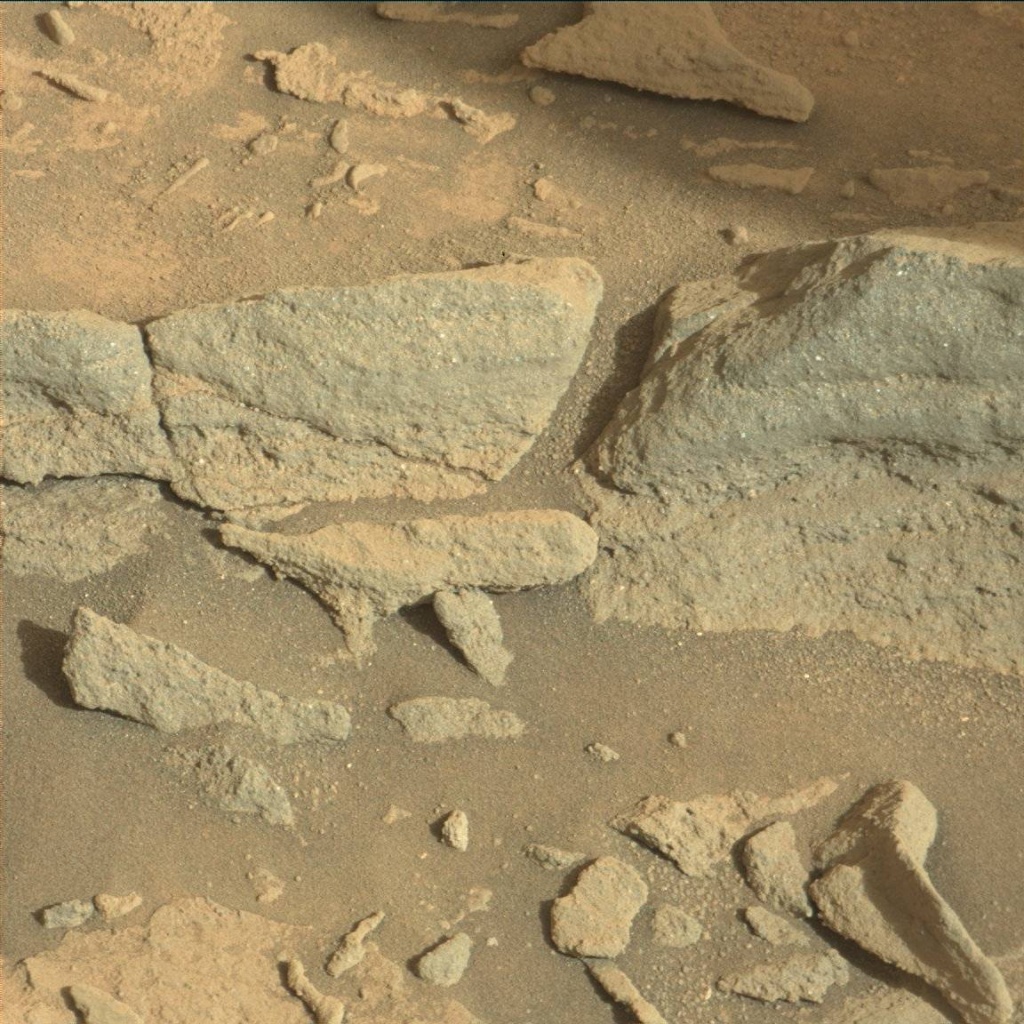
Shadows on Mars... I was browsing through some recent photos from the Curiosity rover on Mars, and this one caught my eye. There are two places in the photo where you can see a sharp shadow of a rock. It's the shadows that I found interesting, precisely because they're so sharp – very little of the penumbra (the fuzzy edge) that we see with shadows here on Earth. Why is that?
It's because Mars is further from the sun than Earth is, and therefore appears to be smaller. Penumbra happen because the source of light isn't a perfect point, but instead is a circle of perceptible size (you see the sun as a bright circle in the sky, not a single point). The sun's angular size from Earth is about 0.5° – and from Mars it's about 0.35°. That means that the sun, as seen from Mars, is just over half the size in the sky of the sun as seen from Earth. That means the penumbra of shadows on Mars are just over half the size of the penumbra of shadows on Earth. Much sharper!
Monday, September 21, 2015
How computers are made...
How computers are made... Via friend, reader, and former colleague Simon M.
Younger electronics types may not recognize the components in the photo. The package at the upper left is an eight pin DIP package. Before surface mount took over the world, they were the standard package for most integrated circuits (with various numbers of pins). The other five components are resistors, with one of their leads cut off and the other twisted up. They were the standard package for most resistors before surface mount's rise...
Stuffed in Paradise...
Stuffed in Paradise... You might not be able to see it, even upon close inspection, but the bowl at right is full of salad. Underneath the raspberries, kiwi, strawberries, feta, apple, and candied pistachios is a bed of baby spinach leaves (one of the few kinds of greens I can eat raw without suffering from horrible digestive disorders). Debbie made a wonderful dressing for this from strawberry yogurt, mayonnaise, vinegar, poppy seeds, sesame seeds, and onion flakes. Very tasty stuff! We polished off this entire bowl, just the two of us. Our tummies are very happy right now!
Why do I think AI is overblown?
Why do I think AI is overblown? Take a look at what it takes for the relatively simple problem of extracting a list of ingredients from a recipe. It's a very nice example of something that is trivially easy for normal humans, but intractably difficult for computers.
I especially enjoyed the declaration of victory with an 89% accuracy rate per sentence. That means a recipe with 20 sentences in it would contain, on average, about two errors. That's victory?
Drugs and capitalism...
Drugs and capitalism... One of the signature human accomplishments is the development of effective therapeutic drugs. The scientists and doctors who were the brains behind this accomplishment have the well-earned respect and admiration of the world's much healthier and long-lived population. Less well understood, and certainly less respected and admired, are the capitalists who made this accomplishment possible – by their pursuit of that awesome incentive called “profit”.
Here's an article that lays out one example of the conflict that constantly arises in this industry. In this case, the price of a particular drug increased dramatically (literally) overnight. Given that it appears in that bastion of Progressivism – the New York Times – it is surprisingly even-handed.
It always surprises me when people are offended by the price of drugs. They'll pay the price anyway, if they need them. That high price is what motivates the pharmaceutical companies to develop the drugs in the first place. Without that incentive, none would bother, and we'd all be worse off.
What to do when someone needs a drug, but really can't afford to pay for it, is a separate question altogether. The problem isn't the high price of the drug, but rather the inability of some people to pay for them. There are numerous experiments going on right now, worldwide, on to deal with that. Here in the U.S., the most common mechanism currently is charitable programs from the drug companies themselves (as mentioned in this article). It will be interesting to see which of these turn out to be most workable. My bet would be on those programs that don't involve the government :)
Here's an article that lays out one example of the conflict that constantly arises in this industry. In this case, the price of a particular drug increased dramatically (literally) overnight. Given that it appears in that bastion of Progressivism – the New York Times – it is surprisingly even-handed.
It always surprises me when people are offended by the price of drugs. They'll pay the price anyway, if they need them. That high price is what motivates the pharmaceutical companies to develop the drugs in the first place. Without that incentive, none would bother, and we'd all be worse off.
What to do when someone needs a drug, but really can't afford to pay for it, is a separate question altogether. The problem isn't the high price of the drug, but rather the inability of some people to pay for them. There are numerous experiments going on right now, worldwide, on to deal with that. Here in the U.S., the most common mechanism currently is charitable programs from the drug companies themselves (as mentioned in this article). It will be interesting to see which of these turn out to be most workable. My bet would be on those programs that don't involve the government :)
Afternoon in Paradise...
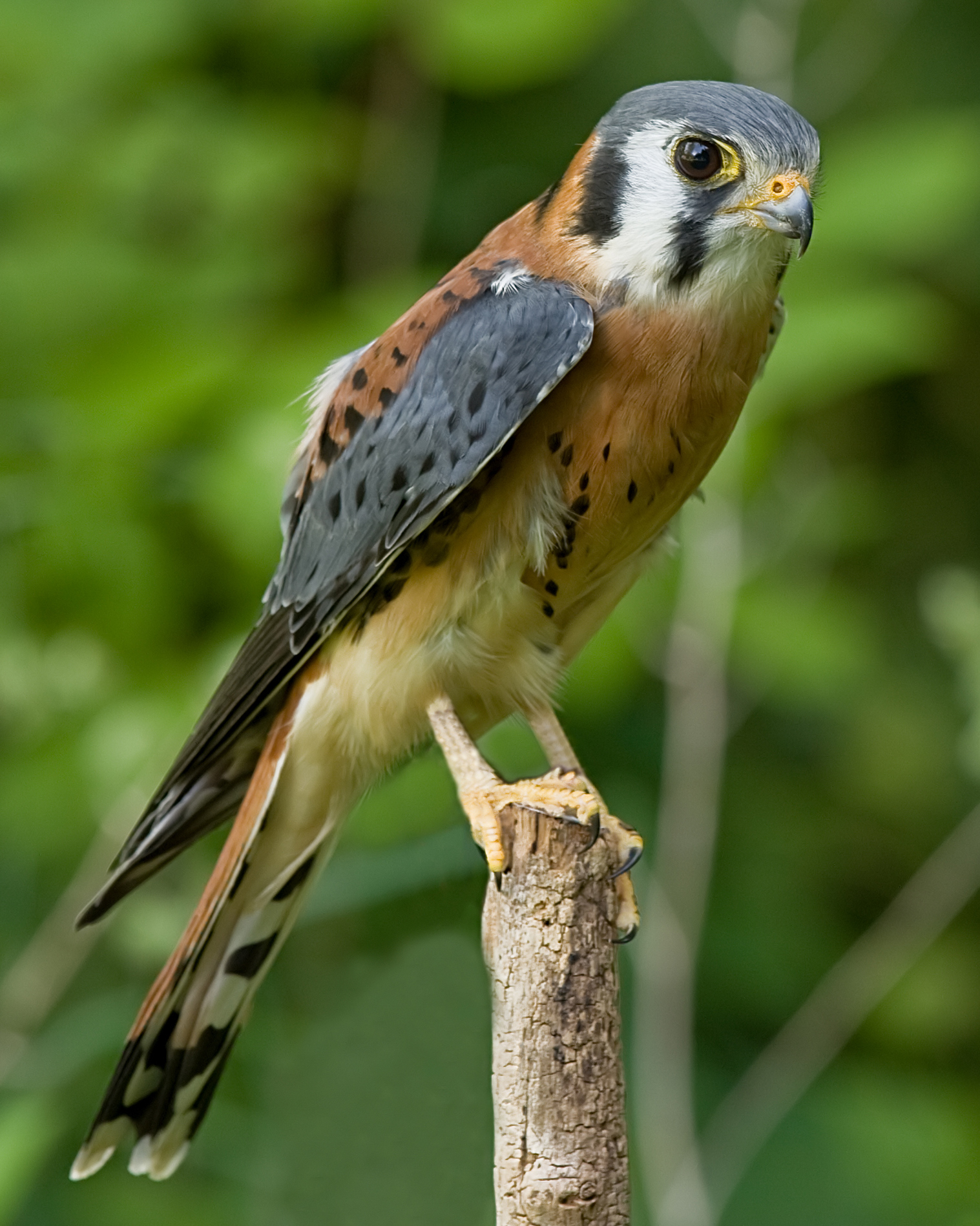
Afternoon in Paradise... As we'd planned, we drove the four-wheel drive road from Avon to Mantua yesterday afternoon. It was a beautiful afternoon, and we saw some nice fall color – but very little wildlife. It wasn't until we got most of the way to Mantua that we saw even any birds! But ... what we saw there more than made up for the dearth until then. First we saw a dozen or so kestrels (not my photo at right), which we had previously misidentified as peregrine falcons. They are beautiful birds, and we had some extended viewing of them as close as 75' or so to us.
Then we saw a dozen or so of a bird that was completely new to us: pinyon jays (photo at left is not mine). Sibley describes their color (the males) as “dusty blue”, with the females a similar gray. The photographer in me would call the females a desaturated version of the males :) It was a treat to see them!
Wind turbine owners paid Texas to take their electricity...
Wind turbine owners paid Texas to take their electricity... What? How could this possibly make any sense?
If you have my sense for the consequences of government involvement, you probably instantly suspected subsidies. And you would be right!
Two billion lines of code...
Two billion lines of code... That's the estimated amount of code that powers all of Google's web sites.
“Lines of code” (LOC) or thousands of lines of code (KLOC) are, these days, standard measures of the size of a software project. As any programmer would tell you, these are very imperfect measurements – somewhat akin to measuring a farm by its acreage. Some farms pack the plants more densely, have better soil, more sunlight, more water, etc. – so the number of acres is a very crude measurement of a farm's productivity. Similarly with software, LOC is a crude measure of how much a particular software program does, or how complex it is. But it's better than nothing, and nobody has yet come up with something that's widely considered to be better (though I'm partial to using the compressed size of code, rather than LOC).
No matter how you measure it, though, Google's code base is simply enormous. It is almost certainly the most complex single thing that mankind has ever produced – though that statement may not be at all obvious to non-programmers. By comparison, the design of an automobile is an utterly trivial effort – even when you include the design of the automobile's components. In fact, even in automobiles today, the amount of engineering that goes into software (including firmware) is larger than all the other engineering put together.
It fascinates me how the engineering effort put into software is invisible to a large segment of the world's population. They simply have no idea what went into, say, the design of the smartphone they use every day. As the number of people exposed to at least basic software concepts increases (and it is, most certainly!), that proportion will change. Has any other technology ever had this sort of disconnect between actual effort and perceived effort? I don't know of any...
“Lines of code” (LOC) or thousands of lines of code (KLOC) are, these days, standard measures of the size of a software project. As any programmer would tell you, these are very imperfect measurements – somewhat akin to measuring a farm by its acreage. Some farms pack the plants more densely, have better soil, more sunlight, more water, etc. – so the number of acres is a very crude measurement of a farm's productivity. Similarly with software, LOC is a crude measure of how much a particular software program does, or how complex it is. But it's better than nothing, and nobody has yet come up with something that's widely considered to be better (though I'm partial to using the compressed size of code, rather than LOC).
No matter how you measure it, though, Google's code base is simply enormous. It is almost certainly the most complex single thing that mankind has ever produced – though that statement may not be at all obvious to non-programmers. By comparison, the design of an automobile is an utterly trivial effort – even when you include the design of the automobile's components. In fact, even in automobiles today, the amount of engineering that goes into software (including firmware) is larger than all the other engineering put together.
It fascinates me how the engineering effort put into software is invisible to a large segment of the world's population. They simply have no idea what went into, say, the design of the smartphone they use every day. As the number of people exposed to at least basic software concepts increases (and it is, most certainly!), that proportion will change. Has any other technology ever had this sort of disconnect between actual effort and perceived effort? I don't know of any...
Laugh of the morning...
Definition of a Finnish extrovert: during a chat, he stares at your shoes.
Sunday, September 20, 2015
Steve McIntyre...
Steve McIntyre ... rips another warmist scientist's work to shreds. His conclusion is pure, classic McIntyre:
However, the issue is not that his original assertion wasn’t “strictly correct”; the issue was that it was unambiguously wrong.Ouch! I would think the climate scientists would be very tired of this kind of whupping, but they all seem to just dismiss McIntyre's work because he's not one of them. That's not how science is supposed to work, guys...
Morning in Paradise...
Morning in Paradise... Yesterday afternoon we decided to have an ice cream cone, so we hopped in the car and headed for the Aggie's Creamery. Once again, great ice cream cones. I also picked up a slab of their “Old Juniper” cheddar cheese: excellent, though I like the Aggiano better. They're all out of that now, though, dang it.
The boys (Miki, Racer) and I took our usual morning walk today. It was downright chilly – about 39°, and a little breeze. Even marching up the hill I needed to keep my jacket zipped. It was completely clear, visibility 50 miles+. I took the photo at right from our front yard, looking out under our pine trees to the southwest. Our alfalfa field (in the foreground) is looking very good, and ready to mow. I expect Scott N. will do that over the next few days. The mountains in the distance have a band of color low on their slopes – the fall color is showing nicely.
This afternoon we're going to head in that direction (southwest) over a four-wheel drive road to Mantua. We did that drive a couple weeks ago and saw lots of peregrine falcons; today we hope to add fall color to that. When we get to the end, we were planning on heading down to Maddox for a good meal – but they're closed on Sundays, dang it!
The boys (Miki, Racer) and I took our usual morning walk today. It was downright chilly – about 39°, and a little breeze. Even marching up the hill I needed to keep my jacket zipped. It was completely clear, visibility 50 miles+. I took the photo at right from our front yard, looking out under our pine trees to the southwest. Our alfalfa field (in the foreground) is looking very good, and ready to mow. I expect Scott N. will do that over the next few days. The mountains in the distance have a band of color low on their slopes – the fall color is showing nicely.
This afternoon we're going to head in that direction (southwest) over a four-wheel drive road to Mantua. We did that drive a couple weeks ago and saw lots of peregrine falcons; today we hope to add fall color to that. When we get to the end, we were planning on heading down to Maddox for a good meal – but they're closed on Sundays, dang it!
Saturday, September 19, 2015
I tweeted this earlier...
I tweeted this earlier ... but it deserves to be saved for posterity. The best programmer's joke evah!
Question: Joe’s code has 20 bugs. If Joe fixes 2 bugs per hour for 8 hours, how many bugs does Joe’s code have now?
Answer: 27.
Morning (so far) in Paradise...
Morning (so far) in Paradise... We got up bright and early this morning, at 3:30 am, so that we could get Debbie back to the ER. This time it wasn't really an emergency; they asked us to go back 24 hours after the last visit, to follow up on her infection treatment. It seems to be going very well – the swelling and rash on her wrist are way down from yesterday, and almost back to normal. The doc at the ER prescribed another round of IV antibiotics, then said we should play it by ear tomorrow morning. If all looks and feels well with her wrist, we'll just keep her on the oral antibiotics; otherwise, we'll take her back into the ER again tomorrow morning. Debbie is very happy to have the IV port removed from her arm this morning. It was bugging the heck out of her all day yesterday and last night.
The photo at right above is Debbie smiling after the ER appointment, and just after the waitress delivered her chicken-fried steak and eggs breakfast at Angie's. I had a ham, mushroom, and cheese omelet. Now we're both in an Angie's coma. In fact, Debbie is taking a nap :) I'm going to work at my desk for an hour or so, then take the doggers on a walkie.
Yesterday we headed down to Ogden so that Debbie could interview a hairdresser. She's not happy with the one she located in Logan, and found this one through Yelp reviews. The interview went well, and she's made an appointment for later in the month. Afterwards we had lunch at Tona, the best sushi we've found in Utah. It's only the second time we've been there, as it's quite a ways from home, but it was a great treat.
When we got home in the afternoon, the first thing we spotted outside our house was the crocus at left. That splash of color really stands out in the fall!
The photo at right above is Debbie smiling after the ER appointment, and just after the waitress delivered her chicken-fried steak and eggs breakfast at Angie's. I had a ham, mushroom, and cheese omelet. Now we're both in an Angie's coma. In fact, Debbie is taking a nap :) I'm going to work at my desk for an hour or so, then take the doggers on a walkie.
Yesterday we headed down to Ogden so that Debbie could interview a hairdresser. She's not happy with the one she located in Logan, and found this one through Yelp reviews. The interview went well, and she's made an appointment for later in the month. Afterwards we had lunch at Tona, the best sushi we've found in Utah. It's only the second time we've been there, as it's quite a ways from home, but it was a great treat.
When we got home in the afternoon, the first thing we spotted outside our house was the crocus at left. That splash of color really stands out in the fall!
Friday, September 18, 2015
Mountains on Pluto...
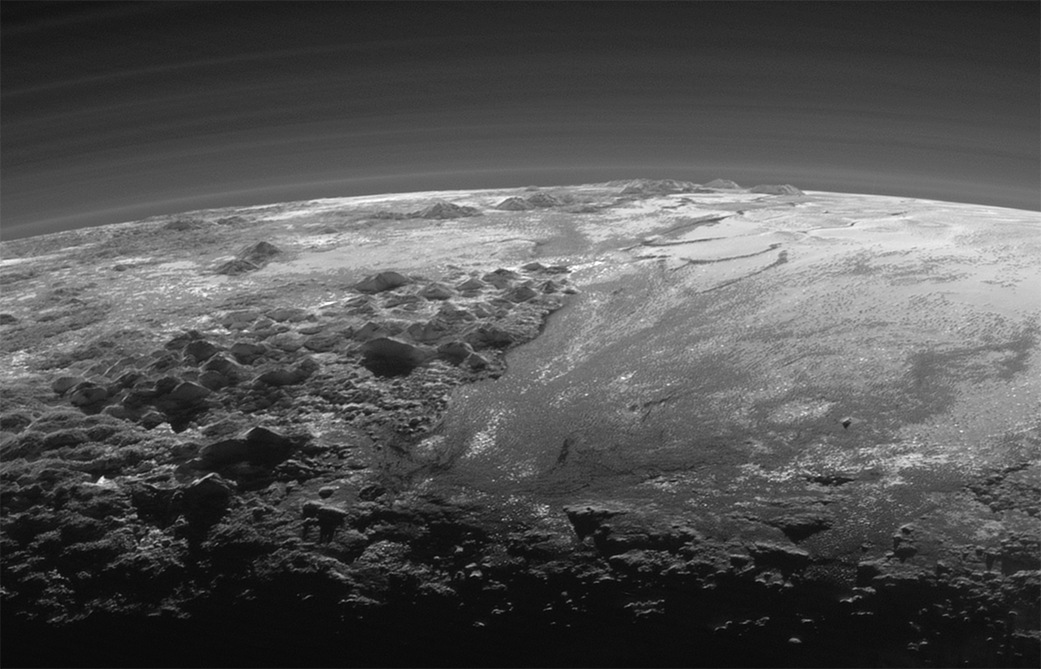
Mountains on Pluto... Some of the latest in the ongoing dump from New Horizons. Click to embiggen. Via APOD, of course. Full resolution version here.
Morning in Paradise...
Morning in Paradise... We (Miki, Race, and I) took a walk this morning for the first time in a few days. Between rain and early morning physical therapy for Debbie, we haven't had a lot of chances. It was quite brisk (40°), and even with my light jacket and some marching I got a little chilled. The morning was overcast just before sunrise, as you can see below:
This morning was a bit more exciting than that walk might suggest. Debbie woke up around 3 am and saw that a red rash had developed on her left wrist (below the cat bite on her left thumb), and the wrist was still quite swollen. After reading a bit about infections after cat bites, she decided that the prudent thing to do was to head back to the ER. So into the truck we piled, and we checked her back in. This time there was nothing exciting going on in the ER, and we saw the nurse within 5 minutes of arriving. A few minutes later, the ER doctor showed up and almost immediately said the one thing we'd really not like to hear: “Interesting.” Sheesh. Turns out that the fact that her thumb and hand looked great while her wrist was obviously infected (even though it wasn't bitten) was weird, and therefore interesting. The doc decided that Debbie needs at least one course of IV antibiotics (which they promptly gave her), a wrist brace, and a return visit bright and early tomorrow morning.
It was only after we got home that the dogs and I went on a walk :)
This morning was a bit more exciting than that walk might suggest. Debbie woke up around 3 am and saw that a red rash had developed on her left wrist (below the cat bite on her left thumb), and the wrist was still quite swollen. After reading a bit about infections after cat bites, she decided that the prudent thing to do was to head back to the ER. So into the truck we piled, and we checked her back in. This time there was nothing exciting going on in the ER, and we saw the nurse within 5 minutes of arriving. A few minutes later, the ER doctor showed up and almost immediately said the one thing we'd really not like to hear: “Interesting.” Sheesh. Turns out that the fact that her thumb and hand looked great while her wrist was obviously infected (even though it wasn't bitten) was weird, and therefore interesting. The doc decided that Debbie needs at least one course of IV antibiotics (which they promptly gave her), a wrist brace, and a return visit bright and early tomorrow morning.
It was only after we got home that the dogs and I went on a walk :)
How to write unmaintainable code...
How to write unmaintainable code... This is just what the world needs: a set of instructions for how to write code that is impossible for someone else to modify or fix. It would be hilarious if it didn't sound so much like code I've actually worked on!
One example:
Sometimes I wonder if the Internet is actually a good thing...
One example:
Wherever scope rules permit, reuse existing unrelated variable names. Similarly, use the same temporary variable for two unrelated purposes (purporting to save stack slots). For a fiendish variant, morph the variable, for example, assign a value to a variable at the top of a very long method, and then somewhere in the middle, change the meaning of the variable in a subtle way, such as converting it from a 0-based coordinate to a 1-based coordinate. Be certain not to document this change in meaning.That is just plain evil. But I've seen code like that, and been burned by it.
Sometimes I wonder if the Internet is actually a good thing...
Aggiano cheese...
Aggiano cheese... We picked up a half pound of this a couple days ago from the Aggie's Creamery, without knowing anything at all about it other than the description on their web site:
After a LONG awaited return, Aggie Creamery is proud to announce that we have our famous Aggiano cheese aged to perfection and ready to sell! This parmigiano style cheese has been aging for over a year to give it a smooth, creamy texture with a pineapple-y flavor.Well, our cheese is now all gone – and we can see why they claim it's famous. It's delicious! When I bought this there were only a couple of packages in their refrigerator. I hope they have some more in storage somewhere!
Thursday, September 17, 2015
So what's the takeaway from this?
So what's the takeaway from this? Friend, reader, and mogul of Idaho Doug S. sends along this story. Bottom line: watching bad news can make you unhappy all day. So ... is the idea that we should insist on seeing only good news? If the world is going to hell in a hand-basket, we should pretend it's not and just be happy happy happy?
It seems to me that allowing good or bad news to affect your own mood is a choice that each of us gets to make. I went on a cheerful drive last night to see the fall color, and I was happy as I was doing it – even though I knew that the Republican presidential debates were about to start (bad news if ever I saw it!). I could have chosen to be grumpy about it, but I didn't. I can easily imagine that some people would choose to react otherwise. It wouldn't surprise me a bit to discover that there were fights, divorces, and maybe even suicides provoked by the mere thought of Trump actually having control over the football (the nuclear weapons trigger). But those are all choices that people made in reaction to the bad news, not something directly caused by the bad news.
I want my news straight, with full knowledge of the reporter's biases. If there's good news, like Bernie being up in the polls, I want to hear it. If there's bad news, like Iran diverting money freed under the nuke deal to Hamas, I want to hear it. And I sure as hell don't want some bozo bureaucrat “adjusting” the mix of good and bad to meet somebody's idea of the “right” balance...
It seems to me that allowing good or bad news to affect your own mood is a choice that each of us gets to make. I went on a cheerful drive last night to see the fall color, and I was happy as I was doing it – even though I knew that the Republican presidential debates were about to start (bad news if ever I saw it!). I could have chosen to be grumpy about it, but I didn't. I can easily imagine that some people would choose to react otherwise. It wouldn't surprise me a bit to discover that there were fights, divorces, and maybe even suicides provoked by the mere thought of Trump actually having control over the football (the nuclear weapons trigger). But those are all choices that people made in reaction to the bad news, not something directly caused by the bad news.
I want my news straight, with full knowledge of the reporter's biases. If there's good news, like Bernie being up in the polls, I want to hear it. If there's bad news, like Iran diverting money freed under the nuke deal to Hamas, I want to hear it. And I sure as hell don't want some bozo bureaucrat “adjusting” the mix of good and bad to meet somebody's idea of the “right” balance...
Behold the surface of Pluto!
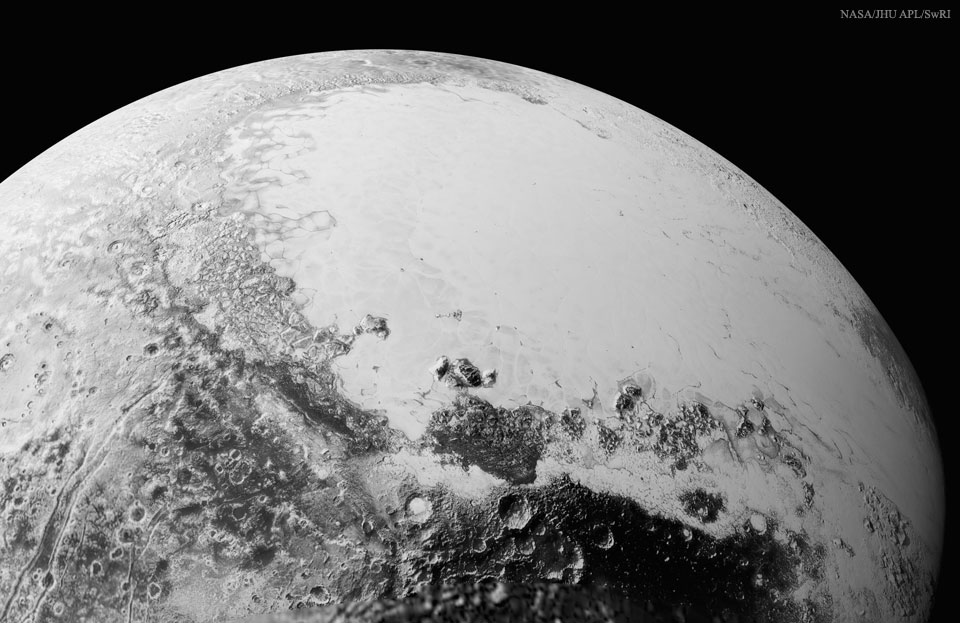
Behold the surface of Pluto! One of the new mosaics constructed from the images of Pluto pouring back from the New Horizons robotic explorer...
An evening in Paradise...
An evening in Paradise... Our evening started off very nicely, with a trip up Blacksmith Fork canyon to Hardware Ranch, to see the fall color (some photos from that ride below). This drive was actually a lot prettier than the drive up Logan Canyon yesterday, and it is a lot easier here to drive slowly or stop in order to gawk properly. Incidentally, all of these photos are taken on my iPhone 5 in the rain – something a 35mm camera would be challenged with unless you happened to have a rain hood.
After we returned from this drive, Debbie's left hand started to get quite painful. The day before one of our cats (Koa) had bitten her left thumb. This happened when Debbie tried to retrieve (from his throat!) a piece of plastic that he'd swallowed. Last night the pain from the bite reached the point where Debbie felt like she needed to go to the emergency room. So off we went, for another late night ER experience. When we were called into a room, we noticed that the ER was very busy, with a knot of people outside one of the rooms in particular. We saw sad, worried faces at first, and much urgency. The ER staff was largely tied up dealing with this, and we waited for over two hours before Debbie was examined and treated. Meanwhile, things must have gotten better in the room that was in focus – people leaving the room started looking less worried, then unworried, and finally, smiling. We found out today that the person being treated was the woman in this story – an accidental gunshot victim. Debbie got two injections last night: tetanus and a powerful antibiotic. Now she's on a 10 day regimen of antibiotics, and hopefully that will be the end of it. Next time (if there is a next time) one of us gets bitten by a cat, we're going straight to the ER...
Wednesday, September 16, 2015
Functional Java...
Functional Java... In the bad old days before Java 1.8 (before lambdas, in other words), if you wanted to list the subdirectories of a given directory, you'd write something like this:
Today I wrote one like this:
I know it's a crazy simple example, and doesn't at all show off the power of lambdas or functional programming. But anything that replaces the gobbledygook of the first example with the (relative) clarity of the second is a winner in my book. Me like!
That's an anonymous class declaration, complete with all the mess of Java wordiness that goes along with it. Ugly, dense, and way too hard to understand.files = _node.listFiles( new FilenameFilter() { @Override public boolean accept( final File node, final String name ) { return new File( node, name ).isDirectory(); } } );
Today I wrote one like this:
files = _node.listFiles( (node, name) -> { return new File( node, name ).isDirectory(); } );
That's a lambda in there: short, to the point, and easy to read.I know it's a crazy simple example, and doesn't at all show off the power of lambdas or functional programming. But anything that replaces the gobbledygook of the first example with the (relative) clarity of the second is a winner in my book. Me like!
Pouring, it is...
Pouring, it is... The skies just opened up here, with buckets of water sheeting down. Up to this moment, the storm has dropped 1.8" on us – well ahead of the forecast. The screen grab at right shows the radar image (if you look carefully, you can find the little ⊕ symbol that marks where Paradise is). That red blob marks the intense rain, and the edge of it just hit us. There's more to come. North of us we see lots and lots of lightning.
At left is the scene outside our north-facing second floor windows. You can see the choke cherries in the middle, just starting to turn color. The rain isn't quite so obvious in the photo, but trust me on this: it's coming down cats and dogs. Big ones!
We caught a break in the rain...
We caught a break in the rain ... late yesterday afternoon, so we piled all three dogs into the truck and headed up to “Tony Grove” Lake (in Logan Canyon) to see what we could see in the way of fall color.
Our route took us right past the Aggie's Creamery, so naturally we stopped in for an ice cream cone. Debbie had a repeat: one scoop of chocolate, one scoop of espresso chip. I tried something new: one scoop of maple walnut and one scoop of caramel cashew. I couldn't get a comment from Debbie, other than “Mmmmmmmm” :) Mine was outstanding – just the way I like it, with a subtle and not-too-sweet flavor of maple and caramel, and lots of nuts. I did have one small problem, though: my server was on his first day at work, and didn't yet understand the physics of ice cream cone preparation. It was all I could do to keep my ice cream situated on top of my cone. He hadn't stuffed enough of it down into the cone to keep it stable. I made it without dropping the ice cream, though. That would have been tragic!
I also bought a half pound of “Aggiago” cheese, which I haven't tried yet.
The drive up Logan Canyon was full of fall color, mostly visible to us on the canyon's sides (as at right). Mainly we saw the oranges and reds of maples, though there were also a few oaks, and up high, splashes of yellow from aspens (not quite in prime color yet).
As we approached Tony Grove itself, though, things changed for the worse. There are large areas of dead or half-dead aspen groves up there, and not a few dead firs. We have no idea why that's the case. Right around the lake itself we saw a bit of color, but truthfully nothing even close to the rather nice color further down in the canyon. We walked the dogs up there (excited, they were!) and headed back home just before dark. Where I walked the dogs, we saw this one lonely (and very late!) bloom on a plant I don't know. Seems pretty weird to see this just a few weeks before there will be snow here...
Our route took us right past the Aggie's Creamery, so naturally we stopped in for an ice cream cone. Debbie had a repeat: one scoop of chocolate, one scoop of espresso chip. I tried something new: one scoop of maple walnut and one scoop of caramel cashew. I couldn't get a comment from Debbie, other than “Mmmmmmmm” :) Mine was outstanding – just the way I like it, with a subtle and not-too-sweet flavor of maple and caramel, and lots of nuts. I did have one small problem, though: my server was on his first day at work, and didn't yet understand the physics of ice cream cone preparation. It was all I could do to keep my ice cream situated on top of my cone. He hadn't stuffed enough of it down into the cone to keep it stable. I made it without dropping the ice cream, though. That would have been tragic!
I also bought a half pound of “Aggiago” cheese, which I haven't tried yet.
The drive up Logan Canyon was full of fall color, mostly visible to us on the canyon's sides (as at right). Mainly we saw the oranges and reds of maples, though there were also a few oaks, and up high, splashes of yellow from aspens (not quite in prime color yet).
As we approached Tony Grove itself, though, things changed for the worse. There are large areas of dead or half-dead aspen groves up there, and not a few dead firs. We have no idea why that's the case. Right around the lake itself we saw a bit of color, but truthfully nothing even close to the rather nice color further down in the canyon. We walked the dogs up there (excited, they were!) and headed back home just before dark. Where I walked the dogs, we saw this one lonely (and very late!) bloom on a plant I don't know. Seems pretty weird to see this just a few weeks before there will be snow here...
To the readers who emailed me...
To the readers who emailed me ... about these floods. We're not in any danger here in Paradise. The floods are near the down of Hildale, Utah, which is 400 miles – a six hour drive – from Paradise. That's about as far from us as you can get and still be in Utah :)
Many of the news reports on the flood neglect to add an interesting fact: Hildale is the Utah epicenter for Warren Jeff's polygamist version of the Latter Day Saints (Mormon) church...
Tuesday, September 15, 2015
Wow!
Wow! We got 1.3 inches of rain overnight, and there's a lot more coming. When this storm is over and the lawns dry out a little bit, I think I'll be putting away my irrigation pipes for the season...
It's raining in Paradise...
It's raining in Paradise... It started last night, got intense a couple times during the night (the noise on our steel roof woke me up!), and we're expecting the most intense part tonight and tomorrow. It's still dark here, so I can't read our rain gauge to see how much we got.
Yesterday afternoon we feasted on leftover chicken and dumpling soup, again with new dumplings. It just keeps getting better as it sits in the refrigerator! I'm looking forward to it again today – the perfect “rainy day food”...
Plans for LEO satellite Internet network filed...
Plans for LEO satellite Internet network filed... Elon Musk's SpaceX has filed plans for a low earth orbit (LEO) network of satellites to provide broadband Internet service to the entire world. This is a key step toward bringing the plan to fruition. Funding seems to be assured, especially with Google's enormous commitment. LEO satellites are vastly superior to the geosynchronous satellites used by existing satellite-based Internet service providers, for the simple reason that they're (much) closer to Earth. This reduces the latency from awful (for the geosynchronous birds) to normal (for the LEO birds).
If Google and Musk pull this off, the world is going to suddenly get very much smaller, again...
Salmon in Paradise...
I did a little research into the topic, and discovered that the salmon we have here are sockeye salmon (Oncorhynchus nerka) – the same salmon found in the northern Pacific Ocean – but part of a landlocked population that never makes it to the ocean. These are called “kokanee salmon”, but are actually the identical species to the ones found in the ocean. In our case, the population is based in Porcupine Reservoir itself, and they spawn up Cinnamon Creek (and perhaps some of the smaller feeder creeks as well, but I'm not sure about that). It turns out that Porcupine Reservoir is one of just three in Utah that were stocked with a sockeye population. How Porcupine Reservoir was selected for that is something I'd like to find out.
When we got to Cinnamon Creek (after seeing some nice fall color along the way), we discovered that the trail down to the water was too rugged for Debbie to attempt on crutches. So poor Debbie waited for me in the truck while I hiked down to see what I could see. Here are some photos of what I found:
Monday, September 14, 2015
Precipitation in Paradise...
Precipitation in Paradise... Starting today, we're due to get hammered by rain for the next four days. The forecast is estimating a total of two inches, with the bulk coming tomorrow and Wednesday.
We're starting to see some fall color around us, at altitudes just a few hundred feet above the valley floor. Our backyard choke cherries are just starting to turn, the first thing to turn on our property. Debbie and I went for a drive on the road from Avon to Liberty yesterday evening, and saw quite a bit of fall color above us, and a little along the road. Some photos:
Last night we had homemade sticky rice and mangoes. The recipe we used resulted in rice that was much less sweet (and sticky) than the same dish when we've had it in restaurants. I actually liked that better, but Debbie longs for the restaurant style. We'll try that again. We didn't have fresh mangoes to put on it, so we used canned instead. They were ok, but not nearly as good as the real deal...
We're headed off for Debbie's hydrotherapy shortly. The doggies will miss their morning walk...
We're starting to see some fall color around us, at altitudes just a few hundred feet above the valley floor. Our backyard choke cherries are just starting to turn, the first thing to turn on our property. Debbie and I went for a drive on the road from Avon to Liberty yesterday evening, and saw quite a bit of fall color above us, and a little along the road. Some photos:
Last night we had homemade sticky rice and mangoes. The recipe we used resulted in rice that was much less sweet (and sticky) than the same dish when we've had it in restaurants. I actually liked that better, but Debbie longs for the restaurant style. We'll try that again. We didn't have fresh mangoes to put on it, so we used canned instead. They were ok, but not nearly as good as the real deal...
We're headed off for Debbie's hydrotherapy shortly. The doggies will miss their morning walk...
The origins of Scrabble...
The origins of Scrabble... All new to me. My family is amongst the addicted, as are many of our friends...
New Pluto photos are pouring in...
New Pluto photos are pouring in ... from the latest New Horizons data dump. Astronomers are delighted at not only having all the amazing new data on Pluto (and its moons), but also at the unexpected nature of it. Via APOD, of course. Full resolution version here.
When I was a young boy (in the early '60s), first learning about and getting interested in astronomy, we knew almost nothing at all about Pluto. The very best telescopic photographs of it showed basically a smeared dot. No telescope existed that could collect enough light from Pluto for even the most basic spectroscopic study. We knew almost nothing about it. Now we are about to have vast amounts of data on the chemical composition of Pluto and its atmosphere, its magnetic field, its gravitational field, and high resolution photographs of its surface. That's a lot of progress within one human lifetime...
Sunday, September 13, 2015
A drug that cures your Hillary problems...
Morning in Paradise...
Morning in Paradise... We had a lovely day yesterday. We went grocery shopping, and then went to the Aggie's Creamery (part of the Utah State University) and got an ice cream cone. Sugar cones with one scoop of chocolate and one scoop of espresso chip. They were brains-fall-out good. Several locals have recommended the creamery to us, but this was the first time we'd actually made it there. Dang, that was good!
Which reminds me... The Crumb Brothers that we so mourned when they went out of business six months ago has been resurrected! A buyer was found, most of the old employees rehired, and the reopening is just a week away. Woo hoo!
After returning from shopping and ice cream eating, Debbie and I made chicken and dumpling soup. We modified a recipe we'd tried last week – adding mushrooms – and the result was a huge success. We gorged ourselves on it in the afternoon, and put five one-meal containers in the refrigerator.
This morning, the boys (Miki and Race) and I did our usual morning walk. It was slightly overcast, but nice and cool. For some reason we saw very few hawks today, which is kind of weird. The dogs got terrifically excited at one point, but I never saw the reason why. Most likely they smelled something enticing; perhaps a raccoon or a woodchuck.
Just a little while ago, I reheated a container of chicken and dumpling soup for my lunch. I made some more dumpling batter and dropped it in the pot, as there are never enough dumplings :) As usual, the soup was even better the second day...
Which reminds me... The Crumb Brothers that we so mourned when they went out of business six months ago has been resurrected! A buyer was found, most of the old employees rehired, and the reopening is just a week away. Woo hoo!
After returning from shopping and ice cream eating, Debbie and I made chicken and dumpling soup. We modified a recipe we'd tried last week – adding mushrooms – and the result was a huge success. We gorged ourselves on it in the afternoon, and put five one-meal containers in the refrigerator.
This morning, the boys (Miki and Race) and I did our usual morning walk. It was slightly overcast, but nice and cool. For some reason we saw very few hawks today, which is kind of weird. The dogs got terrifically excited at one point, but I never saw the reason why. Most likely they smelled something enticing; perhaps a raccoon or a woodchuck.
Just a little while ago, I reheated a container of chicken and dumpling soup for my lunch. I made some more dumpling batter and dropped it in the pot, as there are never enough dumplings :) As usual, the soup was even better the second day...
Subscribe to:
Posts (Atom)