Dell, crapware, and Windows 10... My friend and neighbor Tim D. recently bought a new computer. He chose an inexpensive Dell model sold through Walmart. Shortly after he bought it, he called me for some help: his new computer was vastly slower than the one it replaced, and he basically had no idea how to do anything.
So I ran over to his house, delighted to be able to do something to help repay him for the weeks of assistance he gave me in the past couple of years. I had no idea what to expect.
First thing I saw was that the Windows 10 screen was like some alien thing had taken over his computer. I haven't used Windows for nearly 10 years now, but I expected to see at least something recognizable. There really wasn't much! Everything seemed to have new icons, new names, and new places on the screen. Those bits and pieces of Windows lore that I could dredge up were largely useless. If it's that alien for someone like me, who has lived and breathed computers for almost 50 years – imagine what it's like for a non-techie who has no understanding of the technology and uses computers only casually! Poor Tim was completely and totally lost – and I wasn't much help until I did some online reading to figure out a few basic things.
Then there was the crapware. If you're not familiar with the term, here's the Wikipedia article. This stuff isn't on every new computer (it's not on Macs at all, for example), but it's on nearly every low-cost Windows machine. Dell has a reputation for being amongst the worst crapware offenders, and after seeing Tim's computer I can understand how they got this reputation.
Some of the crapware is “opt-in”, meaning that you have to install it before it does anything. Most of it, though, was pre-installed – very, very annoying. Worst of all was a malignant piece of crapware called NowUSeeIt Player: it was not only pre-installed, but it came with no uninstall program. I call it “malignant” because it was putting up dozens of pop-over ads per hour. Most of these were for bogus “security programs” that had scary-sounding (and looking) screens that tried hard to look like a Windows error screen. They tried to scare the viewer into calling (with their credit card ready!) a company that really was just a front, would do nothing to help your computer, but would take some money out of your credit card account. Probably they'd steal your credit card number, too!
Altogether, over the course of about four visits with Tim, I probably spent 5 or 6 hours cleaning his crapware-infested brand new computer. A non-technical person would have been there much longer, and might not have succeeded at all. That's just awful on Dell's part (it was their choice to earn a few bucks per machine by installing this horrible stuff). I'm sure they don't care, but ... though I've often recommended Dell to people in the past (and bought quite a few of them myself), I will no longer do so. In fact, I will actively recommend against Dell until I can satisfy myself that they've dispensed with the crapware.
I did have one piece of this experience that made me chuckle. I found a guide on the Internet somewhere that described how one could get rid of NowUSeeIt Player even though it had no uninstaller. Mainly it involved deleting registry keys (The “registry” is a uniquely Microsoft invention that is mostly horrible). I had no idea how to do that on Windows 10, but I imagined it was some new tool, with a new name, that worked completely differently than the old tool. That led to the chuckle. There's no new tool. You just use RegEdit, the same tool one used on the earliest versions of Windows. So far as I could tell, there was nothing new or improved about this notoriously awful tool. Using RegEdit is roughly akin to being force to hammer in a nail by using your pen knife, with the blade as the handle. Tim and I tediously deleted the 100 or so registry keys that the NowUSeeIt Player installs, and afterwards his computer was (a) blessedly free of those incredibly annoying pop-over ads, and (b) at least three times faster than it had been.
Dell, you should be ashamed of yourselves. You owe your customers a heartfelt apology, at the very least. You really should find a way to compensate them for the tortures you've visited upon them, too. Along with their geekly friends who have gotten them free of your crapware!

Thursday, March 10, 2016

Taxes...
Taxes... Man, I hate this time of year, when I have to sit down and spend hours torturing myself as I calculate how much money I have to give our government – which it will promptly spend mostly in ways that I find abhorrent. Not fun. Since I retired a few years ago, this tax computation has gotten worse – the tax consequences of living off your investments are way more complicated than living from a paycheck that's had taxes withheld.
Last year was the worst of all for us, as the 2014 tax year was complicated by our moving from one state (California) to another (Utah), owning two homes most of the year, major investments changes, etc. This year was considerably simpler, and the tax software I use (TurboTax) surprised me by making something else much simpler: for the first time it automatically imported all the tax data about my stock trades from my broker. Even the basis (price I paid) was correctly imported. This saved a lot of manual lookup and typing. Bottom line: I did our tax return in just a few hours this year, instead of the several days I was anticipating. That, at least, is a positive thing.
But I still have to let them steal my money and waste it on something stupid (or worse), and that really grates on me. Argh!
Last year was the worst of all for us, as the 2014 tax year was complicated by our moving from one state (California) to another (Utah), owning two homes most of the year, major investments changes, etc. This year was considerably simpler, and the tax software I use (TurboTax) surprised me by making something else much simpler: for the first time it automatically imported all the tax data about my stock trades from my broker. Even the basis (price I paid) was correctly imported. This saved a lot of manual lookup and typing. Bottom line: I did our tax return in just a few hours this year, instead of the several days I was anticipating. That, at least, is a positive thing.
But I still have to let them steal my money and waste it on something stupid (or worse), and that really grates on me. Argh!
More memory memories...

I feel old today :)
PEX rules!

I was at my brother's cabin yesterday, installing a new pressure tank for his water system. The old water tank was a teensy 2 gallon job that was mounted right on the wall, directly threaded into some copper pipe. The one I installed was a 20 gallon, floor-standing tank. We had to run about 6 feet of pipe between the old tank's mount and the new tank. If I had run copper pipe, I'd have had to cut four pieces of pipe to precisely the right length, plus three 90° elbows and two solder-to-threaded adapters for the ends. I'd have needed a box full of tools, probably five or six hours, and an enlarged cussing vocabulary to cover all the mistakes I made. Plus it would most likely have leaked the first three times I tried it.
What a difference with PEX! Because it's quite flexible, I only needed two fittings: adapters to threaded pipe at each end. I only needed one piece of pipe, and no elbows. Cutting the pipe was as easy as using a pair of scissors – the cutting tool slices right though the pipe like scissors on paper. I'd never used PEX before, so I wasn't sure how hard it would be to use the crimp cinch clamp tool. Turns out it's about as challenging as a pair of pliers. You just put the tool onto the clamp and squeeze – you're done! Then when I turned everything back on, it didn't leak a drop. Total time was about 30 minutes, and most of that was just me being careful with techniques that were new to me.
Count me as a new PEX advocate. I'm actually thinking about re-plumbing the mechanical room of our house. The current setup is an incrementally-installed copper pipe mess. I sometimes have to study the pipes for fifteen minutes just to figure out which of the maze of valves I need to turn on or off. With PEX I could easily make a manifold-based system with individual valves for every water destination...
Wednesday, March 9, 2016
Same thing for Trump, or Sanders...

Tuesday, March 8, 2016
Curiosity...
Curiosity ... is into some new and exciting things as it climbs Mt. Sharp on Mars! These are from today's dump of raw images, and there aren't any notes on them yet. The first one, to my amateur rockhound's eye, fairly screams “water!” Those whitish deposits look like minerals that crystallized after having been dissolved in water; we see things like that on Earth all over the place. The second photo appears to be taken looking across the slope that Curiosity is climbing – it looks fairly steep, though I'm not sure the camera was level when it was taken. It also looks quite hazy, presumably from dust and not water vapor...


Morning chuckle...

Update: Debbie tells me it was The Federalist Papers web site where she found that, not Facebook. But Facebook is still just a giant bucket of dark corners...
Chladni patterns...
I first ran into these back in the '80s, when I was doing some consulting work for a company that was using microphones listening to rotating machinery to monitor for impending failures. The most success they had was with ball bearings, where some (relatively) simple fast Fourier transforms could be used successfully. Even the slow computers of the day could do this math in near real time. The company wanted to do some more sophisticated things (which is where the Chladni patterns came in) that involved math that they just couldn't make fast enough.
They hired me to optimize those calculations by using assembly language and every hacky trick I could come up with. They needed to speed up their calculations by a factor of about 1,200, but the best I could do was about 200 – still six times too slow. I could only get that large speedup because the program they started with was written by scientists who basically had no idea how computers worked :) They chose a terrible language (FORTRAN) for such a project, then compounded the error by writing terrible code. It was great fun for me, because they were completely blown away by (a) how fast my code was, and (b) how small my code was – the assembly-language program I wrote was half the lines of their (horrible) FORTRAN code. Also fun: they paid me on time, with a check that cleared...
Norman doors...
I attended a lecture of his back in the '90s, when his work was just becoming well-known amongst software engineers. Then, later, I went to a short course he ran (which the company I worked for then helped sponsor), and had a delightful dinner with him. He went through everything on the table and analyzed how well (or not) it was designed, from a human perspective. It was so much fun! But also one hell of a learning experience.
He looked much younger then :)
There is one thing that I think is a bit misleading in this short video, to wit: the video makes it sound obvious and easy to get the design right. At least with computer user interfaces, that is the exact opposite of the truth. Why? Because discoverability and feedback are highly variable from person-to-person. Someone like me who has been using computers for almost 50 years might find a subtle change in color to be useful and appropriate feedback. Similarly, I might find a right-click menu to be an obviously discoverable element. Another person, however, might need a giant purple blinking square, with 50 watt audio accompaniment, before they'd ever notice the feedback. And that same person might never think of trying a right click – you might as well have buried that feature in a 10 ton block of concrete, as they will never find it. User interface designers constantly face this challenge: the interfaces they design must be usable by novices, but still useful to experts. Sometimes a single design can do this well, but that's relatively rare. More often, the job is either done poorly, or sometimes the only answer is to have multiple designs – one for the noobs, another for the dweebs...
Coloring books and Trump...
Coloring books and Trump... Rob Long, writing on Ricochet, makes an excellent point...
Monday, March 7, 2016
Paradise ice...
Paradise ice... Our trees are covered with sparkly ice this morning, as is our driveway. The sun is shining brightly, though, so we're expecting this all to melt fairly quickly. Meanwhile, here's a few photos for your enjoyment (click to embiggen, as always)...


Pharmaceutical development...
Pharmaceutical development ... is a very complicated thing. Several things are simultaneously true, making it almost impossible for ordinary consumers to figure out what's going on:
One favored by progressives is to fund drug research with public dollars. This, despite the fact that private pharmaceutical companies in search of profit out-perform every government institution that's ever tried their hand at drug development. The CDC, in the U.S., is a great example. While they've had a few successes over the years, the payback per dollar spent is trivial by comparison with what the pharmaceutical companies have done. In my own opinion, this course is a recipe for failure.
Another approach favored by some in every part of the political sphere is to (drastically) reduce the bureaucracy and regulation around drug approval in the U.S. Many schemes have been floated to do this. The naysayers (and there are many) have one easy line to attack them all: some variant of “These reformers want to kill your kids!” So far that line has stopped every attempt to reform the FDA's drug approval process.
Progressives have recently floated another proposal: to allow drugs to be imported into the U.S. much more freely (this is highly regulated today). This would, in particular, allow the Indian generics to be imported. This would rather dramatically change the financial equation for pharmaceutical companies with respect to financing drug development. Only those drugs that were clearly novel under Indian patent law would then be attractive for financing. Depending on who you want to believe, that's between 1% and 4% of all drugs currently being developed. That's something to think about very hard before implementation. One thing that scares me about that one: the immediate political consequences of such a program would all be positive. All of a sudden, a broad range of drugs would be drastically cheaper. The impact of shutting down the drug development pipeline might not be felt for 10 or even 20 years, so long is the development cycle. That sort of decision, to a politician, is unfortunately a no-brainer: they're going to go for the short term benefit.
I certainly have no easy answers for this one. It's an amazingly complicated problem that most people don't even think about. A lot of people – especially younger folks – seem to think that drug development should be a government function, and the profit motive should be eliminated. That notion scares me more than anything else, because all my own experience tells me that drug innovation would practically halt at that point. Government bureaucracies are motivated almost entirely by factors that don't affect their success on their mission – the U.S. Post Office being the canonical example. Private companies pursuing a profit, on the other hand, are motivated almost entirely by success in their mission. I'll take the latter every time...
- Some drugs cost hundreds of millions of dollars to develop, but benefit relatively few people. The money for development costs comes from investors in pharmaceutical companies. The only way those companies can recoup their costs and hope to realize a profit is by charging extremely high prices for those drugs.
- Some drugs cost much less to develop, but the pharmaceutical companies charge high prices for them because they have a monopoly (usually the monopoly derives from them having a patent). That looks like gouging to most people, and sometimes it is – but sometimes those profits are helping subsidize the development of less profitable drugs.
- Government bureaucracies, most notoriously the U.S. FDA, dramatically drive up the cost of developing drugs by requiring the pharmaceutical companies to perform long, expensive tests of their prospective drugs for both efficacy and safety. Without special (and difficult to get) exemption, the drug companies cannot supply those drugs even to terminal patients in the U.S. before those tests are complete. Other countries have far less stringent drug approval processes, and it's common for new drugs to be available in Asia and Europe for years before they're available in the U.S. It's not as clear as you might think that foreign consumers have more risk because of the less stringent procedures there. It is very clear that new drugs that actually work are saving lives outside the U.S. before they can do so inside the U.S.
- One country in particular – India – has the technology to produce the most advanced drugs, but has a much stricter requirement for drugs to qualify for patent. Since most drugs are minor modifications of existing compounds (which don't qualify for patent protection in India), it's perfectly legal under Indian law for their pharmaceutical companies to produce them there – and of course, they are. This provides a means for people outside India to get access to drugs that would otherwise be too expensive for them. That sounds great – until you realize that that also means that the pharmaceutical companies who developed those drugs, at great cost, are not going to recoup their expenses, much less make a profit. The Indian companies, by and large, are not innovating – they're copying. Somebody has to pay for the innovation, or said innovation ain't gonna happen. If the Indian gambit significantly suppresses the revenue for such drugs, it's easy to predict that the pharmaceutical companies will stop developing them.
One favored by progressives is to fund drug research with public dollars. This, despite the fact that private pharmaceutical companies in search of profit out-perform every government institution that's ever tried their hand at drug development. The CDC, in the U.S., is a great example. While they've had a few successes over the years, the payback per dollar spent is trivial by comparison with what the pharmaceutical companies have done. In my own opinion, this course is a recipe for failure.
Another approach favored by some in every part of the political sphere is to (drastically) reduce the bureaucracy and regulation around drug approval in the U.S. Many schemes have been floated to do this. The naysayers (and there are many) have one easy line to attack them all: some variant of “These reformers want to kill your kids!” So far that line has stopped every attempt to reform the FDA's drug approval process.
Progressives have recently floated another proposal: to allow drugs to be imported into the U.S. much more freely (this is highly regulated today). This would, in particular, allow the Indian generics to be imported. This would rather dramatically change the financial equation for pharmaceutical companies with respect to financing drug development. Only those drugs that were clearly novel under Indian patent law would then be attractive for financing. Depending on who you want to believe, that's between 1% and 4% of all drugs currently being developed. That's something to think about very hard before implementation. One thing that scares me about that one: the immediate political consequences of such a program would all be positive. All of a sudden, a broad range of drugs would be drastically cheaper. The impact of shutting down the drug development pipeline might not be felt for 10 or even 20 years, so long is the development cycle. That sort of decision, to a politician, is unfortunately a no-brainer: they're going to go for the short term benefit.
I certainly have no easy answers for this one. It's an amazingly complicated problem that most people don't even think about. A lot of people – especially younger folks – seem to think that drug development should be a government function, and the profit motive should be eliminated. That notion scares me more than anything else, because all my own experience tells me that drug innovation would practically halt at that point. Government bureaucracies are motivated almost entirely by factors that don't affect their success on their mission – the U.S. Post Office being the canonical example. Private companies pursuing a profit, on the other hand, are motivated almost entirely by success in their mission. I'll take the latter every time...
This morning I did something I should have done a long time ago...
This morning I did something I should have done a long time ago ... I closed my LinkedIn account. Everybody I care about knows how to contact me already, and I have no interest in (a) LinkedIn's unceasing efforts to trick me into giving them money, contact information, or my phone number, and (b) the mechanical queries from almost unbelievable numbers of recruiters who completely ignore my status of RETIRED.
So it's gone. Back in the day I put quite a bit of effort into boosting my profile on LinkedIn, and I don't believe that effort ever paid any dividends at all. The one and only value I can think of that LinkedIn actually delivered for me was that it let customers and prospects find me, back when I had a job where that mattered.
The world could use a good, transparent equivalent of LinkedIn. One that wasn't annoying and grasping. How that pays off I have no idea, but my intuition says there must be a way. That's an opportunity for some entrepreneur who recognizes the incredible suckiness of LinkedIn today...
So it's gone. Back in the day I put quite a bit of effort into boosting my profile on LinkedIn, and I don't believe that effort ever paid any dividends at all. The one and only value I can think of that LinkedIn actually delivered for me was that it let customers and prospects find me, back when I had a job where that mattered.
The world could use a good, transparent equivalent of LinkedIn. One that wasn't annoying and grasping. How that pays off I have no idea, but my intuition says there must be a way. That's an opportunity for some entrepreneur who recognizes the incredible suckiness of LinkedIn today...
Snow in Paradise...
Snow in Paradise... Our forecast for yesterday called for a half inch or so of rain. Instead we got rain for a while, turning into slush, and finally into sloppy wet snow – about 2 inches of it. Dang it! We're hoping for a fast melt with the warmer temperatures forecast for the next five days. But ... after that, the forecast has about an inch of rain followed by up to six inches of snow, over a four day period. Double dang it! We're ready for spring :)
Sunday, March 6, 2016
Paradise ponders...
Paradise ponders... Yesterday morning I had three of my neighbor's kids over for their first tutoring session with me, on programming (with a touch of actual computer science). We spent about a third of the session just exploring why they wanted to do this (all three seem highly motivated). They have very different goals and interests – one wants (badly!) to build robots, another is mostly just curious about how programming works, and the other is interested in the math. Since none of them have any substantial knowledge even of the basics, I'll keep them all together until we get past things like base arithmetic, Boolean algebra, etc. After that might be a different story. All of that assumes they want to come back, of course :)
Debbie gave them an extra reason to come back. While we were working, she was cooking – and when we'd finished she served up the results to the kids: an oatmeal cake that was extravagantly good. The cake itself was delicious, but so was the icing: a gooey confection of pecans and coconut. She served these enormous pieces that I could not possibly have eaten, and two of the kids (the two girls) wolfed them down in no time at all, along with mugs of milk. The youngest kid (the one boy) had a bit more trouble, understandably, since the piece of cake was roughly the size of his head!
I forsook eating cake with the kids, as I knew what was coming later that afternoon: baked Ora King salmon and roasted vegetables. Once again, superb. This time Debbie remembered to put Peppadew peppers in the mayonnaise sauce, and it was (of course!) delicious. The roasted veggies included Brussels sprouts, parsnips, and carrots. Man, what a meal! The only problem with a meal like that is the aftermath: I could just barely move for about four hours...
Debbie gave them an extra reason to come back. While we were working, she was cooking – and when we'd finished she served up the results to the kids: an oatmeal cake that was extravagantly good. The cake itself was delicious, but so was the icing: a gooey confection of pecans and coconut. She served these enormous pieces that I could not possibly have eaten, and two of the kids (the two girls) wolfed them down in no time at all, along with mugs of milk. The youngest kid (the one boy) had a bit more trouble, understandably, since the piece of cake was roughly the size of his head!
I forsook eating cake with the kids, as I knew what was coming later that afternoon: baked Ora King salmon and roasted vegetables. Once again, superb. This time Debbie remembered to put Peppadew peppers in the mayonnaise sauce, and it was (of course!) delicious. The roasted veggies included Brussels sprouts, parsnips, and carrots. Man, what a meal! The only problem with a meal like that is the aftermath: I could just barely move for about four hours...
Saturday, March 5, 2016
I'm not sure...
Curiosity is climbing!
Curiosity is climbing! The first picture below is looking behind its track, and it's easy to see that Curiosity is gaining some altitude as it climbs up the slopes of Mt. Sharp. The second photo shows the Naukluft Plateau it's currently climbing up to.


Comet 67P, blowing off some steam...

Pluto and Charon...

So I did a little research, and found this table. From that table, I computed a few ratios of distances to planets to moon diameters:
Pluto::Charon 16
Earth::Moon 111
Saturn::Titan 237
Jupiter::Ganymede 203
Mars::Phobos 231
So Charon really is unusually close to its planet. The next closest such ratio is that of our own moon, and it's seven times as large! If the moon was proportionally as far from Earth as Charon is from Pluto, it would be just 55,616 kilometers (33,370 miles) away. It would look huge in the sky – the full moon would span 3.6° in the sky, occupying 50 times the sky it does now. That what Charon would look like as seen from the surface of Pluto. Wow!
Friday, March 4, 2016
Changes on the surface of Titan...

Isn't it amazing that we're looking at the surface of Titan like this? I remember reading science fiction stories about exploring (and exploiting) Titan, and I don't believe any of them came close to capturing just how weird and wonderful a place it actually is...
The world is a complicated place, part 4,992,527...
The world is a complicated place, part 4,992,527... Mostly it looks hopeless, too. The subject this time is Myanmar (Burma to those of us old enough to remember vinyl records). What a friggin' mess!
I think I'm actually immune now...
I think I'm actually immune now ... to the siren lure of the latest and greatest software architecture fad. I've been increasingly skeptical over the past 30 years or so as I observed that no architecture really seemed to change the pesky fact that large software projects are complicated and hard, but I believe I have now reached the plateau: complete and total immunity.
Why do I say this? Because I read this article and my only reaction was to find it amusing. There wasn't the slightest shred of disappointment over the latest candidate for The Ultimate Software Architecture turning out to be just another way to do the Same Old Thing.
It's a shame I only reached this level after retiring :)
Why do I say this? Because I read this article and my only reaction was to find it amusing. There wasn't the slightest shred of disappointment over the latest candidate for The Ultimate Software Architecture turning out to be just another way to do the Same Old Thing.
It's a shame I only reached this level after retiring :)
If you're interested in politics...
If you're interested in politics ... and you don't regularly read the Ace of Spades blog, you're missing a real treat. Not only is it often wickedly funny, it's also chock-a-block full of excellent commentary, sharp observations, and much-needed political memory. Here's an example from a post made last night, the tail end of a section about Donald Trump in a post grading the Republican candidates' performances in last night's debate:
His answers to questions about Trump University and the budget were somewhat uncomfortable to watch, in much the same way that it is uncomfortable to watch a bus full of circus clowns crash into a school for blind children and even worse the clowns were doing their "Gasoline Comedy" act that day and now all the blind children are on fire and the clowns are trying to squirt water on them with their stupid lapel-flowers but the flowers are just squirting out more gas and the children are crying tears of fire out of their Unseeing Dead Eyes and holy shit a couple of the clowns look like they have boners and they're chasing around the fiery blind children trying to rub up on them with these bobbling clown-boners with big red bulbs on their tips.At this point I consider Ace of Spades therapeutic – because the only sane thing to do in this election is to find some way to make it entertaining!
In other words, as Trump would say: Not the best. Really not terrific. A real mess!
Grade: I don't even know how to even start grading this. As far as a letter grade, I give a red X carved crudely through the face of a rotting pig with a bunch of stripper-glitter tossed on it.
Old style, new data...

Thursday, March 3, 2016
A really nice surprise...
A really nice surprise... After we went to bed last night, but while we were still awake (reading, both of us), I got a text message from my friend Aleck L. He wanted to know if I was still up (he knows about my early bedtime), and if I was interested in taking a Facetime (video) call with him and two other of my friends (and former colleagues): Frankie T. and Jimmy Y. Of course I'd be interested! It turns out they were all three back together in San Diego, and they thought of me.
That call was a hoot! The surprise factor made it even better. It's so fun to get back together with old friends, and three at once is more than three times better! My facial muscles still hurt from smiling so much :)
That call was a hoot! The surprise factor made it even better. It's so fun to get back together with old friends, and three at once is more than three times better! My facial muscles still hurt from smiling so much :)
Comet dust...

The government is about to screw something up again...
The government is about to screw something up again... That was my first thought when I saw this headline:
Curbside recycling may get scaled back in rural Cache CountyCache County is where we live. But then I read the article, and it looks instead like common sense being applied in a careful, thoughtful way. By a government! Unbelievable!
A million people at risk?
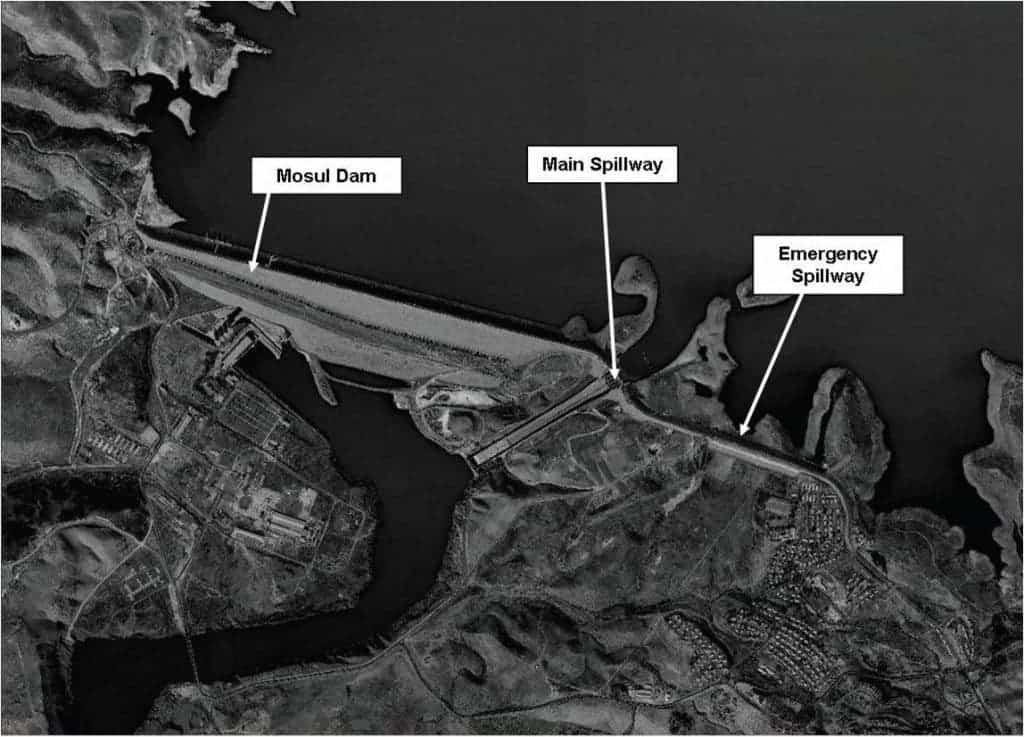
The engineering behind this dam is particularly interesting. The dam could only be built where it was if there was continuous maintenance, mostly for plugging holes in the bedrock it rests on. The near-continuous state of war in Iraq since '91 – most recently the brief occupation of the dam by ISIS – prevented that from happening, and the result is a predictable disaster. It's not clear at all that the Iraqi government will be able to muster the resources to save the dam, or all those people.
Wars have consequences, and some of them are really bad...
Maybe, just maybe, there really is a serious criminal investigation underway...
Maybe, just maybe, there really is a serious criminal investigation underway... I speak of the DOJ's investigation of Hillary Clinton's private email server carrying classified information. Yesterday's grant of immunity to a Hillary State Department staffer – one involved in setting up that email server – is a significant step, and one that's hard to imagine if there wasn't a serious investigation underway. These grants of immunity are offered in exchange for open testimony, generally only when the testimony of an insider can get the information needed. When someone has been granted immunity from prosecution, they can no longer rely on the right against self-incrimination – because they can't incriminate themselves when they have immunity.
It will be most interesting to see what comes out of this...
It will be most interesting to see what comes out of this...
Wednesday, March 2, 2016
A couple of busy days in Paradise...
A couple of busy days in Paradise... Yesterday morning my brother Scott emailed with some not-so-great news. He'd heard awful noises emanating from the basement, and subsequently he had no running water anywhere in the house. It wasn't anything obvious like a circuit breaker. I ran up to his cabin, found the pump controller, and it had a fault light showing. But what did that light actually mean? The well pump there was a type and brand unfamiliar to me. The pump is made by Grundfos and is a variable speed type. That means it varies it's speed as needed to keep the pressure steady no matter how much water is being drawn - and there is no conventional pressure tank. I knew nothing about such systems, and had never heard of the brand. So I did the obvious thing: I Googled it.
A minute later I was talking with Matt, a very knowledgeable fellow who led us through some basic troubleshooting. Shortly thereafter we decided we needed Matt to help us on site, so he threw some parts and tools into his truck and headed out to the cabin. He got there around 2:30, diagnosed the problem as the pump within 15 minutes, and then got right to work pulling the old dead pump, replacing it with a shiny new one. He'd brought all the needed parts, along with the right tools. Long before nightfall he had the new pump running, the we'll head reassembled, and lovely water flowing in the house.
Yet another stellar experience with a local craftsman...
Tuesday, March 1, 2016
As a manager and executive...
As a manager and executive ... I heard some version of this so many times: employees (or prospective employees) just not believing that the laws of economics should apply to their labor. That is, they didn't think their compensation (their pay) should be related directly to the value they delivered to the company.
I've heard many variations of this over the years, enough that they form patterns that I can now pick up very early in a conversation. For instance, there's the “my pay should be related to how hard I try” version, wherein the employee believes that what's actually accomplished is not important, but rather how hard one tries. Then there's the “but it’s the right thing to do for this cause I believe in” version, as if companies should pay their employees on the basis of a philanthropic goal, and not the company's profit. And then there's my all-time favorite: the “but I have this advanced degree!” version, wherein the employee believes that their credential should determine their pay, and not their actual ability or accomplishment.
All of my attempts to advise people with such beliefs were fruitless, so far as I could tell. They just went through life bitter and resentful about their compensation, which of course they generally believed was too low (exactly one person ever complained to me about being paid too much, though quite a few people really should have!). That one person was an interesting case: he worked for me in a company that was struggling, and very clearly understood that if he made less money he was less likely to be laid off. He was one of the most highly compensated engineers in the company at the time he made the request. What he didn't realize was that we often asked key people to take a pay cut in lieu of being laid off, and that's what we did with him on a subsequent round of expense cutting.
Reflecting on this makes me glad (once again!) that I'm retired...
I've heard many variations of this over the years, enough that they form patterns that I can now pick up very early in a conversation. For instance, there's the “my pay should be related to how hard I try” version, wherein the employee believes that what's actually accomplished is not important, but rather how hard one tries. Then there's the “but it’s the right thing to do for this cause I believe in” version, as if companies should pay their employees on the basis of a philanthropic goal, and not the company's profit. And then there's my all-time favorite: the “but I have this advanced degree!” version, wherein the employee believes that their credential should determine their pay, and not their actual ability or accomplishment.
All of my attempts to advise people with such beliefs were fruitless, so far as I could tell. They just went through life bitter and resentful about their compensation, which of course they generally believed was too low (exactly one person ever complained to me about being paid too much, though quite a few people really should have!). That one person was an interesting case: he worked for me in a company that was struggling, and very clearly understood that if he made less money he was less likely to be laid off. He was one of the most highly compensated engineers in the company at the time he made the request. What he didn't realize was that we often asked key people to take a pay cut in lieu of being laid off, and that's what we did with him on a subsequent round of expense cutting.
Reflecting on this makes me glad (once again!) that I'm retired...
Monday, February 29, 2016
Where can you get a good dinner near Logan?
Where can you get a good dinner near Logan? This post is aimed at giving some information to our fellow dog people who will be attending the 2016 Field Spaniel Society of America National Specialty show, which will be at the Cache County Fairgrounds in Logan in May.
All of the restaurants we talk about here are marked on this map.
You won't have any trouble finding a great place to eat dinner in Logan!
For a fancy, classy dinner close by the fairgrounds, you won't do better than Le Nonne. It's an upscale Italian restaurant frequented by people more full of themselves than most locals, and comes complete with oh-so-pretentious waiters and pricey wine – but the food really is outstanding and the atmosphere more like you'd find in a big city joint.
Jack's Wood-Fired Oven is one of our favorite haunts. Outstanding pizza and a selection of beer are what they're most known for, but we'd rank their soups amongst the best in the area – and their lemon cake dessert is terrific.
The Elements is within an easy walk of the fairgrounds, and is another place with a bit more class and atmosphere than usual for our area. We've found their menu a bit hit-and-miss, and variable from visit to visit – but still generally quite good. Their flavored lemonades (raspberry and mango!) are a favorite of ours, and they serve alcohol. Unusually for Logan, they're open on Mondays.
If you're looking for a place with laughter and free-flowing margaritas, Cafe Sabor is a Mexican restaurant (though if you're from Southern California or some other place overflowing with “real” Mexican restaurants, you might question that description :) The food isn't always particularly authentic, but it's tasty (especially after a margarita or three!) and plentiful.
For famously friendly service, belly-stuffing comfort food, and traditional diner fare, Angie's is the place to go. It's a little further away, but well worth it. It really lives up to its motto: “Where the locals eat” They do!
A slightly more exotic venue can be found at Thai House, a newly-opened restaurant just a few blocks from the fairground. It's decent Thai food in a nice setting, a bit pricier than we expected (restaurant prices around here are generally quite low). We suspect that the one time we went (just a few weeks ago) they were still getting their kinks ironed out – the Yelp reviews at the link are a star or two better than we'd have given it.
Last on our list, but certainly not the least: a local institution, the Maddox Ranch House. I've only listed it last because it's not in Logan at all – it's 25 miles to the southwest, in Perry. But ... if you're craving top-notch beef, then this is a restaurant you have got to find a way to get to. They raise their own beef cattle, which is probably all you need to know. Yes, it really is that good! I'm told their lamb, fish, and chicken are also excellent – but I've never gotten past the beef menu...
All of the restaurants we talk about here are marked on this map.
You won't have any trouble finding a great place to eat dinner in Logan!
For a fancy, classy dinner close by the fairgrounds, you won't do better than Le Nonne. It's an upscale Italian restaurant frequented by people more full of themselves than most locals, and comes complete with oh-so-pretentious waiters and pricey wine – but the food really is outstanding and the atmosphere more like you'd find in a big city joint.
Jack's Wood-Fired Oven is one of our favorite haunts. Outstanding pizza and a selection of beer are what they're most known for, but we'd rank their soups amongst the best in the area – and their lemon cake dessert is terrific.
The Elements is within an easy walk of the fairgrounds, and is another place with a bit more class and atmosphere than usual for our area. We've found their menu a bit hit-and-miss, and variable from visit to visit – but still generally quite good. Their flavored lemonades (raspberry and mango!) are a favorite of ours, and they serve alcohol. Unusually for Logan, they're open on Mondays.
If you're looking for a place with laughter and free-flowing margaritas, Cafe Sabor is a Mexican restaurant (though if you're from Southern California or some other place overflowing with “real” Mexican restaurants, you might question that description :) The food isn't always particularly authentic, but it's tasty (especially after a margarita or three!) and plentiful.
For famously friendly service, belly-stuffing comfort food, and traditional diner fare, Angie's is the place to go. It's a little further away, but well worth it. It really lives up to its motto: “Where the locals eat” They do!
A slightly more exotic venue can be found at Thai House, a newly-opened restaurant just a few blocks from the fairground. It's decent Thai food in a nice setting, a bit pricier than we expected (restaurant prices around here are generally quite low). We suspect that the one time we went (just a few weeks ago) they were still getting their kinks ironed out – the Yelp reviews at the link are a star or two better than we'd have given it.
Last on our list, but certainly not the least: a local institution, the Maddox Ranch House. I've only listed it last because it's not in Logan at all – it's 25 miles to the southwest, in Perry. But ... if you're craving top-notch beef, then this is a restaurant you have got to find a way to get to. They raise their own beef cattle, which is probably all you need to know. Yes, it really is that good! I'm told their lamb, fish, and chicken are also excellent – but I've never gotten past the beef menu...
Think about it...
Think about it... Via reader Simi L., who gave me a good belly laugh with this one and a few others:


Beautiful photos...

Sunday, February 28, 2016
Why I no longer subscribe to Scientific American...
Why I no longer subscribe to Scientific American... This is an excerpt from a piece by the scientist Dr. Tim Ball (personal web site), writing on Watts Up With That?
There was a time when Scientific American (SA) occupied a unique niche on the newsstands. It was a magazine about science for the public. It was genuine science usually written by scientists, not a popular pseudo-science magazine like all the others. It was interesting because most people did not understand much of what was written. People that knew about the topic realized it was a very broad overview, but realized it was for public consumption. They published fascinating articles drawing issues to public attention without political bias. Three I recall that were valuable in the climate debate were; John Eddy’s article on the missing sunspots; Stommel and Stommel’s piece on 1816, the year with no summer; and an early article about the influence on ocean temperature measurements of the switch from leather to metal buckets and then engine intakes.It's also why I won't be renewing my subscription to Science News, which I've subscribed to since the '70s. The sad truth is that these days I find better science reporting and analysis on blogs than in professionally edited magazines. The truth stands a much better chance of emerging from those who write from interest than it does from those who write for the commercial opportunity. It's a different example of the same thing that's happened to newspapers and magazines reporting on politics...
Now, SA is a sensationalist, biased, apologist outlet for the IPCC global warming science. It appears the transition was driven, even before the full impact of the internet, by declining sales. Now, in my opinion, SA is no different from any of the other pseudo-science sensationalist magazines. Coincident with the shift was a decline in contributions from scientists and an increase in articles by professional (?) journalists. With climate articles, the majority came from scientists directly involved in the IPCC deception. Doom and gloom and sensationalism sells and even better if it fits the political bias of those involved in producing the magazine.
Paradise ponders...
Paradise ponders... Slept in late this morning – didn't wake up until 6 am, though I did get up around 2 am to let Mo'i out. Our old guy is almost 17 years old now, and still doing ok. We've got him on antibiotics now, because we discovered that he had a urinary tract infection – and those seem to be making a difference. He's actually going walkabout around the back yard now, which he hasn't been doing for several months. Yesterday at his dinner time he was jumping up on my leg to get at the food; apparently his arthritis isn't bothering him as much, either. Maybe the warmer temps? That old fellow is on antibiotics, arthritis pain meds, high blood pressure meds, and thyroid meds. The difference before and after meds is still completely amazing to us – a year ago we thought he wasn't long for this world; he looked terrible and clearly felt terrible. Once we got the meds figured out, he's still with us, and doing just fine.
Had Debbie's patented baked Ora King salmon yesterday. Damn, that is fine fish! This morning she made another chocolate sheet cake. Just what we need lying about the house :)
Had Debbie's patented baked Ora King salmon yesterday. Damn, that is fine fish! This morning she made another chocolate sheet cake. Just what we need lying about the house :)
Saturday, February 27, 2016
On Trump...
On Trump... A good piece by Eliot Cohen, writing at The American Interest. An excerpt:
Moral rot.Do go read the whole thing...
Politicians have, since ancient Greece, lied, pandered, and whored. They have taken bribes, connived, and perjured themselves. But in recent times—in the United States, at any rate—there has never been any politician quite as openly debased and debauched as Donald Trump. Truman and Nixon could be vulgar, but they kept the cuss words for private use. Presidents have chewed out journalists, but which of them would have suggested that an elegant and intelligent woman asking a reasonable question was dripping menstrual blood? LBJ, Kennedy, and Clinton could all treat women as commodities to be used for their pleasure, but none went on the radio with the likes of Howard Stern to discuss the women they had bedded and the finer points of their anatomies. All politicians like the sound of their own names, but Roosevelt named the greatest dam in the United States after his defeated predecessor, Herbert Hoover. Can one doubt what Trump would have christened it?Roosevelt named the greatest dam in the United States after his defeated predecessor, Herbert Hoover. Can one doubt what Trump would have christened it?
Headline of the day...
Headline of the day...
Meerkat expert cleared of assaulting monkey trainer in love spat over llama-keeperI'm not quite sure how one could top that one!
On the other hand...
On the other hand ... this one from my pistol-packing mama I understand completely!
An old priest lay dying in a hospital. He had served the people of the nation’s capital for many years.
He motioned for the nurse to come near.
“Yes father?” said the nurse.
“I would really like to see Hillary Clinton and Barack Obama before I die” whispered the priest.
“I will see what I can do” said the nurse.
The nurse sent the request to Washington and waited for a response.
Soon an answer came back; Both Hillary Clinton and Barack Obama would be delighted to visit the priest.
As they were driven to the hospital Hillary commented to Obama “I don’t know why this old priest wants to see us, but it certainly will help our images and may even help my election prospects”.
Obama agreed it was a good thing.
When they arrived at the priest’s room the priest took Hillary’s hand in his right hand and Obama’s hand in his left hand. There was silence and a look of serenity on the old priest’s face.
Finally Obama spoke “Father of all people you could have chosen, why did you chose us to be with you at this time when your end is so near?”
The old priest slowly replied “I have always tried to pattern my life and behavior after our Lord and Savior Jesus Christ.”
“Amen” said Hillary.
“Amen” said Obama.
The old priest continued “Jesus Christ our savior died between two lying thieving bastards and I would like to do the same.”
My mom sends me things...
My mom sends me things ... and I'm not always sure how to interpret them. Like this one, for example:
Mama taught her well! You've got to love this little girl. What a woman she'll make.
A teacher asked her class, "What do you want out of life?" A little girl in the back row raised her hand and said, "All I want out of life is four little animals, just like my Mom always says".
The teacher asked, "Really and what four little animals would that be?"The little girl said, "A mink on my back, a jaguar in the garage, a tiger in the bed and a jackass to pay for all of it.
The teacher got a coughing fit and had to leave the room.
Northern Pluto...

Friday, February 26, 2016
Paradise ponders...
Paradise ponders... We had a late lunch yesterday at one of our favorite haunts: Jack's Wood-fired Oven. The soup and pizza, were (as usual) delicious. They had a new dessert, and after hearing it described we decided to try it. They call it “zeppoti”, and so far as I can tell that's a name they made up. No matter – it's great! They take a bit of pizza dough, stretch it, slather on some Nutella, fold it over, bake it, sprinkle it with a little powdered sugar, and voila! Zeppoti, which we disappeared quite quickly! How could it be bad if it has Nutella on it?
Then we had an extra surprise: when I went to pay for the meal, the waitress brought us a check for $5 (the price of the dessert). When I called her on the mistake, she said that our meal had already been paid for! On walking into the restaurant, we were greeted by Lawrence W., the fellow who sold me my tractor nearly two years ago. Turns out he bought our lunch and never said a word to us about it. I've no idea why he did this, but it sure was a pleasant surprise!
Afterwards we went out to Hardware Ranch on our usual wildlife hunting excursion. We saw plenty of deer and elk, but no moose. On the dammed pond upstream from the Hyrum power station we saw three smallish swans feeding. Beautiful birds, they were...
Then we had an extra surprise: when I went to pay for the meal, the waitress brought us a check for $5 (the price of the dessert). When I called her on the mistake, she said that our meal had already been paid for! On walking into the restaurant, we were greeted by Lawrence W., the fellow who sold me my tractor nearly two years ago. Turns out he bought our lunch and never said a word to us about it. I've no idea why he did this, but it sure was a pleasant surprise!
Afterwards we went out to Hardware Ranch on our usual wildlife hunting excursion. We saw plenty of deer and elk, but no moose. On the dammed pond upstream from the Hyrum power station we saw three smallish swans feeding. Beautiful birds, they were...
Thursday, February 25, 2016
Paradise ponders...
Paradise ponders... Yesterday Debbie made us a new dish. She's on a roll with these things! This time it was a pasta dish, spaghetti tossed with lemon, parsley, asparagus, mushrooms, bacon, cheese, a little cream, and a little olive oil. It was great!
The snow is starting to melt all over the valley. Patches of our yard and our fields are now snow-free. Mud season is upon us shortly :)
One of our neighbor has three bright kids, 11, 13, and 14 years old, who are all very interested in math and programming. I'm going to start tutoring them next Saturday, and they seem to be pretty excited about this. If that enthusiasm is maintained, this could be an interesting experience for both of us. If not ... I'm prepared to call it off, though their mom (Maria) will be very disappointed if I do...
This morning we put together a kit, a DVD rack. Debbie just finished organizing them all onto the new shelves, and she's quite pleased with the result. I got a good laugh from one piece of that kit: a black marker pen packaged with a slip of paper explaining that it was for touching up scratches, etc. It said that the furniture industry called this “deluxing”, and that this was a deluxing pen that we should save. I figured that was some PR fluff on their part, but I Googled it – and it really is a furniture industry term!
The snow is starting to melt all over the valley. Patches of our yard and our fields are now snow-free. Mud season is upon us shortly :)
One of our neighbor has three bright kids, 11, 13, and 14 years old, who are all very interested in math and programming. I'm going to start tutoring them next Saturday, and they seem to be pretty excited about this. If that enthusiasm is maintained, this could be an interesting experience for both of us. If not ... I'm prepared to call it off, though their mom (Maria) will be very disappointed if I do...
This morning we put together a kit, a DVD rack. Debbie just finished organizing them all onto the new shelves, and she's quite pleased with the result. I got a good laugh from one piece of that kit: a black marker pen packaged with a slip of paper explaining that it was for touching up scratches, etc. It said that the furniture industry called this “deluxing”, and that this was a deluxing pen that we should save. I figured that was some PR fluff on their part, but I Googled it – and it really is a furniture industry term!
This is exactly...
This is exactly ... what many of my Estonian friends are afraid of:
If push ever came to shove, we would sell the Estonians to Vladimir Putin for 30 counterfeit rubles and a mess of beet soup. And we would throw in the rest of the Baltic states for good measure.Read the whole (excellent) piece...
Wednesday, February 24, 2016
Is there a skier...
Claire Berlinski...
Claire Berlinski ... seems to share my sense of doom. Read the comment threads...
Quote of the day...
Quote of the day... This time from Nick Gillespie, writing at Reason:
It's easy to be cynical about this (and to be frankly terrified of a Trump presidency), but Trump is the least cynical politician in the 2016 race.That “least cynical politician” is a fascinating measure, isn't it?
An igniting match...
Farming is a dangerous occupation...
Farming is a dangerous occupation ... much more so than most urban folks realize. Yesterday evening that fact struck us here: a young man was killed in an accident at Rosehill Dairy, just 3 miles north of us (and the source of the milk we drink every day)...
The reign of Moore's Law...
The reign of Moore's Law ... may be about to end. Or not; the end of Moore's Law has been predicted a few hundred times before, too :)
But suppose for a moment that it does end, that we really have reached the end of IC density increases. The linked article talks about other things that will almost certainly be explored to keep improving computers. One possibility I personally find intriguing: it may become more important again – like it was up until roughly 1990 – for programmers to know how to write efficient programs.
At the moment, the need for algorithmic efficiency has been nearly wiped out by the rapidly growing power of computers. The exceptions are relatively few and far between. When I started programming back in the '70s, the exact opposite was true – nearly every program needed to be written in a very efficient way, as the constraints of computer speed and limited memory were quite severe.
Maybe the pendulum will start to swing back the other way again...
But suppose for a moment that it does end, that we really have reached the end of IC density increases. The linked article talks about other things that will almost certainly be explored to keep improving computers. One possibility I personally find intriguing: it may become more important again – like it was up until roughly 1990 – for programmers to know how to write efficient programs.
At the moment, the need for algorithmic efficiency has been nearly wiped out by the rapidly growing power of computers. The exceptions are relatively few and far between. When I started programming back in the '70s, the exact opposite was true – nearly every program needed to be written in a very efficient way, as the constraints of computer speed and limited memory were quite severe.
Maybe the pendulum will start to swing back the other way again...
Things I'd never heard of, part 9,442...
Things I'd never heard of, part 9,442... There's a thing called an “escape room”, and they're all over the world. There's even several near us. They're a big, profitable business.
The ones near us charge around $20 for the privilege of being locked in a room with a dozen or so strangers. You have 90 minutes to collectively try to solve the puzzles and riddles in the room that will allow you to escape. If you fail in that amount of time, they just let you out. That's it – that's the entire “entertainment”.
I'm afraid this is (yet another) one of those things that I will never understand. Why on earth would I pay $20 for something like that, when (for example) $20 worth of gas will take me to a wonderful place in nature, or when $20 each will buy Debbie and I a great meal at a local restaurant, or when $20 will buy me several great books, or when I can learn anything I want to learn for free on the Internet. I just don't get it...
The ones near us charge around $20 for the privilege of being locked in a room with a dozen or so strangers. You have 90 minutes to collectively try to solve the puzzles and riddles in the room that will allow you to escape. If you fail in that amount of time, they just let you out. That's it – that's the entire “entertainment”.
I'm afraid this is (yet another) one of those things that I will never understand. Why on earth would I pay $20 for something like that, when (for example) $20 worth of gas will take me to a wonderful place in nature, or when $20 each will buy Debbie and I a great meal at a local restaurant, or when $20 will buy me several great books, or when I can learn anything I want to learn for free on the Internet. I just don't get it...
It's 2016...
It's 2016 ... and the National Highway Traffic Safety Administration (NHTSA) just now approved a rear-view mirror that uses cameras. And they only approved it because it was a combined mirror/camera.
Let's get one thing out of the way right at the start: cameras and video screens readily available for at least the last ten years are unequivocally superior to a plain glass mirror. They have wider fields of view, they're unaffected by the placement of windows or interior obstructions, they see better in both low and high light situations. In addition to those safety considerations, they eliminate the safety problem (to pedestrians) and aerodynamic problems of external mirrors. They're better in every way.
But car companies are not allowed to build them into cars. Not allowed.
You can add one to your own car if you'd like, though. No problem with that.
Even if you believed (which I do not) that a government bureaucracy should be regulating something like a rear-view mirror ... it's still unconscionable that the NHTSA is taking so long to approve these things. If anything, they should have mandated rear (and side) view cameras years ago. It's as though some government agency required the use of vacuum tubes in radios, or vinyl records for your music.
Man, I really loathe big government. It blocks progress in so many stupid and costly ways...
Let's get one thing out of the way right at the start: cameras and video screens readily available for at least the last ten years are unequivocally superior to a plain glass mirror. They have wider fields of view, they're unaffected by the placement of windows or interior obstructions, they see better in both low and high light situations. In addition to those safety considerations, they eliminate the safety problem (to pedestrians) and aerodynamic problems of external mirrors. They're better in every way.
But car companies are not allowed to build them into cars. Not allowed.
You can add one to your own car if you'd like, though. No problem with that.
Even if you believed (which I do not) that a government bureaucracy should be regulating something like a rear-view mirror ... it's still unconscionable that the NHTSA is taking so long to approve these things. If anything, they should have mandated rear (and side) view cameras years ago. It's as though some government agency required the use of vacuum tubes in radios, or vinyl records for your music.
Man, I really loathe big government. It blocks progress in so many stupid and costly ways...
Another taxpayer-funded boondoggle...
Another taxpayer-funded boondoggle ... that's biased towards progressives. No surprise, really: the National Endowment for the Arts spends (in recent years) around $150 million of taxpayer money annually. Some of this goes to art with a political message, and that message is overwhelmingly progressive – definitely not conservative and not libertarian.
Outrageous? Yes. Should we fix it? Yes. How? By ending taxpayer subsidies of art! I don't really care that the art has a progressive bias. What I care about is that I'm helping pay for it! Nobody asked me if I wanted to do that, but if they did, the answer would be loud and clear: no! That would be true even if the art being subsidized had a message near and dear to me, because I don't believe that even one taxpayer dollar should go to something that certainly isn't an essential communal service...
Outrageous? Yes. Should we fix it? Yes. How? By ending taxpayer subsidies of art! I don't really care that the art has a progressive bias. What I care about is that I'm helping pay for it! Nobody asked me if I wanted to do that, but if they did, the answer would be loud and clear: no! That would be true even if the art being subsidized had a message near and dear to me, because I don't believe that even one taxpayer dollar should go to something that certainly isn't an essential communal service...
What it's like to be an introvert...

Ever since I discovered what an introvert really is, and that I was one, I've been fascinated by the impacts of introversion vs. extroversion. I was in a profession (engineering) where introverts have a distinct intellectual advantage, and yet the management of engineering organizations is dominated by extroverts – a situation that's bound to cause friction (and it does!).
Perhaps the most obvious example of this is the movement toward “open offices” (cubicles) for engineering teams – something only an extrovert could love, and that's guaranteed to lower an introvert's productivity. Extroverts were positive that open offices would improve the productivity of engineering teams, but ... not so much (as engineering teams are, generally, dominated by introverts). What's most interesting to me about this is how the extrovert proponents of open offices just don't get it. It is – I think perhaps literally – beyond their ken.
My last employer was a great example of this. The founder is a brilliant engineer and a flaming extrovert, and he was certain that having engineers work together in shared spaces was one of the keys to engineering creativity and productivity. Nothing I (or anyone else) could say would dissuade him from this. I'm not sure he still holds this belief, though, as it must be true that the results are discouraging for him...
Tuesday, February 23, 2016
Curiosity, near and far...
Curiosity, near and far... A couple of photos from today's dump of raw photos taken by Curiosity. At left, a view into the distance – and at right, an extreme closeup of an interesting rock...


Things I didn't know...
Things I didn't know... I use IntelliJ IDEA, from Jetbrains, as my Java and JavaScript development environment. I've been using it for years, since (I think) 2003. I started using it at the recommendation of a friend, and immediately liked it better than its main competitors (all of which I was familiar with). Later, when I worked for ServiceNow for seven years, I used their standard IDE, which was Eclipse – but still used IntelliJ IDEA for my personal projects. Since I retired, I've switched back to only IntelliJ IDEA.
During all that time I've thought of IntelliJ IDEA as a sort of edge product, one of those things that a few borderline nut cases like, while everyone else uses the perfectly good (and free!) Eclipse. I had no idea that IntelliJ IDEA, along with Jetbrains other products, have been gobbling the IDE space up. I'm very glad to hear it, though – their products are first rate, the community is great, and they just keep making it better all the time (as the linked article points out).
Endorsed!
I had the chance to meet some of the Jetbrains folks a few years ago. Their development center (or at least, one of them) is in St. Petersburg, Russia, and their offices were near by those of a company I worked for at the time. When I wrote and told them I'd be in town, they invited me down to their offices for a visit. I had a grand time talking with some of their developers. Since it was Russia, of course we also had vodka and chocolate :)
During all that time I've thought of IntelliJ IDEA as a sort of edge product, one of those things that a few borderline nut cases like, while everyone else uses the perfectly good (and free!) Eclipse. I had no idea that IntelliJ IDEA, along with Jetbrains other products, have been gobbling the IDE space up. I'm very glad to hear it, though – their products are first rate, the community is great, and they just keep making it better all the time (as the linked article points out).
Endorsed!
I had the chance to meet some of the Jetbrains folks a few years ago. Their development center (or at least, one of them) is in St. Petersburg, Russia, and their offices were near by those of a company I worked for at the time. When I wrote and told them I'd be in town, they invited me down to their offices for a visit. I had a grand time talking with some of their developers. Since it was Russia, of course we also had vodka and chocolate :)
Zipf's Law holds...
Zipf's Law holds... Zipf's Law is one of those observed mathematical relationships that is surprising because it's so simple – and because there's no mechanism to explain it. I first ran into it when studying cryptography in the Navy, back in the '70s. Basically, Zipf's law says that in any given text, the most common word will appear twice as often as the second most common word, three times as often as the third most common, and so on. If you're trying to decrypt the bad guy's messages, and the bad guys used an old-fashioned cipher or code, knowing the way that words (and letters) are distributed can help. That's much less true with modern ciphers, though.
Anyway, I remember thinking at the time that Zipf's Law was too simple to be for real. I imagined that it was an artifact of military messages, because of the strange, passive voice filled, stilted, and acronym-stuffed prose the military favored. Turns out that's not the case – in a recent test against the entire text held by the Gutenberg Project, Zipf's Law largely still holds. How bizarre!
Anyway, I remember thinking at the time that Zipf's Law was too simple to be for real. I imagined that it was an artifact of military messages, because of the strange, passive voice filled, stilted, and acronym-stuffed prose the military favored. Turns out that's not the case – in a recent test against the entire text held by the Gutenberg Project, Zipf's Law largely still holds. How bizarre!
Collectivization...
Collectivization... Friend, former colleague, and fellow retiree Doug W. passed along this quote:
When I was first reading about current events (late '60s, early '70s), the word “collective” had very negative connotations for any Americans who didn't identify as Communist. These days one doesn't hear the word very often, but we are collectivizing, steadily. Our healthcare system is heading quickly toward a “single payer” system – and that fits the definition of a collective perfectly. The discussion about “minimum income” – which in some countries is very close to becoming the law of the land (I'm looking at you, Finland and Switzerland!) – is a move toward collectivization. For me, at least, calling single-payer healthcare collectivized healthcare makes it sound much worse, and more threatening. I wonder if that's true for younger people, those who likely have no idea what a collectivized Soviet farm was like?
It's been almost ten years since Buckley died, and proponents of liberty still have no intellectual support to replace him. We sure could use a new Buckley right about now. Can you imagine what his quips on The Donald, The Hillary, and The Bern might be like?
Back in the 1930s we were told we must collectivize the nation because the people were so poor. Now we are told we must collectivize the nation because the people are so rich.It's been a long time since I last saw that, and pondered on it. There is much truth there, condensed into a very small number of words.
– William F. Buckley, Jr.
When I was first reading about current events (late '60s, early '70s), the word “collective” had very negative connotations for any Americans who didn't identify as Communist. These days one doesn't hear the word very often, but we are collectivizing, steadily. Our healthcare system is heading quickly toward a “single payer” system – and that fits the definition of a collective perfectly. The discussion about “minimum income” – which in some countries is very close to becoming the law of the land (I'm looking at you, Finland and Switzerland!) – is a move toward collectivization. For me, at least, calling single-payer healthcare collectivized healthcare makes it sound much worse, and more threatening. I wonder if that's true for younger people, those who likely have no idea what a collectivized Soviet farm was like?
It's been almost ten years since Buckley died, and proponents of liberty still have no intellectual support to replace him. We sure could use a new Buckley right about now. Can you imagine what his quips on The Donald, The Hillary, and The Bern might be like?
Fish and chips excellence...
Fish and chips excellence... We needed to go to Ogden yesterday. If you're not familiar with Ogden, it's a fair-sized city about 30 miles north of Salt Lake City, and about 30 miles south of us. As we were there in the early afternoon, we decided to try a restaurant we'd not been to before. We used Yelp to pick it: the best-rated place in Ogden that was open on Monday (most restaurants here close Sundays and Mondays). The place we chose is called Sea Bears Ogden Fish House. All we knew when we walked in is that Yelpers liked the place. We had no idea what a treat we were in for!
The inside is clean and homey, with inviting decor and low lighting. We were greeted by the male half of the couple who owns the place, fully outfitted in traditional Scottish costume, including a kilt. Within a few minutes of conversation we discovered that his whole family works there, they're politically very compatible with us, and his wife (the cook and waitress) usually is packing heat (open carry), though she wasn't yesterday – and if you don't like that, they'll gladly tell you about some other places you can get a good meal. Their sons also work there, though we didn't see them and I don't know what they do.
We ordered cod (they also have halibut, albeit at a higher price), and I asked for sweet potato fries instead of traditional chips. I also ordered a crab cake (at $3 I could hardly resist!), and raspberry lemonade. When our orders arrived, they also had cole slaw, which I didn't even realize was included.
How was it, you ask? The fish was top notch, one of the five or six best I've ever had (and that includes memorable fish-and-chip experiences in England, Scotland, and Singapore). Next time I'm going to try the halibut. The sweet potato fries were excellent, not oily at all. The cole slaw was superb – the perfect blend of sweet and sour, and made with fresh Napa cabbage and carrots that had the dressing applied just before it was served. The crab cake was ok; nowhere near the best I've had, but certainly edible (and $3!). The lemonade was real, made right there with fresh lemons and raspberries – awesome!
After polishing off that treat, we joked with the owner that we'd love to have him open a branch in Logan. To our surprise, he reacted by telling us it was already something they were considering. It turns out that he and his wife grew up in Logan, and that they're doing well in Ogden and are looking to expand. Holy cow! So we've been enlisted to keep our eyes open for an opportunity – especially a disused restaurant that they might be able to lease complete with a kitchen.
Oh, that would be great if they were to open up here! As things are now, though, they've just added one more reason for us to venture out of Cache Valley now and again...
The inside is clean and homey, with inviting decor and low lighting. We were greeted by the male half of the couple who owns the place, fully outfitted in traditional Scottish costume, including a kilt. Within a few minutes of conversation we discovered that his whole family works there, they're politically very compatible with us, and his wife (the cook and waitress) usually is packing heat (open carry), though she wasn't yesterday – and if you don't like that, they'll gladly tell you about some other places you can get a good meal. Their sons also work there, though we didn't see them and I don't know what they do.
We ordered cod (they also have halibut, albeit at a higher price), and I asked for sweet potato fries instead of traditional chips. I also ordered a crab cake (at $3 I could hardly resist!), and raspberry lemonade. When our orders arrived, they also had cole slaw, which I didn't even realize was included.
How was it, you ask? The fish was top notch, one of the five or six best I've ever had (and that includes memorable fish-and-chip experiences in England, Scotland, and Singapore). Next time I'm going to try the halibut. The sweet potato fries were excellent, not oily at all. The cole slaw was superb – the perfect blend of sweet and sour, and made with fresh Napa cabbage and carrots that had the dressing applied just before it was served. The crab cake was ok; nowhere near the best I've had, but certainly edible (and $3!). The lemonade was real, made right there with fresh lemons and raspberries – awesome!
After polishing off that treat, we joked with the owner that we'd love to have him open a branch in Logan. To our surprise, he reacted by telling us it was already something they were considering. It turns out that he and his wife grew up in Logan, and that they're doing well in Ogden and are looking to expand. Holy cow! So we've been enlisted to keep our eyes open for an opportunity – especially a disused restaurant that they might be able to lease complete with a kitchen.
Oh, that would be great if they were to open up here! As things are now, though, they've just added one more reason for us to venture out of Cache Valley now and again...
Monday, February 22, 2016
Fun with numbers...
Fun with numbers... I just finished writing some software (for the blog server I'm creating) that figures out whether it makes more sense to send a larger image already on the server, or a smaller image made by scaling the larger image down. Part of doing that required making an estimate of how much computer time it would take to scale down the larger image. That turns out to be (roughly) proportional to how many pixels on the larger image have to be inspected to create a pixel on the scaled-down image, multiplied by the number of pixels in the scaled-down image. Got that? :)
Well, calculating the number of pixels that needed to be inspected turned out to be an interesting problem in geometry and algebra. It boiled down to this formula:
 Where:
t is the number of pixels in the target (scaled down) image
x is the floor of the ratio of source (big image) to target pixel width
y is the same ratio minus x
It took me a while to derive that formula, but to my great satisfaction it did a pretty good job at estimating the time. In my tests it was particularly good with PNG files, and within 20% or so on JPG – way better than I actually need for my purposes.
I don't often get to play with numbers like this for the sorts of software I write. When I get the chance, it's fun! Especially when it works :)
Well, calculating the number of pixels that needed to be inspected turned out to be an interesting problem in geometry and algebra. It boiled down to this formula:
t is the number of pixels in the target (scaled down) image
x is the floor of the ratio of source (big image) to target pixel width
y is the same ratio minus x
It took me a while to derive that formula, but to my great satisfaction it did a pretty good job at estimating the time. In my tests it was particularly good with PNG files, and within 20% or so on JPG – way better than I actually need for my purposes.
I don't often get to play with numbers like this for the sorts of software I write. When I get the chance, it's fun! Especially when it works :)
Curiosity is looking at weird rocks...

Sunday, February 21, 2016
What a world we live in (part 63,992)...
What a world we live in (part 63,992)... For the past few months, I've been playing Scrabble with a new partner, a friend of my sister whom I've never actually met. She's a computer science and math professor, and we play our Scrabble games over the Internet. Her name is Jo, and we've played well over 100 games at this point. I'm ahead in our little competition, but I am in awe of her. Why? Well, for starters, English is not her first language. Jo is Polish. She grew up in the Soviet Union, lived through its collapse, and somewhere along the line picked enough English to be a respectable Scrabble competitor. If you know the game, then you know that's pretty amazing! Then there's Jo's sheer determination -- she keeps right on playing even after getting whipped badly several times in a row.
Yup. I am in awe...
Update: Jo has corrected me – she did not grow up in the Soviet Union, but rather in Poland. While we in the West didn't differentiate very much between the actual Soviet Union and its satellite countries, in fact they actually were different questions. To the citizens of those countries, that's a big distinction!
Update: Jo has corrected me – she did not grow up in the Soviet Union, but rather in Poland. While we in the West didn't differentiate very much between the actual Soviet Union and its satellite countries, in fact they actually were different questions. To the citizens of those countries, that's a big distinction!
The “Jersey Way”...
The “Jersey Way”... Via my pistol-packing, proud New Jerseyan mom:
The Jersey WayThe Jersey Way, indeed. The bad news is that contractors from the other 49 states have also figured this out...
Three contractors are bidding to fix a broken fence at the White House in D.C. – one from New Jersey, another from Tennessee and the third from Florida. They go with a White House official to examine the fence.
How it works:
The Florida contractor, Jonathan, takes out a tape measure and does some measuring, then works some figures with a pencil. "Well", he says, "I figure the job will run about $900: $400 for materials, $400 for my crew and $100 profit for me."
Cletus, the Tennessee contractor also does some measuring and figuring, then says, "I can do the job for $700: $300 for materials, $300 for my crew and $100 profit for me.
Vito from Jersey doesn't measure or figure, but leans over to the White House official and whispers, "$2,700".
The official, incredulous, says, "You didn't even measure like the other guys! How did you come up with such a high figure?"
The New Jersey contractor whispers back, "$1000 for me, $1000 for you, and we hire the guy from Tennessee to fix the fence."
"Done!" replies the government official.
Paradise ponders...
Paradise ponders... Chicken and dumpling soup is a good thing :) So is chocolate cake! It's a tea-and-chocolate-cake kind of morning, too. Although after the political results yesterday, something a little stronger (like 100% ethanol) might be in order...
We ended up getting about 2" of snow, and now we've got another 1 to 3" in the forecast for tomorrow (Monday). Sigh.
Oh, well. It's a chance to get some more work done on my blog software, and perhaps to watch a movie with my honey...
We ended up getting about 2" of snow, and now we've got another 1 to 3" in the forecast for tomorrow (Monday). Sigh.
Oh, well. It's a chance to get some more work done on my blog software, and perhaps to watch a movie with my honey...
Saturday, February 20, 2016
Just yesterday...
Just yesterday ... we were delighted by a weather forecast for ten whole days of no precipitation and above-freezing temperatures. This morning we got up ... and it's snowing. Forecast still said no precipitation. An hour later, there's about two inches of snow on the ground – and suddenly the forecast says 100% chance of snow, about an inch. Now it's three hours later, and the forecast says 1 - 3 inches.
I'm beginning to think the weather folks here are just making this stuff up, then looking out the window to see what happened...
I'm beginning to think the weather folks here are just making this stuff up, then looking out the window to see what happened...
Friday, February 19, 2016
Nine years old...

There's a chocolate cake in the oven right now, and later today we're making chicken and dumplings. Somehow this seems very appropriate :)
Thursday, February 18, 2016
I find it strangely satisfying...

Today I just finished the first user interface component (a sign-in screen). To make that work, a lot of server infrastructure had to work correctly. And it did! For those of you who aren't programmers, user interfaces are fiddly, picky things – and in addition, web user interfaces (which is what I'm doing) are full of quirks and bizarreness. It's challenging even for the experts, and I am not expert on user interfaces. So it's very satisfying to prove to myself that I can still do this, even with my vacuum tube nurtured ancient technology brain...
One of these fine days – at least a couple months off yet – I will be hosting all of my blogs on my new self-written server, running from a virtual machine in Amazon's cloud!
Troubling...
Troubling ... this sort of thing is. But what could be done about it? Other than shining light on the issue (as Claire Berlinski does in the post linked there), this is a sort of corruption that stays hidden. You might suspect someone of benefiting from dishonest writings, but how could you possibly know? And even if you did, what could you do about it? So far as I know, there's nothing illegal about it...
When I think about...
When I think about ... how political outcomes might be manipulated, these days I consider this the most dangerous – far more so than voting machine manipulation, outright corruption, and so on. Why? Because (a) the capability already exists, and (b) it's detectable only through a massive effort, and who would fund that?
I'd be surprised if this isn't already happening. Not necessarily with Google, but with any influential web site. It's definitely already happening on sites where it's obvious there's political bias (consider NPR, the New York Times, HotAir, Fox News, etc.). Where it's dangerous is where you don't think there's bias...
I'd be surprised if this isn't already happening. Not necessarily with Google, but with any influential web site. It's definitely already happening on sites where it's obvious there's political bias (consider NPR, the New York Times, HotAir, Fox News, etc.). Where it's dangerous is where you don't think there's bias...
Wednesday, February 17, 2016
Tim Cook is right on this one...
Tim Cook is right on this one... We really, really don't want the government to be able to get access to our devices. Smartphone owners, for the most part, have no idea how much information is on their phones. The phones know where you've been, what calls or messages you've received and sent, possibly intimate photos and video, and (depending on the apps installed) may also know every key you've pressed, every web site you've visited, and even may record your conversations! It's no surprise that the government would like to have access to that. There's also no doubt that having access will help them convict guilt people. The problems start arising when you consider how it could be used to help convict innocent people (as every new law enforcement technology has done), and how it will be misused and abused.
I read an example not long ago of such misuse, but I couldn't find the article. The gist of it was this: a woman was murdered in a brothel, in Mexico. The woman was a famous celebrity of some sort, and there was enormous pressure to find the murderer. The police started examining the smart phones of anyone they arrested, looking at the GPS records in the phone to see if they'd been at the right place, at the right time to have committed the murder. A few weeks after the murder, they stopped a businessman for speeding – and after examining his phone, determined that he'd driven by the brothel at the right time. That evidence was presented to the jury, and he was convicted and sentenced to life in prison. What the jury was not told was that he had driven by at 70 MPH! The story I read was of his appeal, and of the fight this man is going through to have that latter bit of information presented to the appeal jury. That's the sort of thing one can look forward to if the government has easy access to the trove of information in smart phones...
The New York Times, of all places, has a reasonably balanced overview of the issue. There's much more, all over the web, ranging over the entire spectrum of possible responses...
I read an example not long ago of such misuse, but I couldn't find the article. The gist of it was this: a woman was murdered in a brothel, in Mexico. The woman was a famous celebrity of some sort, and there was enormous pressure to find the murderer. The police started examining the smart phones of anyone they arrested, looking at the GPS records in the phone to see if they'd been at the right place, at the right time to have committed the murder. A few weeks after the murder, they stopped a businessman for speeding – and after examining his phone, determined that he'd driven by the brothel at the right time. That evidence was presented to the jury, and he was convicted and sentenced to life in prison. What the jury was not told was that he had driven by at 70 MPH! The story I read was of his appeal, and of the fight this man is going through to have that latter bit of information presented to the appeal jury. That's the sort of thing one can look forward to if the government has easy access to the trove of information in smart phones...
The New York Times, of all places, has a reasonably balanced overview of the issue. There's much more, all over the web, ranging over the entire spectrum of possible responses...
Tuesday, February 16, 2016
Fire in Paradise...
Fire in Paradise... In our furnace, that is. Our newly repaired furnace!
The experience reminds us once again of why we love living here. We had two new furnaces installed in May 2014 to replace the aged ones that came with the house. The fellow who advised me and did the work – Ryan Osborn, owner of Leading Edge Heating and Air Conditioning (435-994-0666) – recommended a Carrier model and installed them. He did a great job, cleaning up some shoddy work done on the original furnaces – plus he helped me repair an irrigation riser that I knocked off with my lawn mower (the first of several, alas).
Now fast forward to last week, nearly two years after he installed them. We had a problem with the downstairs furnace, so I gave him a call. He instantly accepted responsibility and promised (and delivered) quick action. Four visits later, plus a trip for his sidekick Joe down to Ogden to pick up parts, they had the problem (which was a weird one, naturally) diagnosed, with the parts covered under warranty. Today he's going to preemptively order (and later install) the same parts for our other (identical) furnace. I'm currently trying to figure out how to pay them something for their time, but so far he's not letting me.
This is so different than our normal experience in California – and yet here it's so normal that it is the expectation. Honesty and hard work are the norm here, and it's still hard for us to get used to that after 40 years in the very different culture of California...
The experience reminds us once again of why we love living here. We had two new furnaces installed in May 2014 to replace the aged ones that came with the house. The fellow who advised me and did the work – Ryan Osborn, owner of Leading Edge Heating and Air Conditioning (435-994-0666) – recommended a Carrier model and installed them. He did a great job, cleaning up some shoddy work done on the original furnaces – plus he helped me repair an irrigation riser that I knocked off with my lawn mower (the first of several, alas).
Now fast forward to last week, nearly two years after he installed them. We had a problem with the downstairs furnace, so I gave him a call. He instantly accepted responsibility and promised (and delivered) quick action. Four visits later, plus a trip for his sidekick Joe down to Ogden to pick up parts, they had the problem (which was a weird one, naturally) diagnosed, with the parts covered under warranty. Today he's going to preemptively order (and later install) the same parts for our other (identical) furnace. I'm currently trying to figure out how to pay them something for their time, but so far he's not letting me.
This is so different than our normal experience in California – and yet here it's so normal that it is the expectation. Honesty and hard work are the norm here, and it's still hard for us to get used to that after 40 years in the very different culture of California...
Interesting piece...
Interesting piece ... by a scientist (physicist) and writer named Tom Hartsfield. He takes no sides in the AGW “wars”, but looks at climate science and is appalled by what he sees. The perspective he outlines in this article is very close to what Freeman Dyson observes, and that appears to be the source of Dyson's AGW skepticism...
I can identify with this!

Canada has a national treasure...
Canada has a national treasure ... named Steve McIntyre. There should be a way to honor this man for his sober, level-headed analyses of the data that allegedly supports AGW. He's done it again – no surprise there – and his article is yet another example of why he's been such a mainstay for the AGW skeptics.
I couldn't help but smile at his understated-but-still-devastating conclusion, starting with this paragraph:
I couldn't help but smile at his understated-but-still-devastating conclusion, starting with this paragraph:
The RCS technique used in the LW2005 MXD chronology eliminated high medieval values as a tautology of their method, not as a property of the data. The Icefields data provides equal (or greater) justification for MXD RCS chronologies with elevated medieval values.“…a tautology of their method...” indeed. Translated into language I might use, this says: “The LW2005 MXD chronology is bullshit!” – but he says it much more politely (and with better support) than I ever could. Do read the whole thing, and carefully – it's yet another Steve McIntyre masterpiece...
A map...

Subscribe to:
Posts (Atom)