Showing posts with label Photography. Show all posts

Sunday, September 8, 2013

Data Compression: Curiosity's “Focus-Merge” Images...

The Curiosity rover currently exploring Mars has an interesting image manipulation capability on board that is effectively a form of data compression, albeit a very unconventional one.

Since early in the days of digital cameras, photographers have realized that there are ways to combine multiple digital images of the same scene to provide a better composite image.  One of the first uses of this technique was to increase the camera's effective depth-of-field with a technique called focus stacking or focus bracketing.  The idea is simple enough: you take several images of precisely the same scene, but each with different focus settings.  Then you combine the parts of each image that are in focus, so that the entire resulting image is in focus.

Focus stacking is particularly useful in macro (close-up) photography, because the lenses used have very shallow depth of field.  Digital photographers routinely use focus stacking today, generally with software such as Photoshop.  You might start with images taken at 4 or 5 focus settings, then combine them carefully to get one image as a result.  This is especially useful with studio or product photography, where your subject is stationary.

From the perspective of data size, this is a very inefficient process.  To get a single final image, you have to move several full size images from the camera to your focus stacking software.  For an earthbound digital photographer, that's a few seconds of time as the memory card gets read.  For Curiosity, millions of miles away on Mars, it's an entirely different story – it has to send all those images over a very slow communications link.

Now Curiosity has a macro camera (the MAHLI imager), and it has a major depth-of-field challenge.  It's designed to capture images of rocks for geologists to study, and those rocks generally have surfaces that are far from flat.  But sending multiple images for focus stacking over that slow data link is a more bandwidth than they'd like to use.  The solution: implement focus stacking right on the Curiosity rover, so that only the final, all-in-focus image has to be transmitted.  The MAHLI team calls this technique “focus-merge”

How do they accomplish this feat, normally done with human manipulation?

First, the MAHLI team built an in-focus sensing capability into the camera that extends across the entire image.  On every image, the camera knows which pixels are in focus and which are not.  This is similar to (but more extensive than) the multiple-areas autofocus capability of most high-end digital SLRs today.  This in-focus data is stored with each image taken.

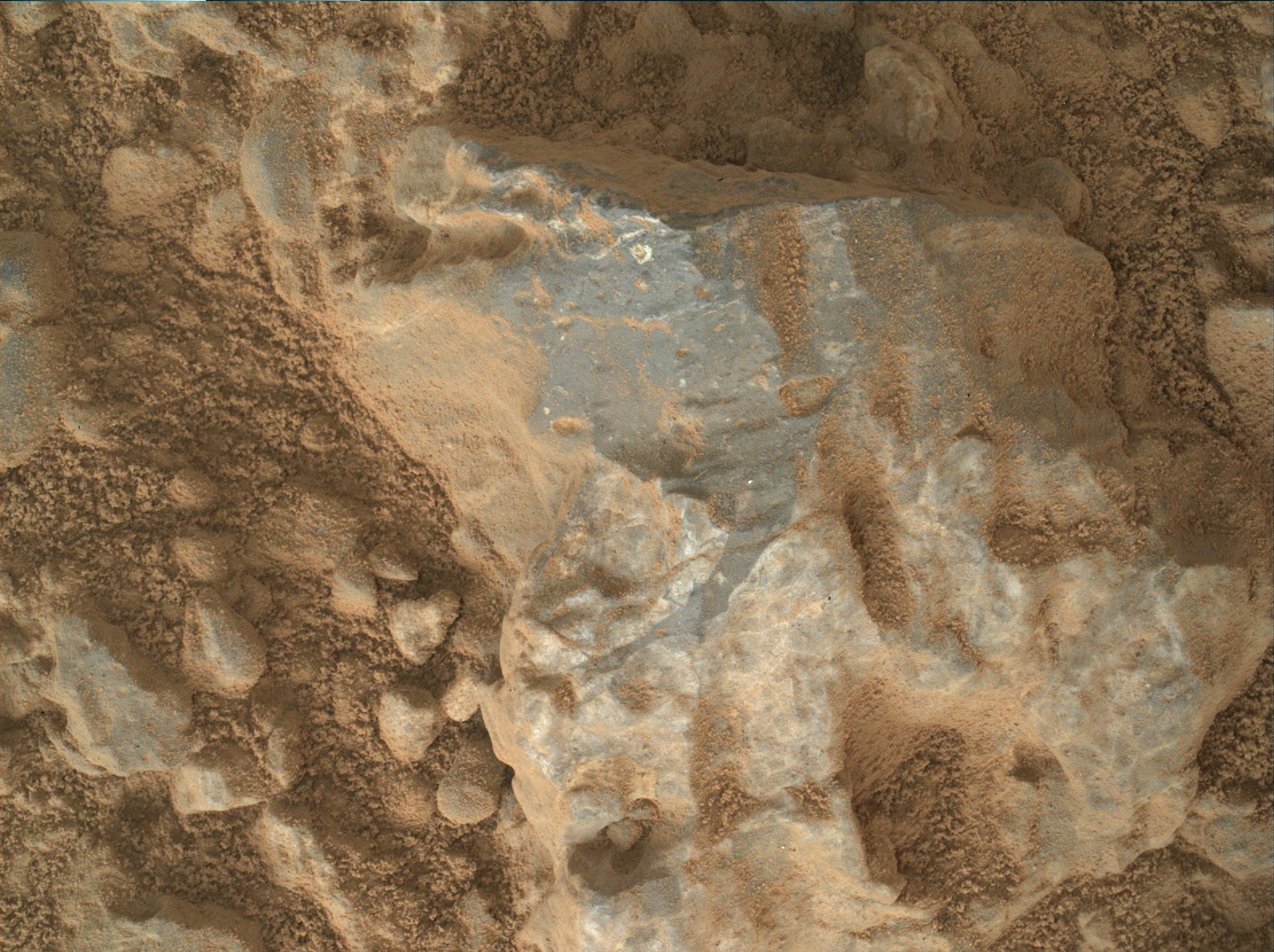
Then for any given rock that MAHLI is imaging, they'll take several photos (2 to 8, depending on the rock's depth variation) at different focus settings.  Software on board Curiosity then scans all the images pixel-by-pixel, choosing the image with the best focus for each pixel.  It also creates a visualization map showing the image selected at each pixel (using 2 to 8 gray levels, with blacker being more distant).

To anyone who has done much macro photography (as I have, with wildflowers), the result approximates magic: extreme close-up photos with essentially infinite depth-of-field.  I really can't use this technique with wildflowers, because the darned things are highly unlikely to be still at microscopic scales.  But I can envy the result nonetheless.

Here's a recent Curiosity focus-merge image of a rock's surface (on top) and it's matching focus map (at bottom):


Monday, July 15, 2013

The Camera...

Several readers have asked me about the camera I'm using on this trip.  It's a FujiFilm FinePix X100, and for all but a couple of photos it is hand-held.  I used a tripod for some time exposures of tumbling streams, to soften the white water.  The only accessory I use with it is a circular polarizing filter.  Quite a few of the photos are cropped; some have exposure adjustments; other post-processing is minimal.

The X100 by far my favorite camera to travel with, because it is incredibly compact and yet has almost all the features I'm used to with a “real” SLR.  The only thing I miss about my Canon SLR so far is the telephoto lens, which is essential for wildlife photography.  But the convenience of the X100, for me, far outweighs the additional functionality of the Canon.  With the X100, everything I need fits in a small fanny pack, and most of the time I carry the camera all by itself.  With the Canon, I carried around a medium-sized backpack with over 100 pieces of gear, weighing 30 pounds.  When you're a 60 year old geezer with a gimpy knee and way too much body fat, that is not an insignificant difference :)

Wednesday, June 26, 2013

Amazing Photo...

Check this out:


Looks like four photos stitched together, right?  Wrong...it's a single photo!

Monday, June 24, 2013

Wednesday, June 19, 2013

New York's New Subway Lines...

They are under construction, and this site has some very cool photos of it:


Beauty on the Wing...

Reader, friend, and former colleague Doug S. passes along this site with beautiful photography.  The photographer is Karim Nafatni, a Dubai-based A320 commercial airliner pilot.  Many of his photographs (like the one at right) are taken from the cockpit of the airplane he's flying.  There's a story about him, and he has a web site with lots of photos.  Some gorgeous stuff here...

Monday, June 17, 2013

40 Powerful Photos...

A collection of 40 of the most powerful photographic images ever taken (according to who, I'm not sure :).  Many of these are famous, like the one at right; most of them I'd agree are very powerful indeed...

Tuesday, June 4, 2013

Saturday, May 18, 2013

Slo-Mo Hummers...

This was taken in Los Angeles.  The two hummingbird species shown (Allen's and Anna's) are both native to us as well...

Friday, May 17, 2013

Thursday, May 16, 2013

National Geographic Photo of the Month...

It'a a corker of an Eastern Screech Owl, in the Okefnokee Swamp of southern Georgia...


Sunday, May 5, 2013

Smithsonian Photo Contest Winners...

Seven beautiful images.  Here's one taken by Bjorn Olesen in Borneo:


Wednesday, April 24, 2013

Beautiful Nature Photos...

Via my mom (one sample below, see the rest here):


Saturday, April 20, 2013

Wednesday, April 10, 2013

20 Photos that Change the Holocaust Narrative...

A collection of 20 powerful images related to the Holocaust, including the one below depicting Holocaust survivors at the very moment they realize they're being liberated.

Every time I try to imagine myself in the place of the Jews in Nazi Germany, my imagination fails.  It fails again here; I dissolve into tears just trying...


More here...

Sunday, April 7, 2013

Online Photos...

Interesting new web-based photo sharing site: Everpix.  $49/year to host any number of photos.  Well, maybe not quite unlimited – there are some weasel-words there to the effect that Everpix can shut down anyone with “excessive” use, whatever that means...

Wednesday, April 3, 2013

Planetary Photos...


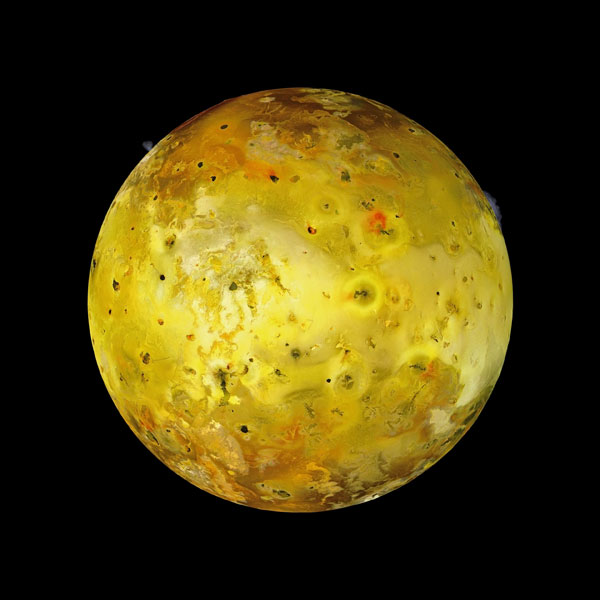
Michael Benson makes planetary photographs from original science data, using up to hundreds of images to make a mosaic.  He also goes to great lengths to get the color “right”, meaning that the color in his photos is what we would see if we could somehow get to the planet (or moon) in question.  Below is one example: Jupiter's fantastical moon Io:


There's a collection of his images in this article.

Cool Science Photos...

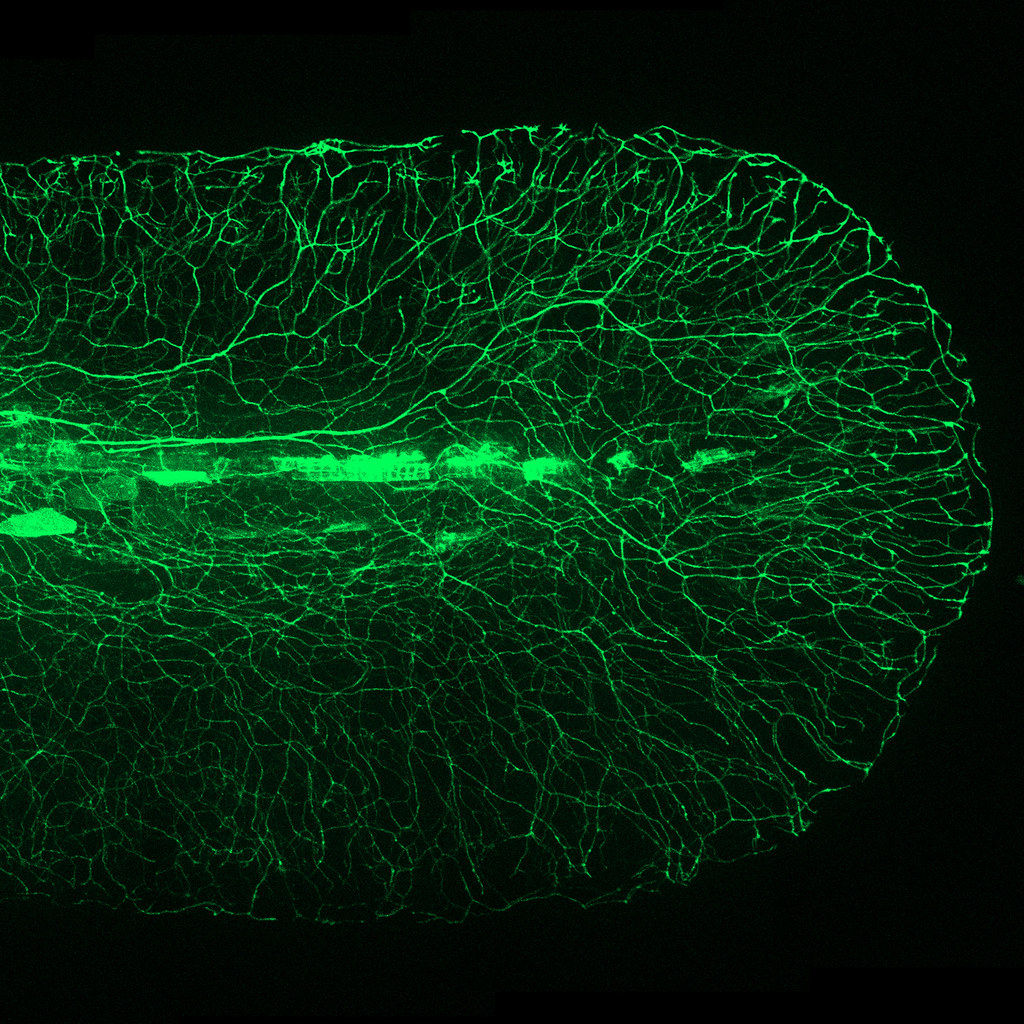
A very nice slide show of the 10 top winners of a cool science photo contest.  Here's one:


Tuesday, April 2, 2013

Test Reel for New Camera...

Teton Gravity Research makes gyro-stabilized cameras, most often used by mounting to helicopters or airplanes.  The challenges involved in engineering such cameras go up proportionally to their resolution.  They've just released a “4K” camera with much higher resolution than standard HD video, and the results are stunning.  You can see them showing this new device off in the video below.  To capture the full effect, expand it to fill your screen: