Paradise ponders: ahi, joist boxes, and plywood floors edition... Yesterday afternoon Debbie made us the most delightful meal: baked ahi with a sweet 'n sour salsa to accompany it, over rice with diced avocado on top. Oh, so delicious it was! That's my serving at right, moments before I attacked it. If you're wondering what that pink concoction I'm drinking is, that's prickly pear flavored Pelligrino sparkling water. It's one of my favorites of a line I like in general. I somehow managed to eat that entire mountain of food. Debbie gave out part way through hers, and that isn't the kind of dish that could be kept and reheated – so the dogs had an unexpected treat. Much appreciated, it was! :) As I write this, Debbie is making today's meal. I don't know the dish, but I know it involves cabbage, ground pork, and ground beef. No way that's going to be bad!
Yesterday and today, Debbie and I worked on building the cedar shed that will house the weather-sensitive components of our irrigation system. The first step was for me to fabricate the four pressure-treated beams to hold up the floor of the shed, and at the same time compensate for the slope of the concrete slab they'd be sitting on. At right you can see one of the cuts I had to make, in this case to a 4x4 (I ripped two of these, and also two 4x6s). First I had to put my saw back together after I tripped the brake the day before, and then I had to run my saw in “bypass” mode so this wet lumber wouldn't trip it again. That all worked fine. All these cuts were carefully calculated in terms of the height of the resulting beam, and the 1.6° angle of the cut. I had to dust off my high school trigonometry to figure all this out! :)
I also had to fabricate three holes in each of the four beams, where the hold-down bolts will go through to the concrete slab below. Each of these holes has a 1.75" high hole that's 9/16" diameter, just big enough for the tie-down bolt to extend through. Above that, through the remaining thickness of the beam, is a 1.25" diameter hole that will accommodate a nice thick washer to spread the load on the wood, and my socket wrench so I can torque that bolt down. The photos below show me doing the holes, with the last photo showing the debris under my drill press once I'd finished. What a mess!
After finished the fabrication of these four beams, I loaded them up on my tractor and hauled them out to the site where we're erecting the shed. I put them down in the approximate position they'd be under the floor, and then put a test board up across them (at right). Note how the closest beam is quite a bit taller than the furthest – that's to correct for the fairly steep slope of the slab. I was testing for level and for alignment of the top surfaces of the boards, and I was very happy to see that both of them were spot on. Yay! Trigonometry and careful fabrication works!
Finally it was time for some actual work on the kit itself. Much of the first step (constructing the floor) would be easier with two sets of hands, and Debbie volunteered to help. It's wonderful that she's recovered enough to even consider doing this, and she not only did it, she did it well. I took the first photo as we were building the first (of six) “joist boxes” for the cedar 2x4 joists that would support the plywood floor. In the second photo you can see a finished joist box leaning up against a wall section. The third photo shows the lazy man's way to transport the joist boxes from where we assembled them to where we'd be using them. Love that tractor! The fourth photo shows two joist boxes being screwed together. The clamps are holding them in alignment while I'm screwing in the screws – they made it very easy to get everything perfectly lined up. The fifth photo shows the plywood floor sections (each the size of a joist box) laid in place. Finally, the last photo shows the floor completely assembled, glued and screwed to the joist box (and, most importantly, all aligned correctly).
Tomorrow I'll be leaning that floor up against the fuel tanks adjacent to it, and fastening the four big beams to the concrete. Then I'll be putting the floor back down onto the beams and installing the metal connectors that will tie the floor solidly into the beams. Some of the metal connectors (for the shortest two beams) will have to be modified slightly, as they're bigger than the beams at the moment. I'm expecting that to take all day, and perhaps a bit longer if all doesn't go well.
Tonight I am one tired puppy – more tired, really, than I ought to be. I sure hope my thyroid's sluggishness turns out to be the problem, and that once we get the dosage adjusted correctly I'll regain my former energy levels. Last year this amount of work wouldn't leave me in the quivering-muscle state I'm in right now. I don't like this at all, not one little bit. As Debbie likes to say, getting old is not for sissies...
Sunday, May 28, 2017
Saturday, May 27, 2017
Paradise ponders: exploding saws, hydraulic ignorance, and wooden trigonometry edition...
Paradise ponders: exploding saws, hydraulic ignorance, and wooden trigonometry edition... Yesterday morning I started on the project of building the cedar shed kit that arrived the day before. The shed is going onto an existing concrete slab, but there's a small challenge there: the slab is sloped (3.5" in 10'), and I'd kind of like my shed to stand up straight. The kit includes a plywood floor built on cedar 2x4 “joists”. After examining that floor's design, I figured out that I could support the floor on four pieces of pressure-treated lumber, nominally 4" thick. The height of each piece would be different, varying from 2" to 5.5", to correct the slab's slope – I actually got to use some trigonometry to figure that out. I'd also cut each piece of wood using a small angle (1.6°) so that the tops of the pieces would all be in one plane and level. Sounds easy! So off I went to Home Depot to buy my four pieces of lumber.
When I returned, I set up my table saw for the first piece, put on my hearing protectors, lit off the dust collection system and the saw, and started to rip the first pressure-treated 4x4. Then ... BOOM! The saw blade stopped and dropped down below the table top. Scared the hell out of me! It took me a minute to figure out what had happened: the safety system in my SawStop saw had triggered. That system stops the blade by driving an aluminum pawl into it, and that's what you see at right after I raised the blade back up. That experience showed me just how fast that blade really does stop – right freakin' now! After I regained a bit of my equanimity, I pulled the blade and brake cartridge out of my saw (they had become one); that's the first photo below. I hammered the brake cartridge off the blade (second photo) to see what the blade did to the pawl. The last photo shows what the brake did to my blade (now in the trash). It's interesting to see that the blade stopped within a very short distance – once that pawl engaged a tooth, it couldn't move very far. SawStop says that engagement time is 5 milliseconds. At 4,000 RPM (unloaded) and a 10" diameter blade, that works out to 10" of blade travel, about 1/3 of a rotation. I don't much like to think about my finger or hand enduring that much cutting action – but it beats the pants off the blade not stopping at all...
So why did the saw's safety system trigger? My finger never touched the blade. However, the pressure-treated lumber I was trying to saw was quite wet, as evidenced by its weight. Lumber that's sufficiently wet will conduct electricity, and the saw detects human contact with the blade electrically. Because the lumber was conductive, it fooled the saw into thinking that it was in contact with me, and it triggered. The saw has a “bypass” mode that will let me run it without the safety mechanism. That's what I'll have to do to saw this lumber – after I replace the brake cartridge and install my new saw blade. I could let the lumber dry out, but then I wouldn't be able to build my shed until about August!
When I ran up to Logan yesterday to pick up a new saw blade, I stopped by an irrigation company referred by my sprinkler contractor, to talk with them about constant pressure pumps. I'm not going to name the company, as I haven't actually done any business with them. They had me talk with their pump expert. It was kind of appalling, really. I am far from a pump expert, but I do know a little bit about them. I understand, for instance, the relationship between pressure and flow rate; I know what friction loss and head height is. I know how to read a pump curve. That dangerously small amount of knowledge made me a certifiable rocket scientist by comparison with their “pump expert”. He was also very fast with the (outrageously) expensive solutions. For instance, he proposed two $1,400 motor-operated valves when I told him I wanted an automatic bypass for the pump. When I showed him how to accomplish the same thing with a $50 check valve, he had trouble comprehending how it would work and was clearly put off by my interference with his $2,800 sale. I don't think I'll be buying my booster pump from those folks! :)
When I returned, I set up my table saw for the first piece, put on my hearing protectors, lit off the dust collection system and the saw, and started to rip the first pressure-treated 4x4. Then ... BOOM! The saw blade stopped and dropped down below the table top. Scared the hell out of me! It took me a minute to figure out what had happened: the safety system in my SawStop saw had triggered. That system stops the blade by driving an aluminum pawl into it, and that's what you see at right after I raised the blade back up. That experience showed me just how fast that blade really does stop – right freakin' now! After I regained a bit of my equanimity, I pulled the blade and brake cartridge out of my saw (they had become one); that's the first photo below. I hammered the brake cartridge off the blade (second photo) to see what the blade did to the pawl. The last photo shows what the brake did to my blade (now in the trash). It's interesting to see that the blade stopped within a very short distance – once that pawl engaged a tooth, it couldn't move very far. SawStop says that engagement time is 5 milliseconds. At 4,000 RPM (unloaded) and a 10" diameter blade, that works out to 10" of blade travel, about 1/3 of a rotation. I don't much like to think about my finger or hand enduring that much cutting action – but it beats the pants off the blade not stopping at all...
So why did the saw's safety system trigger? My finger never touched the blade. However, the pressure-treated lumber I was trying to saw was quite wet, as evidenced by its weight. Lumber that's sufficiently wet will conduct electricity, and the saw detects human contact with the blade electrically. Because the lumber was conductive, it fooled the saw into thinking that it was in contact with me, and it triggered. The saw has a “bypass” mode that will let me run it without the safety mechanism. That's what I'll have to do to saw this lumber – after I replace the brake cartridge and install my new saw blade. I could let the lumber dry out, but then I wouldn't be able to build my shed until about August!
When I ran up to Logan yesterday to pick up a new saw blade, I stopped by an irrigation company referred by my sprinkler contractor, to talk with them about constant pressure pumps. I'm not going to name the company, as I haven't actually done any business with them. They had me talk with their pump expert. It was kind of appalling, really. I am far from a pump expert, but I do know a little bit about them. I understand, for instance, the relationship between pressure and flow rate; I know what friction loss and head height is. I know how to read a pump curve. That dangerously small amount of knowledge made me a certifiable rocket scientist by comparison with their “pump expert”. He was also very fast with the (outrageously) expensive solutions. For instance, he proposed two $1,400 motor-operated valves when I told him I wanted an automatic bypass for the pump. When I showed him how to accomplish the same thing with a $50 check valve, he had trouble comprehending how it would work and was clearly put off by my interference with his $2,800 sale. I don't think I'll be buying my booster pump from those folks! :)
Friday, May 26, 2017
Paradise ponders: drone photos, geysers, cedar sheds, and routers edition...
Paradise ponders: drone photos, geysers, cedar sheds, and routers edition... I got copies of the photos of our place taken by the drone earlier this week. One of them is at right. The resolution is a bit disappointing; someone has modified it from the 4000 x 3000 resolution of the native Phantom 3 camera. West is up in this photo, and north is to the right. It shows roughly the eastern third of our property. That's Utah 165 running left-to-right at the bottom, the Hyrum irrigation canal just above it. Looking at the buildings toward the right, our outbuilding is at the bottom, house in the middle, and barn near the top. My irrigation contractor had this taken so that he could plot out all the sprinklers accurately.
Yesterday morning Debbie and I went out to our new sun room to enjoy the morning as we drank our tea and coffee. I looked toward the south and saw something odd. On closer inspection, it was a geyser – roughly 30' tall, emanating from the south side of our field, about 600' from our house. I knew immediately what it was: a broken riser on the irrigation line that runs east/west there. That riser is on a 3" diameter pipe, so it squirts a lot of water. Most likely a snowmobile broke it off in the winter, and the irrigation company pressurized our pipes on Wednesday evening sometime. So Thursday morning we woke up to our very own (and quite impressive!) geyser.
That event dictated my morning. I went out immediately and shut off the valve that controls the water to that string of risers. Then I assessed the situation, and there was good news and bad news. The good news was that the riser broke off about 5" above ground, at the top of a piece of 3" PVC pipe, which means I wouldn't have to dig a pit in order to fix it. Yay! The bad news was that the valve wouldn't completely shut off the water – so there was still a trickle of water coming out of the riser. Ordinarily the pipe has to be bone dry in order to glue it, and that wasn't a possibility here. After consulting with my much more experienced friend and neighbor (Tim D.), I learned that there existed a kind of glue (solvent, actually) that would work on wet pipe. Off I went to get it, though the nearest source was 20 miles away in North Logan. Once I had all the parts I sawed the pipe off square, shoved a rag into the pipe to at least slow down the water, glued the new connector on, waited five minutes, and opened the valve to repressurize the pipe. The glue joint held, and didn't leak. Yay!
But I may have celebrated too soon. I discovered shortly afterward that while I was in town getting the magic glue, the irrigation company shut down the lines so that they could repair the numerous leaks. So I won't really know if my repair worked until the crank the pressure back up. As of this writing, it's still off. We may have a repeat geyser! :)
I spent most of my remaining day cleaning up a bunch of little details on the changes I've made with our network recently – especially the “heart transplant” that was replacing the routers. I've mentioned before that I chose the MikroTik RB1100AHx2, a very capable box for a mere $350 – less than I used to pay for Cisco's annual firmware license! After spending 15 hours or so working with this thing over the past few days, I'm ready to give it a grade. I'll give it a solid “A”. It's got far more capability than anything but the most loaded-up Cisco router, for a tiny fraction of Cisco's price. The hardware fully delivers on its promise of gigabit performance on 13 ports. It's far easier to manage and configure than Cisco's IOS devices. The built-in tools (packet sniffer, bandwidth testing, etc.) are simply superb. For any IT networking tech who isn't fully invested in his CCIE certification, MikroTik's “Routerboard” operating system for routers is a geek's dream come true: ridiculous power that's easy as hell to use. So far, I have just one complaint: the two fans in it are noisy. That wouldn't matter if this box were in a server room, but ours are located in our offices, and that noise now dominates the room. Thankfully, that's easily fixed: I've purchased new fans that make just 1/40th of the noise, and they'll be installed soon.
Yesterday a truck arrived with the biggest, baddest kit yet: for a 8' x 10' cedar shed. The photo at right shows what the completed shed should look like. Right now, it looks like a big pile of cedar! :) This shed will house some of our new irrigation system's components: the booster pump, filters, and sprinkler controller. It's going on the same concrete slab (behind our outbuilding) that currently hosts our fuel tanks and our backup generator. That slab has a distinct slope to it, so one immediate challenge I have is to build up a foundation that will correct that and let the shed have a level floor. I've come up with a relatively easy approach, and I'll be starting on that this morning. It will involve some precision ripping (of pressure-treated 4x4's); a good exercise for my table saw.
Yesterday morning Debbie and I went out to our new sun room to enjoy the morning as we drank our tea and coffee. I looked toward the south and saw something odd. On closer inspection, it was a geyser – roughly 30' tall, emanating from the south side of our field, about 600' from our house. I knew immediately what it was: a broken riser on the irrigation line that runs east/west there. That riser is on a 3" diameter pipe, so it squirts a lot of water. Most likely a snowmobile broke it off in the winter, and the irrigation company pressurized our pipes on Wednesday evening sometime. So Thursday morning we woke up to our very own (and quite impressive!) geyser.
That event dictated my morning. I went out immediately and shut off the valve that controls the water to that string of risers. Then I assessed the situation, and there was good news and bad news. The good news was that the riser broke off about 5" above ground, at the top of a piece of 3" PVC pipe, which means I wouldn't have to dig a pit in order to fix it. Yay! The bad news was that the valve wouldn't completely shut off the water – so there was still a trickle of water coming out of the riser. Ordinarily the pipe has to be bone dry in order to glue it, and that wasn't a possibility here. After consulting with my much more experienced friend and neighbor (Tim D.), I learned that there existed a kind of glue (solvent, actually) that would work on wet pipe. Off I went to get it, though the nearest source was 20 miles away in North Logan. Once I had all the parts I sawed the pipe off square, shoved a rag into the pipe to at least slow down the water, glued the new connector on, waited five minutes, and opened the valve to repressurize the pipe. The glue joint held, and didn't leak. Yay!
But I may have celebrated too soon. I discovered shortly afterward that while I was in town getting the magic glue, the irrigation company shut down the lines so that they could repair the numerous leaks. So I won't really know if my repair worked until the crank the pressure back up. As of this writing, it's still off. We may have a repeat geyser! :)
I spent most of my remaining day cleaning up a bunch of little details on the changes I've made with our network recently – especially the “heart transplant” that was replacing the routers. I've mentioned before that I chose the MikroTik RB1100AHx2, a very capable box for a mere $350 – less than I used to pay for Cisco's annual firmware license! After spending 15 hours or so working with this thing over the past few days, I'm ready to give it a grade. I'll give it a solid “A”. It's got far more capability than anything but the most loaded-up Cisco router, for a tiny fraction of Cisco's price. The hardware fully delivers on its promise of gigabit performance on 13 ports. It's far easier to manage and configure than Cisco's IOS devices. The built-in tools (packet sniffer, bandwidth testing, etc.) are simply superb. For any IT networking tech who isn't fully invested in his CCIE certification, MikroTik's “Routerboard” operating system for routers is a geek's dream come true: ridiculous power that's easy as hell to use. So far, I have just one complaint: the two fans in it are noisy. That wouldn't matter if this box were in a server room, but ours are located in our offices, and that noise now dominates the room. Thankfully, that's easily fixed: I've purchased new fans that make just 1/40th of the noise, and they'll be installed soon.
Yesterday a truck arrived with the biggest, baddest kit yet: for a 8' x 10' cedar shed. The photo at right shows what the completed shed should look like. Right now, it looks like a big pile of cedar! :) This shed will house some of our new irrigation system's components: the booster pump, filters, and sprinkler controller. It's going on the same concrete slab (behind our outbuilding) that currently hosts our fuel tanks and our backup generator. That slab has a distinct slope to it, so one immediate challenge I have is to build up a foundation that will correct that and let the shed have a level floor. I've come up with a relatively easy approach, and I'll be starting on that this morning. It will involve some precision ripping (of pressure-treated 4x4's); a good exercise for my table saw.
I have remarked...
I have remarked ... several times about the astonishing ignorance many younger Americans have about the changes that have occurred in the world within the past 100 years, especially with respect to the steep declines in poverty and the casualties of war. This morning I ran across a short documentary on the latter, and it is absolutely superb. I especially like the post-WWII perspective segment at the end – it's something that we should pound into every young head in school, but which instead is nearly completely ignored. I'd love to see something like this on the subjects of poverty and liberty...
Wednesday, May 24, 2017
Paradise ponders: routers, sprinklers, and ARP proxies edition...
Paradise ponders: routers, sprinklers, and ARP proxies edition... It was a long, long day for me yesterday. The end result of yesterday's work (and some more this morning) is at right: the Internet speed test on my office laptop. That's what I get when I send a gigabit stream of Internet data through two routers and a radio link to my laptop. It actually varies from around 500 to 800 mbps, and 800 mbps is the limit of what my laptop's network interface can do. Woo hoo! I got data now!
Yesterday I ripped out our two older MikroTik routers and replaced them with newer, (much) faster models (RB/1100AHX2). I brought up the one in my barn office first. That was a tedious, but fairly straightforward affair, and by 1 pm I had that up and running. After returning from a very pleasant lunch with Debbie and our friend Michelle H., I started on the house side. I had it all installed by 6pm, and it was talking between the house and the barn just fine (over my new radio link). But it wouldn't connect to the Internet at all.
I troubleshot it for three hours, with (to me!) very puzzling symptoms. The new MikroTik router could talk to the cable modem just fine, but nothing connected to the router could do so. Sounds like a routing problem, right? I inspected and re-inspected all the address and routing configuration, and found no problems at all. No reason for it not to work! So then I did some packet sniffing, using a constantly-running ping session on Debbie's workstation as a source of known data. The outbound ping got routed to the cable modem just fine, but then the cable modem never responded. Tried the same thing with a ping from the router, and the cable modem responded just fine. My tired brain couldn't process that information, so I went to bed and hoped that with fresh, caffeinated neurons in the morning I could figure it out.
Round about 2 am I woke up, visions of router configurations dancing in my head. After thinking about it some more, it occurred to me that it might be a problem with ARP (the Address Resolution Protocol). Unless you're a networking geek, you probably have no idea what that is. In technical terms, it gives networked devices a way to translate an IP address into an Ethernet destination (a MAC address). This isn't a great analogy, but it's a bit like a service that translates ZIP+4 codes into a street address. In terms of my problem, if the router was trying to send a packet to an IP address (in this case, Debbie's terminal) that it didn't know the corresponding MAC address for, it would broadcast an ARP request to all the devices directly connected to the modem, and then my new router should reply (because it already knows how to send something to that IP address). If that ARP request was never sent, or if my new router never replied to it, the symptoms would match what I was seeing.
So I got up around 3 am and started working on the problem. With a bit more packet sniffing, I was able to determine that the cable modem was sending an ARP request – but my new router never responded. At last, something concrete to track down! With a bit of poring through documentation and configuration screens, I found the place where ARP behavior is configured. That ARP setting on the screen at right is ordinarily set to “enabled”, but on this particular interface (the one connected to the cable modem) it needs to be set for “proxy-arp”. Why? My router's ether1 interface is connected to the cable modem, and it's address is 10.0.0.2/8. All the other router interfaces are subnets of that one. For instance, the client machines are on 10.1.4.x/24. That matters because all the IP addresses that the router issued ARP requests for are within 10.0.0.0/8 – so my new router didn't know that it had to reply; for all it knew some other device would reply. By changing that setting to proxy-arp, the router sent the ARP request to the interface with a matching subnet, and that interface replied to the ARP request. With one simple little tweak, all of a sudden the entire network on the house side started working correctly.
Amazing what a little sleep will do for your troubleshooting capability!
We had another little milestone yesterday: Mark T., the fellow installing our new lawn sprinklers, arrived and started digging the trenches. Progress! His trenching machine is working much better now that our soil has dried out a bit. :) He's starting on the section of our yard that we call the “driving range” (because that's what the previous owner did with it). It's about half our total grass area. He thinks he'll be finished trenching that part by Friday...
Yesterday I ripped out our two older MikroTik routers and replaced them with newer, (much) faster models (RB/1100AHX2). I brought up the one in my barn office first. That was a tedious, but fairly straightforward affair, and by 1 pm I had that up and running. After returning from a very pleasant lunch with Debbie and our friend Michelle H., I started on the house side. I had it all installed by 6pm, and it was talking between the house and the barn just fine (over my new radio link). But it wouldn't connect to the Internet at all.
I troubleshot it for three hours, with (to me!) very puzzling symptoms. The new MikroTik router could talk to the cable modem just fine, but nothing connected to the router could do so. Sounds like a routing problem, right? I inspected and re-inspected all the address and routing configuration, and found no problems at all. No reason for it not to work! So then I did some packet sniffing, using a constantly-running ping session on Debbie's workstation as a source of known data. The outbound ping got routed to the cable modem just fine, but then the cable modem never responded. Tried the same thing with a ping from the router, and the cable modem responded just fine. My tired brain couldn't process that information, so I went to bed and hoped that with fresh, caffeinated neurons in the morning I could figure it out.
Round about 2 am I woke up, visions of router configurations dancing in my head. After thinking about it some more, it occurred to me that it might be a problem with ARP (the Address Resolution Protocol). Unless you're a networking geek, you probably have no idea what that is. In technical terms, it gives networked devices a way to translate an IP address into an Ethernet destination (a MAC address). This isn't a great analogy, but it's a bit like a service that translates ZIP+4 codes into a street address. In terms of my problem, if the router was trying to send a packet to an IP address (in this case, Debbie's terminal) that it didn't know the corresponding MAC address for, it would broadcast an ARP request to all the devices directly connected to the modem, and then my new router should reply (because it already knows how to send something to that IP address). If that ARP request was never sent, or if my new router never replied to it, the symptoms would match what I was seeing.
So I got up around 3 am and started working on the problem. With a bit more packet sniffing, I was able to determine that the cable modem was sending an ARP request – but my new router never responded. At last, something concrete to track down! With a bit of poring through documentation and configuration screens, I found the place where ARP behavior is configured. That ARP setting on the screen at right is ordinarily set to “enabled”, but on this particular interface (the one connected to the cable modem) it needs to be set for “proxy-arp”. Why? My router's ether1 interface is connected to the cable modem, and it's address is 10.0.0.2/8. All the other router interfaces are subnets of that one. For instance, the client machines are on 10.1.4.x/24. That matters because all the IP addresses that the router issued ARP requests for are within 10.0.0.0/8 – so my new router didn't know that it had to reply; for all it knew some other device would reply. By changing that setting to proxy-arp, the router sent the ARP request to the interface with a matching subnet, and that interface replied to the ARP request. With one simple little tweak, all of a sudden the entire network on the house side started working correctly.
Amazing what a little sleep will do for your troubleshooting capability!
We had another little milestone yesterday: Mark T., the fellow installing our new lawn sprinklers, arrived and started digging the trenches. Progress! His trenching machine is working much better now that our soil has dried out a bit. :) He's starting on the section of our yard that we call the “driving range” (because that's what the previous owner did with it). It's about half our total grass area. He thinks he'll be finished trenching that part by Friday...
Monday, May 22, 2017
Paradise ponders: antennas, lunch, and seromas edition...
Paradise ponders: antennas, lunch, and seromas edition... I worked all day yesterday (and most of the day today) getting my new 1.4 gbps backhaul link installed, configured, aligned, and tested. And it works! I've got a solid gigabit connection between the house and my office in the barn. Unfortunately my existing routers are limiting my use of this, along with the network interface on my laptop. My new routers arrived today, a day early, so tomorrow I'll be configuring them. That should get my laptop up to about 250 mbps, the limit of its network interface. Next time I get a computer (likely sometime next year when Apple releases the updated Mac Pros), it's network interface should handle the whole gigabit stream. Woo hoo!
Debbie made us a fantastic lunch yesterday. Simple, but oh-so-good. Broiled asparagus, a baked potato with butter, sour cream, and chives, and half of a prime ribeye steak. It still blows me away that we can get prime beef at the butcher counter of our local grocery store – that stuff was next to impossible to get in San Diego unless you went to one of the outrageously expensive fancy beef stores, where that ribeye might set you back $50 or $60. Here they're a modest premium over choice – but oh so much tastier! The best part of that meal, though, was the asparagus. Debbie broiled it after tossing with some olive oil, pepper, and some other spices. Yum!
This afternoon we had to take Cabo back to the vet to get her seroma drained again. Once again, no charge. Poor little girl is filling up with fluid near her spay suture. This time the vet told us to just let it fill up and don't worry about it – in a week or two it will be reabsorbed. If Cabo could have understood that, she'd have been very happy to hear it – she doesn't like the vet's office one little bit.
Debbie made us a fantastic lunch yesterday. Simple, but oh-so-good. Broiled asparagus, a baked potato with butter, sour cream, and chives, and half of a prime ribeye steak. It still blows me away that we can get prime beef at the butcher counter of our local grocery store – that stuff was next to impossible to get in San Diego unless you went to one of the outrageously expensive fancy beef stores, where that ribeye might set you back $50 or $60. Here they're a modest premium over choice – but oh so much tastier! The best part of that meal, though, was the asparagus. Debbie broiled it after tossing with some olive oil, pepper, and some other spices. Yum!
This afternoon we had to take Cabo back to the vet to get her seroma drained again. Once again, no charge. Poor little girl is filling up with fluid near her spay suture. This time the vet told us to just let it fill up and don't worry about it – in a week or two it will be reabsorbed. If Cabo could have understood that, she'd have been very happy to hear it – she doesn't like the vet's office one little bit.
Saturday, May 20, 2017
Paradise ponders: antennas, voles, and seromas edition...
Paradise ponders: antennas, voles, and seromas edition... Today I continued working on my antenna project. The antenna on our house is completely installed except for aiming (which I can't do until both antennas are up) and painting (which I can't do until I've aimed it). Fishing the cable through the wall of Debbie's office was a two-person job, and Debbie has recovered enough that she could lay down on the floor and do the indoor part of it while I crawled out on the roof to do the outdoor part. Progress! The antenna is wired up to its POE injector, ready for connection to the new routers I've ordered; it's management WiFi network is on the air. I also started on the barn antenna, but around 4 pm today I just sort of conked out. Lack of sleep last night caught up with me, I think...
It was such a gorgeous day this morning that I decided to go for a walk, taking Cabo with me. The skies over our heads were perfectly clear, but there were puffy clouds over the mountains to both the east and west of us. With snow on the peaks and the valleys a beautiful green, flowers popping out, and all our summer animals and birds back, it was a real treat for me. I took Cabo along for the walk, and she had herself a grand adventure. On one of her forays into the tall alfalfa (like in the first photo), she caught the scent of a vole – and then flushed it. That triggered an instinctive reaction to pounce on it, which she did – and she caught it. She raised her head, with her jaws holding a struggling vole, and then calmly crunched it, killing it. Then she dropped it and looked at me as if to say “Now what do I do with this?” She showed no inclination to eat it, which is what Mo'i or Race would have done before I got a word out. But she definitely wanted to find more voles – for the entire remainder of our walk, searching for voles is all she wanted to do!
The second photo is of a stand of mustard, backlit by the morning sun, with some dew still on it. Even mustard can be pretty! :) The last photo is the distance view to my west as we were walking. Pretty as a postcard, isn't it?
We took Cabo to the vet yesterday so the vet could take a look at a seroma that we'd noticed at the site of her spaying incision. The vet (Dr. Watkins) was quite surprised – said he doesn't often see a seroma on a simple spay, and he was worried that it might mean the incision on the body wall (not the skin) had herniated. He palpated it and found nothing suspicious, then took multiple X-rays and also saw nothing. These seromas do occasionally happen for unknown reasons, they're not dangerous, and generally they go away on their own as the body reabsorbs the fluids. So he just drained the fluid that had already accumulated (about 20cc, or a tenth of a cup), gave her a shot of antibiotics, just as a precaution, and sent us home. We're to watch for further accumulation and bring her in for draining as required, but otherwise we're just waiting for it to go away on its own. The vet wouldn't accept any payment for any of the work he did yesterday, saying it's part and parcel of the spay. A nice gesture, that was. We'd have happily paid for it, because (so far as we know) it wasn't the vet's fault that Cabo got a seroma. But to have such great service, delivered as if we were close friends, and then say it's free – well, that can't help but put a smile on our faces...
It was such a gorgeous day this morning that I decided to go for a walk, taking Cabo with me. The skies over our heads were perfectly clear, but there were puffy clouds over the mountains to both the east and west of us. With snow on the peaks and the valleys a beautiful green, flowers popping out, and all our summer animals and birds back, it was a real treat for me. I took Cabo along for the walk, and she had herself a grand adventure. On one of her forays into the tall alfalfa (like in the first photo), she caught the scent of a vole – and then flushed it. That triggered an instinctive reaction to pounce on it, which she did – and she caught it. She raised her head, with her jaws holding a struggling vole, and then calmly crunched it, killing it. Then she dropped it and looked at me as if to say “Now what do I do with this?” She showed no inclination to eat it, which is what Mo'i or Race would have done before I got a word out. But she definitely wanted to find more voles – for the entire remainder of our walk, searching for voles is all she wanted to do!
The second photo is of a stand of mustard, backlit by the morning sun, with some dew still on it. Even mustard can be pretty! :) The last photo is the distance view to my west as we were walking. Pretty as a postcard, isn't it?
We took Cabo to the vet yesterday so the vet could take a look at a seroma that we'd noticed at the site of her spaying incision. The vet (Dr. Watkins) was quite surprised – said he doesn't often see a seroma on a simple spay, and he was worried that it might mean the incision on the body wall (not the skin) had herniated. He palpated it and found nothing suspicious, then took multiple X-rays and also saw nothing. These seromas do occasionally happen for unknown reasons, they're not dangerous, and generally they go away on their own as the body reabsorbs the fluids. So he just drained the fluid that had already accumulated (about 20cc, or a tenth of a cup), gave her a shot of antibiotics, just as a precaution, and sent us home. We're to watch for further accumulation and bring her in for draining as required, but otherwise we're just waiting for it to go away on its own. The vet wouldn't accept any payment for any of the work he did yesterday, saying it's part and parcel of the spay. A nice gesture, that was. We'd have happily paid for it, because (so far as we know) it wasn't the vet's fault that Cabo got a seroma. But to have such great service, delivered as if we were close friends, and then say it's free – well, that can't help but put a smile on our faces...
Friday, May 19, 2017
Paradise ponders: drones, antennas, and remembrance...
Paradise ponders: drones, antennas, and remembrance... Today would have been my dad's 93rd birthday, were he still alive. Debbie and I were out to dinner with friends (Gary and Elayne S.) last night, and on our drive dad came up in the conversation. We were passing by some plants we didn't recognize, and Debbie commented that my dad would have known what every one of them was, whether it was native, what it's natural history was, etc. And that led us into a conversation about my dad with our friends. We miss you, Pater...
The contractor installing our sprinklers is working with a sub-contractor to map out the sprinkler head locations (there are just over 200 of them!) in a software app so he can price out our project. It turns out that the county maps the app depends on are obsolete for our purposes (mainly because the irrigation canal was rerouted since the maps were last updated. So our primary contractor engaged a fellow to take aerial photos of our place from a drone. This fellow showed up around 10 am with his Phantom drone, zoomed it up to 700' high, and then got nice aerial shots. The entire process took about 5 minutes. He flew it from an iPad strapped into a controller, and it sure looked easy to do. I don't have the results yet, but I'll post them when I do...
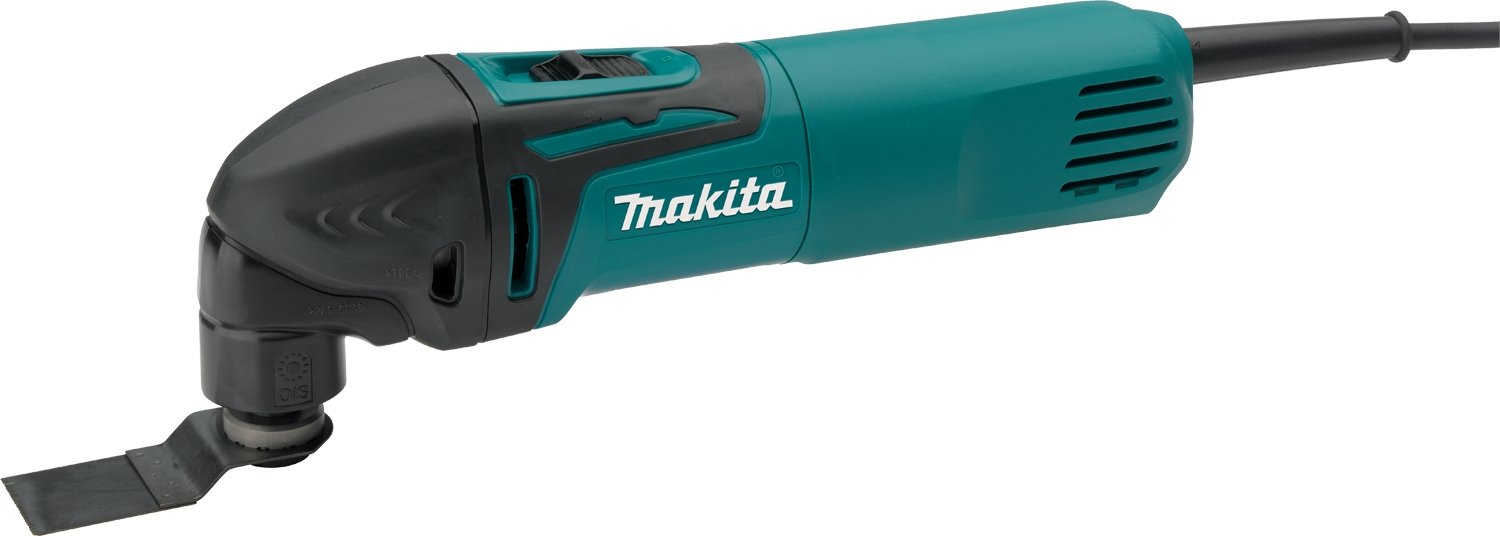
In between all the other goings-on, I installed the first (of two) antenna for the data link I'm putting up between our house and barn (where my office is). I started with the house, which is the “master” of the pair. The only part of the installation I've finished so far is the mechanical mount, which actually was very straightforward. My little oscillating saw (at right) made cutting those holes through the siding for the mount's five feet easy. The first photo below is what the mount looked like after I installed it. The actual antenna mounts to the gold colored mast, as you can see in the second photo. The last photo just shows how high up that thing is. I was at the very limit of what I could safely do on that ladder!
I'll be caulking all the wood I cut through to make it waterproof, then painting all that silver and gold colored stuff white. I also have to install a ground wire, which will have a rather convoluted route in order to keep from traversing the steel roof. Then comes likely the most difficult part of installation: getting the outdoor Ethernet cable through the house wall, without causing a leak, or a place for animals or insects to get in. Part of this will involve snaking the cable through the wall of Debbie's office, where I'm not allowed to do anything ugly. :)
One consequence of installing gigabit Internet access that I didn't anticipate is that my existing routers can't keep up with the Internet feed. It would be just plain silly to have gigabit Internet if I can't get that capacity to our devices, so I'm also going to have to upgrade our routers. I'm using MikroTik routers, which I just love (so much easier to manage than Cisco routers!). The one I chose has 13 gigabit ports, with 2 gbps overall throughput. That's enough performance to do the job nicely, and enough ports that I can have a dedicated port for all of our computers – which means we'll avoid bottlenecking our switches (and I can keep those!).
The contractor installing our sprinklers is working with a sub-contractor to map out the sprinkler head locations (there are just over 200 of them!) in a software app so he can price out our project. It turns out that the county maps the app depends on are obsolete for our purposes (mainly because the irrigation canal was rerouted since the maps were last updated. So our primary contractor engaged a fellow to take aerial photos of our place from a drone. This fellow showed up around 10 am with his Phantom drone, zoomed it up to 700' high, and then got nice aerial shots. The entire process took about 5 minutes. He flew it from an iPad strapped into a controller, and it sure looked easy to do. I don't have the results yet, but I'll post them when I do...
In between all the other goings-on, I installed the first (of two) antenna for the data link I'm putting up between our house and barn (where my office is). I started with the house, which is the “master” of the pair. The only part of the installation I've finished so far is the mechanical mount, which actually was very straightforward. My little oscillating saw (at right) made cutting those holes through the siding for the mount's five feet easy. The first photo below is what the mount looked like after I installed it. The actual antenna mounts to the gold colored mast, as you can see in the second photo. The last photo just shows how high up that thing is. I was at the very limit of what I could safely do on that ladder!
I'll be caulking all the wood I cut through to make it waterproof, then painting all that silver and gold colored stuff white. I also have to install a ground wire, which will have a rather convoluted route in order to keep from traversing the steel roof. Then comes likely the most difficult part of installation: getting the outdoor Ethernet cable through the house wall, without causing a leak, or a place for animals or insects to get in. Part of this will involve snaking the cable through the wall of Debbie's office, where I'm not allowed to do anything ugly. :)
One consequence of installing gigabit Internet access that I didn't anticipate is that my existing routers can't keep up with the Internet feed. It would be just plain silly to have gigabit Internet if I can't get that capacity to our devices, so I'm also going to have to upgrade our routers. I'm using MikroTik routers, which I just love (so much easier to manage than Cisco routers!). The one I chose has 13 gigabit ports, with 2 gbps overall throughput. That's enough performance to do the job nicely, and enough ports that I can have a dedicated port for all of our computers – which means we'll avoid bottlenecking our switches (and I can keep those!).
Labels:
Pater
Wednesday, May 17, 2017
Paradise ponders: snow and marbles edition...
Paradise ponders: snow and marbles edition... When I woke up this morning and looked out my window, here's what I saw:
Yup, that's right. A winter wonderland. The dogs were quite enthused about this! I was ... less so. At least the asphalt in our driveway stayed warm enough to melt the white stuff. If this global warming warms things up any more, we'll be frozen solid! Almost every day in these part we're breaking 100 year records for cold and wet – exactly the opposite of what those infallible climate models predicted we'd see in this decade. Sheesh...
When my father was a toddler, in the late 1920s, he had a favorite toy: a set of wooden ramps down which marbles would roll. I didn't know that in the late 1950s when I played with this same toy at his parents' (my grandparents') house. I remember thinking it was a big, heavy thing – when my grandmother sent me to the closet she kept it in so I could get it out and play with it. It seems small and light to me now. :) I also remember the marbles as great big taws (shooters), but actually they're just ducks. It's made very simply, and not particularly well-finished, though in my memory it was a finely crafted and polished wood. No matter, the memories are the important part. It is made of a fine-grained hardwood (maple at a guess).
I found out that it was my dad's toy on one of our many trips together. It was during a far-ranging conversation about his life before WWII, the same conversation in which I learned that his pre-war career plan was to become a chicken farmer. In another part of that conversation, he was telling me what it was like to have grown up in the Great Depression. At the time of the stock market crash, he was just five years old. This toy was one of the few that he had at that time, and there was no money for other toys until he was too old to want them any more. Most of the toys he remembered were things that his father clapped together, or that he made do with. Hoops from a broken basket and a nice stick, for instance, made one of his favorites. But this toy, the marble ramps, was one that he especially cherished because it was one of the few “real” toys he ever had – and it was a gift for him, from his parents, not a hand-me-down from his two older brothers.
I have very few artifacts that belonged to my father, other than documents and photos. This is the only one I have from his childhood. I shall cherish it...
Yup, that's right. A winter wonderland. The dogs were quite enthused about this! I was ... less so. At least the asphalt in our driveway stayed warm enough to melt the white stuff. If this global warming warms things up any more, we'll be frozen solid! Almost every day in these part we're breaking 100 year records for cold and wet – exactly the opposite of what those infallible climate models predicted we'd see in this decade. Sheesh...
When my father was a toddler, in the late 1920s, he had a favorite toy: a set of wooden ramps down which marbles would roll. I didn't know that in the late 1950s when I played with this same toy at his parents' (my grandparents') house. I remember thinking it was a big, heavy thing – when my grandmother sent me to the closet she kept it in so I could get it out and play with it. It seems small and light to me now. :) I also remember the marbles as great big taws (shooters), but actually they're just ducks. It's made very simply, and not particularly well-finished, though in my memory it was a finely crafted and polished wood. No matter, the memories are the important part. It is made of a fine-grained hardwood (maple at a guess).
I found out that it was my dad's toy on one of our many trips together. It was during a far-ranging conversation about his life before WWII, the same conversation in which I learned that his pre-war career plan was to become a chicken farmer. In another part of that conversation, he was telling me what it was like to have grown up in the Great Depression. At the time of the stock market crash, he was just five years old. This toy was one of the few that he had at that time, and there was no money for other toys until he was too old to want them any more. Most of the toys he remembered were things that his father clapped together, or that he made do with. Hoops from a broken basket and a nice stick, for instance, made one of his favorites. But this toy, the marble ramps, was one that he especially cherished because it was one of the few “real” toys he ever had – and it was a gift for him, from his parents, not a hand-me-down from his two older brothers.
I have very few artifacts that belonged to my father, other than documents and photos. This is the only one I have from his childhood. I shall cherish it...
Labels:
Pater
Tuesday, May 16, 2017
Scary moment...
Scary moment... Nothing that happened to us, but something that we witnessed. We were driving north on Main Street in Logan (a four lane city street), when we passed a gigantic double (a full length truck with a full length trailer behind it) bulk material hauler, filled to the brim with road base. That thing must have weighed 20 tons at minimum. Just after I passed it, I looked back at it in my mirror – just in time to watch one of those tiny “Smart Cars” cross the street right in front of the truck. The truck driver locked his tires and honked. Smoke from the tires filled the air. The truck was wobbling all over as the driver struggled to keep it under control. And the “Smart Car” (complete with awesomely stupid driver) just barely made it across before the truck came through. I don't think the gap between the truck and the car was even a foot. If that truck had struck the “Smart Car”, I don't think there would have been anything taller than an inch left of the car.
That poor truck driver must have been sweating bullets, and I'll wager he was shouting some choice comments at the driver he nearly killed. It was scary enough just witnessing this...
Monday, May 15, 2017
Medical update...
Medical update... Just got back from the doctor, where I got a bit of an education. There were two results from my blood tests that were definite indications of a problem.
First are the levels of two thyroid-related antibodies: they are (respectively) 200x and 1,500x normal. Yikes! Basically, as she explained it, that means my body is eating my thyroid – an autoimmune problem. My pituitary gland is reacting to that by increasing its stimulation (through a hormone) of what remains of my thyroid, and under that increased stimulation the remnants of my thyroid are producing hormones at levels that are borderline low. This is called Hashimoto's Disease, and about 5% of all people will get it at some point in their life. It's easily treatable with a daily oral dose of levothyroxine, which I'm starting immediately.
Second, my blood levels of vitamin D are significantly below normal. The doctor had no explanation for this, but typically it's caused by a dietary deficiency. So I'm taking massive supplements for a couple weeks, then daily normal dose supplements after that. We check again in six weeks to see if that was all it took to get my levels back to normal. When we discussed my diet, it seemed like I ate plenty of things with vitamin D in it – so we're going to look at the results in six weeks carefully, and if the vitamin D levels don't pop back up she's going to start looking at things that might prevent my body from absorbing the vitamin D. One thing that struck both of us: my pernicious anemia (diagnosed about 25 years ago) is a condition caused by my body's inability to absorb vitamin B12. We're both wondering if there's some related condition with vitamin D...
Both of the above problems have fatigue and sensitivity to cold amongst their symptoms. Hashimoto's Disease has as a risk factor the presence of other autoimmune diseases (which pernicious anemia and Raynaud's Disease, two conditions I've been diagnosed with, both are). Both are also easily treated. So basically that's all unsurprising (except to me!) and relatively good news. And if the treatments work as advertised, I'll certainly be happy to have the symptoms reversed!
First are the levels of two thyroid-related antibodies: they are (respectively) 200x and 1,500x normal. Yikes! Basically, as she explained it, that means my body is eating my thyroid – an autoimmune problem. My pituitary gland is reacting to that by increasing its stimulation (through a hormone) of what remains of my thyroid, and under that increased stimulation the remnants of my thyroid are producing hormones at levels that are borderline low. This is called Hashimoto's Disease, and about 5% of all people will get it at some point in their life. It's easily treatable with a daily oral dose of levothyroxine, which I'm starting immediately.
Second, my blood levels of vitamin D are significantly below normal. The doctor had no explanation for this, but typically it's caused by a dietary deficiency. So I'm taking massive supplements for a couple weeks, then daily normal dose supplements after that. We check again in six weeks to see if that was all it took to get my levels back to normal. When we discussed my diet, it seemed like I ate plenty of things with vitamin D in it – so we're going to look at the results in six weeks carefully, and if the vitamin D levels don't pop back up she's going to start looking at things that might prevent my body from absorbing the vitamin D. One thing that struck both of us: my pernicious anemia (diagnosed about 25 years ago) is a condition caused by my body's inability to absorb vitamin B12. We're both wondering if there's some related condition with vitamin D...
Both of the above problems have fatigue and sensitivity to cold amongst their symptoms. Hashimoto's Disease has as a risk factor the presence of other autoimmune diseases (which pernicious anemia and Raynaud's Disease, two conditions I've been diagnosed with, both are). Both are also easily treated. So basically that's all unsurprising (except to me!) and relatively good news. And if the treatments work as advertised, I'll certainly be happy to have the symptoms reversed!
Phone weirdness...
Phone weirdness... We have a Panasonic cordless phone system at home, and yesterday we installed a new one that I'd purchased some time ago but had never set up. With the new phone system we have eight handsets. That might sound completely crazy unless you saw our house and barn. I've got one handset on each floor of the barn, and then there are six scattered throughout the house. Not really as phone-saturated as eight handsets sounds! :)
Anyway, we'd noticed something quite odd with our new phones: we'd set the date and time, then sometime later the time would change to seven hours later. We'd fix it, and then sometime later once again, the time was seven hours later. What the heck?
Well, seven hours later than Mountain Standard Time, at the moment, happens to be Greenwich Mean Time. That got me to thinking that there might be a time zone setting in the phone, but no, there wasn't. Well, what then?
After a bit of research on the Internet, I found some references to others having the same problem – and there was a fix, too. It turns out there's a setting buried a couple of levels down in the menu system, one that I had missed: a “time adjustment” option that lets the phone pick up the time from Caller ID or manually. It was set to Caller ID by default. I switched it to Manual, and if our experience is like others that will fix the problem.
Our phone isn't POTS and Ma Bell, it's Xfinity (Comcast) over our cable connection (along with our Internet). While researching this I discovered that lots of people are having a similar issue, with multiple phone systems (Panasonic isn't the only phone vendor providing this feature) and multiple phone service providers (including some POTS lines!). That makes me wonder why the phone system vendors seem to all default that setting to Caller ID...
Anyway, we'd noticed something quite odd with our new phones: we'd set the date and time, then sometime later the time would change to seven hours later. We'd fix it, and then sometime later once again, the time was seven hours later. What the heck?
Well, seven hours later than Mountain Standard Time, at the moment, happens to be Greenwich Mean Time. That got me to thinking that there might be a time zone setting in the phone, but no, there wasn't. Well, what then?
After a bit of research on the Internet, I found some references to others having the same problem – and there was a fix, too. It turns out there's a setting buried a couple of levels down in the menu system, one that I had missed: a “time adjustment” option that lets the phone pick up the time from Caller ID or manually. It was set to Caller ID by default. I switched it to Manual, and if our experience is like others that will fix the problem.
Our phone isn't POTS and Ma Bell, it's Xfinity (Comcast) over our cable connection (along with our Internet). While researching this I discovered that lots of people are having a similar issue, with multiple phone systems (Panasonic isn't the only phone vendor providing this feature) and multiple phone service providers (including some POTS lines!). That makes me wonder why the phone system vendors seem to all default that setting to Caller ID...
Paradise ponders: paperwork, spring beauty, and geraniums on our porch...
Paradise ponders: paperwork, spring beauty, and geraniums on our porch... I spent darned near all day yesterday on danged paperwork. What a pain in the butt! Makes me wonder what it would cost to have someone trustworthy do all this for me. Hmmm...
In the afternoon Debbie and I went on a quest for baby goats. Really! :) We'd noticed four newborns in a paddock a couple miles north of us, and we know several places where there are herds of goats – so we made the rounds. Not a goatlet to be found anywhere except the original four. Those little things sure are cute, bouncing around like crazy. Too bad they have to grow up into actual goats, obnoxious and smelly...
When we returned from our quest, Debbie noticed a flower on our front porch. It was a potted geranium (at right), presumably a Mother's Day gift for Debbie. There was no note on it, so we have no idea who might have left it. Chief suspects are our immediate neighbors, but there are quite a few people within a few miles who might do something like leave a geranium on every front porch – so we really don't know who it was. But it sure put a smile on Debbie's face! :)
Today I'm visiting with our doctor, who called me back into the office for consultation after receiving the results of some blood testing I had done two weeks ago. It seems unlikely this would be entirely good news. :( All I know from the nurse who called me is that the blood tests showed (a) normal B12 levels (which means my every-two-weeks one milliliter injection of cyanocobalamin is the right dose), and (b) there are thyroid antibodies present in my blood. The latter might be indicative of hypothyroidism, which could explain my low energy levels the past few months. We'll find out more today, I hope...
In the afternoon Debbie and I went on a quest for baby goats. Really! :) We'd noticed four newborns in a paddock a couple miles north of us, and we know several places where there are herds of goats – so we made the rounds. Not a goatlet to be found anywhere except the original four. Those little things sure are cute, bouncing around like crazy. Too bad they have to grow up into actual goats, obnoxious and smelly...
When we returned from our quest, Debbie noticed a flower on our front porch. It was a potted geranium (at right), presumably a Mother's Day gift for Debbie. There was no note on it, so we have no idea who might have left it. Chief suspects are our immediate neighbors, but there are quite a few people within a few miles who might do something like leave a geranium on every front porch – so we really don't know who it was. But it sure put a smile on Debbie's face! :)
Today I'm visiting with our doctor, who called me back into the office for consultation after receiving the results of some blood testing I had done two weeks ago. It seems unlikely this would be entirely good news. :( All I know from the nurse who called me is that the blood tests showed (a) normal B12 levels (which means my every-two-weeks one milliliter injection of cyanocobalamin is the right dose), and (b) there are thyroid antibodies present in my blood. The latter might be indicative of hypothyroidism, which could explain my low energy levels the past few months. We'll find out more today, I hope...
Sunday, May 14, 2017
We are so glad...
We are so glad ... that we escaped from the formerly golden state of California. Nearly every day we see a new example of the insanity there, and here's yet another.
We cannot imagine what they're thinking.
I hope I don't live long enough to see this sort of crap in Utah...
We cannot imagine what they're thinking.
I hope I don't live long enough to see this sort of crap in Utah...
A most pleasant surprise...
A most pleasant surprise... A few minutes ago my cell phone rang – it was my friend and neighbor Tim D. He told me he “had a little something” for Debbie, for Mother's Day, but he couldn't get into our house (nobody was responding to his knocking). I came down to let him in, and found him all dressed for church – a phenomenon I'd never witnessed before. Had to have a photo of that (at right)!
It turns out that the ward he's in has a treat for all the moms on Mother's Day each year. He copped one for Debbie, knowing that she wouldn't be there: a nice slice of banana cream pie.
There are so many reasons why we love this place, but Tim is one of the bigger ones...
It turns out that the ward he's in has a treat for all the moms on Mother's Day each year. He copped one for Debbie, knowing that she wouldn't be there: a nice slice of banana cream pie.
There are so many reasons why we love this place, but Tim is one of the bigger ones...
Paradise ponders: the magnificent Cabo and fairy stairs edition...
Paradise ponders: the magnificent Cabo and fairy stairs edition... Debbie and I took a morning drive up to Hardware Ranch and saw remarkably little wildlife. We did spot three deer (instead of the hundreds we were anticipating) and a couple of magpies, along with a few turkeys – and that was it. Later in the afternoon we took a little drive not that far from home. During that we popped up over a little rise west of our house and had this magnificent view northwards up Cache Valley. It's a beautiful place we live in...
Well, I managed to finish the dovetail joints on the second window frame. I glued it up and put it in clamps. Today I'll be mostly consumed with paperwork stuff, but tomorrow I should be able to move on to start applying the finish to the frames...
Cabo and I took a nice little walk in the afternoon, up our usual back road route east of our house. The photos below are all from that walk. The first two show a dry field (i.e., not irrigated) that's been lying fallow since we moved here. This year someone has tilled and planted it in some sort of grass, which has just started sprouting. The next two photos were taken near the highest point of our walk, looking to the west at our beautiful valley. In the second of them, very near the center you can see the brightly reflecting roof of our barn. Then there's Cabo, trying to take back the red tail hawk feather I had just taken away from her. I'm not sure what she thought she'd do with it, but she definitely wanted it! Finally, the last photo shows something new for our neighborhood: a field of “Roundup-ready” alfalfa, and the weeds right next to it that were just sprayed with Roundup. The alfalfa looks ridiculously happy and verdant, even though it was just sprayed with Roundup (which normally kills alfalfa). Meanwhile, the weeds are all dying. These fields are going to be practically weed-free this year, except for those few weeds that can survive Roundup (dyer's woad, especially).
While Cabo and I were walking, I got a text from our friend Michelle H. She wanted to know if she could come over and get a log cut up to make fairy steps. When we walked back into our driveway, she was already there, with her “log” – a pine branch perhaps 2" in diameter. :) We cut it into roughly 1/4" thick slices, which she used to make the steps in the fairy garden at right. Cute, eh? Michelle told us a funny story about her experiences shopping for the gewgaws in there – women were jealously guarding the pieces they'd managed to snatch before someone else got them. Some of them looked like they might actually get violent, over plastic mushrooms. Michelle is wondering about her fellow humans... :)
Well, I managed to finish the dovetail joints on the second window frame. I glued it up and put it in clamps. Today I'll be mostly consumed with paperwork stuff, but tomorrow I should be able to move on to start applying the finish to the frames...
Cabo and I took a nice little walk in the afternoon, up our usual back road route east of our house. The photos below are all from that walk. The first two show a dry field (i.e., not irrigated) that's been lying fallow since we moved here. This year someone has tilled and planted it in some sort of grass, which has just started sprouting. The next two photos were taken near the highest point of our walk, looking to the west at our beautiful valley. In the second of them, very near the center you can see the brightly reflecting roof of our barn. Then there's Cabo, trying to take back the red tail hawk feather I had just taken away from her. I'm not sure what she thought she'd do with it, but she definitely wanted it! Finally, the last photo shows something new for our neighborhood: a field of “Roundup-ready” alfalfa, and the weeds right next to it that were just sprayed with Roundup. The alfalfa looks ridiculously happy and verdant, even though it was just sprayed with Roundup (which normally kills alfalfa). Meanwhile, the weeds are all dying. These fields are going to be practically weed-free this year, except for those few weeds that can survive Roundup (dyer's woad, especially).
While Cabo and I were walking, I got a text from our friend Michelle H. She wanted to know if she could come over and get a log cut up to make fairy steps. When we walked back into our driveway, she was already there, with her “log” – a pine branch perhaps 2" in diameter. :) We cut it into roughly 1/4" thick slices, which she used to make the steps in the fairy garden at right. Cute, eh? Michelle told us a funny story about her experiences shopping for the gewgaws in there – women were jealously guarding the pieces they'd managed to snatch before someone else got them. Some of them looked like they might actually get violent, over plastic mushrooms. Michelle is wondering about her fellow humans... :)
Saturday, May 13, 2017
Paradise ponders: small assistants, taper jigs, and new glasses edition...
Paradise ponders: small assistants, taper jigs, and new glasses edition... So, thinking that I had the entire day available to work in my shop yesterday I started out by finishing the assembly of a jig I bought to cut small tapers. I'd thought it would take just a few minutes to assemble the jig (a kit, naturally). But I ran into a problem: the extension table for my table saw didn't have the miter run routed out all the way through (you can see this in the first photo below) – it only extended about 1/3 the length of the table. That caused a problem with the jig, as it rides on a tight-fitting miter bar that you slide all the way through – and it stopped far short of passing the blade. So ... I needed to route the miter run out all the way through, and the first photo shows my setup for doing this. That effort worked great except that right near the right-hand side my router bit ran through a pair of steel screws. What a noise! I was surprised the bit survived intact, but it did (though it has a couple of nicks in it now that make it much less useful). That did solve my miter run problem, though. In the second photo you can see the jig all set up (but not inserted into the miter slot), with a piece of scrap in it for a test run. The results are in the last photo – a nice, smooth tapered cut. The main reason I wanted this jig was to let me safely cut wedges for wedged tenon joints, and now I can!
But of course instead of taking 5 minutes to assemble the jig, I spent a couple of hours by the time I got done. Sigh.
Then I moved on to glue up the first window frame that I'd test-fitted the day before. Into the clamps it went, and I'll be taking it out of clamps this morning. After that I routed out the tail boards for the second window frame. Today I'll be doing the pin boards and gluing it up (I hope!).
Debbie made us a fine salmon lunch, but cooking it differently than her usual baked salmon with dill and mayonnaise. This time she used the same technique she uses for scallops, just as an experiment. It was a successful experiment! :) Delicious, that lunch was. I could hardly move when we finished, though.
As we were eating, our optometrist called us to let us know that Debbie's new glasses were done. We hopped in the car and ran into Logan to get them, and then of course we needed an ice cream cone (since we were up in Logan anyway, don't you know). By the time we got done with all this, it was almost 5 pm. Where the heck did the day go?
My filling station structure had accumulated some dirt in its bottom during construction; about 2" of Paradise's gluey, clayey muck. I tried to clean it out myself, but the space is so constrained (32" x 16", and 36" below ground level) that I couldn't maneuver. I'm just too big. But that thought gave me an idea: I needed a small person! Michelle H.'s son Dallon was just the ticket, and she volunteered him for the job. As you can see at right, he fit into that little space just fine! He worked hard for a half hour or so, and scooped all that muck out for me. Now my little filling station is much nicer!
I mentioned a few days ago the problem I discovered with the filling station: the nozzles required some back pressure in order to operate, more than is supplied by the height of the tanks. The solution I chose was to install fuel pumps, which will provide not only the needed pressure, but a higher flow rate as well. I received the first pump yesterday afternoon, and it was quite a bit larger than I'd imagined it would be. So much so, in fact, that I was afraid two of them wouldn't even fit! So this morning I got out my tape measure to check that out – and I got lucky: they fit with just about an inch to spare. Phew! However, all the plumbing inside the enclosure will have to be re-done. It's my own fault for not researching those nozzles thoroughly enough. Dang it. The folks who did the plumbing for me are willing to re-do it, thankfully. Hopefully within the next couple of weeks we'll have that done...
But of course instead of taking 5 minutes to assemble the jig, I spent a couple of hours by the time I got done. Sigh.
Then I moved on to glue up the first window frame that I'd test-fitted the day before. Into the clamps it went, and I'll be taking it out of clamps this morning. After that I routed out the tail boards for the second window frame. Today I'll be doing the pin boards and gluing it up (I hope!).
Debbie made us a fine salmon lunch, but cooking it differently than her usual baked salmon with dill and mayonnaise. This time she used the same technique she uses for scallops, just as an experiment. It was a successful experiment! :) Delicious, that lunch was. I could hardly move when we finished, though.
As we were eating, our optometrist called us to let us know that Debbie's new glasses were done. We hopped in the car and ran into Logan to get them, and then of course we needed an ice cream cone (since we were up in Logan anyway, don't you know). By the time we got done with all this, it was almost 5 pm. Where the heck did the day go?
My filling station structure had accumulated some dirt in its bottom during construction; about 2" of Paradise's gluey, clayey muck. I tried to clean it out myself, but the space is so constrained (32" x 16", and 36" below ground level) that I couldn't maneuver. I'm just too big. But that thought gave me an idea: I needed a small person! Michelle H.'s son Dallon was just the ticket, and she volunteered him for the job. As you can see at right, he fit into that little space just fine! He worked hard for a half hour or so, and scooped all that muck out for me. Now my little filling station is much nicer!
I mentioned a few days ago the problem I discovered with the filling station: the nozzles required some back pressure in order to operate, more than is supplied by the height of the tanks. The solution I chose was to install fuel pumps, which will provide not only the needed pressure, but a higher flow rate as well. I received the first pump yesterday afternoon, and it was quite a bit larger than I'd imagined it would be. So much so, in fact, that I was afraid two of them wouldn't even fit! So this morning I got out my tape measure to check that out – and I got lucky: they fit with just about an inch to spare. Phew! However, all the plumbing inside the enclosure will have to be re-done. It's my own fault for not researching those nozzles thoroughly enough. Dang it. The folks who did the plumbing for me are willing to re-do it, thankfully. Hopefully within the next couple of weeks we'll have that done...
Friday, May 12, 2017
Paradise ponders: another chaotic day edition...
Paradise ponders: another chaotic day edition... When I last posted, I was anticipating getting more work done on the window frames for the cattery. Guess how much I got done? Nothing. Nada. Bumpkiss...
It's always something... :)
Early in the morning I took our little girl field spaniel (Cabo) down to the vet for her appointment to get spayed. We've been worried about her and her brother Mako (who hasn't been neutered). Sometimes their play looks more like ... doggie foreplay. We wouldn't want her to get pregnant by her brother, and we wouldn't really want her to get pregnant by some neighborhood dog who jumped the fence when she went into heat – which could have happened at any moment (she's 14 months old). So off to the vet she went.
In the afternoon I went and picked her up. She was the very image of a totally miserable dog. She whimpered piteously all the way home, and I could do nothing to comfort her (I was alone in the car, driving). When I got her home, she was obviously frightened and we think still feeling the effects of the anesthesia. We did our best to comfort her before we went to bed, but then her miserable, piteous whimpering tore us up. I went out and got some pain meds into her, got her to drink a bit, then tried going back to bed again. More whimpering, and she sounded very frightened. Probably was, as this is the first time anything like sustained pain has happened to her, and she couldn't do anything about it. So I went out and got her, and we brought her up on the bed between us. She was trembling, panic breathing, and very upset. About 15 minutes later she was calm, nodding off, and breathing normally. A little while later she showed signs of engaging with Jahar, our Savanna cat (who was extremely unhappy about this canine in the bedroom, which so far as he is concerned is his territory). So I took Cabo back out to the kitchen and let her stay outside her crate all night. She was fine after that. I got up around 3:30 this morning, and when I went out to our kitchen she scampered over to see me, all cheerful, tail wagging, and looking like her normal happy self. She was excited when I got the leash to take her for a walk. I'll be doing that for the next week, as we don't want her to start roughhousing with Mako, which is her normal daily activity.
This morning I put together a tool cart I'd ordered that had been delivered yesterday afternoon. It went together easily, all the parts were there, and the end result looks quite nice. It's made in China, and the quality is very good. But ... while I was assembling it, I kept running into stickers saying things like “The wheel treads contain chemicals known by the State of California to cause cancer” or “Do not eat” printed on a bag of nuts and bolts. That got me to thinking ... the workers in China who put these notices on things ... if any of them can read English, they must be rolling around on the floor laughing at the stupid Americans (most especially the Californians). What kind of idiot has to be told not to eat a bolt? And really, if such idiots actually exist, could they read? Wouldn't it really be better in the long run to let such people eat bolts and let nature take its course?
As scheduled, a two-man tech team (Dustin and Justin) from Comcast showed up to install our gigabit Internet service. Turns out we're one of the very first people in Cache County to get this service installed, and we are the first on the particular distribution amplifier our home is fed by. They warned me they were likely to be here a while, because the signal had to be perfect for the gigabit Internet to work, and in their experience nobody's installation was perfect. So they did their testing for signal levels, and ... our installation was perfect. That's because, of course, we've had two recent visits from other Comcast techs to fix the intermittent problems we'd been having, and in the course of doing that they replaced (literally) every coaxial connector between the tap on the utility pole and our modem. They also bonded our cable ground to the power ground. Some combination of this fixed our intermittent problem – we haven't had a single outage (not even for a few seconds) since the last part of that effort.
So the gigabit Internet modem worked on the first go. We thought we had a kind of weird problem with the web management interface, but that turned out to be a browser compatibility issue: it worked fine on Chrome, but not on Firefox or Safari. With Dustin's test equipment we got 1020 mbps download and 44 mbps upload. On Debbie's iMac (the most modern piece of gear we own), she gets 818 mbps download and 43 mbps upload. Awesome! Our iPads are getting 200 mbps download over WiFi, which we've never seen before. Out in my office I'm still limited to 100 mbps down because of my underground backhaul being limited to that speed, but I am getting 40 mbps upload.
But my favorite part of getting the new gigabit Internet has nothing to do with the speed. It's a privilege derived from being one of the first. I now have in my position the cell phone numbers of Dustin and his supervisor – and an invitation to call for help directly should I need it. They'd also like feedback of any kind. They'll probably regret giving me these numbers. Or maybe they'll change their numbers after a while. But I'm cherishing the thought that I won't have to go through the automated voice messaging system to get to a tech the next time I have an issue...
Yesterday's UPS brought the components for my new 1,400 mbps radio backhaul link to my office. Another project! :) The antennae are larger than I'd imagined, over a foot in diameter. Once I get those puppies up, I'll have super-duper high speed Internet in my office, too. Woo hoo!
These days my attention to politics is mainly limited to trying to anticipate what the government might do that I need to react to in some manner (change investment strategy, buy more guns and ammo, change insurance, move to Mars or Estonia, etc.). I can't help but learn about some “Trump stuff” along the way, and as always, it's a seriously mixed bag from my perspective. Some things I really, really like (such as his appointment of Neil Gorsuch to the Supreme Court). Some things make me cringe (like inviting the evil Duterte to the White House). Others demonstrate an ignorance of policy or politics that make me think he really is the blithering idiot the progressives make him out to be (like the timing of the Comey firing, or his tweets on trade policy). What throws me the most, I think, is that he doesn't seem to have any of the motivations of the “normal” politicians I detest. You'd think that might be a good thing. But I can't figure out what his motivations are, either. I've pretty much given up on trying to predict how he might decide to come down on any particular issue. I've also pretty much concluded that he has no more power to get Congress to take action than Obama did (both came into office promising they'd change the way Washington worked, and neither were able to do so). I won't be very surprised if he resigns tomorrow, nor will I be surprised if he declares martial law and sequesters Congress without food or water until they pass a budget, tax reform, and health care (I might actually support that move!). Bottom line: planning in the age of Trump is even harder than in the age of Obama. At least with Obama I could be fairly certain that he'd come down on the wrong side of every issue I cared about, from my perspective. I have no idea at all what Trump is going to do!
I spent quite a bit of time yesterday with Mark T., who's starting the installation of a pop-up sprinkler system for our lawns and landscaping. The first step is for him to plan where all the sprinkler heads will go, and to figure out what kind of head is needed for each spot. I'd never really considered this before, but it's actually fairly complicated. First there's the question of flow rate: the water laid down per square foot needs to be the same for all the sprinkler heads in any given zone (because they'll all be turned on-and-off simultaneously, and therefore need to complete their job in the same amount of time). Then there's the “throw” needed for each sprinkler. Our yard is very oddly shaped, so the sprinklers can't be placed in a regular pattern. Another consideration for placement is to keep as much water off paved surfaces as possible – and that also means controlling how broad the pattern is (360°, 180°, etc.). Yesterday, after lots of questions for me, he finished laying out all the sprinklers for our front yard and the “golf course”. Those areas will take 141 sprinkler heads. I'd have guessed perhaps a third of that! He'll be laying out the back yard this morning, and there will likely be another 50 or so sprinkler heads back there.
The booster pump, filters, and controllers for the irrigation system are all going to be mounted near our fuel tanks, on a concrete pad behind our outbuilding. These need to be protected from the weather, so I've ordered an 8' x 10' cedar shed to contain them. Assembling that will be yet another project, once it arrives!
I posted a few days ago about the scary escape of Cabo and Mako when a construction worker accidentally left one of our gates open. Debbie had a brilliant (and simple!) idea the next day: to put signs up on all five of our gates asking people to keep them closed. I ordered the signs the next day, and they arrived yesterday afternoon. I put them up as my last work of the day. They're painted cast iron, and should last longer than we do (though they may need painting every few years)...
It's always something... :)
Early in the morning I took our little girl field spaniel (Cabo) down to the vet for her appointment to get spayed. We've been worried about her and her brother Mako (who hasn't been neutered). Sometimes their play looks more like ... doggie foreplay. We wouldn't want her to get pregnant by her brother, and we wouldn't really want her to get pregnant by some neighborhood dog who jumped the fence when she went into heat – which could have happened at any moment (she's 14 months old). So off to the vet she went.
In the afternoon I went and picked her up. She was the very image of a totally miserable dog. She whimpered piteously all the way home, and I could do nothing to comfort her (I was alone in the car, driving). When I got her home, she was obviously frightened and we think still feeling the effects of the anesthesia. We did our best to comfort her before we went to bed, but then her miserable, piteous whimpering tore us up. I went out and got some pain meds into her, got her to drink a bit, then tried going back to bed again. More whimpering, and she sounded very frightened. Probably was, as this is the first time anything like sustained pain has happened to her, and she couldn't do anything about it. So I went out and got her, and we brought her up on the bed between us. She was trembling, panic breathing, and very upset. About 15 minutes later she was calm, nodding off, and breathing normally. A little while later she showed signs of engaging with Jahar, our Savanna cat (who was extremely unhappy about this canine in the bedroom, which so far as he is concerned is his territory). So I took Cabo back out to the kitchen and let her stay outside her crate all night. She was fine after that. I got up around 3:30 this morning, and when I went out to our kitchen she scampered over to see me, all cheerful, tail wagging, and looking like her normal happy self. She was excited when I got the leash to take her for a walk. I'll be doing that for the next week, as we don't want her to start roughhousing with Mako, which is her normal daily activity.
This morning I put together a tool cart I'd ordered that had been delivered yesterday afternoon. It went together easily, all the parts were there, and the end result looks quite nice. It's made in China, and the quality is very good. But ... while I was assembling it, I kept running into stickers saying things like “The wheel treads contain chemicals known by the State of California to cause cancer” or “Do not eat” printed on a bag of nuts and bolts. That got me to thinking ... the workers in China who put these notices on things ... if any of them can read English, they must be rolling around on the floor laughing at the stupid Americans (most especially the Californians). What kind of idiot has to be told not to eat a bolt? And really, if such idiots actually exist, could they read? Wouldn't it really be better in the long run to let such people eat bolts and let nature take its course?
As scheduled, a two-man tech team (Dustin and Justin) from Comcast showed up to install our gigabit Internet service. Turns out we're one of the very first people in Cache County to get this service installed, and we are the first on the particular distribution amplifier our home is fed by. They warned me they were likely to be here a while, because the signal had to be perfect for the gigabit Internet to work, and in their experience nobody's installation was perfect. So they did their testing for signal levels, and ... our installation was perfect. That's because, of course, we've had two recent visits from other Comcast techs to fix the intermittent problems we'd been having, and in the course of doing that they replaced (literally) every coaxial connector between the tap on the utility pole and our modem. They also bonded our cable ground to the power ground. Some combination of this fixed our intermittent problem – we haven't had a single outage (not even for a few seconds) since the last part of that effort.
So the gigabit Internet modem worked on the first go. We thought we had a kind of weird problem with the web management interface, but that turned out to be a browser compatibility issue: it worked fine on Chrome, but not on Firefox or Safari. With Dustin's test equipment we got 1020 mbps download and 44 mbps upload. On Debbie's iMac (the most modern piece of gear we own), she gets 818 mbps download and 43 mbps upload. Awesome! Our iPads are getting 200 mbps download over WiFi, which we've never seen before. Out in my office I'm still limited to 100 mbps down because of my underground backhaul being limited to that speed, but I am getting 40 mbps upload.
But my favorite part of getting the new gigabit Internet has nothing to do with the speed. It's a privilege derived from being one of the first. I now have in my position the cell phone numbers of Dustin and his supervisor – and an invitation to call for help directly should I need it. They'd also like feedback of any kind. They'll probably regret giving me these numbers. Or maybe they'll change their numbers after a while. But I'm cherishing the thought that I won't have to go through the automated voice messaging system to get to a tech the next time I have an issue...
Yesterday's UPS brought the components for my new 1,400 mbps radio backhaul link to my office. Another project! :) The antennae are larger than I'd imagined, over a foot in diameter. Once I get those puppies up, I'll have super-duper high speed Internet in my office, too. Woo hoo!
These days my attention to politics is mainly limited to trying to anticipate what the government might do that I need to react to in some manner (change investment strategy, buy more guns and ammo, change insurance, move to Mars or Estonia, etc.). I can't help but learn about some “Trump stuff” along the way, and as always, it's a seriously mixed bag from my perspective. Some things I really, really like (such as his appointment of Neil Gorsuch to the Supreme Court). Some things make me cringe (like inviting the evil Duterte to the White House). Others demonstrate an ignorance of policy or politics that make me think he really is the blithering idiot the progressives make him out to be (like the timing of the Comey firing, or his tweets on trade policy). What throws me the most, I think, is that he doesn't seem to have any of the motivations of the “normal” politicians I detest. You'd think that might be a good thing. But I can't figure out what his motivations are, either. I've pretty much given up on trying to predict how he might decide to come down on any particular issue. I've also pretty much concluded that he has no more power to get Congress to take action than Obama did (both came into office promising they'd change the way Washington worked, and neither were able to do so). I won't be very surprised if he resigns tomorrow, nor will I be surprised if he declares martial law and sequesters Congress without food or water until they pass a budget, tax reform, and health care (I might actually support that move!). Bottom line: planning in the age of Trump is even harder than in the age of Obama. At least with Obama I could be fairly certain that he'd come down on the wrong side of every issue I cared about, from my perspective. I have no idea at all what Trump is going to do!
I spent quite a bit of time yesterday with Mark T., who's starting the installation of a pop-up sprinkler system for our lawns and landscaping. The first step is for him to plan where all the sprinkler heads will go, and to figure out what kind of head is needed for each spot. I'd never really considered this before, but it's actually fairly complicated. First there's the question of flow rate: the water laid down per square foot needs to be the same for all the sprinkler heads in any given zone (because they'll all be turned on-and-off simultaneously, and therefore need to complete their job in the same amount of time). Then there's the “throw” needed for each sprinkler. Our yard is very oddly shaped, so the sprinklers can't be placed in a regular pattern. Another consideration for placement is to keep as much water off paved surfaces as possible – and that also means controlling how broad the pattern is (360°, 180°, etc.). Yesterday, after lots of questions for me, he finished laying out all the sprinklers for our front yard and the “golf course”. Those areas will take 141 sprinkler heads. I'd have guessed perhaps a third of that! He'll be laying out the back yard this morning, and there will likely be another 50 or so sprinkler heads back there.
The booster pump, filters, and controllers for the irrigation system are all going to be mounted near our fuel tanks, on a concrete pad behind our outbuilding. These need to be protected from the weather, so I've ordered an 8' x 10' cedar shed to contain them. Assembling that will be yet another project, once it arrives!
I posted a few days ago about the scary escape of Cabo and Mako when a construction worker accidentally left one of our gates open. Debbie had a brilliant (and simple!) idea the next day: to put signs up on all five of our gates asking people to keep them closed. I ordered the signs the next day, and they arrived yesterday afternoon. I put them up as my last work of the day. They're painted cast iron, and should last longer than we do (though they may need painting every few years)...
Subscribe to:
Posts (Atom)