Wednesday, February 10, 2016

Paradise ponders...

Paradise ponders...  We had a lovely excursion up to Hardware Ranch late yesterday afternoon, after a great lunch at Jack's.  We both had their Teres Major pizza, which is made from a beef cut (teres major) I'd never heard of before.  Debbie had peppadew peppers with hers, and I had roasted red peppers.  Yum!

Our excursion was a memorable outing for several reasons, but most especially because we had four moose sightings – by far the most moose we've ever seen on one day!  One of them was an injured bull that we've spotted a couple times before, quite close to where we saw him yesterday.  His left rear leg (or foot, we're not sure) has something wrong with it; you can see him avoiding putting any weight on it.  Despite the crippling injury, he seems to be getting enough to eat, and otherwise he looks like he's in good shape.  We were only 40' or so from him, so we had a great viewing.  The other three moose were partway up the side of the mountain to the south of Blacksmith Fork River.  I've never seen moose foraging so far from water before; a couple of them were at least a quarter mile up that mountain.  All three of them were munching away on the already-struggling deciduous bushes that grow on those steep slopes, probably some sort of scrub oak.

Another memorable sighting was an American Dipper, like the one at right (not my photo), doing his little bobbing thing in the creek not 30' from our parked truck.  He didn't seem to mind the fact that there was ice all along the edges of the creek, or that the water was 32.0001°F (at most!).

We also saw about 12 bazillion deer, littering the canyon's bottoms and sides.  It was really kind of crazy how many deer there were.  Then there were the elk – about 10 bazillion of them.  Most of the elk were in the fenced enclosure up at Hardware Ranch, but we also saw some outside the enclosures, ranging the hills.  Once again we saw the group of bull elk on the hills just outside of Hyrum, right at the mouth of Blacksmith Fork Canyon.  Awesome!

Why would you vote Democrat?

Why would you vote Democrat?  An oldie-but-goodie, via my lovely bride.  It's fake, of course, but still entertaining (if you're not a Democrat :):
Ten reasons to vote Democrat by Letterman

#10. I vote Democrat because I love the fact that I can now marry whatever I want. I've decided to marry my German Shepherd.

#9. I vote Democrat because I believe oil companies' profits of 4% on a gallon of gas are obscene, but the government taxing the same gallon at 15% isn't.

#8. I vote Democrat because I believe the government will do a better job of spending the money I earn than I would.

#7. I vote Democrat because Freedom of Speech is fine as long as nobody is offended by it.

#6. I vote Democrat because I'm way too irresponsible to own a gun, and I know that my local police are all I need to protect me from murderers and thieves. I am also thankful that we have a 911 service that gets police to your home in order to identify your body after a home invasion.

#5. I vote Democrat because I'm not concerned about millions of babies being aborted so long as we keep all death row inmates alive and comfy.

#4. I vote Democrat because I think illegal aliens have a right to free health care, education, and Social Security benefits, and we should take away Social Security from those who paid into it.

#3. I vote Democrat because I believe that businesses should not be allowed to make profits for themselves. They need to break even and give the rest away to the government for redistribution as the Democrat Party sees fit.

#2. I vote Democrat because I believe liberal judges need to rewrite the Constitution every few days to suit fringe kooks who would never get their agendas past the voters.

#1 reason I vote Democrat is because I think it's better to pay $billions$ for oil to people who hate us, but not drill our own because it might upset some endangered beetle, gopher, or fish here in America. We don't care about the beetles, gophers, or fish in those other countries.

Remember when Nancy Pelosi said, "We have to pass Obamacare, to find out what's in it."  A physician called into a radio show and said: "That's the definition of a stool sample."

"The difference between genius and stupidity is that genius has its limits"… Albert Einstein

The perils of a connected world...

The perils of a connected world...  This story is about a GPS glitch that caused some GPS satellite clocks to broadcast a time that was 13 microseconds (that's millionths of a second) off.  That doesn't sound like much, but it's more than enough to cause major errors in GPS' major function (locating oneself on the planet).  That 13 microsecond error translates into a (roughly) three mile location error, if the broken satellite was one of three you're using.  The problem is less awful if your receiver is using more satellites, as is most often the case.

But ... that's only the beginning of the problem.  GPS satellites contain an atomic clock that keeps time accurate to billionths of a second (actually much better than that in the current generation of satellites).  Each satellite is broadcasting the time it has, continuously.  The position of each satellite is known to a fantastic degree of precision.  If you know the time that the satellite thinks it is (which it's broadcasting), and exactly where the satellite is (easy to get), then you can put a receiver anywhere on earth and use that to keep time that's almost as accurate as the clock on the satellite itself.  That receiver and the necessary electronics and software are (currently, at least) far less expensive than having your own atomic clock.  Because of that, systems on earth that require extremely precise timekeeping often rely on the GPS satellites as their time source.

I know of two such systems, but I'm sure there are more. 

First there's the global network of cell phones.  I won't go into the technical details here (that's a whole post on its own!), but here's a site that explains how cell phones work if you want to know.  The main point I want to make here is that the cell phone systems are utterly dependent on incredibly accurate time keeping – and they depend on the GPS satellites for that time.  That 13 microsecond error would translate directly into cell phones failing.

Then there's the global electronic trading systems, especially those for stocks, options, and currency exchange (probably others as well, but those are the ones I know well).  The exchanges for these electronic trading depend on knowing the exact order that trades take place.  That may seem like a trivial problem, but it's not – because (a) there are sometimes many thousands of trades occurring in a single second, and (b) the trades can originate anywhere in the world, (c) multiple exchanges that are simultaneously open must synchronize their trades perfectly.  The system can recover if an error occurs (and they sometimes do), but the process of “unwinding” erroneous transactions is expensive and painful, so the exchanges go to great lengths to avoid such problems in the first place.  Key to that is requiring a very high precision to the timekeeping used by all the components of that system.  That required precision has increased over the years, and it's now at the point where only atomic clocks can provide it.  Once again, that means a dependency on GPS clocks (except for a few big organizations that have sprung for their very own atomic clock). 

So when the GPS clocks suffer from a problem like the one described in the article, the consequences can be far more serious than you might expect!

Maybe it's not such a bad thing...

Maybe it's not such a bad thing ... that our trip to Hawai'i got delayed.  Yikes!

Tuesday, February 9, 2016

Supernova 2015F...

Supernova 2015F...  Awesome series of photos turned into a movie, courtesy of a South Korean observatory using an Australian telescope.  Via APOD, of course...

It's hard to wrap one's brain around the scale of this thing, but ... I sure wouldn't want to be anywhere within a few light-years of that thing when it blew!

Curioser and Curiosity...

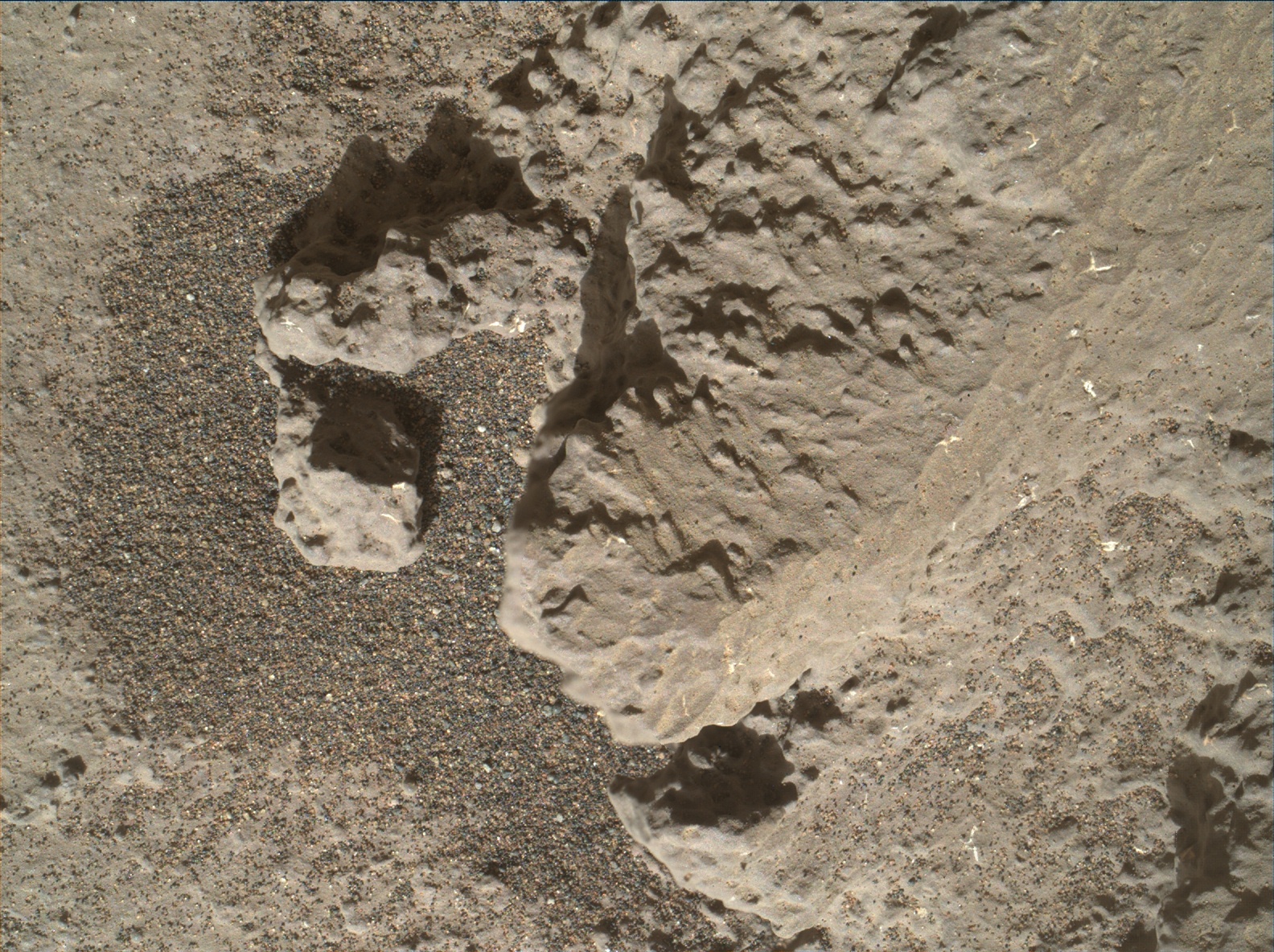
Curioser and Curiosity...  The Mars rover has found another fascinating rock.  I'm guessing this is an inclusion of salts formed by water evaporation.   Look at the upper left side, partly obscured by soil (click to embiggen)...

A walk though the morning's political headlines...

A walk though the morning's political headlines ... neither inclines me to be proud of my country's political process, nor to be more engaged in it:

Trump calls Cruz a “pussy”  Classy, isn't he?

Hillary to shake up her campaign staff  Her poor showing can't be her fault!

Bloomberg eying a run for President  Because we need another old white guy!

Jeb! would eliminate Citizens United  Because conservatives hate free speech!

Sheesh...

Artur Fischer, RIP...

Artur Fischer, RIP...  You have almost certainly used some of this man's 1,000+ inventions.  I've used many of themHe died on January 27th, at his home in Germany, at the age of 96...

I did a lot of work on things like this...

I did a lot of work on things like this ... back in the early 2000s, when I worked for an electronic stock and options company.  “Algorithmic trading” was just coming into its own back then, and some companies were making a lot of money with some relatively simple algorithms.  For instance, “pairs trading” was a common strategy.  The notion behind it was very simple: by examining historical stock pricing data, someone would identify a pair of stocks where the price on one of the pair (call it "AAA") change before the price on the other (call it "BBB") changed, and in a predictable way.  In that case, you could write a program that watched the price of "AAA", and automatically bought or sold "BBB" on the assumption that it's price would change sometime later.

We built a pairs trading platform, and sold it as a service to hedge fund traders.  It didn't take us long to observe a problem: soon after someone started using a particular pair of stocks, the correlation between the pair's prices would decline and disappear.  Why?  With some investigation, it was obvious: other people would soon start using the same pair, and after that, the market erased any benefit (when lots of people see such a correlation, the price automatically gets adjusted by market forces to eliminate the benefit – it gets “priced into” the trailing stock).  How did these other people know to trade in the pair?  That's also easy: with a simple algorithm like pairs trading, you can figure it out from the trades that someone makes – and those trades are public information.

So our CEO decided that what we needed was an algorithmic trading platform that used an algorithm so complex that nobody could reverse-engineer it.  Personally, I thought that was crazy – with all the trading data available, it seemed really unlikely that such an algorithm existed.  I thought a more sustainable route was an algorithmic trading platform that depended on something more reliable: that computers are always going to be faster than humans.  We had a series of contentious management meetings on the subject, with the result that we sent off to build that complex algorithm platform.  Shortly afterwards I was laid off.  I have no idea if my skepticism was even part of why I was laid off. 

I note with some belated satisfaction, however, that the high-speed trading is in fact the way the industry has gone – albeit with far more fanaticism than I'd ever have thought.  For instance, there are now point-to-point radio links in place between traders and the markets in New York (and similarly in other parts of the world).  These links exploit the tiny advantage in the speed of electronic communications that a straight-line route has over the traditional wired route.  That tiny advantage justifies many millions of dollars in cost to set up those radio links.  Amazing!

You may have seen this story...

You may have seen this story...  A hacker published (on Sunday) the names and other information about 20,000 FBI agents.  When I first read the very superficial and (of course!) breathless news reports, I had two immediate questions:
  1. Are there really 20,000 FBI agents?  That seems like an awfully big number.
  2. Did the hacker get this information by exploiting technology vulnerabilities, or some other way?
The first question turned out to be easy.  The FBI says it employs roughly 35,000 people, and this estimate from the son of an agent estimates that 21,000 of them are “Special Agents”.  So, yeah, it seems likely that there really are that many of them.  Sheesh.  My own math: their average salary is around $100k, so the FBI Special Agent payroll is something like $2 billion a year.  By the time you add benefits, expenses, office space, cars, training, guns, ammunition, etc., it's likely something like $4 billion a year.  I wonder what benefit U.S. citizens get for that expenditure?  That's not a complaint, I'm really wondering.  I don't actually know what the FBI does that would justify that magnitude of expense.  That's a lot of money!  Do they really need that many Special Agents?

The second question is answered by this article.  Assuming that information is accurate and complete (and I feel foolish even considering that, given it's sourced by a news organization), the information was obtained by good old-fashioned Kevin Mitnick-style “social engineering”.  The hacker tricked someone into giving him access to a classified account.  No special technical knowledge required.  This is very often the case – the very best, most perfectly maintained security technology can easily be bypassed if a hacker can trick an authorized user into letting him in.

Not long ago I read a version of this social engineering that involved something else altogether: a way to steal valuable cars.  It seems a gang of car thieves realized that customers of a restaurant with valet service were voluntarily handing the keys of their cars to the valets.  So they paid the real valets at a fancy Boston restaurant to take a night off – and they paid them very well.  Then the car thieves too the place of the real valets, and parked customer's cars for about an hour.  Then they simply drove off with the eight most valuable customer's cars, using the keys that the customers handed them.  At the time the news story I read was written, they had not been caught.

Often the social engineering approaches that succeed at hacking into things like those FBI records are just as plausible as that car example.  Most of the time, if you poke into the details, you'll come away thinking “That could have happened to me!”  It doesn't take particularly stupid or foolish people to be tricked...

Well, this is encouraging...

Well, this is encouraging...  Note, though, that it's not happening inside our school system...

That moment...

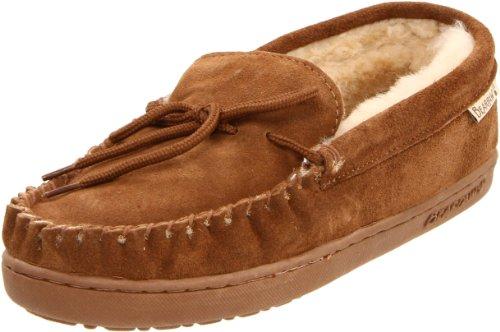
That moment ... when you realize that you didn't know how to use that object you've been using for 40 years.  This happened to me a couple days ago, when I got frustrated (for about the 40,000th time) that my moccasin-style slipper fell off my foot.  I've been wearing this style of slipper for something like 40 years now; sometimes when I buy one they fit well – snugly enough to stay on my feet.  Most of the time, though, they were too loose.  The heel would slip off my foot as I walked.

I'd often wondered why nearly all of these slippers had that decorative shoelace in front.  So far as I could tell, the only thing it was good for was entertaining cats (and that it was very good for!).  But this time I got to looking closely at that shoelace, and noticed that it wrapped all the way around the opening for my foot.  Somehow in all these years I'd never noticed that.  I thought it was just sewn into the front top of the slipper, a useless decoration. 

So I tried an experiment: I yanked hard on those laces and ... it made the foot opening smaller.  In fact, with just a little trial-and-error I was able to adjust the opening to precisely the right size to keep the slipper both comfortable and secure. 

Dang.

I could have done that on the 30 or so other pairs of slippers I've owned.  And I never knew it...

Now we'll see if I can remember this little lesson :)

Monday, February 8, 2016

Paradise ponders...

Paradise ponders...  This morning we took little Konani (our new kitten) in to the vet to be neutered.  As we left, one of the girls who works there called out to us: “There’s a moose!”  Sure enough, about 100' away was a cow moose, young looking, and both frightened and confused.  We helped chase it away from the highway, but we're hoping it will head for the (nearby) mountains.  The staff at the vet were all very amused by the presence of a moose – that was the first time they'd seen one there.  We choked that it was coming in for a checkup!

This afternoon I was helping my brother Scott scan in some of his important papers (so that no matter what happens, he can't lose them).  Right in the middle of that effort, the power dropped out – and about 5 seconds later, it came back up.  Our backup generator had kicked in!  I poked my head out the window to see if I could hear it, but I could not.  So I threw on my boots and jacket, and ran out to the outbuilding it's next to.  At first I thought it wasn't running, but it actually was – I just couldn't hear it until I got to within about 20' of it.  Standing on the back porch of our house, about 100' away from it, I couldn't hear it over the ambient noise.  It ran for 37 minutes until the power mains came back on.  That's the first time we've lost power since we put the generators in, so now we know: they work!  Yay!

Artemis, the field spaniel...

Artemis, the field spaniel ... from Canada (Russell, Ontario, just SE of Ottawa) will be the only non-champion competing at the Westminster Dog Show this year.  I know not why, but I do know that that's one beautiful dog – and apparently possesses the same butt-wiggle that we cherish in our field spaniel Miki...

Sunday, February 7, 2016

Snow on the roof ...

Snow on the roof ... and sunshine means icicles!  We've got them all around the house.  The biggest one is around 5' long, but I couldn't get close enough to it to take a photo.  This four-footer is right next to our front door, so I got it instead :)  Click to embiggen...

Decadence in Paradise...

Decadence in Paradise...  So it's lunchtime, and we're hungry.  We have no particular plans for a meal.  What to do?

We started with some Crumb Brothers black pepper Parmesan bread, lightly toasted.  Slathered it with Duke's mayonnaise.  Sliced some Utah non-hydroponic hothouse Beefsteak tomatoes, slapped them onto the bread.  Cooked up some Dailey's fresh applewood-smoked bacon, chopped it up, sprinkled it on top of the tomatoes, thickly.  Chased that down with a big glass of ice-cold Rosehill Dairy Creamline milk.

I don't know how it gets any better than that!

What is this “Superbowl” thing I keep reading about?

What is this “Superbowl” thing I keep reading about?  :)

What on earth is this?

What on earth is this?  Well, it's not on Earth – it's on Mars, recently imaged by the Curiosity rover.  What do you suppose made those oddly-shaped bumps?  I'm guessing viscous lava eroded after cooling...

Why bad science papers live on...

Why bad science papers live on...  Good science isn't as friction-free as we'd like it to be.  This explains why so many thoroughly debunked climate science papers (as well as from other branches of science) have never been retracted...

Don't be too impressed ...

Don't be too impressed ... with that fancy safe you bought.  Most of the safes sold to consumers (all of them selling for under $1,500 or so) are pretty much useless as a deterrent to theft.  “Mr. Locksmith” demonstrates how easy it is to open one particular model (a popular Sentry electronic safe) in the video at right.  They're not much better at fire protection, either.  The old school hole-in-the-ground is better for both, if a tad less convenient :)

A while back I read an interview with a successful home burglar (here successful means he didn't get caught).  He told the interviewer that when he saw a safe in a home he just smiled – because he knew that (a) the homeowner had stuff valuable enough to need protection, and (b) within minutes he'd have that safe open.  When he was asked what the best way to protect valuables from someone like himself was, he said the best protection was adequate insurance.  Second best: creative hiding.  All the usual methods of hiding he knew very well, even details like what the fake hollowed out books looked like.  But someone who hid their valuables in a unique way that they invented – that would likely work, as he wouldn't spend the time to search for it.

Road train...

Road train...  A somewhat different (and, I suspect, much less expensive) alternative to convoys of autonomous trucks – and this alternative is already in use!  These “road trains” are in Australia, but there are plenty of places in the western U.S. where I would think they would be just as useful – but I never heard of them being even considered here.  I wonder why?

Saturday, February 6, 2016

Just got back...

Just got back ... from another trip up to Hardware Ranch, on a wildlife quest.  We saw quite a few deer, a dipper, a kingfisher, two golden eagles, and five gorgeous bull elk right near the mouth of the canyon, just east of Hyrum.  They were up on a knoll, lying down and surveying their dominions (and in their minds, I'm sure, their subjects).  One of them had a spectacular set of antlers, 12 points with a spread of 5 to 6 feet.  We also saw several beaver dams (just below Hardware Ranch itself) that were snow covered, but there were little muddy gullies carved through that snow – where the beavers travel from one of their ponds to another.

Unfortunately for our enjoyment (we like to drive very slowly and gawk), there were bazillions of cars on the road today.  Weekends are always busier, but today was particularly so.  Oh, well...

Words I did not know...

Words I did not know ... but which greatly amuse me: Thermaggedon.  People who believe that global warming will cause the world to end are Thermaggedonists.  Oh, most excellent!

Paradise panorama...

Paradise panorama...  I took the panorama below this morning, from the field just south of our home.  The house in the distance on the left is due south from where I was standing, and our flagpole on the right side is ENE from where I was standing.  The mountains in the distance are the Wellsville Mountains, a sub-range of the Wasatch Mountains (where the two ranges join, just south of us, is the southern end of Cache Valley).  Our home is just barely visible through the pines just right of center.


This is the sort of thing...

This is the sort of thing ... that a real geek does for fun.  After reading this, I just wish I'd thought of the problem first :)

Think about this for a moment before you go read that post.  Consider the numbers 24 and 50, written in Roman numerals:
24: XXIV
50: L
Fifty is, of course, a much larger number than twenty-four in the usual way we think about numbers' “sizes”.  But notice that twenty-four is wider (on the screen) than fifty when written in Roman numerals.  That's the observation that provoked the puzzle in the linked article.

Now go read it :)

Paradise ponders...

Paradise ponders...  On Thursday afternoon, we made a mess of roasted fresh veggies (and, in my case, a couple of Trader Joe's chicken sausages).  My pig bowl is in the photo at right, but in my defense, Debbie's was about the same size :)

What's in that lovely looking thing?  Well, there are Brussels sprouts, asparagus, carrots, turnips, parsnips, and Shiitake mushrooms.  All of those, after chopping, we threw into a big plastic bag along with a little olive oil, roasted garlic salt, and fresh ground pepper.  Shake, spread on a foil-lined cookie sheet, and roast at 350°F until the veggies are done.  How long it takes is mainly a function of how big the chunks are; ours took about an hour.

Deeeeeelicious!

Oh, and the glass full of milk is, of course, our wonderful Rosehill Dairy Creamline milk.  My brother Scott is now a fellow lacaholic...

Speaking of that milk...  Debbie and I are going to try making our own mozzarella cheese (using that milk!) this afternoon.  We got us a little cheese-making kit after reading how easy it is.  We'll see if that was just cheese propaganda, or if it's true :)  We're going to have the cheese on toasted black pepper Parmesan bread (from Crumb Brothers), with some more of those roasted veggies...

Yesterday we visited a property in south Hyrum, close to our home, on behalf of our friend Kevin P.  He and his wife, after visiting us, decided that they'd like to live up here someday as well.  They've had a sort of background search for a place ever since they visited, and this property popped up in the search.  Mainly I've got it here because I used that occasion to take the first panoramic photo I've made with in iPhone 6:


That photo encompasses about 220° of the view from where I was standing.  I'm pretty impressed with the job the camera did of stitching all that together, automatically.  The only thing I did to this photo was to color-correct it (I've noticed the iPhone takes distinctly bluish photos in snow scenes).  Otherwise, it's just like it was straight out of the camera.

A couple of years ago, a married couple bought the vacant lot right next to my mom's house, near Charlottesville, Virginia.  We've never met them in person, but right after they bought it they managed to start being obnoxious, via letters demanding all sorts of compensation for all sorts of offenses, both imagined and real.  We accommodated where it was the right thing to do, and refused where it wasn't, and they remained steadfastly obnoxious.  My mom has (rightly) been dreading the day they moved into the house they were planning to build there.  Well, a few days ago a realtor posted a sign by the front of that lot – it was for sale.  I contacted that realtor, found out that the asking price was basically a fire sale price (the obnoxious couple needed the money to fund construction on another property they bought), so I put an offer in on it, at a very attractive (to me) price.  They accepted.  Now I have to figure out what to do with two acres of Virginia forest, with one edge along a pond...

Friday, February 5, 2016

Geek: there's a lot of truth...

Geek: there's a lot of truth ... in this short article about the dangers of abstracted, de-duplicated software design.  I've been involved in debates about this exact topic at two different companies, and was surprised the first time (and amused the second) when it quickly evolved into two fairly well-defined camps: what I'll call the pragmatists vs. the theorists.  Basically the pragmatists were saying
“Your lovely design, while laudable and compliant with all the right texts, doesn’t actually work well in the real world!”, 
while the theorists were all
“You heathen!  How dare you advocate violating software design law number umpty-squatch?” 
Since in both cases I was the arbiter, I ruled for the pragmatists.  The first time this happened, I actually had two engineers quit, they were so upset.  We were better off for that.  The second time, I talked with the leaders of the theorist camp before I announced my decision generally, and several of them threatened to quit if I did so.  When I told them I was ok with that, they backed down, and by the time I announced it more generally, they had somehow accommodated themselves to my decision.  One of them told me, long afterward, that he had waited for months for the evils that would inevitably result from my decision to manifest – and when they never did, he realized that he might accidentally have learned something valuable :)

In nearly all my experiences in which the theorists had their way, the results were horrible.  The example of that that comes most readily to mind was at the now-defunct Stac Electronics, where a cabal of fervent object-oriented design devotees managed to take the leadership of a major development project.  Hundreds of pages of beautiful diagrams, thousands of man-hours of meetings, and innumerable design documents later – we had a beautiful but all-but-immutable design ... that didn't even come close to (a) meeting our functional requirements, and (b) meeting our performance requirements.  Disaster.  The leadership of that team lost their jobs, and the company lost over a year of time-to-market.  I was part of the team that came in to clean up the mess, but the dot-comm bubble smacked us around long before we were able to finish that.  Very sad, for all concerned.  Big lesson to me. 

Theorists belong in academia or solitary confinement.  Pragmatic engineers ... they're the ticket!

Chang'e 3 / Yutu photos released...

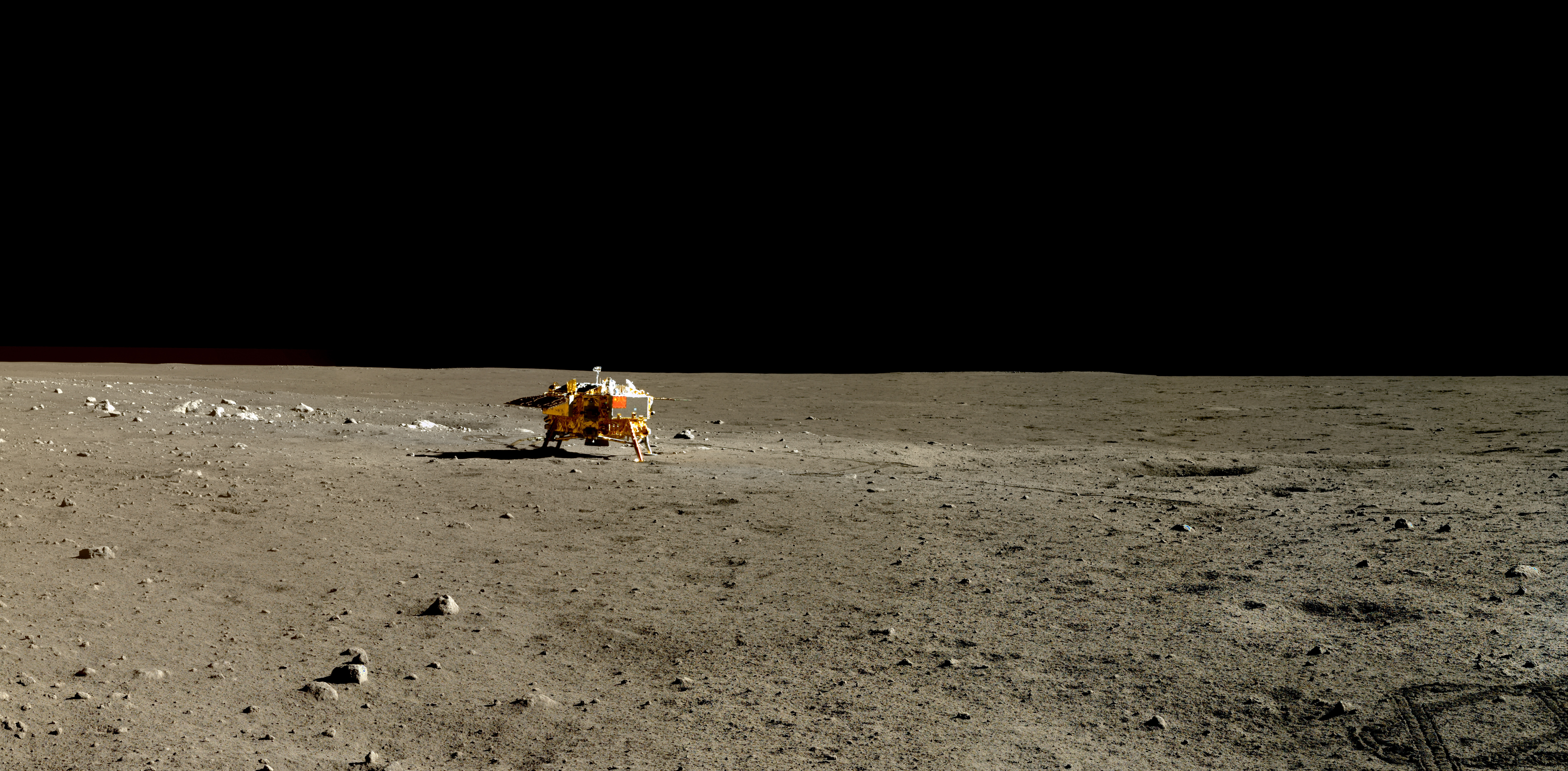
Chang'e 3 / Yutu photos released...  Chang'e 3 is the Chinese robotic lunar lander that successfully touched down on the moon in December 2013.  Yutu is the lunar rover that deployed from Chang'e 3 and was able to do some science work (and take photos!) before it broke down.  The Chinese space agency just released a trove of photos, including the one at right (glorious full resolution version).

I still marvel that our understanding of the moon went from the fuzzy photos and wild speculation of my youth to the the close, high resolution photos and detailed knowledge of today.  I remember well how serious scientists in the mid-'60s warned NASA that the Apollo lunar landers were likely to be swallowed up by the miles-thick powdery dust that likely blanketed the moon's surface.  Not so much :)

Thursday, February 4, 2016

If your data doesn't support your hypothesis...

If your data doesn't support your hypothesis ... in most of science, you change your hypothesis.  Not the global warmists, though!  Steve McIntyre explains, with yet another example of the warmists blatantly cherry-picking the data that supports their preconceived notions.

It would be amusing to see real scientist – say, a physicist – closely examine the way the global warmists use their data...

The Canary Islands...

The Canary Islands...  I flew through there once, on a business trip, but it sure didn't look like this!  More info on the photo...

Our sun...

Our sun ... as you've never seen it before!  You'll want to full-screen this one.  From the video comments:
It’s always shining, always ablaze with light and energy that drive weather, biology and more. In addition to keeping life alive on Earth, the sun also sends out a constant flow of particles called the solar wind, and it occasionally erupts with giant clouds of solar material, called coronal mass ejections, or explosions of X-rays called solar flares. These events can rattle our space environment out to the very edges of our solar system. In space, NASA’s Solar Dynamics Observatory, or SDO, keeps an eye on our nearest star 24/7. SDO captures images of the sun in 10 different wavelengths, each of which helps highlight a different temperature of solar material. In this video, we experience SDO images of the sun in unprecedented detail. Presented in ultra-high definition, the video presents the dance of the ultra-hot material on our life-giving star in extraordinary detail, offering an intimate view of the grand forces of the solar system.

Credit: NASA's Goddard Space Flight Center

A planetarium on your computer screen...

A planetarium on your computer screen...  Free, too.  The Celestia program is pretty cool, even after just a few minutes of playing with it.  It's sort of a Google Earth for the rest of the universe...

Squirrels vs. houses of worship...

Squirrels vs. houses of worship...  One team clearly has a superior strategy:
There were four churches and a synagogue in a small town: a Presbyterian church, a Baptist church, a Methodist church, a Roman Catholic church and a Jewish synagogue. Each church and the synagogue had a problem with squirrels.

The Presbyterians called a meeting to decide what to do about their squirrels. After much prayer and consideration they determined the squirrels were predestined to be there and they shouldn’t interfere with God’s divine will.

At the Baptist church, the squirrels had taken an interest in the baptistery. The deacons met and decided to put a water slide on the baptistery and let the squirrels drown themselves. The squirrels liked the slide, but, unfortunately, they knew instinctively how to swim, so twice as many squirrels showed up the following week.

The Methodists decided that they were not in a position to harm any of God’s creatures. So, they humanely trapped their squirrels and set them free near the Baptist church. Two weeks later the squirrels were back when the Baptists took down the water slide.

But the Roman Catholics came up with a very creative strategy. They baptized all the squirrels and consecrated them as members of the church. Now they only see them on Christmas and Easter.

Not much was heard from the Jewish synagogue, however. They took one squirrel and circumcised him; they haven’t seen another squirrel since…
Via my pistol-packing mama and my cousin Mike...

All those billions of dollars...

All those billions of dollars ... and disastrous incompetence.  Can you imagine any private company surviving with similarly bad performance?  The TSA costs us over $7 billion a year – every year since 2002 – and it accomplishes ... utterly nothing.  Zero terrorists captured or identified.  Zero terrorists stopped.  Zero terrorist weapons captured.  But millions upon millions of travelers inconvenienced and delayed.

From a political perspective, the TSA accomplishes two things:

1.  It pacifies low-information voters, making them believe they're being protected.  The vast majority, unfortunately, do not understand the TSA's profound uselessness.

2.  It employs hundreds of thousands of people on the government payroll – and they can be counted on to vote for Big Government, just as other large groups of public sector union members do.  Also, their union can be counted on to contribute major sums to the Democratic Party and its candidates, thus guaranteeing continued support from them.

Sheesh.  If the voters won't stop nonsense like this, what hope is there?  The doom, I feel it approaching...

Ceres...

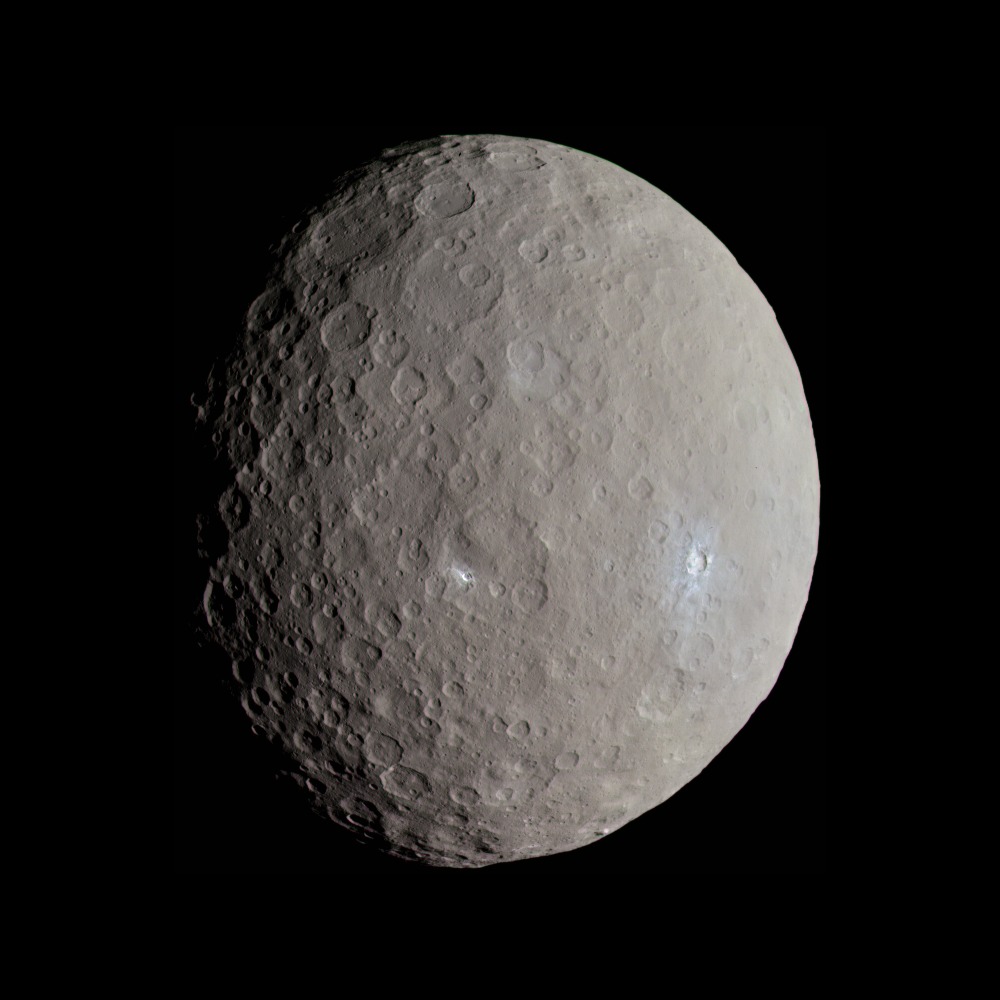
Ceres...  As photographed by the Dawn robotic space explorer.  Via APOD, of course!

Old computers...

Old computers...  I mean really old computers, before electronics.  As many of my readers know, I collect old computing instruments – slide rules (especially), sector rules, Gunter's rules, and abaci.  But there's one old computing instrument that I don't have even a single example of, and I'd sure love to: Napier's bones.  I'm not interested in any of the modern replicas; I would like to get one of the real deals, in any of its many variants, made (most likely) in the 1600s.  I've never seen one for sale, dang it.  Anybody got a set lying about?

Wednesday, February 3, 2016

Konani, and a few more ponders...

Konani, and a few more ponders...  That's the latest iteration of this cute little guy's name, pronounced co-NAH-knee.  I'm not sure how long this one will last :)  Debbie's been going through names at a record-setting pace, and I can no longer keep up.  If kittens pay any attention to what people call them, this must be one terminally confused little cat!

If you know Debbie at all, you'll be unsurprised that Konani is getting lots of attention.  He's still in isolation, in our basement bathroom – but he gets taken on “trips” frequently, usually to our office, for a little one-on-one attention.  Today we visit the vet with him to get clearance for him to join the rest of our kitties.  Yesterday he got some extra attention from our friend Michelle H.  This little guy is much more interested in people than most of our cats are, and is completely unafraid of strangers.  That's slightly unusual in cats, but even more unusual is that he fetches a little ball and brings it back to be thrown again.  We have one other cat (Jahar, our Savannah cat) who does that, but of all the cats we've owned we've never had another who did so.

Yesterday morning I drove up to visit with my brother Scott, near Newton, Utah.  The view on the last few miles was simply breathtaking – a near-180° panorama of the snow-covered Wasatch Mountains, to the east.  His cabin was very homey looking in the snow!

Last night Debbie and I drive down to Salt Lake City (SLC) to meet up with our friend Doug W.  We took the opportunity to stock up on wine and beer at the (much larger) SLC State Liquor Store, then met him at (of course!) the Red Iguana.  Debbie and I both ordered the special (chicken poblano with grilled shrimp) because it sounded so good – and it was!  It wasn't the stuffed poblano pepper I was expecting, though.  This was a grilled chicken breast with a poblano pepper butterflied on top of it, then the whole thing drenched in a sauce that was just heavenly.  The grilled shrimp were on top of that concoction, just sitting there like little presents.  We had very happy tummies!  Great company and great food is sure a tough combination to beat...

Doug and his wife Dee live near San Diego, but are up here to attend a conference for a few days.  Dee decided to pursue her genealogy research in the LDS church's facility here instead of joining us at dinner.  She doesn't often get access to a vast library of microfilmed documents like they have here, so being the hard core genealogist that she is, she took a few granola bars into the basement research facility and looked at microfilms instead of having a meal with us at the Red Iguana.  That's what I call dedication!  I tried to imagine making such a sacrifice ... but I didn't get very far :)

I've been accumulating a few photos over the last couple of days that I've neglected to share.  These are all from around our yard.  The first photo is from Saturday afternoon, as I was plowing our driveway.  The sun, not far from setting, peeked through a hole in the clouds to our southwest, illuminating the Wellsville Mountains foothills there.  Beautiful!  The second photo I took on Sunday, looking to our northeast from a second floor window in our house.  This was also near sunset, in a few moments when the clouds clear (that day was nearly solid clouds except for a few minutes of sunshine).  The last two photos I took yesterday, when we actually had some sunshine.  We have icicles everywhere now because of the combination of low temperatures (under 20°F).  On my drive up to see my brother Scott yesterday, I saw some houses with 6' long icicles hanging from south-facing roofs.  Amazing to see!

All the wet snow we got has caused a bit of damage to our landscaping.  We have two pines near the house that have lost large branches (one of them is 5" in diameter).  Most likely we'll find more damage elsewhere, once the snow melts enough to let us walk around.  Beautiful but dangerous, that snow is...


Tuesday, February 2, 2016

Remember the derby cars sawed in my shop last week?

Remember the derby cars sawed in my shop last week?  Alan L. sent over this photo of Nick L. with his finished “wookie board” car.  Nice!

Nick's dad is quite a talented photographer, no?

This is being reported...

This is being reported ... as the sinking of a battleship, to make an artificial reef.

Uh, no.

That's not a battleship, not even in the Mexican Navy.  It's just barely a ship, for crying out loud.

But the video is cool!

We're so glad we left California...

We're so glad we left California...  After reading this, I wonder if Victor Davis Hanson might be following us someday soon.  Depressing, that piece is, if you ever loved California...

You don't often hear something like this...

You don't often hear something like this ... from a dedicated progressive.  Just listen!

I want you to know...

I want you to know ... that Mia Love is a Utahan, and a Republican representative to Congress.  Look what she's proposing.  Ain't it wonderful?  I estimate its chance of passage at about 0.0000048%, give or take a few millionths.  But we can dream, can't we?

Wait a minute...

Wait a minute...  In last night's Iowa caucuses, on the Democratic side there were six precincts where the ballots were tied – evenly split between The Hillary and The Bern.  So what did they do?  They tossed a coin to decide it.  That's fair enough; in a tie they break it by randomly choosing a winner.

But...

In all six of these tied precincts, The Hillary's people won the toss.  What's the chances of that?  For a geek like me, that's a trivial question.  Assuming the coin tosses really are random, there's exactly one chance in sixty-four that Hillary (or Bernie) would win all six of them.  If it had gone the other way (that is, Bernie winning all six), would that have changed the election results?  I'm not sure, as the Democrats have a less-than-transparent mechanism, population-based, for deciding how much weight to place on each precinct's votes.  If the precincts decided by a coin toss are small (in population), as is most likely, then their cumulative effect might not be enough to change the outcome.  But we don't know that – at least not now – and given the shenanigans the Clinton dynasty is justly famous for, I find that ... at least unsettling, and possibly suspicious.

I'd sure like to know whether if Bernie had won tosses, he'd be the winner...

Meanwhile, Scott Adams is broadly hinting that it's possible the Republican caucuses were rigged.  The most persuasive piece of “evidence” he offered (assuming it's accurate) is that Microsoft supplied the software that totaled the Republican results, Rubio's biggest donor was Microsoft, and Rubio is a big-but-plausible winner.  Hmmm...

Comet 67P...

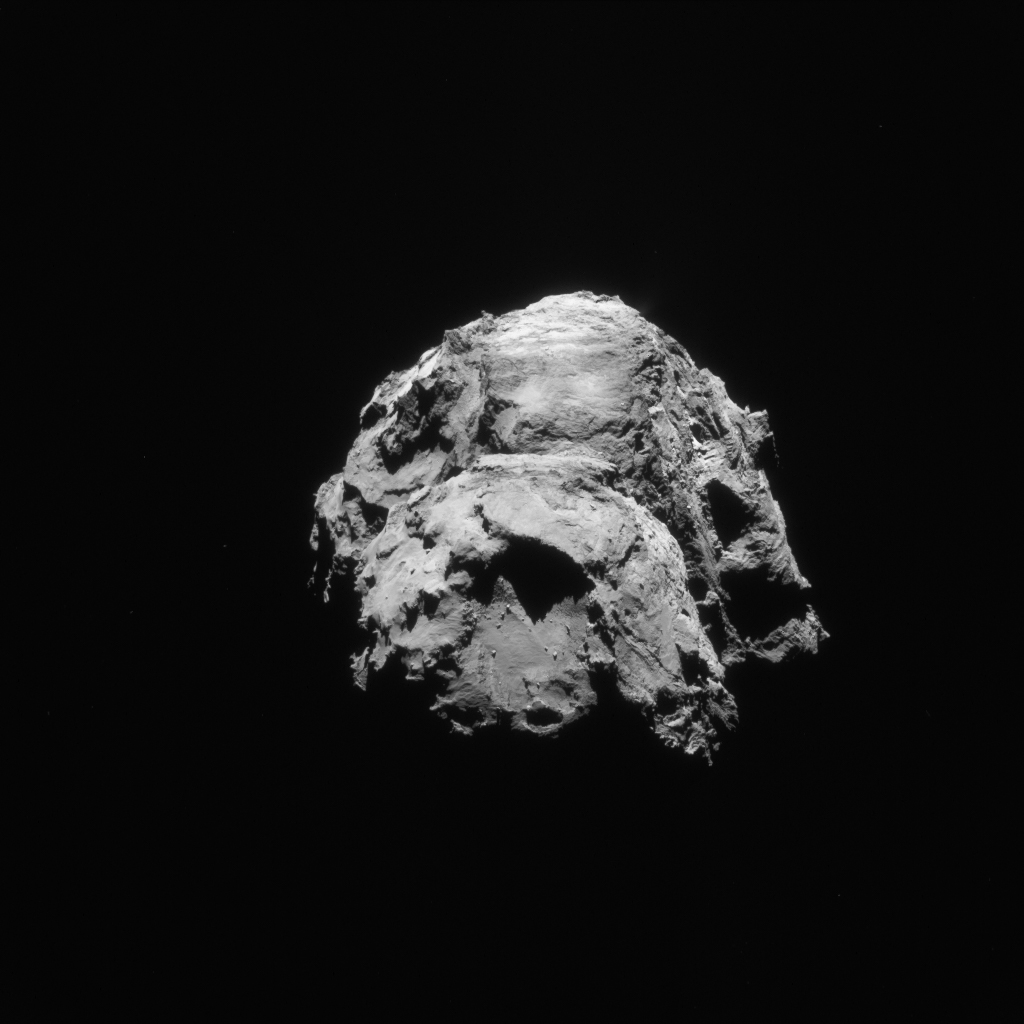
Comet 67P...  Every time I look at one of these images, I marvel that I live in an age where I can sit in my living room and look at photos taken just hours ago by a camera located very nearby a comet

When I was a boy on our farm in New Jersey, comets were largely mysterious objects about which there was far more speculation than actual knowledge.  Not so many years later, we have sent robotic explorers to two comets, we have several more such explorers that will be visiting, and we've gained an enormous amount of concrete knowledge about comets – including magnificent photos like these, streaming back from the Rosetta spacecraft.  While there are still many mysteries about comets (especially about their origins), there's a solid base of knowledge and understanding now – there's more knowledge than speculation...

So the Iowa caucuses are over...

So the Iowa caucuses are over...  What did we learn?

Not much, I think.  The big loser would appear to be The Hillary – a tie with an octogenarian socialist is pretty far removed from the expected coronation.  It's only one tiny step from losing to the octogenarian socialist.

On the Republican side, there were three viable candidates going into the caucuses (Cruz, Trump, Rubio) ... and there are three viable candidates coming out.  The three of them finished less than 5 points away from each other, which I'll call a tie for statistical purposes.  So ... a great, big nothing-burger.

Another loser (but this is almost an evergreen assertion these days): the polls.  Not a single one of them correctly predicted this outcome.  Everybody was surprised by (a) Trump's loss, slight as it was, and (b) Rubio's near-tie.  My takeaway from this is the same as my takeaway from the pollsters in the 2012 election: political pollsters and weather forecasters are the only two occupations I know of where getting the wrong answer most of the time isn't career-threatening (I'm looking at you, weather forecasters of northern Utah last week!).  We shouldn't give either group any credibility in our thinking.

I'm feeling ... very reinforced in my lack of excitement and engagement with this year's Presidential contest.  We still have five viable candidates (Clinton, Cruz, Trump, Sanders, Rubio), not one of which I'd look forward to having as my President.

My favorite observation about the evening, made by several people in several forms: the alleged party of old white men (the Republicans) gave over 60% of their votes to (relatively) young minorities, while the allegedly minority-friendly party of the people (the Democrats) gave 99.4% of their vote to old white folks...

Monday, February 1, 2016

An amazing visualization tool...

An amazing visualization tool...  Free, on the web, and it works in your favorite web browser.  It's called “earth”, and it lets you look at winds, temperature, humidity, pollutants, ocean waves, and more – and you can see them anywhere in the world.  It's all driven by satellite data, and much of the data is updated in near realtime (within a few hours).  The least fresh data I could find was at most five days old.  You can even look at the data with a variety of map projections.  Amazing to have this at your fingertips!

I took the screenshot at right this morning, showing the winds over the U.S. At first I thought that winds were all it could show, but then I clicked on the “earth” menu at the lower left corner, and a whole 'nother world opened up.  Take a gander!

The math was settled...

The math was settled...  There is no such thing as an irrational number (that is, a number that cannot be exactly defined as the ratio of two numbers). No opposition was allowed; in fact, irrational number deniers are rumored to have been executed.

It's all very reminiscent of global warming and its skeptics...

I tried...

I tried ... to get interested in tonight's caucuses (caucusi? see note below.) in Iowa.  I tried to even care.  But I failed.  Tonight's events are doubly irrelevant for me.  First of all, there isn't a single candidate running that I'm sure I'd like to elect as President.  Worse, there's not even anyone who stands out as someone I don't want – so there's not even anyone in particular to vote against.  Hell, I'm not even very curious about who wins this thing, in either party – they're all schmucks!  Then secondly there's the very limited meaning and impact of the Iowa caucuses, and it seems to be getting even less relevant with each passing election.

So I'm paying no attention at all.

Note: on a much more important matter, I looked up “caucus” in the OED to see what the usual form of the plural is.  I assumed, from the form of the word, that it was derived from Latin.  I got a surprise:
caucus
[Arose in New England: origin obscure.
   Alleged to have been used in Boston U.S. before 1724; quotations go back to 1763. Already in 1774 Gordon (Hist. Amer. Rev.) could obtain no ‘satisfactory account of the origin of the name’. Mr. Pickering, in 1816, as a mere guess, thought it ‘not improbable that caucus might be a corruption of caulkers', the word “meetings” being understood’. For this, and the more detailed statement quoted in Webster, there is absolutely no evidence beyond the similarity of sound; and the word was actually in use before the date (1770) of the event mentioned in Webster. Dr. J. H. Trumbull (Proc. Amer. Philol. Assoc. 1872) has suggested possible derivation from an Algonkin word cau′-cau-as′u, which occurs in Capt. Smith's Virginia 23, as Caw-cawaassough ‘one who advises, urges, encourages’, from a vb. meaning primarily ‘to talk to’, hence ‘to give counsel, advise, encourage’, and ‘to urge, promote, incite to action’. For such a derivation there is claimed the general suitability of the form and sense, and it is stated that Indian names were commonly taken by clubs and secret associations in New England; but there appears to be no direct evidence.] 
Such outright uncertainty is fairly rare in the OED, but this sort of discussion is one of the big reasons why I love that tool.  Way more than I love the Iowa primary process, whatever one calls it...

Sunday, January 31, 2016

Paradise ponders...

Paradise ponders...  Well, the snow finally stopped sometime last night.  This morning, after the sun came up and was shining nicely, I went out to plow the driveway again.  I quickly ran into a problem, though – in my hurry to get into the (nice, warm) house last night, I forgot to turn off the hazard lights on my tractor.  I don't normally use those lights, but last night when I drove down the highway I had them on.  They were still flashing this morning, but the bulbs just barely lit up.  The tractor engine wouldn't turn over.

So ... I had to go fish the jumper cables out of the garage, run Debbie's truck over to the barn (over the unplowed inch to two inches of fresh snow), and park it nose-to-nose with the tractor.  Then I had to figure out how to open the tractor's “hood” so I could get to the battery.  Luckily that turned out to be easy.  I hooked up the cables and started up the tractor, then put the truck back, the cables away, and finally I could go plow.

I got surprised right away by a layer of ice that developed somehow, right against the pavement.  In a couple of places it was almost an inch thick, but most places it was only about a quarter of that.  I plowed the entire driveway but still couldn't actually see the pavement!  Fortunately the sunshine took care of that problem in just a few hours.

Then I shoveled off the walkway again, and salted it to get rid of the ice (it was there, too; not just on the pavement).  I've got four foot high piles of snow now on both sides of that walkway...

Uh oh...

Uh oh...  Curiosity may have a problem...

I've never been able to fathom...

I've never been able to fathom ... why so many people are attracted to socialism.  The inevitable outcome isn't exactly attractive...

Collision imminent!

Collision imminent!  A giant cloud of gas (weighing more than a million suns) is headed for the Milky Way galaxy at 700,000 MPH.  It will hit a different arm of the galaxy than the Earth is in, about 30 million years from now.  That's imminent in the grand scheme of things, though it may not seem so to you :)

The Square Red Nebula...

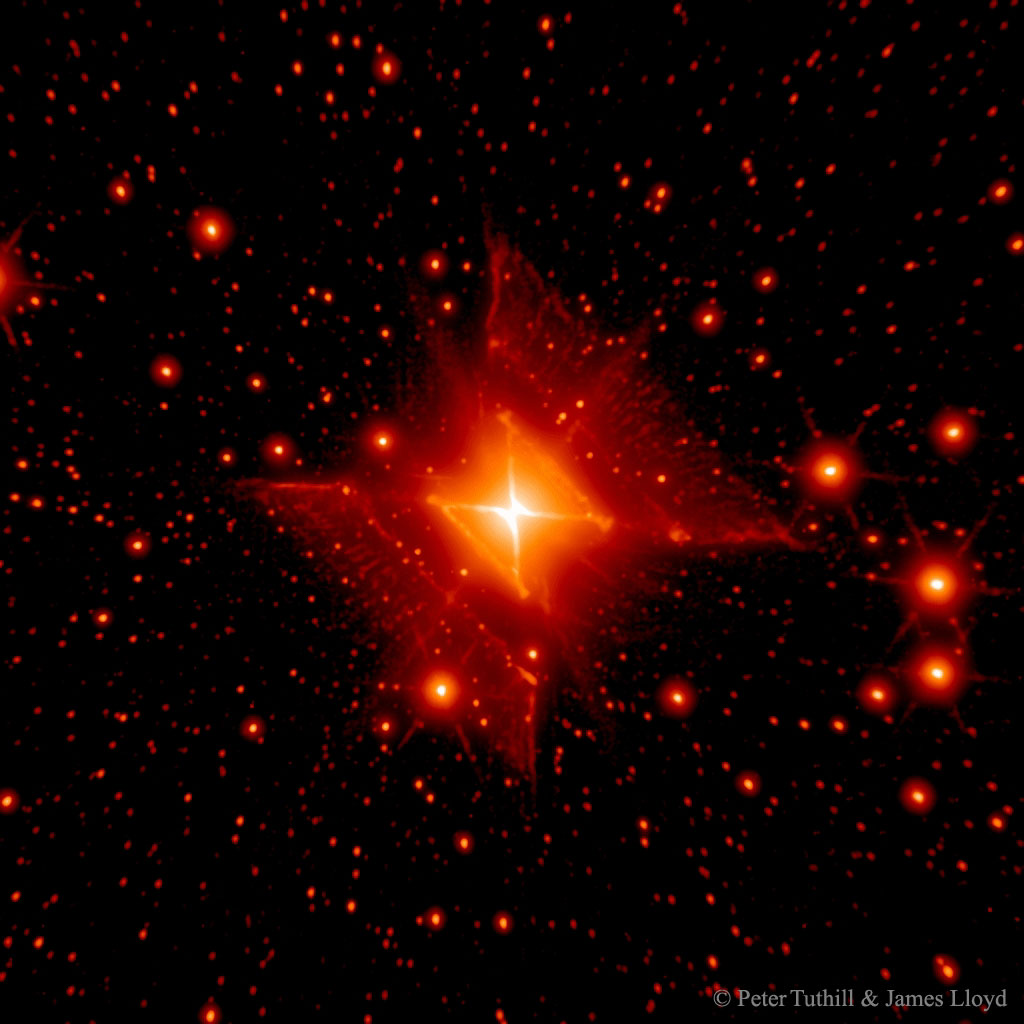
The Square Red Nebula...  Via APOD, of course.  What a bizarre celestial object!  Click to embiggen...

Things I did not know, part 54,903,112...

Things I did not know, part 54,903,112...  StrategyPage's article on suicide bombings includes this paragraph (emphasis mine):
In both Lebanon and to a lesser extent in Sri Lanka, the terrorist organizations took advantage of religious beliefs that honored extreme sacrifice. Added to this was exploitation of economic and political grievances, thus making the suicide attackers into heroic characters. In addition, families of the suicide volunteers received generous (by local standards) economic rewards. Until in 2003 families of Palestinian suicide bombers receive up to $33,000 (from various sources, mainly Iraq and Saudi Arabia). Financial incentives like this have become common and the Palestinian government now pays them out of foreign aid cash
Assuming that's true (and I've found StrategyPage to be a reliable source), this is simply appalling.  The vast majority of foreign aid that Palestine receives comes from the U.S., either directly or indirectly through the U.N. and other aid organizations.  So ... U.S. tax dollars are paying rewards to the families of suicide bombers.

You'd think I'd be cynical enough to be unsurprised by this, but I guess I need to work on my cynicism some more because this did surprise me.  As I sat here and festered, I started thinking about all the things our government does that anger me, and ... I understood a little better what a powerful current Trump is tying into.  I don't like the idea of Trump-as-President, but I absolutely love the idea of tipping over the apple-cart on the current people running the government...

I've neglected to mention...

I've neglected to mention ... a piece of clothing I recently bought, that's making me even more comfortable outside in cold weather: fleece-lined jeans from Carhartt.  They are the bomb!
 Despite having (a relatively mild case of) Raynaud's disease, with the right apparel I'm not having much trouble.  The one exception: my hands.  I still don't have a great solution for keeping my hands comfortable while still allowing me to work with some semblance of dexterity.  My best answers today are (a) a pair of electrically heated gloves (designed for motorcyclists), and (b) a pair of well-insulated mittens combined with chemical heaters.  My fingers still get painful in the gloves if it's cold enough, and of course in the mittens my dexterity is quite impaired.  Still searching for a good answer for that!

The insulated boots I got earlier this year have proven to be a great answer for my cold feet.   Yesterday afternoon I was outside for about four hours, including an hour in a near-blizzard condition, and my feet (and legs) were comfortable the whole time...

Saturday, January 30, 2016

Dang it!

Dang it!  The storm stopped around 1:30 pm, and the forecast said little chance of more, and the weather radar showed nothing on the way – so I shoveled our porch and walkway (about 18" of snow), and plowed our driveway. 

Then I headed over (on the tractor) to our neighbor, Nick and Maria S.  They have a long driveway and told me they had nobody arranged to plow them out, so I volunteered.  On the drive over (about 2 miles on a 15 MPH tractor), it started to snow.  By the time I got to their house, it was a full-on blizzard, with visibility down to 100' or so.  I plowed them out as best I could see, and headed home. 

I was frozen and soaked by the time I got back in the house, so I jumped right into a nice, hot shower.  Fifteen minutes later, there was an inch of fresh snow on the ground – and it's still coming down hard. 

Dang it!

Plowing the driveway this time was a much different experience than usual.  Normally the only challenge is to scrape every square inch while marshaling all the snow off to the side.  It's sort of a management problem: not taking too big a bite, having the blade angled right, etc.  This time there was a completely different challenge: how to get the vast quantity of snow herded off to some place available to put it.  There was a lot of snow to put somewhere!  Next time we have a deep snowfall, I'm going to try starting out with the loader bucket, and use that to move the bulk of the snow off to some good place for a pile.  Then I'll use the blade to finish it off nicely...

Newton...

Newton ... or Haukea (white snow in Hawai'ian), or Haunani (beautiful snow) ... all these names are under consideration.  He's one cute little kitten.  So far as we can tell, he's in good health.  He's got a vet appointment on Wednesday to be sure.

Then there's our dogs, in the snow.  They'd really rather be inside :)


Snowy consequences...

Snowy consequences...  The temperature is hovering right around freezing, which means the (totally unpredicted) volumes of snow that we're getting are heavy, gloppy, and wet.  For some reason one particular basement casement window is having lots and lots of snow pile into it – to the point where I started to get worried about its physical integrity.  The weight of that snow looked like it just might break the window panes!

So I ran out to my shop, found a piece of scrap OSB (chip board), and sawed it up into two 5' x 20" pieces.  Then I shoveled all the snow out from around the casement (this is while the roof was dumping more on me!), shoveled out most of the snow inside the casement, and covered it with those two pieces of OSB.  It looks like it will hold, and it definitely removed the immediate threat.  We're keeping an eye on the other casements, too, but so far none of them are getting large amounts of snow in them.  I know not why.

Meanwhile, some photos from around the place to entertain you.  If I didn't keep thinking about the work it's going to take to dig us out, I'd be entranced by the beauty of it.  The first photo shows our sidewalk after I shoveled off the first 8" or so.  In the fifth photo you can see the juncos that just don't care that I'm standing right next to them – they want that food!  The last is the same balcony shot I took just a few hours ago – look at all this white stuff!


Our balcony...

Our balcony ... at 7am.  And it's supposed to snow all day long.  Yikes!

The forecast says 3 to 5 inches today, but we've already gotten more than that.  Can you spell buried?

Mystery of the cattery pond...

Mystery of the cattery pond...  When Debbie went down to our basement cattery this morning, she discovered a small pond in the northeast corner of the room.  This was very reminiscent of the indoor ocean we had last summer during a rainstorm, but on that memorable occasion it was quite obvious where the water came from: the casement window had about 8 inches of water in it, and water was streaming through the window frame into the basement.

This time the source wasn't nearly so obvious.  We cleaned up the water with mops; the total was about two quarts.  That's far too much for a cat to be the source under even the wildest set of assumptions.  It's even too much for a water bowl to have been the source.  The kitties were puzzled as well; it was not the water feature of their dreams.  So we were mystified as we cleaned up, until Debbie spotted some water on a casement window sill.  Ah, ha!  That had to be the source.  But how?  The bottom of the casement well had no water.  Where did the water come from?  How did it get through the window?

Some inspection and thought unveiled the answer.  If water came through the casement opening at an angle (as it would if the wind was blowing from the east), then the rain would strike the casement window pane.  Then it would run down and into the sill that the window slides in.  That sill has a drain to the outside, but it's a small hole – heavy rain could easily overwhelm it.  In that case, water would overflow and some of it would run down the inside of the sill, into the cattery.  That must have been what happened.  It was rainy and windy last night.

I'm going to call that a mystery solved.  We've been in the house nearly two years now, and this is the first time anything like that happened.  Let's hope it remains a rare occurrence!

You have to pick cherries...

You have to pick cherries ... if you want to make cherry pie.  That's from this new post by Steve McIntyre, continuing his tireless work trying to find some bit of reality in the warmist's research papers.  Short version: he hasn't found any yet.  From his conclusion:
Unfortunately, Briffa and associates have never set out ex ante criteria for site inclusion/exclusion, resulting in Briffa regional reconstructions seeming more like Calvinball than science, as discussed in many CA posts.   However, remarkably, D’Arrigo et al 2009 (though not noticed at the time) had admitted earlier that year to doing exactly what Briffa had denied: the ex post selection of sites in order to obtain a preconceived result (a reconstruction that went up in the 20th century).
Do read the whole thing.  It's wonderful and satisfying to see a competent observer applying actual science techniques and skepticism.  Plus, a Calvin and Hobbes reference!

Paradise ponders...

Paradise ponders...  We had an unplanned adventure yesterday.  My brother Scott had a new feline at his house – a male kitten, barely old enough to be outside by himself.  The kitten (which he named “Furball”) was obviously not feral – he was very familiar with people and wanted into the house.  Scott isn't interested in having a kitten as a pet, and we didn't want to see the poor thing tossed back out into the snowstorm, so Debbie and I drove up and picked him up.  Furball (tentatively renamed “Newton”) is now ensconced in our basement bathroom, isolated from our cattery kitties.  We have an appointment for him with the vet next Wednesday, and Debbie has contacted Four Paws (a rescue volunteer group) to see about finding him a permanent home.

Meanwhile, Debbie has a kitten.  If you know her, you can probably imagine just how heartbroken she is about this :)  Photos will be forthcoming...

Water is all over Pluto...

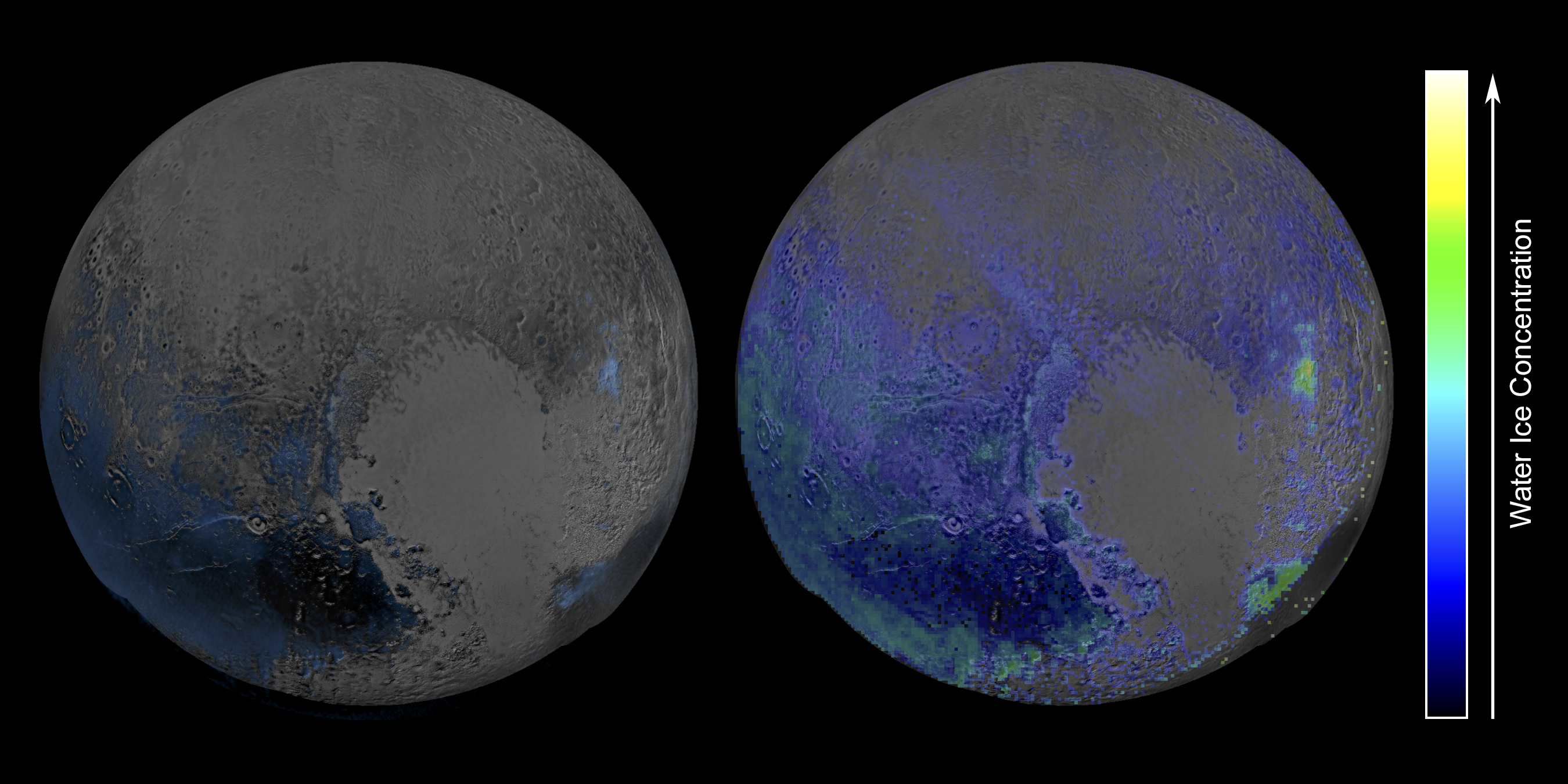
Water is all over Pluto...  It was a surprise to find any water ice on Pluto.  With more analysis of the New Horizons data, researchers are discovering that there's lots of water on Pluto, and very widely distributed.  More here...

Comet 67P...

Comet 67P...  Handsome fellow, isn't he?

Of dates and computers...

Of dates and computers...  I stumbled into this article in my reading this morning.  It's a good, non-technical explanation of why we have leap years (this year is a leap year, by the way).  This is familiar territory for me, as I've written quite a bit of code that deals with these issues.  That got me to pondering just how much time I've spent over the years doing this.  It's kind of crazy, really, just how hard it is!

The most recent descent into date madness that I took was about 12 years ago, when I was working for a company doing electronic stock and option trading.  They had customers located all over the world, in a total of 28 different time zones.  The development team was getting all twisted up in the problem of converting dates and times from one time zone to another.  Our programming environment (Java) had a standard way of doing this (a “library”), but it always seemed to be missing a few of the time zones we needed.  The problem was that time zones changed frequently.  Mistakes in the time zone conversions could be very expensive for us, so it was worth considerable effort to get right.  I ended up writing a replacement for the standard Java library that we could keep up to date ourselves.  I was amazed how complex this seemingly simple problem was, especially when it dawned on me that I had to track not only the current time zones (that was bad enough!) but also the entire history of time zones.  Sheesh!

Way back in the '80s I had a consulting job that involved writing code for a different kind of date and time conversion.  This time it was a university who needed a way to figure out the relative timing of events in the past, back to around 500 BC.  The challenge was that people in different places used to keep entirely different calendars, and these calendars independently changed over time.  When someone in Italy wrote a date of (say) February 12, 1204, that wouldn't necessarily have been the same date in (say) Denmark; there it might be December 29, 1203.  One of the big challenges to understanding those differences was that the whole concept of a country was quite fluid back then :)  Even worse, in some places the researchers cared about, the calendars they used were completely different – not the Julian calendars invented by the Romans, but totally different calendars generally controlled in quite an arbitrary and capricious manner by religious authorities.

That was a really challenging programming problem.  Coming up with a model that could handle all these things wasn't too hard, but gathering the information required to fully implement that model was.  I ended up getting a grad student assigned to me as my helper, and her only job was to go get answers for me.  I'd ask her a question like “When did Amsterdam switch over to the Gregorian calendar?”, and she'd go off to get the answer.  In the end, the solution was more a database and less a bunch of code. 

I remember one problem the researchers were wrestling with that they never did come up with a satisfactory answer for.  The problem arose when interpreting the writings of someone in the past who was writing about events in an area not local to them.  For example, an Englishman might write about the purchase of a ship from Amsterdam, saying something like “I bought this ship for 4,000 guineas, and it was delivered on March 17, 1366.”  The problem is which March 17, 1366 was he talking about: London's or Amsterdam's?  Because they weren't the same.  Most likely they'll never figure that one out :)

Anyway, I've spent a lot more programming time dealing with issues like this than I ever thought I would.  The problem of dates and times keeps recurring, and I'm not sure that will ever end.  For instance, there's a debate currently underway about leap-seconds, and whatever the answer turns out to be, software will have to be written to deal with it...


Laser beam space rock deflection?

Laser beam space rock deflection?  That's what this article is talking about.  They propose two versions: one that would orbit the rock being deflected, the other in Earth orbit. 

The version with the laser flying nearby the space rock makes sense to me: the laser is basically collecting sunlight (with a solar panel array) and turning it into a high energy beam of light that vaporizes parts of the rock's surface, acting like a small (and terribly designed!) rocket to “push” the rock the other way.

The version with the laser flying in Earth orbit sounds like fantasy to me, mainly because of the implausibly “tight” beam divergence that would be required.  “Beam divergence” is one of the measures of the quality of a laser.  It's a function of both the laser itself and the optics the beam is passed through.  The “optics” part gets very tricky with high power laser beams, as the optics inevitably absorb some of the energy from the laser.  Even if the absorbed fraction is very small, the optics get very hot – and that heat can only be gotten rid of in space by re-radiating it.  That's hard.  But even if you ignore the heat problem, the quality of the laser and optics required is almost unimaginably high.  I think the people proposing this are smoking something they shouldn't oughtta be...

A new skiing operation...
A new skiing operation ... uses a Snow-Cat that runs up a trail starting just 2.5 miles southeast of our home.  We've seen the Snow-Cat parked there, but didn't know why...
The weatherman said snow...

The weatherman said snow ... and (this time, at least) he was right on target.  There are about 2 inches of fresh snow on the ground.  When I let the dogs out a couple hours ago, it was snowing hard – when they came back inside, each of them had a quarter inch or so of snow all over their backs.  Then they shook it off :) 

The image at right show the weather radar picture as of about 4 am this morning.  The winds are blowing almost directly from the west, so most of that “blue blob” (the snow storm) has yet to hit us.  The forecast for today has been revised; they're now saying 3 to 5 inches of snow today, with the snow lasting into this evening.  That means a storm total of 5 to 7 inches.

Looks like my Sunday morning chores will include plowing the driveway and clearing the sidewalk!

Whenever someone whines to me...

Whenever someone whines to me ... about the stock market decline, I show them a chart like the one at right, and remind them that they haven't “lost” a penny unless they sell.  That chart plots the Dow-Jones index, the NASDAQ 100 index, and the S&P 500 index over the five years.  Yes, the stock market prices have declined a bit over the past few months.  Yes, if you had purchased an index fund at the peak, and sold today, you'd have lost a small percentage.  But ... if you purchased that index fund more than a year or so ago, it's had an appreciable increase in value even with the recent declines.

So after I show them this chart, I tell the whiners that if they are going to have an emotional reaction when they watch the indices every day, then they shouldn't be investing in the stock market at all.  They should instead invest in something less visibly volatile, with a risk/return trade-off they  can live with.  If they can find such a thing – these days the stock market is hard to beat on that score...