Wednesday, August 15, 2007

Wildfire Information...

It's that time of year again for Jamulians – with the low relative humidity and high temperature, our risk of wildfire is greatly increased. Add some Santa Ana winds to the mix, along with illegal aliens making campfires anywhere and anytime, and we've got a very volatile situation.

When a wildfire is actually underway, everybody in the area hungers for information – good, solid, reliable, up-to-date information. Unfortunately, this information can be amazingly difficult to come by. The usual sources that you might expect to deliver such information are actually rather bad at it. During the Viejas, Pines, Cedar, and Horse fires, we discovered firsthand (by our own on-the-spot surveys and investigations) that much of the information being put out by the media – newspapers, radio, and television – was either flat-out wrong or very badly out-of-date. Wildfires driven by Santa Ana winds evolve very quickly, and the media news cycles just can't seem to keep up.

So where do you go for information? Here is a list of the best resources that I've accumulated over the years, both from my own research and from local residents where were kind enough to share. If you know of other resources, please leave them in the comments. I'll round 'em all up and revise the post. I've made a permanent link at right to point to this list…

619/590-3160 and 619/590-5100: These fire information hotlines are manned by volunteers during an incident. We've had mostly good information from these folks, though the quality has not be consistent. One thing we particularly appreciate is that you can ask specific questions about the risks to your area, and you will usually get an informed answer. We were particularly impressed with this service during the Horse Fire (which burned quite close to our home).

Lyons Peak Cameras (North, East, South, and West): These cameras are a fantastic resource for Jamulians – a 360° view from Lyons Peak, updated every two minutes. I snagged the photo at right from the north camera (which looks toward our home) this morning – no smoke! A local fellow told me about these cameras around the time of the Horse Fire, and I used them to keep track of the fire's progress in nearly real time. The smoke plumes, smoke direction, and weather were all clearly visible on the screen – we knew when the wind shifted to a direction dangerous to us, and when things looked relatively safe. These cameras are part of the High Performance Wireless Research and Education Network (HPWREN), and the same group maintains several other such cameras.

Fire Planning and Mapping Tools: When I first stumbled across this web site a few years ago, I could scarcely believe what I had found – it is so chock-full of good information that it just didn't seem likely. It takes a bit of work to learn how to use this site, but that is time well invested. The image at right is one that I captured this morning. It shows our area; Jamul is roughly in the center of the screen. The shaded red areas show the boundaries of fires that occurred between 2000 and 2007 – you can see pieces of the Cedar, Viejas, Horse, and Otay fires. With this tool you can easily zoom into any part of California and Nevada, and you can turn “layers” on and off (the red-shaded fire boundaries are one example of such a layer). The real power of this tool lies in the rich set of layers that are available: current fuel loads, current incident boundaries, historical fire boundaries, fuel treatment history, risk assessments, and even satellite data from thermal imaging satellites.

In my own experience, the historical information on this site is far more useful than the information on current incidents. You might think the satellite information, in particular, would be highly useful – but it's got several problems that I've observed. First, it's not all that timely – there may be only two or three satellite passes per day; this is useless and even misleading on a fast-moving wildfire. Second, the resolution is low (about 1 kilometer), so it is not possible to accurately pinpoint the active front. Third, the data can be quite misleading – sometimes active fire fronts don't show up at all, and sometimes inactive places (for example, with lots of embers) do show up. On the Horse Fire we were able to directly compare personal observations, Lyons Peak camera observations, and the satellite data – and the satellite data was always wrong.

CDF Current Incidents Page: The California Department of Forestry (CDF) is the lead firefighting organization in our area. This page (and the links on it) have some information about all the incidents they are currently working. Our own experience with this site is mixed, mainly because of one weakness (from our selfish perspective): the information on it always seems to be at least 24 hours old, and sometimes more. This delay was very evident to us during the Horse Fire, when our our own observations were clearly a day or so ahead of this web site. On the plus side: they publish information that is hard to obtain elsewhere, especially incident maps and photos. The image at right demonstrates both the good and the bad: it's the most current incident map of the still-burning Zaca Fire (in Santa Barbara County) – over two weeks old!

Fire Imagery – Remote Sensing Center: This is a national web site, with many organizations participating. It has many different kinds of information available, and it's well worth exploring. The most useful looking to me are the thermally-enhanced satellite imagery (example of today in southern California at right), and a map of the whole country similar to the California and Nevada Fire Mapping and Planning Tools discussed above, but with fewer layers. The thermally-enhanced satellite imagery shows both the active fire fronts and the smoke plumes – wonderful information to have during an incident.

National Interagency Fire Center: This site has a lot of useful safety and planning information, and links to lots of other information (including on current incidents, such as the sites above). The image at right shows a simple overall wildfire risk assessment for this year; there's a lot of information like this that you can snag on this site.

Wildland Fire Assessment: This site is run by the National Forest Service (NFS), and has several areas with good information on a national scale. For example, they publish a daily map of 10, 100, and 1000-hour fuel moisture like the one at right. These maps are useful guides to the overall risk in your area. The same site has many other “products” that you can view or download as well, from weather forecasts to direct sensor observations to the output of forecasting models especially created to help predict wildfire behavior. The NFS uses this information to help them decide where to deploy and pre-position their fire-fighting assets.

Another example is shown at right – a map of “observed fire potential”. This product is still experimental, which means (I believe) that the NFS is not yet ready to rely on its results. Our area looks surprisingly low risk until you look very closely and discover that Jamul is in a relatively small area of high risk completely surrounded by lower risk areas.

Those are the resources that I rely on the most (along with my own eyeballs, of course. Do you know of others? If so, please leave comments to share them with your fellow Jamulians!

Fuel Moisture

One of the key factors determining how fast a wildfire moves and spreads in the chaparral is fuel moisture – the amount of water that has been absorbed by the fuel. Here we're talking about “dead moisture” – the moisture that is in dead wood, brush, and grass. “Live moisture” is the moisture present in living plants, and this is largely independent of atmospheric conditions. The notion that high fuel moisture retards fire makes instant sense to everybody – if the fuel is wet or damp, it isn't going to catch fire as quickly as perfectly dry fuel, nor will it burn as intensely. But dig down into the notion of fuel moisture a little more, and there are some complexities that are well worth knowing…

Fuel moisture is determined in the end by atmospheric humidity and precipitation. However, there is a lag time between a change in atmospheric conditions and a change in the moisture of any particular fuel. Light, small fuels (such as dead grass) will very quickly respond to changes in the atmospheric conditions; heavy fuel (such as large downed logs) will change very slowly. This lag time is critical for firefighters, as it is a major determinant of whether fire will spread quickly or slowly through a particular area at a particular time. Here's how they classify fuel moisture lag time:

Fuels are classified into four categories by which they respond to changes in moisture. This response time is referred to as time lag. The four categories are:

  • 1-hour fuels: up to 1/4 inch in diameter.
  • 10-hour fuels: 1/4 inch to 1 inch in diameter.
  • 100-hour fuels: 1 inch to 3 inches in diameter.
  • 1000-hour fuels: 3 inches to 8 inches in diameter.

Examples of one-hour fuels are grass, leaves, mulch and litter. Fuel moisture in these fuels can change within one hour according to factors such as temperature, rain, humidity and shade. Conversely, larger diameter fuels such as deadfalls, brush piles, etc., take up to 1,000 hours to respond to changes in environmental factors.

Fuel moisture can be determined by clipping and immediately weighing the sample before oven drying it to a constant weight. Then the following formula can be used to determine percent fuel moisture: [(Wet Weight – Dry Weight)/Dry Weight] x 100.
When I first saw fuels classified as “1 hour” or “10 hour” fuels, I thought that meant how long the fuel would burn. But that's not it at all – the time is instead a reference to the lag time between a change in relative humidity and the consequent change in fuel moisture.

In a desert climate such as ours, there is a daily cycle of relative humidity: we are typically very dry during daylight hours, and very variable during nighttime (but averaging about 80% RH). That means that fuels with lag times below about 15 hours will dry out every day, and at some point during the day they will become “flashy”, meaning prone to quick ignition, quick fire growth, and will burn intensely. Since we rarely have more than a week of very dry nights, fuels with lag times of more than about a week (roughly 200 hours) will never completely dry out, and those fuels are much less flashy (and therefore much less dangerous).

Firefighters constantly use fuel moisture information when assessing the risks of any particular area during an incident. For example, the morning after a humid night, a field full of tall, dead grass (about 1 hour fuel) may be perfectly safe – but a couple of hours after sunrise, when the air has been dry for an hour, that same place may be very dangerous.

Homeowners can use fuel moisture information as well, when deciding what has to be cleared from near their homes (or other structures). Plants with plenty of live moisture are best of all; plants (or plant materials, such as leaves, needles, and wood chips) with short lag times are the worst.

Tuesday, August 14, 2007

Flying Pigs Alert

For a little while this morning, I thought some hacker had hijacked the English-language Der Spiegel site. I have this on my reading list mainly because it has consistently (and stridently) presented the leftist European view of American foreign policy – most especially in Iraq and Afghanistan. In other words, you can normally rely on Der Spiegel to echo the prevailing European “let's bash America” views, with a special emphasis on Bush, Rove, and cowboy diplomacy – and sneering ridicule of American intellect and ideology.

So imagine my surprise when I read this (in the current edition of Der Spiegel):
Ramadi is an irritating contradiction of almost everything the world thinks it knows about Iraq -- it is proof that the US military is more successful than the world wants to believe. Ramadi demonstrates that large parts of Iraq -- not just Anbar Province, but also many other rural areas along the Tigris and Euphrates Rivers -- are essentially pacified today. This is news the world doesn't hear: Ramadi, long a hotbed of unrest, a city that once formed the southwestern tip of the notorious "Sunni Triangle," is now telling a different story, a story of Americans who came here as liberators, became hated occupiers and are now the protectors of Iraqi reconstruction.
There's more – much more. For example:
Dinner arrives and it's a true feast, with a spread of kebabs and large pieces of roast chicken, salad and rice with coriander leaves. Chudeir serves sumptuous meals whenever the Americans come to visit, not only because he is a good host, but also because he is grateful to his American friends. Thanks to the American engineers, he says, the city has up to 10 hours of electricity a day now. "We have never had this in all of Ramadi's history. In the end, we will live like civilized people."
I have the same sense of wonder about this that I might if Teddy Kennedy stood up one day and announced that he was resigning the Democratic Party in disgust and had applied for membership in the Republicans. What on earth was in the editor's coffee yesterday morning? Could it be that they simply woke up one morning and realized that they were wrong?

I'm expecting a retraction to be announced at any moment, and probably some kind of excuse, such as a CIA mole planted within the web team…

Monday, August 13, 2007

Morning in the Chaparral...

Debbie and I took our usual morning walk with our dogs (Lea, Miki, and Mo'i from left to right in the left-most photo below), but just a little bit later than usual. The sun was just barely peeking over the mountains to the northeast of us, and gave us a very pleasant morning light to walk in.
The first photo I took on the way up our local hill; it's looking south and uphill. The second I took on the way down; it's looking northwest and downhill. Behind Debbie you can see Cajon Mountain, a prominent local landmark about 12 miles northwest of us. The colors in the chaparral are the “summer colors” – lots of browns, washed-out greens, and grays, along with a few greens as well. When I first moved out here, it looked to my eye (used to the lush greens of the east coast) like everything was dead or dying here. Now it looks normal, and even attractive – our sense of taste and beauty adapts quite easily.

This photo shows our front yard. The “lawn”, as always for this time of year, is basically dirt and dead annuals – the only living thing is the damned mustard. In the foreground at left you can see our dark green acacia (not a native) that is thriving in our desert climate. Just behind to to the right of it, there's a rather nice manzanita (native), one of a group of five that is the showpiece of our front yard. Behind the manzanita and peeking up over its top is a fan palm (native); these normally need access to water, but this one is doing just fine with none at all. In front of and to the right of the manzanita is one of our native scrub oaks; I have trouble telling these apart. To the left of the manzanita is a liquid amber tree (not native, and so named because of its beautiful fall foliage); it's the only thing in our yard that resembles the deciduous greens that I grew up with…

Saturday, August 11, 2007

This Week's Puzzler

Imagine that you are flying in a small airplane with a skydiver. The door has been removed (as is common) so that the skydiver can easily jump out. You are positioned with a perfect view out of the door, so you can watch the skydiver as he jumps.

The airplane climbs to 10,000 feet high, flying straight and level at 90 MPH. The skydiver picks his jump point and leaps out of the airplane as you watch. From your perspective (and assuming that the airplane doesn't change course or speed itself), how would you describe the motion of the skydiver? Assume you can still see him for the first 30 seconds or so of his fall…

Last Week's Puzzler...

…must have been boring – only three people answered it, and all three of them got it right!

Let's see if I can do better this week…

A Heretic Speaks Out...

Freeman Dyson – famous and accomplished scientist, and proud scientific heretic – has a new essay at Edge. I'm always eager to read something by Dyson, as it's always good brain exercise – fully of tasty ideas and fresh perspectives. This one did not disappoint. Here's a sample, on one of my favorite topics:
My first heresy says that all the fuss about global warming is grossly exaggerated. Here I am opposing the holy brotherhood of climate model experts and the crowd of deluded citizens who believe the numbers predicted by the computer models. Of course, they say, I have no degree in meteorology and I am therefore not qualified to speak. But I have studied the climate models and I know what they can do. The models solve the equations of fluid dynamics, and they do a very good job of describing the fluid motions of the atmosphere and the oceans. They do a very poor job of describing the clouds, the dust, the chemistry and the biology of fields and farms and forests. They do not begin to describe the real world that we live in. The real world is muddy and messy and full of things that we do not yet understand. It is much easier for a scientist to sit in an air-conditioned building and run computer models, than to put on winter clothes and measure what is really happening outside in the swamps and the clouds. That is why the climate model experts end up believing their own models.

There is no doubt that parts of the world are getting warmer, but the warming is not global. I am not saying that the warming does not cause problems. Obviously it does. Obviously we should be trying to understand it better. I am saying that the problems are grossly exaggerated. They take away money and attention from other problems that are more urgent and more important, such as poverty and infectious disease and public education and public health, and the preservation of living creatures on land and in the oceans, not to mention easy problems such as the timely construction of adequate dikes around the city of New Orleans.
Don't miss the whole thing!

New Moon Rising

Just a few minutes ago, I was outside with our dogs in the early morning twilight, and spotted this beautiful new moon. You may have to enlarge the photo to spot it!

We live in a location that's close to ideal for watching new moons, which are the thinnest when the moon is very close to the sun. Here we have clear skies nearly every morning, very little man-made “light pollution”, and a nice little mountain range to block the sun in the morning. My view this morning took perfect advantage of this setup – most of the glare (caused by Mies scattering) from the morning sun is being blocked by the mountains you see at the bottom of the photo, and the moon contrasts very nicely with the still-dark sky above.

Thursday, August 9, 2007

Global Warming News

CoyoteBlog has a great post on some rather dramatic global warming news from yesterday: the historical temperatures in the primary database used by climatologists have been revised downward, by a significant amount. I call that very dramatic news indeed, though my guess is that you won't see this on the evening news – most especially not the implications…

It turns out that the recent accusations of climatologist “amateur” Steve McIntyre were dead on target – the professional scientists had committed a grade-school error (a year 2000 bug, no less!) in their math. The error was hard to find for a very unscientific reason: GISS (the creators of the database) never released their methodology for peer review. Steve McIntyre did some clever reverse-engineering to make a case for their bug, and yesterday GISS admitted that he was absolutely correct.

Oops!

The reason this is a big deal is that this database is used as an input to all of the climate models that have been “proving” anthropogenic global warming. The revised historical temperatures are so much lower that they destroy one of the central premises of anthropogenic global warming: that mankind has caused global temperatures to increase through the 1900s, with the hottest years of the century coming right at the end. The “fixed” (still highly suspect in my book) shows the hottest year on record was 1934 (not 1998, as previously claimed).

Oops!

Wednesday, August 8, 2007

Quote of the Day

By Skippy Stalin, at Enjoy Every Sandwich:
Simply put, symbolism is the result of the marriage between the stupidity of the public and the laziness of the political class. Once you understand that, politics becomes much more fun to watch.
He wrote this as part of a discussion about Darleen Mealy, a New York City councilwoman) introducing a bill to outlaw the word “bitch” – but don't go there if you're offended by coarse language or photos of beautiful, half-naked women (and links to more).

Tuesday, August 7, 2007

Not Tonight...

From an anonymous writer:
I never quite figured out why the sexual urge of men and women differ so much. And I never have figured out the whole Venus and Mars thing. I have never figured out why men think with their head and women with their heart.

FOR EXAMPLE: One evening last week, my girlfriend and I were getting into bed.

Well, the passion starts to heat up, and she eventually says "I don't feel like it, I just want you to hold me."

I said "WHAT??!! What was that?!"

So she says the words that every boyfriend on the planet dreads to hear... "You're just not in touch with my emotional needs as a woman enough for me to satisfy your physical needs as a man." She responded to my puzzled look by saying, "Can't you just love me for who I am and not what I do for you in the bedroom?"

Realizing that nothing was going to happen that night, I went to sleep.

The very next day I opted to take the day off of work to spend time with her. We went out to a nice lunch and then went shopping at a big, big unnamed department store. I walked around with her while she tried on several different very expensive outfits. She couldn't decide which one to take so I told her we'd just buy them all. She wanted new shoes to compliment her new clothes, so I said lets get a pair for each outfit. We went onto the jewelry department where she picked out a pair of diamond earrings. Let me tell you...she was so excited. She must have thought I was one wave short of a shipwreck. I started to think she was testing me because she asked for a tennis bracelet when she doesn't even know how to play tennis. I think I threw her for a loop when I said, "That's fine, honey." She was almost nearing sexual satisfaction from all of the excitement. Smiling with excited anticipation she finally said, "I think this is all dear, let's go to the cashier."

I could hardly contain myself when I blurted out, "No honey, I don't feel like it."

Her face just went completely blank as her jaw dropped with a baffled WHAT?"

I then said "honey! I just want you to HOLD this stuff for a while. You're just not in touch with my financial needs as a man enough for me to satisfy your shopping needs as a woman." And just when she had this look like she was going to kill me, I added, "Why can't you just love me for who I am and not for the things I buy you?"

Apparently I'm not having sex tonight either.

Fortress Update

Great progress again today, and a big milestone reached: the block walls are finished! Davy (the mason) and Alfredo started early this morning, just before 6:00 am – Davy wanted to take advantage of the cool morning air, and he certainly did that. But just a few hours later – by 11:00 am – I discovered that they had finished the wall and were cleaning up the work site.

Which leads to the not-so-good news: there was nothing more that Davy could do, because Ruben (my contractor) had not delivered the additional materials need (lumber for the forms and rebar for reinforcing the roof). I've been in contact with Ruben, and he swears he's trying to get it delivered today by borrowing a big truck (the lumber is 16' long and the rebar is 20' long – way too big for a pickup truck). If he fails, then it will be a couple of days or more for the supplier to get it out here, which means a delay. Damn! I'm not in a frame of mind to readily accept delays – the darned thing is finally underway, and I want it finished! No excuses!!!

Today was Alfredo's last day on the job, as tomorrow his school year begins. I'll miss his smiles, and his adult-level work ethic. Of the boys that I've met, he seems most like his father in his behavior (though certainly not in appearance)…

While talking with Davy today, I discovered that my estimates for the rebar were badly understated. I forgot to account for the ‘L’ shaped pieces needed to tie the vertical rebar pieces to the horizontal pieces on the roof, and there will be a lot of those – it adds up. Also, I forgot about overlaps (some of which are spec'd at 4 feet) and some other stuff. All in all, I underestimated by about 15%.

But that's better than Ruben did on the blocks. With the walls completely finished, we still have about 300 blocks left! I'm not quite sure how he managed to be off by that amount.

Oh, well. Blocks are a handy thing to have around the place. I'm sure there's something else we can use them for, one of these fine days…


Ahhhh...

This morning, as is our habit, we walked (with all three dogs!) a couple of miles up a small hill near our home. We haven't seen very much dense fog this year (mostly it has been below us), but this morning we were completely encased in thick, soupy fog.

I love walking in this weather – the sounds and smells of our chaparral environment are all amplified tremendously. We heard quail and rabbits (lots of rabbits!), and smelled the sages and other pungent desert plants. The dogs go a little bit crazy when the humidity is so high, as they can smell so much better. The fog was so dense today that large amounts were condensing on tree leaves and dripping down, leaving wet circles around every tree. At one point where a eucalyptus tree is overhanging a piece of pavement, there is a wet spot and a pleasant sound like a light rain. Just beautiful!

The graph above shows you our temperature (red, left scale) and humidity (green, right scale) for the past week. You can see that we've been on a cooling trend for the past few days, and the classic desert humidity “rail-to-rail” swings are in evidence. Though this morning it is 52°F and 100% relative humidity, in just a couple of hours it is likely to be about 85°F and under 5% relative humidity, with perfectly clear, blue skies.

Davy and Alfredo came to work just as we left for our walk, at about 5:45 am – much earlier than usual. When we got back, I talked with him and discovered that he knew all about the cool, damp morning and rushed out here early to take advantage of it. That's exactly what I do when I work outside in the summer – start early in the morning. But me, I stop when it gets hot – usually 10 or 11 am. Davy and his son will keep working until at least 4 pm, right through the heat…

Monday, August 6, 2007

Not Much New Under the Sun...

A newlywed wife whose husband is serving in the war wrote about a dinner where many of the attendees were members of the liberal elite:
For dark, personal reasons, many people could not resist this chance at cruelty. There were the intellectuals who demanded aggressively if we believed in war and asked across our dinner tables did we relish the idea of being the widows of dead heroes? There were men of peace who fulminated against destruction and argued that no idea was worth fighting for that leveled Casino or Dresden….There were the newscasters who, after the fourth Martini, swore with something akin to professional pride that the war would last another eight years….
These “men of peace” aren't talking about the Iraq war – it's World War II they're fulminating about. The newlywed was choreographer Agnes De Mille, writing in her memoirs.

Neo-Neocon uses this story to illustrate that there's nothing new about the liberal elites' reflexive anti-war posture, or their declarations about the useless sacrifice in any war. To them, it's always “not worth it” – even in circumstances such as World War II, where to most people the lines between good and evil seemed so clearly drawn.

Agnes De Mille would instantly recognize the sneers and blatherings of today's liberals as they posture about the Iraq war.

I always wonder why those liberal elites can't seem to hear themselves in the echoes of history – and why the don't ever seem to pause to think hard about the folly of their position when we are in a battle to the death with an implacable enemy. I'm still waiting for an answer on that one…

Electoral Unfairness

I have long felt that my vote in Presidential elections was, for all practical purposes, completely useless – the Democrats inevitably win because they have a large majority in any statewide race, and California (like most states) has a winner-takes-all rule for its electoral votes. It's not that I'm a Republican, mind you – but it's hard to imagine any Democrat that I'd vote for winning the primary…

That winner-takes-all rule is the source of what is essentially the disenfranchisement (in California, for Presidential elections) of anyone who is not a Democrat. It seems quite unfair to me that the roughly 45% of the voters in California who normally vote for some candidate other than the Democrat have no influence on the election at all.

The winner-takes-all rule is not imposed by any Federal constraint – the individual states are completely free to allocate those electoral votes any way they see fit. Last month, a well-known attorney (GOP Thomas Hiltachk) filed the papers to begin the initiative process to change the winner-takes-all rule to one that instead allocates two electoral college votes to the winner in each congressional district, plus two more for the statewide winner. In the 2004 election, had that been in place, George Bush would have received 22 electoral votes from California, instead of zero. And my vote would have actually meant something, as I could have contributed to a win against John Kerry in my congressional district (which leans slightly Republican).

Hiltachk's proposal still isn't completely “fair” (where proportional votes would be completely fair) – but it's a huge step in that direction. It's also completely within the spirit and intent of the electoral college system, unlike some other proposals being bandied about. I like the idea, and I think it is a much fairer system than the winner-takes-all system we have in almost every state today. I'd support it, and I say this without even knowing if Democrats or Republicans have an advantage if this were implemented in other states. California's unique initiative system probably makes it easier to get the ball rolling here than in any other state, and here the Republicans would be the clear winner. In many other states, such a change would deliver an advantage to the Democrats, and I have no idea how it would balance out nationwide.

But who cares? I want my vote to matter!

I suspect there's going to be one hell of a fight over this California initiative, with money pouring in from all over the country, both for and against. Hiltachk has an impressive record with initiatives – he's the guy who started the recall effort that pitched Governor Gray Davis out of office four years ago. If this initiative were crafted and timed such that it would be effective for the 2008 election, then both Democrats and Republicans would see this as quite likely to tilt the playing field significantly in the Republican's direction – 22 electoral votes ain't chickenfeed; it could easily be enough to swing the election. So both sides will have a large incentive to influence the initiative vote – and there are no limits on spending for initiatives…

More information from the Sacremento Bee.

Fortress Update

Davy (the mason) and his son Alfredo arrived early this morning, and immediately plowed into the work of laying more block. It is a pleasure to watch this quiet, competent man work – there are no theatrics, no drama; just a wall that slowly and steadily appears. As the wall gets higher and higher, the amount of work to lay each block gets larger and larger. When I took the photo at right (early this morning), Davy's head is about 12 feet off the ground. Each block must be lifted up to him (that's what Alfredo does), and buckets full of mortar must be raised the same way. Also, Davy's motions are now constrained to the size of the scaffold – which is just a couple 2 x 12s supported on steel ends.

But other than taking more effort (per block), the work is the same as it has been the past few days. The only thing that I spotted that was different today is visible in the photo at right, where it appears that the distant wall has a block missing. That's where one of the building's two vents will be located; there will be another one directly opposite it. If you look carefully, you can see that Davy – a bit of a perfectionist – used two half-blocks in order to locate the vent in the exact center of the wall. I wouldn't have cared if he was five feet off in either direction!

By the time they'd finished for the day, as they did shortly after I took the photo above, one entire wall was at full 10' height, along with one other corner (the one that Davy is working on). Tomorrow, Davy believes, they will finish all the block work. After that, the form for the roof goes up – and after that, the two layers of rebar for the reinforced concrete roof.

The form should be interesting to watch; I've never seen anything even remotely like this constructed. As best I understand it, the form inside the building will consist of a large number of 4 x 4 posts, on approximately 18" centers, supporting sheets of 3/4" plywood that will comprise the form for the bottom of the interior. The roof will project 8" outside the walls, forming short eaves. The form will be made from 2 x 8s for the bottom and 2 x 12s for the sides, with this assembly held up by more 4 x 4 posts. I haven't yet deciphered how they're planning to keep the pressure of the concrete from forcing the form away from the walls.

The plans call for two layers of rebar inside the roof. Both layers are constructed from #5 (5/8" diameter) rebar – that's big, heavy, “industrial strength” rebar! The top layer will be made of rebar on 16" centers (forming 16" squares); the bottom layer on 8" centers. That's a lot of rebar – about 1,600 feet if I did the math right.

I did learn something new today, talking with Davy: once we pour the roof, the form must stay in place for 15 to 22 days. This is much longer than the three days we waited after pouring the slab before starting to lay the block. Apparently it is critical for the concrete in the roof to completely cure before it first takes the loads and stresses of holding up the roof by itself. I'm not too surprised at this: reinforced concrete weighs roughly 160 pounds per cubic feet, and this roof will be 290 cubic feet – that works out to just over 23 tons of concrete! I want that to be well-cured before we remove those forms – and I don't want to be underneath it when we do!

Starry Nights

Are you fascinated by images such as the one at right, showing NGC 1316 as captured by the Hubble Telescope? If so, don't miss this web site.

Attractors

Here's an interesting simulation of gravity in two dimensions (a much simpler problem than in three dimension). You can drag the black dots (which have “gravity” around as you like.

Sunday, August 5, 2007

Lost and Found Pets

In the most recent edition of the Jamul Shopper, Sharon and Phil Freeman have a short article (on page 19) outlining the need for a web site for Jamulians to post notices about lost and found pets. They're absolutely right, as there is no better way to get the word out than the web. My local readers know that I already post such notices on request, or when I spot them – but what we really need is a place that everybody knows about.

I've written the Jamul Shopper, as the Freemans suggest in their article, to see if they would help publicize the “Lost And Found Pets in Jamul” section of my blog, which can be found by clicking here (and of course right now there's nothing in it but this post). Anyone in the Jamul area is welcome to post a notice of any lost or found pets. All you have to do is send me an email at slightlyloony@jamulblog.com. Describe the pet you've lost or found, provide contact information, and if possible, attach a photo or two. I'll post it as soon as I receive it.

And if the ad succeeds, please let me know – my readers will want to know if the pet was reunited with it's owners!

Saturday, August 4, 2007

Last Week's Puzzler...

Five of you got the right answer on this one, and only two got it wrong. But most of you didn't even try!

The scale of the universe is really difficult to truly grasp. Even the scale of our local neighborhood – the solar system – is amazing. If you were to continue the model used for last week's puzzler, if the sun is a foot in diameter, how big are we? Answer: about 17 billionths of an inch tall. We're pretty insignificant in the solar system!

This Week's Puzzler...

Imagine that you owned a water tank located on a hill behind your house. The water tank is 300 feet from the house, on an uphill slope that averages 30° from the horizontal. If you filled the tank with water, and ran a pipe from the tank to your house, what water pressure (in pounds per square inch) would you expect to see (at your house)? Enter your answer on the poll at right.

Friday, August 3, 2007

Fortress Update

Another day of fine progress on our safe-house! Davy (the mason) showed up bright and early, with two of his sons (Roberto and Alfredo). As usual for them, they worked hard, straight through the day – from about 8:00 am until about 4:30 pm, right through the hot part of the day (and it was darned hot today!

I learned today from Ruben (my contractor) that Davy has five sons – all of whom are budding masons – and one daughter. I've now met three of his sons, and my reaction could be summed up very simply: as far as I can tell, he's got every reason to be one proud papa. All three boys I've met are courteous, hard-working, and (especially considering their age) remarkably talented. It's a pleasure to watch them all work together; it reminds me of certain times in my childhood working with my father…

The work today, for the most part, was a straightforward continuation of the earlier masonry work I observed. Just a couple of new things to talk about.

Yesterday, as you know if you're following these events, we didn't have quite enough concrete on the truck to complete the grout lift. So this morning Alfredo and Roberto mixed several bags of concrete in a wheelbarrow, and lifted it up by hand about two gallons at a time in a bucket to finish the grout lift. It didn't take them long at all; just a half-hour or so.

Partway through today, Davy finished laying blocks on both sides of the doorway. The next row would go over the cutout for the doorway – so how do you lay blocks in mid-air?

He did it very simply, by building a temporary wooden support for the blocks (you can see it in the photo at right). Then he laid the next row of blocks right over the support. Over these “suspended” blocks, and for several block lengths on either side, several pieces of rebar (as called for in the plan) will be fit into notches. There are three more rows of block going over this one.

If you think about this from the perspective of a mechanical engineer, it's quite a complex system: horizontal rebar near the door cutout to handle the tension created from the weight on the blocks above the doorway (which will be considerable when the roof is poured!), vertical rebar to handle the much lower vertical tensions, and the block plus grout to handle the compressive loads. It would take me quite a while to figure out how to model this system, but with such a mix of materials I know it would be tough to calculate…

And now some photos from the day:


Quote of the Day

John Fund, commenting in today's WSJ Political Diary ($ email), about the decision by every announced Democratic 2008 Presidential candidate to attend (or, as Mr. Fund puts it, “to genuflect before”) the YearlyKos convention in Chicago this weekend:
There's a reason that the Democrats can still lose the 2008 elections even against a Republican Party that has lost much of both its elan and purpose. The party has gone over the ideological guardrails and may once again present a face to the American people that is too extreme. Watch the speeches of the Democratic candidates to the YearlyKos convention this weekend for clues as to just how far they feel compelled to have to bend towards the party's Loony Left.
Mr. Fund is highlighting what I think is the Democratic Party’s single biggest weakness: the lunacy factor. The “Kos Kids” are widely perceived as members of the tin foil hat brigade – they tend to be “truthers” (denying that al Qaida was responsible for 9/11), supporters (or even members of) “Code Pink” (or other similarly radical anti-war organizations, and so on. Ordinary Americans generally get rather queasy upon close examination of Kos and his ilk. I suspect they'll feel a little queasy about voting for candidates closely allied with the loony left as well.

I sure hope that's true, as otherwise I'm not confident of the Republicans fielding a candidate likely to win against Clinton, Edwards, or even Obama…

The Italian Prescription

Writing in today's WSJ ($), Daniele Cappezone (president of the productivity committee of the Italian Chamber of Deputies) writes about what socialized medicine has done in his country:

We live in an age of unprecedented medical innovation. Unfortunately, most of today's cutting-edge research is conducted outside Europe, which was once a pioneer in this field. About 78% of global biotechnology research funds are spent in the U.S., compared to just 16% in Europe. Americans therefore have better access to modern drugs. One result is that in the U.S., the annual death rate from cancer is 196 per 100,000 people, compared to 235 in Britain, 244 in France, 270 in Italy and 273 in Germany.

It is both a tragedy and an embarrassment that Europe hasn't kept up with the U.S. in saving and improving lives. What's to blame? The Continent's misguided policies and state-run health-care systems. The reasons vary from country to country, but broadly speaking, the custodians of public health budgets aren't devoting the necessary resources to get patients the most modern and advanced medicines, and are happier with the status quo. We often see news headlines about promising new cures and vaccines next to headlines about patients who can't get life-saving drugs as politicians impose ever stricter prescription controls on doctors.

The human toll can be measured in deaths and unnecessary suffering. It also costs us a lot of money. Prevention is cheaper than treatment. Modern medicine can prevent many medical complications that would otherwise require hospitalization and other expensive care. For every euro spent on new medicine, national health-care systems could save as much as €3.65 in later treatments, according to a National Bureau of Economic Research study.

This situation is especially dire in Italy. The government has capped spending on pharmaceuticals at 13% of total health-care expenditures while letting expenses for infrastructure and staff skyrocket. From 2001 to 2005, general health expenses in Italy grew by 31% while expenditure on medicines increased a mere 1.7%. Italian patients might well have been better off if the reverse was the case, but the state bureaucrats who make these decisions refuse to acknowledge the benefits of advanced drugs.

This is what Hilary, Kennedy, Pelosi, Reid (and their buddy Michael Moore, of course) want for us.

Let's just say “no!”

Pamela Adams Sentenced

Pamela Adams used to be the president of the Friends of Jamul-Dulzura Schools, a non-profit organization dedicated to providing (with volunteers and funding) sports, cultural, and other after-school activities to the students in the area. She was convicted of stealing over $100,000 in donations from the organization she headed. Yesterday she was ordered to pay additional money back to the organization, and she was sentenced to one year in jail (from the San Diego Union-Tribune):
A former president of a nonprofit that raises money for an East County school district was sentenced to one year in jail yesterday for stealing more than $100,000 from the foundation.

Pamela Adams was sentenced to one year in jail for stealing more than $100,000 from the Friends of Jamul-Dulzura Schools nonprofit foundation.
“You violated a position of trust,” Superior Court Judge Patricia Cookson told a weeping Pamela Adams.

Adams, 48, was ordered to pay $55,639 in addition to the $93,000 she has already paid back to the Friends of Jamul-Dulzura Schools.
The bald details of her crime are bad enough – but what makes it even worse is that Ms. Adams is far from impoverished. She didn't even need the money she stole! I'm sure that one year in jail for someone of her age and life experience is going to be pure hell for her – entirely appropriate for the grief and misery she's caused others. I just hope she takes this lesson to heart, and never considers such behavior again after she is released. I hope others with similar inclinations will note the punishment and decide to take a righteous course. And I hope Ms. Adams moves to someplace far away when she is finally released. I recommend Detroit, Michigan, or Camden, New Jersey – or perhaps Washington, D.C.

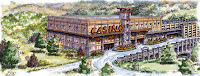
Revised Casino, Revised

Updated and bumped:

Mike W. (one of my readers) spotted an interesting change on the Lakes Entertainment web site. Here's what it says now:
Casino Highlights
  • 1,000 gaming devices, 20 table games and 5 poker tables
  • Enclosed parking garage
  • 20 minutes to downtown San Diego
  • Proven gaming market
  • Population - 11 million/100 mile radius
Project Status
  • Signed development and financing agreement
  • Currently planning to build on existing reservation
They dropped the completion date! I'm not entirely sure what this change means, but it sure is hard to see it as anything other than good news!

Original Post:

The Lakes Entertainment web site is now showing the revised casino plans:

Casino Highlights
- 1,000 gaming devices, 20 table games and 5 poker tables
- Enclosed parking garage
- 20 minutes to downtown San Diego
- Proven gaming market
- Population - 11 million/100 mile radius
Project Status
- Signed development and financing agreement
- Currently planning to build on existing reservation
- Opening estimated January 2009

Assuming those are Class 2 gaming devices (not requiring any agreement with the State), this is a plan for a tiny and far less profitable casino than the proposal we heard last fall. It appears to be either 3 or 4 stories high, versus the 27 or 30 or whatever was really being planned (I’ve heard so many variations that I’m not sure what the reality was).
While I’m sure that the tribe and Lakes Entertainment are completely correct to say there are fewer obstacles in the way of getting this plan implemented, I believe it’s also true that the (much) smaller profit incentive means it’s much less likely that Lakes Entertainment will be willing to fund a prolonged, difficult legal battle. In other words, I think this development means the casino project is now more vulnerable to challenge…

Indian Wisdom

Tip of the hat to my mom for this one:
An Indian walks into a cafe with a shotgun in one hand pulling a male buffalo with the other. He says to the waiter: “Want coffee. ”

The waiter says, “Sure, Chief. Coming right up.” He gets the Indian a tall mug of coffee.

The Indian drinks the coffee down in one gulp, turns and blasts the buffalo with the shotgun, causing parts of the animal to splatter everywhere and then just walks out.

The next morning the Indian returns. He has his shotgun in one hand, pulling another male buffalo with the other. He walks up to the counter and says to the waiter “Want coffee.”

The waiter says “Whoa, Tonto! We're still cleaning up your mess from yesterday. What was all that about, anyway?”

The Indian smiles and proudly says “Training for position in United States Congress: come in, drink coffee, shoot the bull, leave mess for others to clean up, disappear for rest of day.”
As Glenn would say, “Indeed.”

Thursday, August 2, 2007

Fortress Update

The astonishing and unexpected progress continues! Despite the masons taking the day off (because of the uncertainty about the inspection time), a lot was accomplished. Ruben (my contractor) and the inspector showed up within moments of each other, before 8 am. A few minutes later, after some minor difficulty locating the rebar schedule (the specification for the size of the rebar) on the design drawing, we were approved – we passed the inspection!

Next came the really surprising part… I can't help but think of Ruben as the absolute master of procrastination – eight months of zero activity will do that to you. But today, after the pleasant surprise of an early-in-the-day inspection (passed!), Ruben turned into the whirling dervish of Jamul. With a few phone calls, he arranged for the delivery of the remaining materials we need for construction, for delivery this afternoon of the 3.5 yards of concrete needed for the next pour, for Carlos (the concrete pumper) this afternoon, and for the masons to show back up tomorrow. Whew!

Even better – the material actually showed up, Carlos arrived and set up his pump, and the concrete arrived on time. Moments later, Carlos started pumping concrete into the voids inside the concrete blocks already laid. This operation is called a “grout lift” – the “grout” means filling the holes in the blocks with concrete, and the “lift” refers to filling the blocks up only to a certain height (five feet, in this case). The reason for limiting a grout lift to five feet is to limit the hydraulic pressure acting on the lower runs of block being filled – if the lift were made high enough (say, 10 feet), the pressure might be high enough to burst those blocks. What a mess that would be, with concrete running out all over the place!

Tomorrow Davy starts early in the morning, putting up the last 7 runs of block. He and his sons should be finished with that in two or three days of work. After that, they'll begin installing the form and rebar for pouring the last grout lift (which will fill the new blocks they're about to lay) and the pour for the roof. My estimate is that we'll make that pour next Wednesday or Thursday. Woo hoo!

The Blob

The unions who represent federal employees love to spin the image of their members as selfless civil servants, making sacrifices like long hours and low pay in order to (patriotically, of course) serve their country.

Don't you believe it!

The new data for 2006 show that 1.8 million federal civilian workers earned an average $111,180 in total compensation (wages plus benefits). That is more than double the $55,470 average earned by U.S. workers in the private sector.

Looking just at wages, federal workers earned an average $73,406, which is 60 percent greater than the $45,995 average earned by private sector workers.

The full report has much more detail.

At the same time that compensation for Federal employees is soaring, so is the percentage of the work force employed by the government. In 2006, the government employed 16% (20 of 128 million) of all employees.


We are slowly being transformed from a society of entrepreneurs with a small, idealistic government to a society that impedes entrepreneurs with a large, selfish government of leeches. This path leads to a bad place, similar to where Europe was a couple decades ago – and has been running away from ever since.

The more developed and entrenched our money-corrupted government becomes, the harder it becomes to throw the bums out. The recent earmark “reform” should be all the proof of this thesis that anyone needs – not only have the Democrats not followed through on their promise to clean up the corruption of earmarks, they're actually making it worse (mainly by eliminating any transparency on the earmarks at all).

Here's something for you to think about: in 2006, the government paid out 28% of all compensation paid in the U.S. What goods or services did those employees produce or provide? Not much, that's for sure.

Think leeches.

When leeches are sucking out your blood, do you leave them on your body so they can suck some more? No, of course not. You remove them.

We need to remove the government leeches. Short of a revolution, that can only happen as a political process: we must elect Representatives, Senators, and a President who are committed to reducing the size of government. Traditionally in our two-party system, that has been the position of the Republicans. In the last few years, it is not the position of either party.

We need a new party, before the Blob of Federal Leeches sucks out every bit of life this country has. Where is this new party going to come from? It seems unlikely to me that a brandy-new party could successfully be started from scratch. More likely is the emergence of a reformer from within an existing party who can transform the party's purpose. Given their respective ideologies, that seems much more likely from the Republican side. As I look at the announced and possible 2008 Presidential candidates there, limiting myself to those that have any realistic prayer of success, I come up with only two names (Fred Thompson and Newt Gingrich), and I'm not real sure about either one of them…

Wednesday, August 1, 2007

Fortress Update

Another day with great progress on our safe-house! Davy and his 14 year old son Alfredo (at right) worked a long day today, and actually they're still hard at work as I write this. They're going to finish up the seventh run of block, where the wall will be just shy of five feet high.

For some reason that I don't fully understand (and probably never will), the County planning department requires an inspection when the wall is no higher than five feet high. So now all work on the project must come to a crashing halt, while we wait for the inspector to show up tomorrow. Since we have no idea when the inspector will show up (they give us no clue at all), Davy and his sons will work on another job tomorrow. Hopefully they will return to the job on Friday – assuming, of course, that we pass the inspection tomorrow.

The work done today was essentially a continuation of yesterday's process. I saw just a couple of new techniques. Davy used a piece of scrap lumber I had laying about, with a few blocks, to make a perfectly usable scaffold. If I understood him correctly, on future days when the wall is considerably higher, he'll bring a real scaffold to the work site. And I saw a simple and clever tool: a pair of cast metal pieces designed to grasp the top of the blocks on a corner while holding a string in exactly the right place to act as a guide for laying the block. With these tools, Davy had a guide string set for each new run with just a few seconds of work.

Here are some more photos of today's progress:

Scary Socialized Medicine

My mom sent me an email copy of an interesting commentary piece by a person whose name I recognized: Dr. David Gratzer. He's a Canadian doctor, practicing in both the U.S. and Canada, and a crusader for capitalist (e.g., for-profit) medicine. Here's a quote from this latest piece, which appeared in Investor's Business Daily:

Swinging open the door, I stepped into a nightmare: the ER overflowed with elderly people on stretchers, waiting for admission. Some, it turned out, had waited five days. The air stank with sweat and urine. Right then, I began to reconsider everything that I thought I knew about Canadian health care.

I soon discovered that the problems went well beyond overcrowded ERs. Patients had to wait for practically any diagnostic test or procedure, such as the man with persistent pain from a hernia operation whom we referred to a pain clinic — with a three-year wait list; or the woman with breast cancer who needed to wait four months for radiation therapy, when the standard of care was four weeks.

Government researchers now note that more than 1.5 million Ontarians (or 12% of that province's population) can't find family physicians. Health officials in one Nova Scotia community actually resorted to a lottery to determine who'd get a doctor's appointment.

These problems are not unique to Canada — they characterize all government-run health care systems.

Dr. Gratzer is particularly good at rebutting the arguments of liberals who cite the “evils” of American medicine (think Michael Moore and Sicko). For example:

Americans live 75.3 years on average, fewer than Canadians (77.3) or the French (76.6) or the citizens of any Western European nation save Portugal. Health care influences life expectancy, of course. But a life can end because of a murder, a fall or a car accident. Such factors aren't academic — homicide rates in the U.S. are much higher than in other countries.

In The Business of Health, Robert Ohsfeldt and John Schneider factor out intentional and unintentional injuries from life-expectancy statistics and find that Americans who don't die in car crashes or homicides outlive people in any other Western country.

And if we measure a health care system by how well it serves its sick citizens, American medicine excels. Five-year cancer survival rates bear this out. For leukemia, the American survival rate is almost 50%; the European rate is just 35%. Esophageal carcinoma: 12% in the U.S., 6% in Europe. The survival rate for prostate cancer is 81.2% here, yet 61.7% in France and down to 44.3% in England — a striking variation.

If you have even the slightest inclination to support socialized medicine, or any legislation that reduces the independence or profitability of American medicine, please … read the whole thing. Another relevant commentary piece (in the Wall Street Journal) is here, an index of Dr. Gratzer's essays here, and his books here.

In my travels I have had the opportunity to meet and get to know quite a few people who live in countries with socialized medicine – especially in England, Germany, Estonia, and Russia. In each of these countries, I have posed a similar question to several people: “Suppose your spouse or child had a life-threatening cancer. Suppose that you were independently wealthy and could afford to have your loved one cared for anywhere in the world. Where would you take him or her for treatment?” Every single person I have asked this question of instantly said “America”.

Why is this so obvious to the people who live under socialized medicine? Most of the people I talked with had never even been to America – and yet they are absolutely certain our medical system delivers superior care. When I probed this, the typical answers were variants of “our system is so bad that America's must be better” and “America is where all the rich people go, and they'd know better than I”, with a few “I have friends or relatives who have moved to America, and they tell me the medical system is wonderful there”.

But our liberals tell us – against all evidence that I'm aware of
(not to mention common sense!) – that socialized medicine is superior.

My mom's reaction to this editorial was to suspect it was exaggerated, but generally on target. I'm glad her instincts are to suspect the evils of socialist medicine. But I cannot for the life of me understand why so many Americans (including my mom) have so much trouble believing just how bad socialized medicine really is. For me, the essential problems are obvious: (1) any system in which a desirable good or service is “free” will inevitably lead to shortages and rationing, and (2) any system that does not provide financial incentives for success and excellence will decay into shoddiness. Our public education system suffers from these two problems. Socialized medicine, everywhere I've ever been, suffers from them as well. Examples of drug rationing, surgery backlogs (a form of rationing), and diagnostics rationing abound. Doctors – especially the good ones – flee from those countries to America, where they can make good money. Why is this so hard for so many Americans to absorb? I cannot fathom it.

Tuesday, July 31, 2007

Fortress Update

I still can't quite wrap my brain around the fact that our safe-house is actually being built. After eight months of inactivity, suddenly (and completely inexplicably) my contractor has decided to finish the job. I mentioned earlier that I witnessed my contractor negotiating the job with the masons. Later I got to know the masons just a little bit better. It's a family affair: a father and his two sons. The father's name is Davey (at right, just before going home for the day); the older son Eduardo. I checked in a few times during the day today to see what progress there was, and if anything was needed. Each time, it was a pleasure to watch these men work – they clearly have a lot of experience as masons, and the way they make the job look effortless is a testament to their skills.

The work started with some careful measuring and calculating. From what I could tell, the main objectives of all this was to figure out exactly how many blocks were required on each layer (“run”) of blocks, to figure out where their outer edges should lie on the slab, and to make sure the vertical pieces of rebar were all in the right place to poke through the holes in the block. A complicating factor was the doorway; one piece of rebar had to be bent slightly to make that work. Then the tangible work commenced: they laid a first run of block down all around the building.

It was fascinating to watch carefully how the masons laid those blocks. They make it look so easy! The starting point was a single block, set down into a lot more mortar than was actually needed. Davey tapped this block gently into position, paying the most attention to the height of the block (I suppose to make sure the grout thickness underneath was correct). This block's height then became the reference height for all the rest of the blocks.

For all the subsequent blocks, the masons followed a pattern. First the blocks were set on end near where they'd be used. Then they would put some grout (again, much more than actually needed) on the top end. Next they would lay down heavy lines of grout on the slab (or later, on the underlying row of block) where the blocks would go. Then, one at a time, the upended blocks were turned sideways and set roughly into place. Then Davey would work his magic, carefully maneuvering the block by gentle taps until it was in exactly the right place, as determined by eyeball, straight-edge, and level. The last step was performed by the youngest son: cleaning up and removing the excess grout from the inside of the joints (as you can see in the photo above right).

Thinking like a nerdy engineer for a moment, it was interesting to note that he moved that block with all six classical degrees of freedom: forward/backward, left/right, up/down, and rotation about all three of those axes. That's quite a feat of spatial manipulation, but he made it look effortless and easy. I know darned well that were I to attempt such a thing, the result wouldn't be nearly as pretty…

On every second run of block, something slightly different occurs: a horizontal piece of rebar is run through all the blocks. They accomplished this by manually notching the three lengthwise segments of every block on that run. At right you can see Eduardo making cuts in those segments; later the youngest boy uses a hammer to carefully knock them out. After one of these notched runs is complete, the masons bend rebar as required to run it completely around the wall.

By the third run of block, there was very little of the original vertical rebar pieces left showing. Yet the plans call for vertical rebar running all the way up the wall. On asking, I found out that this requirement will be satisfied by placing vertical pieces of rebar in place when the wall is completely built. This is much easier than trying to thread every block through 8 feet or so of rebar!

At right you can see Davy using the level as he completes a corner. This extra care is need to make sure that the runs of block along each wall meet up on the corners correctly. I watched him do this several times; he's not satisfied until the error is invisibly small.

The end result is a perfect block wall. Well, at least it is perfect within the capacity of my eyeballs to detect error: I cannot see anything out of whack on these walls. In the photo at right, you can see the first three runs on the south wall – everything about it appears to be straight as an arrow and perfectly aligned.

Davey and his sons are due back on the job at 7:30 am tomorrow morning. I don't know them well, but I know them enough to have developed a sense that Davey is a reliable, straight-up kind of guy (unlike someone else I might mention). When he tells me that he'll be here tomorrow morning, I'm inclined to believe him.

What a nice feeling that is, and what a refreshing change in the context of this project.

I'll end with these scenes of three skilled masons at work…