Sea level rise:The whole thing is an excellent and sober summary of the problems with climate alarmism. No matter what your position or beliefs on climate change are, you'll learn something by reading this piece...
Globally averaged sea level appears to have been rising at the rate of about 6 inches a century for thousands of years. Until the advent of satellites, sea level was essentially measured with tide gauges which measure the sea level relative to the land level. Unfortunately, the land level is also changing, and as Emery and Aubrey note, tectonics are the major source of change at many locations. Beginning in 1979 we began to use satellites to measure actual sea level. The results were surprisingly close to the previous tide gauge estimates, but slightly higher, but one sees from Wunsch et al (DOI: 10.1175/2007JCLI1840.1) that one is in no position to argue that small differences from changing methodologies represents acceleration. Regardless, the changes are small compared to the claims that suggest disastrous changes. However, even in the early 1980’s advocates of warming alarm like S. Schneider argued that sea level would be an easily appreciated scare tactic. The fact that people like Al Gore and Susan Solomon (former head of the IPCC’s Scientific Assessment) have invested heavily in ocean front property supports the notion that the issue is propagandistic rather than scientific.

Tuesday, May 2, 2017
Lindzen on climate alarmism...
Lindzen on climate alarmism... If you're not familiar with him, Richard Lindzen is a well-known atmospheric scientist at MIT who's long been cautious about global warming (or climate change) claims. I just ran across a detailed article he wrote a few days ago. Here's one sample paragraph:

Paradise ponders, joinery jig jollies and vampire doctors edition...
Paradise ponders, joinery jig jollies and vampire doctors edition... The past couple of days I've been assembling and learning to use two joinery jigs that I purchased. I'm still working on them; they're fairly complicated, both to put together and to use. One of the jigs is for dovetail and finger joints, the other for mortise and tenon joints. The photo on the left is my new dovetail and finger joint jig, before I assembled it. On the right is the mortise-and-tenon jig, mostly assembled. Both of these came with large bags of parts, some of which had to be assembled, and some of which are needed for certain modes of use. Both also came with thick manuals, well-written and illustrated, showing you how to do all sorts of different things using the jigs. It will be a while before I feel competent with these. :) Fortunately, basic sorts of joints look pretty easy to do.


Building these jigs involves a little woodworking, which I wasn't expecting at all. The most involved thing I have to do is to build a sturdy wooden box that can lift the jigs a couple of feet above the 35" high surface of my bench. That will let me put joints in boards that are up to 5' long, which I actually need for the very first set of dovetail joints I'm making.
Yesterday Debbie and I had a joint doctor's appointment with our general practitioner. I had a few things to talk with her about, including my desire to check on my blood B12 levels after adjusting the dose of injected B12 this year. So the vampire lady there came after me with four vials of blood to fill. First she stabbed me in the inside right elbow, and got three and a half vials when that vein gave out. So then she stabbed me in the left inside elbow and got the remaining vial. Truthfully I barely felt the needle; she was very good. But I walked out looking like I'd been in a battle, with black wrap over big wads of cotton on both elbows. Got a big bruise on the right one, too.


Building these jigs involves a little woodworking, which I wasn't expecting at all. The most involved thing I have to do is to build a sturdy wooden box that can lift the jigs a couple of feet above the 35" high surface of my bench. That will let me put joints in boards that are up to 5' long, which I actually need for the very first set of dovetail joints I'm making.
Yesterday Debbie and I had a joint doctor's appointment with our general practitioner. I had a few things to talk with her about, including my desire to check on my blood B12 levels after adjusting the dose of injected B12 this year. So the vampire lady there came after me with four vials of blood to fill. First she stabbed me in the inside right elbow, and got three and a half vials when that vein gave out. So then she stabbed me in the left inside elbow and got the remaining vial. Truthfully I barely felt the needle; she was very good. But I walked out looking like I'd been in a battle, with black wrap over big wads of cotton on both elbows. Got a big bruise on the right one, too.
Monday, May 1, 2017
Another SpaceX success...
Another SpaceX success... They launched an NRO classified payload today, and recovered the first stage by a landing at Cape Canaveral.
Simply amazing. If I were a young man right now, I'd be doing everything I could to get a job at SpaceX. If I were at NASA, I'd be wondering why.
Webcast of today's launch. I never get tired of watching these things...
Simply amazing. If I were a young man right now, I'd be doing everything I could to get a job at SpaceX. If I were at NASA, I'd be wondering why.
Webcast of today's launch. I never get tired of watching these things...
Walking down memory lane again...
Walking down memory lane again... Just saw the latest Ken Shirriff post on reverse-engineering the 76477 audio chip. Oh, man, did that bring back some memories! I ran into that chip when doing a consulting gig to design electronic pinball machines in the late '70s. Back then the idea of an electronic pinball machine was pretty radical, and in many parts, heretical. One of the biggest complaints players had about the few electronic machines in existence was the horrible audio (and it really was horrible!). The fellow I was consulting for was willing to spend some money to solve that problem, and we quickly focused on the 76477 as a practical solution. We ended up with four of them in our design, all being controlled by a Z80 and a board full of analog electronics to supplement the 76477. We got it to the point of slightly less than horrible, but certainly nowhere near the mechanical noise nirvana of an old fashioned solenoid-and-relay pinball machine...
Sunday, April 30, 2017
Paradise ponders: router table and sushi edition...


A wall around California...
A wall around California... I suspect the majority of the population of the Mountain States would think this was a very good idea!

Saturday, April 29, 2017
Favorite colors...
Favorite colors... It would never have occurred to me to study the question of what colors are people's favorites. Nor would I have expected that there would be significant differences in the popularity of various colors. But there apparently are:
 My own favorite color? Well, I'd have a hard time choosing between bright orange (like a California poppy) or bright yellow (like a nice lemon). Maybe a slight preference to the orange. That puts me solidly in the weirdo category, it seems. One of my friends likes to call me “six sigmas” because I'm at least six standard deviations from normal (though I claim eight!). This seems to be yet another dimension in which I deviate... :)


Paradise ponders: Utah gratitude edition...
Paradise ponders: Utah gratitude edition... I fled to Utah from California just three years ago, after living in that sunny land for 43 years. When I first came to California, in 1971, I was coming from New Jersey. The California of 1971 was a paradise by comparison to the hell-on-earth that was New Jersey. Back then, even California's government was better.
It was all downhill from there. By the time we retired in 2013, it was obvious to Debbie and I that our long-planned retirement in the mountains of San Diego wasn't going to be the dream we'd thought it would be. We made up our minds to leave, and we chose Utah for many reasons.
It turns out, though, that we'd underestimated (by a lot!) just how well we'd fit in here in Utah. We'd expected the natural beauty, as we'd traveled here many times. We knew the weather would include actual seasons. We hoped that the government would prove to be less intrusive, more common-sensical, and it has. But we did not expect the people here to be so welcoming, despite our not being of the predominant faith here (LDS). We also didn't expect some other things, slightly subtler, but that turn out to be very important to us.
I'd say the biggest one, for me, is the general assumption of honesty here. In general, people just trust one another. If you tell a craftsman that you agree with their price, they'll just proceed with the work and trust that you'll pay them. If you leave your wallet somewhere, you can trust that it will be held for you, contents intact. If you leave your car unlocked, you can trust that it will not be stolen. If you carry ten items to the cash register in a store and tell the clerk you have ten of them, she'll just ring you up for ten without even counting. And so on. I'm talking about out here in the countryside, where we live – the story is different in the cities, of course. Out here, though, people just assume that you're honest in your dealings. How refreshing, especially compared with our experiences in California!
Another slightly subtle surprise for us: we can depend on others around here for help, and they assume they can depend on us. I still get surprised by this quite often – people are all the time volunteering to help out, and they really mean it.
And some of our neighbors have become good friends, despite the vast differences in our backgrounds and experiences.
We're very grateful for the wonderful home that Utah has made for us.
And when we read things about California, like this or this, we're even more grateful for Utah providing us with refuge!
It was all downhill from there. By the time we retired in 2013, it was obvious to Debbie and I that our long-planned retirement in the mountains of San Diego wasn't going to be the dream we'd thought it would be. We made up our minds to leave, and we chose Utah for many reasons.
It turns out, though, that we'd underestimated (by a lot!) just how well we'd fit in here in Utah. We'd expected the natural beauty, as we'd traveled here many times. We knew the weather would include actual seasons. We hoped that the government would prove to be less intrusive, more common-sensical, and it has. But we did not expect the people here to be so welcoming, despite our not being of the predominant faith here (LDS). We also didn't expect some other things, slightly subtler, but that turn out to be very important to us.
I'd say the biggest one, for me, is the general assumption of honesty here. In general, people just trust one another. If you tell a craftsman that you agree with their price, they'll just proceed with the work and trust that you'll pay them. If you leave your wallet somewhere, you can trust that it will be held for you, contents intact. If you leave your car unlocked, you can trust that it will not be stolen. If you carry ten items to the cash register in a store and tell the clerk you have ten of them, she'll just ring you up for ten without even counting. And so on. I'm talking about out here in the countryside, where we live – the story is different in the cities, of course. Out here, though, people just assume that you're honest in your dealings. How refreshing, especially compared with our experiences in California!
Another slightly subtle surprise for us: we can depend on others around here for help, and they assume they can depend on us. I still get surprised by this quite often – people are all the time volunteering to help out, and they really mean it.
And some of our neighbors have become good friends, despite the vast differences in our backgrounds and experiences.
We're very grateful for the wonderful home that Utah has made for us.
And when we read things about California, like this or this, we're even more grateful for Utah providing us with refuge!
Friday, April 28, 2017
Paradise ponders: snow and router table edition...
Paradise ponders: snow and router table edition... The router table is now complete except for the actual router and it's lifter (they're supposed to arrive today). The rest of the kit went together just as perfectly as the first third. The only challenging part turned out to be putting that cast iron top on. That thing was heavy (I'm guessing about 70 pounds), and the bolts that attach it to the stand go up through the bottom of it. That was a real booger to get on, because the top's mounting holes had to be precisely aligned with the corresponding holes in the stand, and because I couldn't see a darned thing inside the cabinet (no space to get my fat head in there). The first photo below shows the wood chip box that's supposed to make this router table nearly dust and chip free. We'll see how well that works!


 Our weather today is really hard to believe for being nearly May. We've had rain, hail, sleet, and snow today, all day long. Right now it's raining. It's about 35°F outside, so the snow and sleet aren't sticking very long, thankfully. Our trees (at right) had some snow on their leaves, though. But once again, it's wet as heck outside – there's mud everywhere. Dang.


AI and deep learning...
AI and deep learning... My long time readers will know that I am very skeptical of artificial intelligence (AI) in general. By that I mean two separate things these days, as the field of AI has split into two rather different things the past few years.
The first (and oldest) meaning was the general idea of making computers “intelligent” in generally the same way as humans are intelligent. Isaac Asimov's I, Robot stories and their derivatives perfectly illustrated this idea. The progress researchers have made on this sort of AI is roughly the same as the progress they've made on faster-than-light space travel: nil. I am skeptical that they ever will, as everything I know about computers and humans (more about the former than the latter!) tells me that they don't work the same way at all.
The second more recent kind of AI is generally known by the moniker “deep learning”. I think that term is a bit misleading, but never mind that. For me the most interesting thing about deep learning is that nobody knows how any system using deep learning actually works. Yes, really! In this sense, deep learning systems are a bit like people. An example: suppose spent a few days learning how to do something new – say, candling eggs. You know what the process of learning is like, and you know that at the end you will be competent to candle eggs. But you have utterly no idea how your brain is giving you this skill. Despite this, AI researchers have made enormous progress with deep learning. Why? Relative to other kinds of AI, it's easy to build. It's enabled by powerful processors, and we're getting really good at building those. And, probably most importantly, there are a large number of relatively simple tasks that are amenable to deep learning solutions.
Deep learning systems (which are programs, sometimes running on special computers) we know how to train, but we don't know how the result works, just like with people. You go through a process to train them how to do some specific task, and then (if you've done it right) they know how to do it. What's fascinating to me as a programmer is that no programming was involved in teaching the system how to do its task – just training of a general purpose deep learning system. And there's a consequence to that: no programmer (or anyone else) knows how that deep learning system actually does its work. There's not even any way to figure that out.
There are a couple of things about that approach that worry me.
First, there's the problem of how that deep learning system will react to new inputs. There's no way to predict that. My car, a Tesla Model X, is a great example of such a deep learning system. It uses machine vision (a video camera coupled with a deep learning system) to analyze the road ahead and decide how to steer the car. In my own experience, it works very well when the road is well-defined by painted lines, pavement color changes, etc. It works much less well otherwise. For instance, not long ago I had it in “auto-steer” on a twisty mountain road whose edges petered off into gravel. To my human perception, the road was still perfectly clear – but to the Tesla it was not. Auto-steer tried at one point to send me straight into a boulder! :) I'd be willing to bet you that at no time in the training of its deep learning system was it ever presented with a road like the one I was on that day, and therefore it really didn't know what it was seeing (or, therefore, how to steer). The deep learning method is very powerful, but it's still missing something that human brains are adding to that equation. I suspect it's related to the fact that the deep learning system doesn't have a good geometrical model of the world (as we humans most certainly do), which is the subject of the next paragraph.
Second, there's the problem of insufficiency, alluded to above. Deep learning isn't the only thing necessary to emulate human intelligence. It likely is part of the overall human intelligence emulation problem, but it's far from the whole thing. This morning I ran across a blog post talking about the same issue, in this case with respect to machine vision and deep learning. It's written by a programmer who works on these systems, so he's better equipped to make the argument than I am.
I think AI has a very long way to go before Isaac Asimov would recognize it, and I don't see any indications that the breakthroughs needed are imminent...
The first (and oldest) meaning was the general idea of making computers “intelligent” in generally the same way as humans are intelligent. Isaac Asimov's I, Robot stories and their derivatives perfectly illustrated this idea. The progress researchers have made on this sort of AI is roughly the same as the progress they've made on faster-than-light space travel: nil. I am skeptical that they ever will, as everything I know about computers and humans (more about the former than the latter!) tells me that they don't work the same way at all.
The second more recent kind of AI is generally known by the moniker “deep learning”. I think that term is a bit misleading, but never mind that. For me the most interesting thing about deep learning is that nobody knows how any system using deep learning actually works. Yes, really! In this sense, deep learning systems are a bit like people. An example: suppose spent a few days learning how to do something new – say, candling eggs. You know what the process of learning is like, and you know that at the end you will be competent to candle eggs. But you have utterly no idea how your brain is giving you this skill. Despite this, AI researchers have made enormous progress with deep learning. Why? Relative to other kinds of AI, it's easy to build. It's enabled by powerful processors, and we're getting really good at building those. And, probably most importantly, there are a large number of relatively simple tasks that are amenable to deep learning solutions.
Deep learning systems (which are programs, sometimes running on special computers) we know how to train, but we don't know how the result works, just like with people. You go through a process to train them how to do some specific task, and then (if you've done it right) they know how to do it. What's fascinating to me as a programmer is that no programming was involved in teaching the system how to do its task – just training of a general purpose deep learning system. And there's a consequence to that: no programmer (or anyone else) knows how that deep learning system actually does its work. There's not even any way to figure that out.
There are a couple of things about that approach that worry me.
First, there's the problem of how that deep learning system will react to new inputs. There's no way to predict that. My car, a Tesla Model X, is a great example of such a deep learning system. It uses machine vision (a video camera coupled with a deep learning system) to analyze the road ahead and decide how to steer the car. In my own experience, it works very well when the road is well-defined by painted lines, pavement color changes, etc. It works much less well otherwise. For instance, not long ago I had it in “auto-steer” on a twisty mountain road whose edges petered off into gravel. To my human perception, the road was still perfectly clear – but to the Tesla it was not. Auto-steer tried at one point to send me straight into a boulder! :) I'd be willing to bet you that at no time in the training of its deep learning system was it ever presented with a road like the one I was on that day, and therefore it really didn't know what it was seeing (or, therefore, how to steer). The deep learning method is very powerful, but it's still missing something that human brains are adding to that equation. I suspect it's related to the fact that the deep learning system doesn't have a good geometrical model of the world (as we humans most certainly do), which is the subject of the next paragraph.
Second, there's the problem of insufficiency, alluded to above. Deep learning isn't the only thing necessary to emulate human intelligence. It likely is part of the overall human intelligence emulation problem, but it's far from the whole thing. This morning I ran across a blog post talking about the same issue, in this case with respect to machine vision and deep learning. It's written by a programmer who works on these systems, so he's better equipped to make the argument than I am.
I think AI has a very long way to go before Isaac Asimov would recognize it, and I don't see any indications that the breakthroughs needed are imminent...
Paradise ponders: of ovens and arduous kits...

I'm about one third of the way through the assembly, and so far I am very pleasantly surprised. With just a single exception, every part has fit precisely correctly, first try. Better yet, the edges of the sheet metal don't seem quite so sharp – no cuts yet (and no bloodstains on the goods!). The one exception was a minor one: I needed one gentle tap of the rubber mallet to get a recalcitrant threaded hole to line up with a drilled hole. The directions are crystal clear, with great illustrations. I hope the rest of the assembly is just as nice!


Thursday, April 27, 2017
NASA at...
NASA at ... its most awesome, and at its least awesome... Too bad there's so much more of the latter than the former...
Paradise ponders: artichokes, kits, better indexes, and electricity edition...

Over the past few days some tools I've ordered arrived: a couple of jigs (for making box joints and mortise-and-tenon joints) and a router table. All three of these are kits – boxes of parts with bags of nuts and bolts. Big bags of nuts and bolts. I'm gonna be putting things together for a while before I can use them. All three of these were long-planned, but I need them now to let me build some stuff for the cattery. Somehow I didn't expect the jigs to be kits, but the fact that the router table is a kit doesn't really surprise me...
A couple days ago I posted about an index to look up the value of the largest decimal digit that is smaller than a given binary value. The code that I posted was ... not optimal. Here's a better attempt:
In addition to a better algorithm, I also made the code easier to read. The compiler optimizes the local variables away, so there's no performance impact to this. The 9 bit index generated is pretty simple. If 2^k is the most significant bit in _val, then the upper six bits of the index are k, and the lower three bits are the bits in _val at 2^k-1, 2^k-2, and 2^k-3 (with a bit of special casing for k < 3).int lz = Long.numberOfLeadingZeros( _val ); int mag = 63 - lz; int hi = mag << 3; long sec = Long.highestOneBit( _val ) ^ _val; int lo = (int)(sec >>> Math.max(0, mag - 3)); int index = hi | lo;
I'm going to be putting up a little shed soon, to house some components of our sprinkler system. I had my favorite electrician (Tyler, from Golden Spike Electric) out yesterday evening to check out the job. It's such a pleasure to work with people like him! I want something kind of weird (naturally!), and he had absolutely no problem accommodating me. I'm going to have him run a 50 amp 220 volt circuit to a subpanel in the new shed, and I'm going to wire it from there. “No problem”, says he – and we looked over the existing panel that he'd connect to. There was a circuit installed long ago that ran to an external plug for an RV. This is not something we'll ever need, so we're going to remove that and steal the existing breaker (which happens to be 50 amp!) for my new subpanel. Easy peasy!
Wednesday, April 26, 2017
Paradise ponders: Debbie's “graduation”, filling station milestone, steam train, and tax cuts...
Paradise ponders: Debbie's “graduation”, filling station milestone, steam train, and tax cuts... This morning Debbie went in to see her surgeon for a two week post-surgery followup. He pronounced her recovery to be great, ready to get her staples taken out, and cleared for any physical activity that didn't cause her pain. She looked so good, in fact, that he declared it unnecessary for her to have the usual subsequent followup visits. This prompted a nurse who was in the room to comment that Debbie had “graduated”. Yay! The staples came out (something that Debbie really hates – she crushed my hand and buried her head in my shoulder while the nurse did this), and now her big job is to see how far she can push herself with exercise before it gets painful. First milestone there will be walking without any walker, crutches, or cane. The surgeon said she could be doing this just as soon as she can comfortably put full weight on her left knee.
Yesterday the guys were here working on our filling station. They got all the pipe cut, threaded, and installed – the tanks are now actually connected to the nozzles! I just put in a call to my fuel supplier, and within a few days I should actually have some gasoline and diesel fuel sloshing around in those tanks. There's still more work to do on the filling station, but we can use it while that work gets done. I've just ordered the steel door to go in the front of it; that should be here in six weeks or so. I've also got Randy Bingham (the mason who did our fireplace) lined up to put rock on top and all around it, but it might be a while before that gets done. Progress!
Yesterday we'd planned to go see a steam locomotive that was scheduled to stop for just a half hour in Cache Valley. The place where it was to stop was the teensy little town of Cache Junction, just south of my brother Scott's home. This town has about four houses, and it's kind of in the boonies of Cache Valley – so we weren't expecting many people to show up for it. Man, were we wrong! There were a couple hundred cars parked there, overflowing the little parking area to line the sides of the roads for a half mile or so on both sides of town. I'd guess that around a thousand people were milling all about. In that environment there was no way for us to park close by for a view of the train, and Debbie's not ready to walk over rough ground, so we just drove through town and marveled at the size of the crowd. We visited for a little while with my brother (where we picked up some beautiful logs he'd saved for me) and on the way out we did get to see the locomotive as it approached Cache Junction. We crossed the tracks about 2 miles from Cache Junction and were amused to see that a crowd had gathered there as well. This steam locomotive was darned popular here!
As I started writing this post, news is trickling in about Trump's proposed tax cut. I have no idea what the chances are that this will actually get through Congress intact, but I'm skeptical given the magnitude of the cuts and the general hostility of the Democrats. But one aspect of the proposed plan jumped out at me: repealing the federal income tax deduction for state and local taxes. This deduction is, in effect, a federal subsidy that disproportionately benefits residents of high tax states. I'd be delighted to see that actually be repealed, but it's easy to foresee that the Democrats will start crazed howling about this one. That's so obvious that I have to wonder if it was included in the proposal mainly as a sop whose removal could be traded for Democratic votes in the Senate...
Yesterday the guys were here working on our filling station. They got all the pipe cut, threaded, and installed – the tanks are now actually connected to the nozzles! I just put in a call to my fuel supplier, and within a few days I should actually have some gasoline and diesel fuel sloshing around in those tanks. There's still more work to do on the filling station, but we can use it while that work gets done. I've just ordered the steel door to go in the front of it; that should be here in six weeks or so. I've also got Randy Bingham (the mason who did our fireplace) lined up to put rock on top and all around it, but it might be a while before that gets done. Progress!
Yesterday we'd planned to go see a steam locomotive that was scheduled to stop for just a half hour in Cache Valley. The place where it was to stop was the teensy little town of Cache Junction, just south of my brother Scott's home. This town has about four houses, and it's kind of in the boonies of Cache Valley – so we weren't expecting many people to show up for it. Man, were we wrong! There were a couple hundred cars parked there, overflowing the little parking area to line the sides of the roads for a half mile or so on both sides of town. I'd guess that around a thousand people were milling all about. In that environment there was no way for us to park close by for a view of the train, and Debbie's not ready to walk over rough ground, so we just drove through town and marveled at the size of the crowd. We visited for a little while with my brother (where we picked up some beautiful logs he'd saved for me) and on the way out we did get to see the locomotive as it approached Cache Junction. We crossed the tracks about 2 miles from Cache Junction and were amused to see that a crowd had gathered there as well. This steam locomotive was darned popular here!
As I started writing this post, news is trickling in about Trump's proposed tax cut. I have no idea what the chances are that this will actually get through Congress intact, but I'm skeptical given the magnitude of the cuts and the general hostility of the Democrats. But one aspect of the proposed plan jumped out at me: repealing the federal income tax deduction for state and local taxes. This deduction is, in effect, a federal subsidy that disproportionately benefits residents of high tax states. I'd be delighted to see that actually be repealed, but it's easy to foresee that the Democrats will start crazed howling about this one. That's so obvious that I have to wonder if it was included in the proposal mainly as a sop whose removal could be traded for Democratic votes in the Senate...
Tuesday, April 25, 2017
Binary to decimal conversion performance...
Binary to decimal conversion performance... Now here's an obscure topic that I've worked on a great many times over my career. The original inspiration for me to work on this came from programming the Z-80, way back in the '70s. That little 8 bit microprocessor could do 16 bit addition, but it had no multiply or divide instructions at all. Often the application I was working on needed higher precision math (usually 32 bits), so I had a library of assembly language subroutines that could do the basic four 32 bit operations: add, subtract, multiply, and divided. Multiply and divide were maddeningly slow. Eventually I came up with a way to speed up multiply considerably, but divide was intractably slow.
This slow divide performance was on full display anytime I wanted to convert a 32 bit binary integer to its decimal equivalent. The canonical algorithm uses repeated division-with-remainder by ten. For instance, to convert the binary number 11001001 to its decimal equivalent, you would do this:
What I came up with has been independently invented by many people; I wasn't the first, I'm sure, and I don't know who was. The basic technique depends on a simple observation: there aren't all that many possible decimal digits whose value fits in a given length binary number. For instance, in a signed 32 bit binary number, the largest positive decimal number that can be represented is 2,147,483,647. That's 10 decimal digits, any of which can have the non-zero values [1..9], except the most significant one can only be [1..2]. That's just 83 values. If you pre-compute all those 83 values and put them in a table, then you can convert a binary number to decimal with this algorithm:
That was vital to getting decent performance out of that Z-80. But what about a modern processor? Well, it turns out that in relative terms, division is still the red-haired stepchild of CPU performance. On a modern Intel or ARM processor, 64 bit integer division can take over 100 CPU clock cycles. Multiply operations, by comparison, take just a handful of clock cycles, while addition and subtraction are generally just 1 or 2 clock cycles. Even when using a high-level language like Java, algorithms that avoid using division repetitively can still produce large performance gains. I've done this five or six times now, most recently to get a 6:1 performance gain when converting floating point values to XML.
One line of the above algorithm I sort of glossed over: the bit about finding the largest value of a decimal digit that is less than the remaining value. The naive way to do this would be to use a linear search, or possibly a binary search of the table of decimal digit values. This would require a number of iterations over the search algorithm, at best an average of 4 iterations for a binary search over a table big enough for 32 bit values. For 64 bit values we'd have 171 decimal digit values, and we'd need 5 iterations for that binary search.
We can do better, though, by taking advantage of the fact that there's a close relationship between the binary values and the largest fitting decimal digit. I just finished coding up a nice solution for finding the largest decimal digit that fits into a signed 64 bit integer. It works by using a table with 512 entries, about three times as many as we have possible decimal digit values. Given a 64 bit positive binary number, the Java code that computes the index into that table is:
With those two techniques in combination, I'm doing conversions from binary to decimal with no divisions and no iterative searching. It's very challenging to benchmark performance in Java, but my simple testing shows about 5:1 improvement in performance for random numbers in the 64 bit positive integer range. Smaller numbers (with fewer decimal digits) show smaller performance gains, but always at least 2:1. I'll call that a win!
This slow divide performance was on full display anytime I wanted to convert a 32 bit binary integer to its decimal equivalent. The canonical algorithm uses repeated division-with-remainder by ten. For instance, to convert the binary number 11001001 to its decimal equivalent, you would do this:
11001001 / 1010 = 10100 remainder 1The result is then the remainders, in decimal, in reverse order: 201. You need one division operation for each digit of the result. A 32 bit number might have as many as ten digits, and on that low-horsepower little Z-80, those divisions were really expensive. So I worked hard to come up with an alternative means of conversion that didn't require division.
10100 / 1010 = 10 remainder 0
10 / 1010 = 0 remainder 10
What I came up with has been independently invented by many people; I wasn't the first, I'm sure, and I don't know who was. The basic technique depends on a simple observation: there aren't all that many possible decimal digits whose value fits in a given length binary number. For instance, in a signed 32 bit binary number, the largest positive decimal number that can be represented is 2,147,483,647. That's 10 decimal digits, any of which can have the non-zero values [1..9], except the most significant one can only be [1..2]. That's just 83 values. If you pre-compute all those 83 values and put them in a table, then you can convert a binary number to decimal with this algorithm:
start with the binary value to be convertedThis produces the decimal digits in order, from the most significant digit to the least significant digit. Most importantly, it does so with no division required.
while remaining value is nonzero
find the largest value of a decimal digit < the remaining value
record the digit
subtract that decimal digit value from the remaining value
That was vital to getting decent performance out of that Z-80. But what about a modern processor? Well, it turns out that in relative terms, division is still the red-haired stepchild of CPU performance. On a modern Intel or ARM processor, 64 bit integer division can take over 100 CPU clock cycles. Multiply operations, by comparison, take just a handful of clock cycles, while addition and subtraction are generally just 1 or 2 clock cycles. Even when using a high-level language like Java, algorithms that avoid using division repetitively can still produce large performance gains. I've done this five or six times now, most recently to get a 6:1 performance gain when converting floating point values to XML.
One line of the above algorithm I sort of glossed over: the bit about finding the largest value of a decimal digit that is less than the remaining value. The naive way to do this would be to use a linear search, or possibly a binary search of the table of decimal digit values. This would require a number of iterations over the search algorithm, at best an average of 4 iterations for a binary search over a table big enough for 32 bit values. For 64 bit values we'd have 171 decimal digit values, and we'd need 5 iterations for that binary search.
We can do better, though, by taking advantage of the fact that there's a close relationship between the binary values and the largest fitting decimal digit. I just finished coding up a nice solution for finding the largest decimal digit that fits into a signed 64 bit integer. It works by using a table with 512 entries, about three times as many as we have possible decimal digit values. Given a 64 bit positive binary number, the Java code that computes the index into that table is:
Pretty simple code, really. It's also very fast. Best of all, with a properly constructed table the index will point to an entry that will either be the correct one (that is, the largest decimal digit that will fit into the value) or it will be too big. If it is too big, then the preceding entry in the table is guaranteed to be the correct one. Much better than the iterative searches!int lz = Long.numberOfLeadingZeros( value ); int index = ((63 - lz) << 3) + (0xf & (int)Long.rotateRight( value, 60 - lz));
With those two techniques in combination, I'm doing conversions from binary to decimal with no divisions and no iterative searching. It's very challenging to benchmark performance in Java, but my simple testing shows about 5:1 improvement in performance for random numbers in the 64 bit positive integer range. Smaller numbers (with fewer decimal digits) show smaller performance gains, but always at least 2:1. I'll call that a win!
Monday, April 24, 2017
Paradise ponders: rain, and strange coincidences edition...

This morning I spoke for a little while with the attorney I'm using to handle a real estate transaction in Virginia. He mentioned that he was a little familiar with Utah, as he used to come out here for vacations, especially near Moab. So I shared a bit with him about our numerous trips there, and I mentioned that we knew the La Sal Mountains very well. He then related his happy visits to Pack Creek Ranch, a now-defunct resort on the western slopes of the La Sals. Debbie and I have very happy memories of that place, having stayed there several times ourselves. It's a little bitty resort, way out of the way, exactly our sort of place precisely because it's not very popular. And yet ... this lawyer from Virginia knew it, and had stayed there three or four times. What a bizarre coincidence!
A step taken...
A step taken... This morning I registered a new domain: decinum.org. I was a bit surprised that it hadn't already been taken – my usual experience with finding domain names is that the first 1,000 or so that I try have already been snagged. :) Further, to my amazement, 60 seconds after registering decinum.org, the DNS resolution was already working. The first domain I ever registered (dilatush.com, back in '93) took several days to get that far.
This new registration is a first step for an open source project I'm going to start working on. The main purpose is to actually implement the observations and ideas I've had for representing money in Java. The vast majority of that work lies in representing high precision decimal numbers, hence the domain name. I won't have any web site for decinum.org at first; I locked down the name mainly so I could safely use it for Java class names...
This new registration is a first step for an open source project I'm going to start working on. The main purpose is to actually implement the observations and ideas I've had for representing money in Java. The vast majority of that work lies in representing high precision decimal numbers, hence the domain name. I won't have any web site for decinum.org at first; I locked down the name mainly so I could safely use it for Java class names...
Sunday, April 23, 2017
Paradise ponders, 8' lumber, oven removal, and scallops edition...
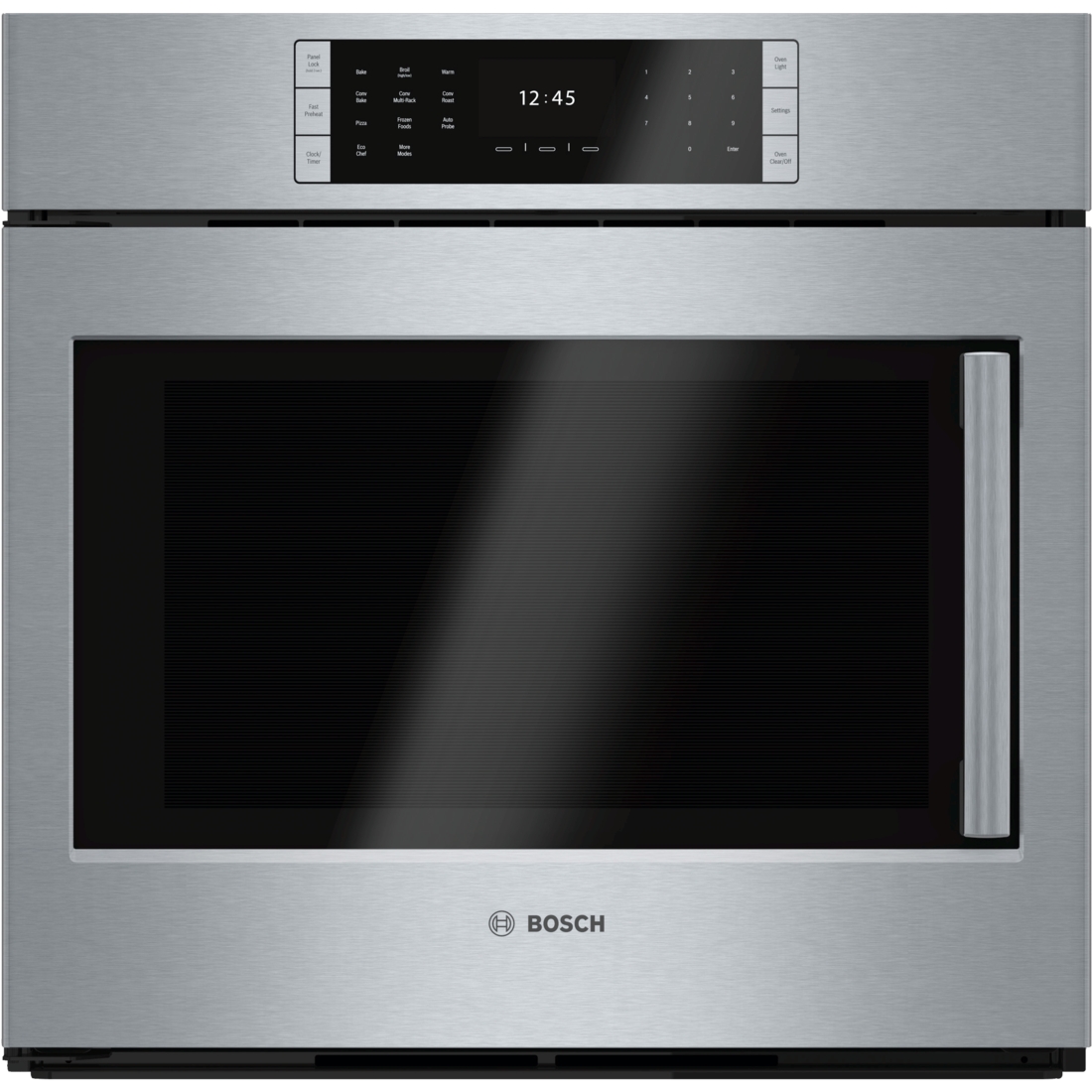
Paradise ponders, 8' lumber, oven removal, and scallops edition... Tomorrow we're supposed to get our new oven installed. You may remember that we gave up on our old oven after three failed attempts to get it repaired. The new one is a Bosch model that we're hoping we're just as happy with as we are with our Bosch dishwasher. Also, it came highly recommended by our repair technician.
So this morning I tackled what I thought was likely to be an all-day job: removing the old oven and installing an electrical junction box. The house's previous owner had done an awesomely shabby job of wiring the old oven: he just used wire nuts to join the wires, covering them with approximately eight miles of electrical tape. It's the sort of electrical job you might imagine a child doing. I ran into something similar when I replaced the microwave directly above this oven, and there I had room to install a standard outlet box. The new oven is 220V, and those outlets are way too big to install in the cramped space the oven must fit in. So I went with a hard-wired junction box.
Taking the oven out turned out to be relatively easy. I had the old oven out in our garage just a half hour after starting. With some creative use of our hand truck, it wasn't even all that difficult. The hardest part was getting it onto the hand truck – wrangling 185 lbs of oven by myself was a bit of a challenge! But I got it...
We made a run to Home Depot and got all the electrical parts I needed. Installing them took all of another half hour. So by 10 am I was completely done with that job. Yay!
So we made another run to Home Depot, this time to buy the stuff I needed to build out a couple of frames around two of our basement windows in our cattery. These are the windows that we've opened up to our sun room. I removed the glass sliding windows, including their frame, and now we just have the steel frame that's set into the basement's concrete wall. I'm building a frame out of cedar 1x8's with the boards perpendicular to the plane of the old window. This is at the suggestion of our mason, who will use that frame as one edge of the rock he's installing.
 I needed to buy five 8' long pieces of cedar (1x8s), so I did some measuring to see if it would be possible to fit those in our Model X. To my surprise, the answer was yes! About six inches of the boards needed to extend over the center console, which I covered with a shipping pad to protect. The photo at right I took while standing behind the open rear hatch. You can see the “hole” between the two front seats where we stowed the boards, along with the pads I used to protect it. We keep getting surprised by what we can carry in the Model X – it's really quite roomy inside (especially our five seat version with the rear seats folded down).
On the way to Home Depot, I stopped for a few groceries at Smith's. That's not where we usually shop, so while I was in there I did a little scouting. On the way by the seafood counter I spotted scallops – the great, big sea scallops that Debbie uses in her scrumptious baked scallops recipe. I bought a pound and a half, and Debbie is cooking them as I write this. Feast today!
So this morning I tackled what I thought was likely to be an all-day job: removing the old oven and installing an electrical junction box. The house's previous owner had done an awesomely shabby job of wiring the old oven: he just used wire nuts to join the wires, covering them with approximately eight miles of electrical tape. It's the sort of electrical job you might imagine a child doing. I ran into something similar when I replaced the microwave directly above this oven, and there I had room to install a standard outlet box. The new oven is 220V, and those outlets are way too big to install in the cramped space the oven must fit in. So I went with a hard-wired junction box.
Taking the oven out turned out to be relatively easy. I had the old oven out in our garage just a half hour after starting. With some creative use of our hand truck, it wasn't even all that difficult. The hardest part was getting it onto the hand truck – wrangling 185 lbs of oven by myself was a bit of a challenge! But I got it...
We made a run to Home Depot and got all the electrical parts I needed. Installing them took all of another half hour. So by 10 am I was completely done with that job. Yay!
So we made another run to Home Depot, this time to buy the stuff I needed to build out a couple of frames around two of our basement windows in our cattery. These are the windows that we've opened up to our sun room. I removed the glass sliding windows, including their frame, and now we just have the steel frame that's set into the basement's concrete wall. I'm building a frame out of cedar 1x8's with the boards perpendicular to the plane of the old window. This is at the suggestion of our mason, who will use that frame as one edge of the rock he's installing.

On the way to Home Depot, I stopped for a few groceries at Smith's. That's not where we usually shop, so while I was in there I did a little scouting. On the way by the seafood counter I spotted scallops – the great, big sea scallops that Debbie uses in her scrumptious baked scallops recipe. I bought a pound and a half, and Debbie is cooking them as I write this. Feast today!
Saturday, April 22, 2017
Jaw-dropping innumeracy test...
Jaw-dropping innumeracy test... I ran across this online somewhere (can't find it now), read their results and suspected shenanigans. I was wrong. In fact, my own tests suggest the innumeracy situation might even be worse than the report I read.
Here's the test:
So I've tried the test now on five people (a ludicrously small sample, I know), more or less randomly selected. None of them were even remotely close to the right answer. The most common place for the third dot was somewhere near the middle of the line. One person put it about 1/5th of the line's length from the right! I'm slightly comforted by the fact that none of these people were scientists or engineers ... but only slightly comforted.
I find this absolutely stunning. Somehow it never occurred to me that so many adults – probably a majority of adults – wouldn't intuitively grasp such basic concepts. That level of innumeracy means that things like discussions of government budgets are beyond their ken, as they don't understand the significance of the difference between millions, billions, or trillions of dollars (and probably not thousands, either!). Or basic astronomical concepts. Sheesh, much of science involves numbers covering multiple orders of magnitude.
Gobsmacked, I am...
Here's the test:
Take a piece of blank paper. Draw a dot on the left and mark it “0”. Draw a dot opposite the first one, on the right, and mark it “1,000,000,000” (one billion). Draw a line between the two dots. That's a number line, like many of us learned in school. It represents all the numbers between zero and a billion, with the integers equally spaced. Now draw a third dot on the line where you think the number 1,000,000 (one million) belongs.The report I read said that about half of people trying this test put the third dot in roughly the correct place; everyone else got it wrong. That's the result I was skeptical of. The correct place, of course, is 1/1000th of the line's length from the left. So if your line was 10 inches long, the third dot would be a mere 1/100th of an inch from the dot for zero.
So I've tried the test now on five people (a ludicrously small sample, I know), more or less randomly selected. None of them were even remotely close to the right answer. The most common place for the third dot was somewhere near the middle of the line. One person put it about 1/5th of the line's length from the right! I'm slightly comforted by the fact that none of these people were scientists or engineers ... but only slightly comforted.
I find this absolutely stunning. Somehow it never occurred to me that so many adults – probably a majority of adults – wouldn't intuitively grasp such basic concepts. That level of innumeracy means that things like discussions of government budgets are beyond their ken, as they don't understand the significance of the difference between millions, billions, or trillions of dollars (and probably not thousands, either!). Or basic astronomical concepts. Sheesh, much of science involves numbers covering multiple orders of magnitude.
Gobsmacked, I am...
Paradise ponders, brief “I’m busy!” edition...
Paradise ponders, brief “I’m busy!” edition... Yesterday none of our workers showed up, and no progress was made on any project. I hate days like that!
I squired Debbie down to Ogden for her hair appointment, which took 3.5 hours. She does this every five weeks, so that works out to roughly 40 hours a year. Me, I get a haircut every 5 or 6 months, whether I need it or not. :) My haircuts generally take less than 15 minutes. My haircuts cost $15, including a 50% tip (which the ladies who cut my hair are very happy with!). Debbie's cost ... you don't want to know, especially if you include the cost of the chemical soup she buys to maintain it. Now, I like her hair, mind you. I'm just noting the differences here, and pondering the magnitude of the investment of time and treasure. I cannot even imagine doing this myself...
When we were done with her hair appointment, we tried out a new restaurant in Ogden: Rosa's Cafe. We found it through Yelp. Debbie ordered a smothered pork burrito, and I had a chili relleno. Both were outstanding – they had a home-cooked vibe, much like our beloved Los Primos. The portions were gigantic, especially that burrito. Even better, the staff (allegedly a family) were just as friendly as the folks at Los Primos. We knew it was going to be good when we first opened the door. Debbie stood there for a moment, trying to figure out how to negotiate the small step up into the restaurant. An ample young man who works there stepped out to help with a big smile, and simply lifted her right up. Problem solved! An older man guessed that this was our first time, and advised us on what to get based on our tolerance for spiciness. We placed our order, grabbed some mango Jarritos from the fridge (again, just like Los Primos), and sat down to wait. Less than five minutes later, our food was in front of us. Mine came with rice and refries, and both of those were also outstanding – as was the giant, thick flour tortilla that came with the meal. That tortilla was obviously homemade for those burritos. The beans are made there, and man can you tell. The rice is something that most Mexican restaurants don't do well, with the rice typically grossly overcooked. Not here. The rice was perfect, the sauce beautifully done, and just the right amount of corn, carrots, etc. You can probably guess that we'll be going back. :)
Why am I busy today? I'm catching up on two weeks of neglected financial stuff. It's been accumulating in a pile on my desk, and today I shall demolish that pile...
I squired Debbie down to Ogden for her hair appointment, which took 3.5 hours. She does this every five weeks, so that works out to roughly 40 hours a year. Me, I get a haircut every 5 or 6 months, whether I need it or not. :) My haircuts generally take less than 15 minutes. My haircuts cost $15, including a 50% tip (which the ladies who cut my hair are very happy with!). Debbie's cost ... you don't want to know, especially if you include the cost of the chemical soup she buys to maintain it. Now, I like her hair, mind you. I'm just noting the differences here, and pondering the magnitude of the investment of time and treasure. I cannot even imagine doing this myself...
When we were done with her hair appointment, we tried out a new restaurant in Ogden: Rosa's Cafe. We found it through Yelp. Debbie ordered a smothered pork burrito, and I had a chili relleno. Both were outstanding – they had a home-cooked vibe, much like our beloved Los Primos. The portions were gigantic, especially that burrito. Even better, the staff (allegedly a family) were just as friendly as the folks at Los Primos. We knew it was going to be good when we first opened the door. Debbie stood there for a moment, trying to figure out how to negotiate the small step up into the restaurant. An ample young man who works there stepped out to help with a big smile, and simply lifted her right up. Problem solved! An older man guessed that this was our first time, and advised us on what to get based on our tolerance for spiciness. We placed our order, grabbed some mango Jarritos from the fridge (again, just like Los Primos), and sat down to wait. Less than five minutes later, our food was in front of us. Mine came with rice and refries, and both of those were also outstanding – as was the giant, thick flour tortilla that came with the meal. That tortilla was obviously homemade for those burritos. The beans are made there, and man can you tell. The rice is something that most Mexican restaurants don't do well, with the rice typically grossly overcooked. Not here. The rice was perfect, the sauce beautifully done, and just the right amount of corn, carrots, etc. You can probably guess that we'll be going back. :)
Why am I busy today? I'm catching up on two weeks of neglected financial stuff. It's been accumulating in a pile on my desk, and today I shall demolish that pile...
Subscribe to:
Posts (Atom)