

Wednesday, January 8, 2014
Pack rat midden...

Tuesday, January 7, 2014
On that incandescent lamp ban...
On that incandescent lamp ban... I keep getting surprised by running into people who believe that the ban on incandescent bulbs is the result of the green lobby. It is no such thing. The ban on incandescent bulbs would never have happened if it weren't for the lobbying (and associated millions of dollars in bribes “campaign donations”) in support of the ban done by the manufacturers of the incandescent bulbs.
Why? Because before the incandescent bulbs were banned, the lamp manufacturing business was stagnant: their sales were limited to replacing those bulbs that burned out, plus a very modest growth each year. It was a boring, highly-competitive, low-margin business. By banning the incandescent bulbs, those manufacturers managed to get the government to force the replacement of every single incandescent bulb in the country with a more-expensive, government-subsidized, high-margin bulb (and in the case of CFL bulbs, far less reliable and therefore needing replacement more often).
It's smart business for those manufacturers to do this. They're now seeing record profits, and are projecting even more. They love disruptive new lamp technologies, as each time one comes along, they get to replace all those lamps again. They'd love to see a mass migration to CFL (already in progress) followed by a mass migration to LED (easy to predict). If you want proof that this is something those companies want, all you have to do is look at their lobbying expenditures. They wanted that incandescent ban, and they wanted it bad. The CEO of Philips (one of the world's largest manufacturers of incandescent bulbs) once said (on an earnings call) that the ban would “save the industry”.
Some greens are actually quite upset by the ban, especially the move toward CFL bulbs – mainly because of the mercury content and the environmental problems associated with their disposal. Consumer groups are upset with the CFL bulbs because of their reliability problems (they're only reliable if you leave them on – cycling them on and off, as ordinary users would of course do, makes them fail much quicker than incandescent bulbs do). Many consumers – most definitely including me – are unhappy with the terrible quality of the light emitted by both CFL and LED lamps (in both cases, their emission spectrum is very “peaky”, with between two and six peaks, unlike the smooth, continuous spectrum from incandescent bulbs). For those consumers, the distortion of perceived colors is somewhere between annoying and painful – especially if you engage in any activity that requires high fidelity color. That includes obvious things like photography or painting, but also perhaps less obvious things like reading the color codes on electronics parts, choosing yarns for knitting, etc.
Bring back the incandescents (or an equally high quality alternative)! Down with spectrally impure lamps!!
Why? Because before the incandescent bulbs were banned, the lamp manufacturing business was stagnant: their sales were limited to replacing those bulbs that burned out, plus a very modest growth each year. It was a boring, highly-competitive, low-margin business. By banning the incandescent bulbs, those manufacturers managed to get the government to force the replacement of every single incandescent bulb in the country with a more-expensive, government-subsidized, high-margin bulb (and in the case of CFL bulbs, far less reliable and therefore needing replacement more often).
It's smart business for those manufacturers to do this. They're now seeing record profits, and are projecting even more. They love disruptive new lamp technologies, as each time one comes along, they get to replace all those lamps again. They'd love to see a mass migration to CFL (already in progress) followed by a mass migration to LED (easy to predict). If you want proof that this is something those companies want, all you have to do is look at their lobbying expenditures. They wanted that incandescent ban, and they wanted it bad. The CEO of Philips (one of the world's largest manufacturers of incandescent bulbs) once said (on an earnings call) that the ban would “save the industry”.
Some greens are actually quite upset by the ban, especially the move toward CFL bulbs – mainly because of the mercury content and the environmental problems associated with their disposal. Consumer groups are upset with the CFL bulbs because of their reliability problems (they're only reliable if you leave them on – cycling them on and off, as ordinary users would of course do, makes them fail much quicker than incandescent bulbs do). Many consumers – most definitely including me – are unhappy with the terrible quality of the light emitted by both CFL and LED lamps (in both cases, their emission spectrum is very “peaky”, with between two and six peaks, unlike the smooth, continuous spectrum from incandescent bulbs). For those consumers, the distortion of perceived colors is somewhere between annoying and painful – especially if you engage in any activity that requires high fidelity color. That includes obvious things like photography or painting, but also perhaps less obvious things like reading the color codes on electronics parts, choosing yarns for knitting, etc.
Bring back the incandescents (or an equally high quality alternative)! Down with spectrally impure lamps!!
Scratch a prog, find a greedy, grubby thief...
Scratch a prog, find a greedy, grubby thief... So says Stephen Green, writing at VodkaPundit. “Prog” is shorthand for “progressive”...
Geek: an awesome hack...
Geek: an awesome hack... Jeroen Domburg hacks into a hard disk. Today's hard disks have computers (much) more powerful than the mainframe computers I started my career on. They're thoroughly hidden by their embedded nature, but they really are there – as Jeroen proves with his awesome hack...
I've been worried about this for a while...
I've been worried about this for a while... Over the past few years, the number of Internet-connected devices in our home has grown steadily. Every time I dump the MAC addresses from our home's WiFi router, I'm surprised at just how big the list is. Without consciously trying to build a “Internet of Things” at home, we've done it. Sometimes when we buy a device, we're not even aware that it has Internet connectivity. The proliferation of these devices made me wonder – and worry – about how some hacker might cause me grief by attacking them. Bruce Schneier agrees, but puts a lot of the focus on routers and firewalls, rather than on the devices.
Earlier this year, I noticed a new MAC address showing up on my router, one that was failing to authenticate. Thinking that I might be seeing someone trying to hack into my network, I borrowed a field strength meter and tracked down the source – it was our new FJ Cruiser! Something in the car is Internet enabled, but it doesn't have the password to our WiFi and can't get in. I finally figured out that the radio/navigation system can use WiFi to upgrade its software.
Elsewhere in our house, the devices connected to our WiFi include a TV, a DVD/BlueRay player, a DVR, a thermostat, two DSLR cameras, a microwave oven, an alarm, a weather station, two LED light bulbs, several Kindles, and a variety of things you'd expect (laptops, iPads, iPhones, etc.). In almost all cases, the fact that the device was WiFi-enabled was incidental to our purchase. In most of the cases, connectivity turned out to be either essential or desirable for the devices function. In a few cases (like the microwave oven), we didn't need or want the connectivity, and we ignored it (I don't really care if I have the latest update to the mashed potato reheating algorithm).
My office has one of our Internet-connected LED lamps in it (a LIFX device). Sometimes the bulb's software crashes and the lamp starts blinking – and every time it does, I wonder if a hacker has attacked my lamp :) There are things that a malicious attacker could do might cause us some harm. For instance, if a hacker could get into our Nest thermostat, they could find out whether we're home or not (the Nest knows when we walk past it). Not good. There are more things like that to worry about.
Still, though, the number one Internet security concern I have is related to web site security, especially for our financial accounts. There someone could do some real harm...
Earlier this year, I noticed a new MAC address showing up on my router, one that was failing to authenticate. Thinking that I might be seeing someone trying to hack into my network, I borrowed a field strength meter and tracked down the source – it was our new FJ Cruiser! Something in the car is Internet enabled, but it doesn't have the password to our WiFi and can't get in. I finally figured out that the radio/navigation system can use WiFi to upgrade its software.
Elsewhere in our house, the devices connected to our WiFi include a TV, a DVD/BlueRay player, a DVR, a thermostat, two DSLR cameras, a microwave oven, an alarm, a weather station, two LED light bulbs, several Kindles, and a variety of things you'd expect (laptops, iPads, iPhones, etc.). In almost all cases, the fact that the device was WiFi-enabled was incidental to our purchase. In most of the cases, connectivity turned out to be either essential or desirable for the devices function. In a few cases (like the microwave oven), we didn't need or want the connectivity, and we ignored it (I don't really care if I have the latest update to the mashed potato reheating algorithm).
My office has one of our Internet-connected LED lamps in it (a LIFX device). Sometimes the bulb's software crashes and the lamp starts blinking – and every time it does, I wonder if a hacker has attacked my lamp :) There are things that a malicious attacker could do might cause us some harm. For instance, if a hacker could get into our Nest thermostat, they could find out whether we're home or not (the Nest knows when we walk past it). Not good. There are more things like that to worry about.
Still, though, the number one Internet security concern I have is related to web site security, especially for our financial accounts. There someone could do some real harm...

Monday, January 6, 2014
Gullible, fanatical, suicidal, and expendable...
Gullible, fanatical, suicidal, and expendable... Daniel Greenfield, writing at Sultan Knish, notes an interesting factoid: that converted Muslims commit terrorist acts at a higher rate than lifelong Muslims. He wonders why, and concludes that it's because Muslim converts tend to be ... gullible, fanatical, suicidal, and expendable. He elaborates...
ObamaCare, simplified...
ObamaCare, simplified... Via my lovely bride, this explanation. Savor it slowly; absorb the aroma of the progressive mind at work...
Obamacare: To insure the uninsured, we first make the insured uninsured and then make them pay more to be insured again, so the original uninsured can be insured for free.To me it smells like 450°F bullshit, with a little boiling vomit thrown in...
Geek: source code in TV and movies...
Geek: source code in TV and movies... Have you ever spotted some source code on a screen in a show on TV, or in a movie ... and then wondered what it really was? You may be able to find out here!
California leads the way...
California leads the way ... in keeping ineffective teachers. I've noted before the near-impossibility of firing teachers in California, usually in the context of a convicted criminal still keeping their job as a teacher. The linked article discusses an effect that's possibly even worse: school superintendents can't fire the bad teachers, and can't keep the good ones. Sounds like a recipe for success, doesn't it? If you answered “yes” to that, well, then, you're a good little progressive, aren't you?
Geek: Lehmer sieves...

Sunday, January 5, 2014
And that's how the fight started...
And that's how the fight started... Reader and friend Simon M. passes along this collection from a classic humor genre:
My wife and I were watching Who Wants To Be A Millionaire while we were in bed. I turned to her and said, 'Do you want to have Sex?' 'No,' she answered. I then said, 'Is that your final answer?' ... She didn't even look at me this time, simply saying, 'Yes..' So I said, "Then I'd like to phone a friend." And that's when the fight started...
Habaneros Mexican Grill...

This morning we both had machaca burritos: Debbie's dry, but with cheese; mine “wet” (slathered with enchilada sauce and melted cheese). This is a favorite dish of ours from years ago, when we lived in Chula Vista, and a local restaurant (La Nena's) offered up a tasty example. I've never had the equal of La Nena's wet machaca burritos before, but I have to say that Habaneros bested them. The machaca was perfectly done (onions nice and transparent, peppers still slightly crunchy, and the beef fall-apart tender). Habaneros puts both green and red peppers in their machaca, a nice twist on the green-only that I'm used to. The tortillas were absolutely perfect. The enchilada sauce was unusually tasty, and not at all oily, or overly salty. The refried beans were as good as I've ever had. All-in-all, an awesome (not to mention filling!) breakfast.
We'll be going back, you can be sure...there are so many things on their menu that we haven't tried yet!
Pater: digital archaeology...

My dad wasn't at all interested in archaeology (though his brother, Donald, was). However, over the past week I've done quite a bit of “archaeology” on the hard disks from my dad's computer.
Digital archaeology...
My dad got a computer in early 1989 with the goal of writing a horticultural reference book. He wanted to record all that he had learned in his years of study and work as a nurseryman, horticulturist, and botanist. I know exactly when he got that computer, and what it was, thanks to a note he made about it:
1989 Computer (1st) Epoch Technologies 1/17/89 PB28610 computer, 40 Mb hard drive, monochrome card 1475. 2/11/88 Monitor, 30 mg HD, Mouse, Okidata 182 parallel printer 724.I can translate some of that: he got a Packard-Bell 28610 computer (most likely a 80286 processor, though I couldn't verify that), a 40 megabyte hard disk, a monochrome (black-and-white) video card, a monitor (for some reason with a date almost a year earlier; possibly a typo), a 30 megabyte external backup disk (this was a removable media device, probably something like an Iomega Zip drive), a Microsoft mouse, and an Okidata dot matrix printer. Epoch Technologies was the name of the company I was co-founder of, and was running at the time; either I gave him that computer, or (more likely) he purchased it at cost through me.
For many years after that, my dad used that computer (and a couple of subsequent replacements) almost exclusively to work on his book. He made a lot of progress through about 2003, but then he slowed down considerably as he started to have challenges with his vision and cognition. Still later, and at first unknown to anyone in the family, he started deleting parts of the work he'd done. On one of my visits with my parents, I checked to see if the automated backup I'd set up was still working correctly, and I was shocked to see that most of his work on the book was gone. I said that to my dad, and he said “Oh, that’s ok, I saved it all on these backup disks first.” They were DVDs, and indeed there was a lot of data on them, so I stopped worrying about it.
A few weeks ago, my sister removed the two hard disks from his computer and sent them to me, along with the backup DVDs. I set out to see if I could recover my dad's writings. The first thing I did was to check out the backup DVDs – and to my vast disappointment, I found almost nothing on there of any use. Either he had backed up after deleting his work, or he had somehow screwed up and not backed it up at all. That left the hard disks.
My dad's old computer was running Windows XP; my computers are all Macs. The disks were fairly modern 5.25" disks with a SATA interface, but still I couldn't plug them directly into either my Macbook Pro or Debbie's iMac. But these days you can buy an adapter for just about anything-to-anything, and in fact with just a bit of searching I found the perfect adapter for me: a $20 widget that included a power supply for the hard drive and a SATA-to-USB adapter. That allowed me to plug it straight into my Macbook Pro, and OS X knows how to mount a FAT (Windows-style) disk, so as the ad says “it just worked.” I do love my Macs. With very little effort, I was looking at my dad's hard disk.
But right away I ran into a challenge. I wanted to attempt to “undelete” the files my dad had deleted, but that's not something that's built into OS X. I searched around and found some open source software (TestDisk) that does have that ability. When I ran it, I was able to recover some files – but none of them were old enough to still have the book data that I was looking for. Some notes in its source code led me to the idea of searching the free space on the disk. I made some quick-and-dirty changes to the TestDisk code to scan the disk looking for some patterns one would expect in a Microsoft Word file, and bingo – I found lots of stuff that way that the undelete function had missed. In fact, I found dozens of files laid out in sequential sectors – and when I wrote them out to Mac files, they loaded up with OpenOffice just fine. I got everything off the free space that I could. Life was good!
However, when I started looking at those files in detail, it was obvious that there was still a lot of missing material. I remembered things from his book that didn't show up in the files I'd recovered. Dang.
In my desperation, I tried something else: a search through every directory for any file ending in “.doc” (the Microsoft Word document extension). That search took over four hours to run, but it located two directories with gobs of .doc files. The first one was a directory named “OldBook” (very hopeful!) that was in a crazy place – the directory containing data files for a scanner program. I'm guessing that my dad, who never did understand files and directories very well, somehow accidentally copied his book directory there. The second one was buried within a top level directory named “Old Computer” – apparently the last time I upgraded his system, I had first made a copy of the entire hard disk from his earlier system. Woo hoo!
These two directories were snapshots in time of the work my dad was doing. As far as I have been able to tell, they are complete. With some editing, we will, I hope, be able to recover some material that we can figure out how to publish.
There were also some files also some files on his system that had nothing to do with his horticultural book, and some of these are veritable treasure troves for the family. One of them in particular caught my eye this morning: a file with a half-dozen pages of dense notes about the history of our nursery. Here's a sample entry:
1955 payroll was $19000. Tom traded Mr. Shaw of Cape Cod, MA a load of potted holly cultivars for a load of milled tongue and groove white pine lumber that was cut from his hurricane downed white pine plantation. Many large holly trees were planted for Mr. Schweiker, several homes in Tuxedo Park, H. M. Royal’s home & factory, etc. Lee Werst rototilled the new home yard and planted grass in exchange for young nursery stock & the plant market office. Mike Stevens purchased a lot of young Holly trees. Harry’s old home was wrecked in one day by Tom & Bill Wilson. Harry & Marge moved to Mr. West’s former home (formerly Thomas Jobe’s last residence). The 1949 Farmall M & C tractors were traded for a 1955 MTA tractor and loader. The International K5 truck, Farmall Cub & post hole digger were traded for a Super A tractor and highway mower. The irrigation lake was dug by drag line.$19,000 in payroll for (I presume) the entire farm. That would have included my dad, two helpers (Julius and Chalky). That's not a lot of money for three families, even back then. The white pine lumber paneled several rooms of the house I grew up in, including the large living room and the bedroom I shared with my brothers. I had no idea that's how it was obtained! Harry was, I think, the man I knew as “Chalky” – one of the guys who helped around the farm, especially when I was younger. We kids were in awe of his strength, and he was always kind to us. His little Chihuahua dog, not so much :) When I knew him, he lived on our farm, in a small house just east of the house I grew up in. My mom tells me that the house mentioned above as the one Harry (Chalky) and Marge moved into wasn't the one I remembered Chalky living in – instead, it was where the Ames family lived in times I can remember. Before that, my great-grandmother and great-grandfather Jobes lived there. I don't remember my great-grandfather at all, but my great-grandmother Jobes I spent many hours with in the early '60s, when she lived in a wing of my grandparent's home on our farm. I was fascinated by the old books she had, and even more so, by her reminiscences from her youth – first seeing a car, a train, and a plane, especially. I'm guessing that the “irrigation lake” mentioned is the small irrigation pond just east of the house Chalky lived in when I was a kid.
For a while this morning, while reading this document, I could almost imagine I was talking with my dad again. His writing style was distinctive, at least to me. It had me smiling and crying at the same time, and occasionally exclaiming out loud – usually with delight at finding out some new nugget (like the source of that pine paneling)...
Saturday, January 4, 2014


First time in the snow!

The Perverse Exemption...
The Perverse Exemption... James Taranto is back from his vacation, and in his first column for the year he analyzes in detail the plight of Edie Sundby, the Stage 4 gall bladder cancer survivor who wrote a Wall Street Journal op-ed piece critical of ObamaCare a while back. Taranto dug for details about the impact that ObamaCare has had on her, and the results are sobering and frightening: she and her husband are paying much more money for much less coverage, contrary to claims of the progressive ObamaCare supporters. There are many parallels between the Sundby's situation and our own, so this was a particularly meaningful read for us. It's also a good crosscheck on my own investigations, which closely parallel what Mr. Taranto found.
When something that so affects our life is at the mercy of our political process at the federal level, it's a good time to be worried...
When something that so affects our life is at the mercy of our political process at the federal level, it's a good time to be worried...
Repealing “ObamaCare”...
Repealing “ObamaCare”... That's the title of an opinion piece in today's Wall Street Journal, but it wasn't what I expected. It's about some academics at Lake Superior State University who want to ban the word “ObamaCare”, not the law. I especially liked the concluding paragraph:
Despite the Lake Superior injunction, we'll continue to use ObamaCare for this offense against medicine, not least because the law neither protects patients nor offers affordable care. Ban that.
The U.K.'s NHS leads the way...
The U.K.'s NHS leads the way ... to fewer doctors. The number of doctors per 1,000 citizens is now lower in the U.K. than in all other EU countries except Slovenia, Romania, and Poland. And this is the model the progressives hold forth for the U.S.!
Repeal of ObamaCare can't come fast enough for me...
Repeal of ObamaCare can't come fast enough for me...

Scientists behaving badly...
Scientists behaving badly... NASA scientists, this time. They're silently revising their projections after the fact. As Robert Zimmerman puts it:
Scientists so good they can predict things after they happen...
Friday, January 3, 2014
Bad Web Behavior Alert: FTD Florists...
Bad Web Behavior Alert: FTD Florists... Back in early November, I used the FTD web site to order flowers for my mother-in-law. The flowers were great, no problems there. But what followed was not great at all: a veritable flood of emails, sometimes as many as three a day, urging me to buy more flowers for a variety of contrived reasons. That by itself wouldn't irritate me; this sort of thing happens all the time. That's why there's an “unsubscribe” feature on just about every legitimate commercial web site. So I unsubscribed from FTD.
And, as you've probably guessed, the emails continued unabated. So I tried unsubscribing again – and noticed, in a tiny font, a little sentence under the giant “Unsubscribe” button. This sentence said, basically, that if you really want to unsubscribe, click on this unreadably-small link. What the giant Unsubscribe button is for remains a mystery. So I clicked on the tiny link, and followed the on-screen directions, and still the emails continued. Fewer of them, but still an annoyingly large number. So I went through the rigamarole again, re-entering my email address (twice for verification!), only to be told that this email was already removed, but if I wanted to unsubscribe to everything from FTD, then click on yet another (also tiny) link. This morning, I did that – and I also added a filter to my gmail account to automatically delete any email that comes from ftd.com.
Folks from FTD, should you find your way here: your incredibly rude web behavior just cost you a customer. And don't bother emailing me; it will just be deleted by my quite reliable, and very easy to set up, gmail filter...
And, as you've probably guessed, the emails continued unabated. So I tried unsubscribing again – and noticed, in a tiny font, a little sentence under the giant “Unsubscribe” button. This sentence said, basically, that if you really want to unsubscribe, click on this unreadably-small link. What the giant Unsubscribe button is for remains a mystery. So I clicked on the tiny link, and followed the on-screen directions, and still the emails continued. Fewer of them, but still an annoyingly large number. So I went through the rigamarole again, re-entering my email address (twice for verification!), only to be told that this email was already removed, but if I wanted to unsubscribe to everything from FTD, then click on yet another (also tiny) link. This morning, I did that – and I also added a filter to my gmail account to automatically delete any email that comes from ftd.com.
Folks from FTD, should you find your way here: your incredibly rude web behavior just cost you a customer. And don't bother emailing me; it will just be deleted by my quite reliable, and very easy to set up, gmail filter...
Escalante Staircase...

No bailout!
No bailout! Charles Krauthammer argues that Republicans should force a vote to repeal the parts of ObamaCare that allows the government to bail out insurance companies that lose money paying out ObamaCare claims. As he concludes:
Who can argue with no bailout? Let the Senate Democrats decide: Support the bailout and lose the Senate. Or oppose the bailout and bury Obamacare.I doubt it's quite that easy, as there are plenty of Democrats who understand full well that a bailout is going to be necessary to save ObamaCare. But easy or not, Krauthammer may well be right that the Republicans could leverage public antipathy – present even in uniformed voters – for bailouts of any kind. And this bailout will be ginormous, that's a virtual certainty at this point...
Happy New Year.
2013 was a banner year...
2013 was a banner year ... for science papers about the solar influence on the Earth's climate. Here's a collection of 71 such papers...
Eleven attorneys general say That One is a law-breaker...
Eleven attorneys general say That One is a law-breaker... They point out the obvious: it's a violation of our U.S. Constitution for the executive branch to arbitrarily decide which of our laws they're going to enforce. Nothing new about the observation, but it is news that top state law enforcers are taking action. They've taken the first step: writing a letter to HHS Secretary Sebelius demanding that the existing laws be enforced. I'm sure it will surprise nobody that all eleven of these attorneys general are Republicans...
New baby in the family?
New baby in the family? No ObamaCare coverage for the little one! Yet another “glitch” in the top-down redesign of our healthcare system by Barry's Bozos. It won't be the last, unfortunately...
ObamaCare causing people to forgo needed treatment...
ObamaCare causing people to forgo needed treatment... The first line of this article (from a U.K. newspaper!) says it all:
Hospital staff in Northern Virginia are turning away sick people on a frigid Thursday morning because they can't determine whether their Obamacare insurance plans are in effect.
Indistinguishable from magic...
I want one!
NSA is building a quantum computer to crack encryption...
NSA is building a quantum computer to crack encryption... This is all over the news today, because it's confirmed in the documents Snowden leaked – but I'm pretty sure that basically everyone in the cryptographic community has been assuming this was the case all along (Snowden leaks or not). Why? Because if a quantum computer could actually be made to work, then the NSA could use it to do one of its primary jobs: reading our adversaries' encrypted communications. So actually I'd be quite disappointed if the NSA wasn't working on a quantum computer – unless, that is, they'd proven it was impossible...
Oops! There goes another ObamaCare promise...
Oops! There goes another ObamaCare promise... One of the oft-repeated “selling points” for ObamaCare was that it would reduce the use of emergency rooms for non-emergency medical care. Oregon studied this notion, and the results are in. Emergency room use for non-emergency care goes up when ObamaCare's provisions are exercised. Oopsie! Megan McArdle has the facts and analysis...
The poor darling sustained some minor injuries...

OKLAHOMA CITY - Several victims fought back against a suspect armed with a gun, leaving the man naked and injured outside an Oklahoma City hair salon.
Employees told police due to the busy holiday, they were working late at "Head Honchos" near N.E. 36th Street and Lottie. Just after midnight on Christmas Eve, a woman said a suspect identified as 23-year-old Corneilyus Howeth jumped into her car and pointed a gun at her.
The victim managed to call her brother, who was inside the hair salon just a few feet away. He rushed outside to help, but said Howeth pointed the gun at him and pushed him back into the salon. The victims said Howeth demanded all their money and kept asking for someone who wasn't there.
A few moments later, someone else walked into the salon. Witnesses said Howeth turned to point the gun at the newcomer, and that's when one of the victims tackled the suspect.
According to the police report, the two struggled over the weapon. The victim hit Howeth with a table leg, and another person in the salon jumped into the fight to help subdue Howeth. The victims told police they managed to take the gun from Howeth. They then stripped off his clothes, pushed him outside, and locked the door before telling someone to call 911.
The victims were not seriously injured. Howeth did sustain some minor injuries and was taken to a hospital for treatment before being booked into the Oklahoma County jail for robbery with a firearm.
Zip. Nada. Zero. None. You get the idea...
Zip. Nada. Zero. None. You get the idea... That's how many small businesses have seen their healthcare costs go down because of Obamacare. Oh, and the number that saw their costs go up? All of them. Every one. Every. Single. One!
Thursday, January 2, 2014
The Mill...
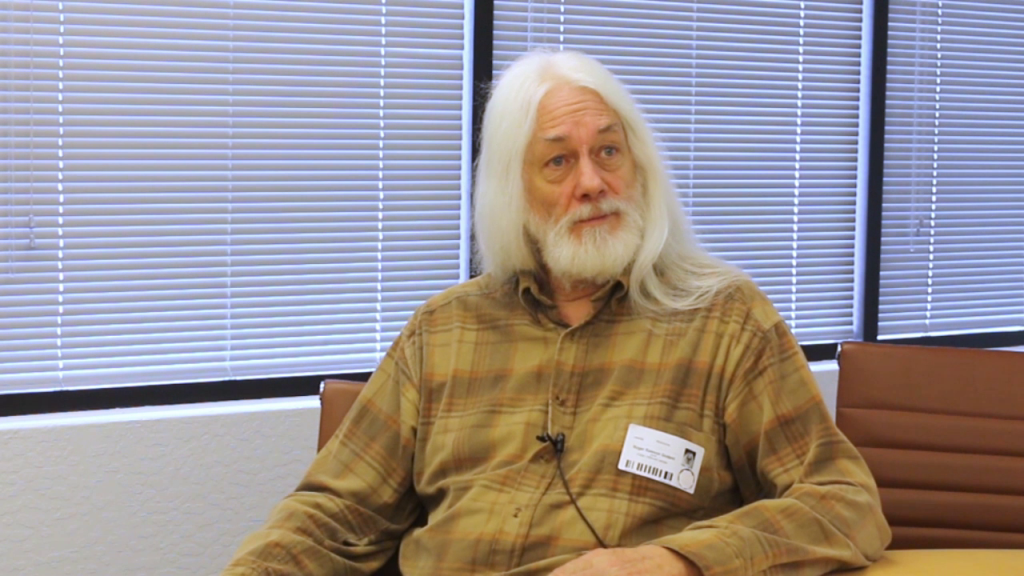
The photo at right is of Ivan Godard, who seems to be the principal hardware designer involved. He reminds me of the LOTR movie's Gandalf, especially when I hear him in the videos...
The project is well underway as a stealth commercial effort, but they're disclosing pieces of the design as the patents get filed. I've listened to three of the talks so far, and read quite a bit of the material they've published – there are lots of interesting ideas here for anyone interested in hardware design to gnaw on. The central idea is called “The Mill”, and the more you know about it, the more powerful the idea seems.
Hackaday has more (in a less technical form)...
Parental planning...

The rest of the photos in the series...
Via my mom...
So that's why there's an angel on top of the Christmas tree!
So that's why there's an angel on top of the Christmas tree! My mom explains:
A Little Christmas Story
When four of Santa’s elves got sick, the trainee elves did not produce toys as fast as the regular ones, and Santa began to feel the pre-Christmas pressure. Then Mrs. Claus told Santa her Mother was coming to visit, which stressed Santa even more.
When he went to harness the reindeer, he found that three of them were about to give birth and two others had jumped the fence and were out, Heaven knows where. Then when he began to load the sleigh, one of the floorboards cracked, the toy bag fell to the ground and all the toys were scattered.
Frustrated, Santa went in the house for a cup of apple cider and a shot of rum. When he went to the cupboard, he discovered the elves had drunk all the cider and hidden the liquor. In his frustration, he accidentally dropped the cider jug, and it broke into hundreds of little glass pieces all over the kitchen floor. He went to get the broom and found the mice had eaten all the straw off the end of the broom.
Just then the doorbell rang, and an irritated Santa marched to the door, yanked it open, and there stood a little angel with a great big Christmas tree. The angel said very cheerfully,“Merry Christmas, Santa. Isn’t this a lovely day? I have a beautiful tree for you. Where would you like me to stick it?”
Said Santa: “Up your ass!”
And so began the tradition of the little angel on top of the Christmas tree. Not a lot of people know this.
California leads the way...
California leads the way ... in sea lion poop problems... San Diego is the locale...
Dogs can sense weak magnetic fields...

It is for the first time that (a) magnetic sensitivity was proved in dogs, (b) a measurable, predictable behavioral reaction upon natural MF fluctuations could be unambiguously proven in a mammal, and (c) high sensitivity to small changes in polarity , rather than in intensity, of MF was identified as biologically meaningful. Our findings open new horizons in magnetoreception research. Since the MF is calm in only about 20% of the daylight period, our findings might provide an explanation why many magnetoreception experiments were hardly replicable and why directional values of records in diverse observations are frequently compromised by scatter.The full paper is available online.
If verified, this is a fascinating result from a couple of perspectives. First, of course, is the surprise discovery of magnetic field sensitivity in dogs. Then there's the author's hypothesis that MF variability is the reason other attempts to detect this ability have failed – which opens the possibility that the ability to detect magnetic fields is far more common than we'd thought. Possibly it even provides the mechanism that allows (some :) people to “know” their position and direction. And I'm certain that Dave Barry is intrigued by the prominent role of peeing and pooping in the study...
Time for a Big-League President...
Time for a Big-League President... Daniel Henninger, writing at The Wall Street Journal. A clip:
Only one thing really matters in an unsettled world: the quality of U.S. leadership. And so amid global unease came the disturbingly smug selfie photo of Barack Obama, David Cameron and the prime minister of Denmark at the Mandela funeral.Of the three or four phrases from this presidency that will live past 2016, one we may see quoted in a future Margaret MacMillan-type history is that in the affairs of the world, Mr. Obama was leading from behind. What this often means is that the American president goes with the flow of opinion polls.Because polls say Americans are in an isolationist mood, Mr. Obama won't spend political capital outside the country—Ukraine, Syria, Asia. He wants to spend what capital he has left consolidating internal federal authority. The Iran nuclear deal is an obsession, similar to promoting windmills after the fracking revolution.
Read the whole thing...
IPCC faces its enemy: data...
IPCC faces its enemy: data... The IPCC has – very quietly – slashed it's estimates of global warming rates to one third their previous estimates. This is the highest value they could possibly defend in the presence of accurate (and public!) recent temperature data.
Am I the only one irritated by climatology's institutional willingness to describe computer modeling efforts as “science”, when those models are so evidently invalid? The simple fact that they pool dozens of models together to arrive at a (claimed) “model consensus” is, all by itself, enough to completely invalidate the idea. It seems to me that global climate models are a valuable tool for testing our understanding of the natural mechanisms that drive climate. But...taking 32 (or 37, or 42, or whatever the number is this week) different models, each with different assumptions, and each individually failing to have any predicative value, averaging them, and then claiming that the numerical result is valid and useful as a vision of our temperature future – that seems like something approach madness to me!
Am I the only one irritated by climatology's institutional willingness to describe computer modeling efforts as “science”, when those models are so evidently invalid? The simple fact that they pool dozens of models together to arrive at a (claimed) “model consensus” is, all by itself, enough to completely invalidate the idea. It seems to me that global climate models are a valuable tool for testing our understanding of the natural mechanisms that drive climate. But...taking 32 (or 37, or 42, or whatever the number is this week) different models, each with different assumptions, and each individually failing to have any predicative value, averaging them, and then claiming that the numerical result is valid and useful as a vision of our temperature future – that seems like something approach madness to me!
Want fewer murders in your area?
Want fewer murders in your area? Agitate for liberal concealed carry policies! We're headed to one such place (Utah) from one that's not (California)...
Backdoors in Linksys and NetGear routers confirmed...
Backdoors in Linksys and NetGear routers confirmed... Details...
No respect for the law...
No respect for the law... I'm talking about That One's administration, of course. All through the ObamaCare rollout, we've watched as the administration simply disregards extant law whenever it's not convenient to them. This outrageous violation of the U.S. Constitution has gone largely unremarked by the lamestream media, and unpunished by either the legislative or judicial branches. We shouldn't be surprised when they do it again and again. In at least one case, the lawless shenanigans of That One's bureaucratic minions has caught the attention of The Wall Street Journal:
Since the 1970s, annual federal appropriations bills have explicitly prohibited the federal workplace overseer from descending on small family farms. Specifically, OSHA does not have jurisdiction over "farming operations" with 10 or fewer employees.This time, the bureaucrats seem to have tugged on a bigger tiger's tail than they had imagined. When this outrage got the attention of The Wall Street Journal and a bunch of senators, OSHA suddenly backed off. For now, at least. But I have no doubt that That One and his fellows will be back at it again...
But OSHA officials have found a novel way to circumvent this statutory restraint. The regulators have simply claimed the authority to rewrite the definition of farming. A remarkable 2011 memo from OSHA's enforcement chief to regional administrators at first acknowledges that the law prevents the agency from regulating small farms engaged in growing and harvesting crops and any "related activities." But then the memo proceeds to instruct employees on how to re-categorize small farms as commercial grain handlers. So OSHA inspectors have recently begun to descend on family farms, claiming the authority to regulate their grain storage bins.
DHS confiscates and destroys musical instruments...

Good grief...

Flying pigs moment...

Considering the enormous value of the information he has revealed, and the abuses he has exposed, Mr. Snowden deserves better than a life of permanent exile, fear and flight. He may have committed a crime to do so, but he has done his country a great service. It is time for the United States to offer Mr. Snowden a plea bargain or some form of clemency that would allow him to return home, face at least substantially reduced punishment in light of his role as a whistle-blower, and have the hope of a life advocating for greater privacy and far stronger oversight of the runaway intelligence community.I agree with this, except that I don't believe Snowden should face any punishment at all. In fact, I'd like to see him rewarded – not in a material way, but with recognition.
Read the whole thing...
Scientists get a little too honest!

Wednesday, January 1, 2014
Elliptic curve PRNG “back door” proof-of-concept...
Elliptic curve PRNG “back door” proof-of-concept... Aris Adamar explores the leaked exploit, and concludes (appropriately): “Yikes!”
LRO spots Chang'e on the moon...

Oh, the irony...

But there is a delicious little irony contained within the story. The ship is Russian flagged, and it's a sort of global warming tourism effort: there are a few actual climate scientists on board (warmists all), along with a number of paying passengers who are hoping to contribute in some small way to climate science. Their goal on this trip was to document decreasing ice coverage due to global warming; instead they ran into record high ice levels.
But that's not the irony of which I speak. Here it is: those people on that ship need accurate weather data to guide their actions (and, hopefully, a rescue) over the next few days. They didn't have access to that data. So they reached out to some well-known sources of good (meaning accurate) weather data – including John Coleman and Anthony Watts, both leaders in the global warming skeptic community. They are doing their best to help.
Some background on the expedition here. Their leader, climatology professor Chris Turney, looks quite foolish on the evidence at hand...
Awesome response to a cease-and-desist letter...
Awesome response to a cease-and-desist letter... A bar in Missouri had a beer whose name was dangerously close to Starbucks' “Frappucino” Starbucks' lawyers sent them one of the usual over-the-top cease-and-desist letters. The bar owner's response is wonderful!
Happy New Year!
Happy New Year! We're noticing that for a lot of people (ourselves included), there's a suffix this year: we're hoping that 2014 is a better year than 2013 was...
California leads the way!
California leads the way! ... in small business discouragement. Says Andy Puzder, CEO of Hardees' parent company:
Under the current U.S. business climate, regulatory and tax restrictions tend to curb otherwise dynamic entrepreneurial energy. We’d love to see more growth in domestic markets. Unfortunately, it’s easier for our franchisees to open a restaurant in Siberia than in California.That's the way, Sacramento! Let's not have any of those job-producing, consumer-pleasing fast food joints in our state!
Tuesday, December 31, 2013
Product review of the year...
Product review of the year... Whatever you do, do not click on the link that follows while you are standing up, drinking or eating something. Fair warning: if the kiddies read this, you may have some explaining to do. Here's the product review on Amazon's UK site. Other reviews of the same product.
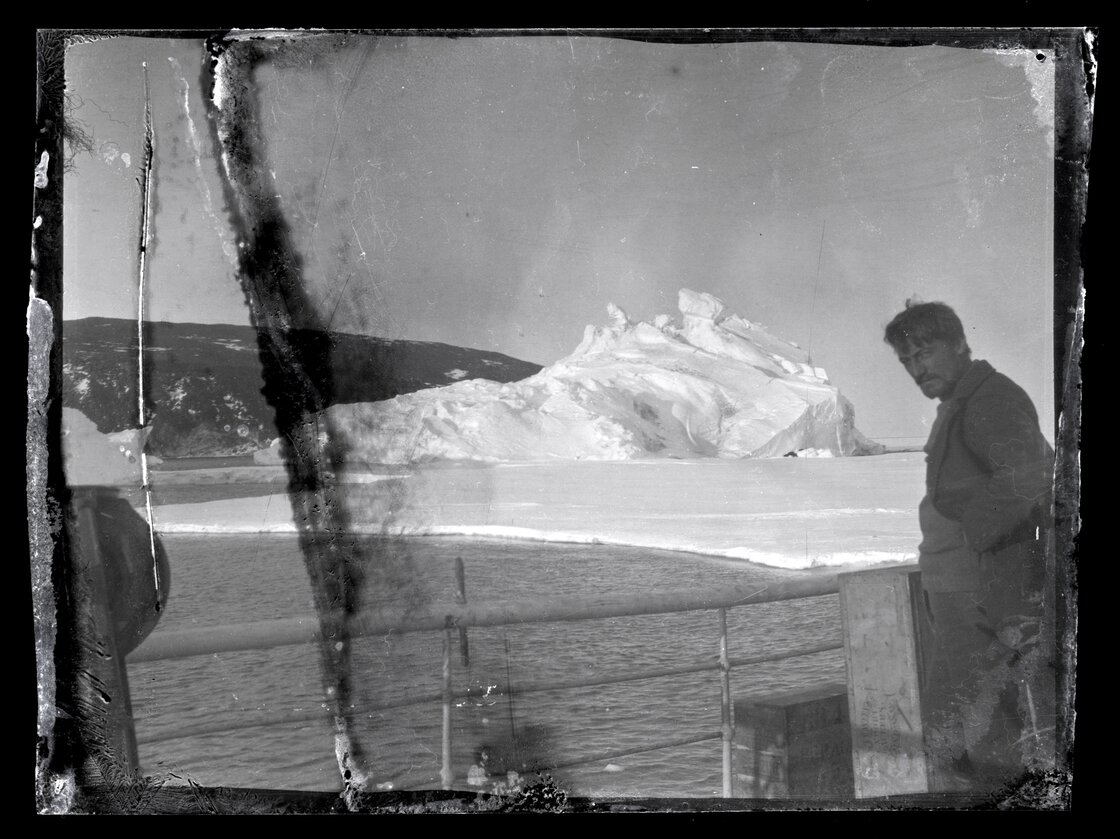
Photos from the Shackleton 1914-1917 expedition found...
California leads the way!
California leads the way! In losing the competition for drone testing areas. We lost out to Texas, Nevada, Alaska, New York, North Dakota, and Virginia. I'm sure that Governor Rick Perry is doing the happy dance, and Governor Moonbeam is confused again (for the 4,506,772nd time this week)...
Megan on ObamaCare...
Megan on ObamaCare... Signs that ObamaCare is not dead yet, and change is ObamaCare's only certainty...
The big, giant health care reform roundup...
The big, giant health care reform roundup... Pejman Yousefzdeh at Ricochet, chock full of linky goodness...
Moral for engineers: always look for the simple answer...
Moral for engineers: always look for the simple answer... Via reader Sean H. For some reason I haven't been able to pin down, software engineers seem to be particularly susceptible to the siren's call of overly complex solutions for problems that actually have a simple solution. Here's a parable that nicely illustrates this engineering challenge, and it's in a form that anyone can understand:
A toothpaste factory had a problem: Due to the way the production line was set up, sometimes empty boxes were shipped without the tube inside. People with experience in designing production lines will tell you how difficult it is to have everything happen with timings so precise that every single unit coming off of it is perfect 100% of the time. Small variations in the environment (which can't be controlled in a cost-effective fashion) mean quality assurance checks must be smartly distributed across the production line so that customers all the way down to the supermarket won’t get frustrated and purchase another product instead.A personal aside: I've seen the fan-blowing-empty-boxes-off-the-line solution in actual use, on a production line for paper clips. There was a machine that took small boxes of paper clips and stuffed a dozen of them into a larger box. That machine sometimes spit out an empty box (if it couldn't get 12 little boxes in time), and a nozzle squirting compressed air would blow those empties off the conveyor carrying the “full” boxes out of the machine. It worked great!
Understanding how important that was to his bottom line, the CEO of the toothpaste factory gathered the top people in the company together. Since their own engineering department was already stretched too thin, they decided to hire an external engineering company to solve their empty boxes problem.
The project followed the usual process: budget and project sponsor allocated, requests for proposal sent out, third-parties were selected, and six months (and $8 million) later a fantastic solution was delivered — on time, on budget, high quality and everyone in the project had a great time. The problem was solved by using high-tech precision scales that would sound a bell and flash lights whenever a toothpaste box came off the production line weighing less than it should have. The line would stop, and someone had to walk over and yank the defective box off the line, then press another button to re-start the line.
A short time later, the CEO decided to have a look at the ROI (return on investment) of the project: amazing results! No empty boxes ever shipped out of the factory after the scales were put in place. There were very few customer complaints, and they were gaining market share. “That was some money well spent!” he said, before looking closely at the other statistics in the report.
The number of defects picked up by the scales was zero after three weeks of production use. How could that be? It should have been picking up at least a dozen a day, so maybe there was something wrong with the report. He sent an email asking why, and after some investigation, the engineers indicated the statistics were indeed correct. The scales were NOT picking up any defects, because all boxes that got to that point in the conveyor belt were good.
Perplexed, the CEO went down to the factory and walked up to the part of the line where the precision scales were installed. A few feet before the scale, a $20 desk fan was blowing any empty boxes off the belt and into a bin. Puzzled, the CEO turned to one of the workers who said, “Oh, that … one of the guys put it there because he was tired of walking over every time the bell rang!”
The moral is obvious: simple, obvious solutions are not always possible – but when they are, they are better.

Glitter nail polish – new security tool...
Glitter nail polish – new security tool... This is wickedly clever – a cheap, easy, and effective way to tell if something has been tampered with. For example, suppose you're traveling to China, Iran, or some other destination where you're afraid someone might open up your laptop and install a keylogger or similar device that will compromise the security of your laptop. Actually preventing that may be impossible – but at least if you knew that your laptop had been opened, you'd know it wasn't safe to use it any more.
Enter the glitter nail polish. Put a dot of nail polish over all the screws in your laptop's case. Then (key part!) take a photo of those dots with your cell phone, and keep the cell phone with you at all times. Now if you have to leave your laptop unguarded, you can do a “blink test” to compare the photos of the nail polish blobs with what you see now. The glitter in the nail polish forms an effectively random pattern that would be practically impossible to copy precisely – and you've recorded it on your cell phone. Even if the intruder managed to find the same nail polish you used, the pattern of the glitter would be different – and your brain's excellent pattern matching software would instantly detect the difference in the blink test.
Awesome, via Wired...
Enter the glitter nail polish. Put a dot of nail polish over all the screws in your laptop's case. Then (key part!) take a photo of those dots with your cell phone, and keep the cell phone with you at all times. Now if you have to leave your laptop unguarded, you can do a “blink test” to compare the photos of the nail polish blobs with what you see now. The glitter in the nail polish forms an effectively random pattern that would be practically impossible to copy precisely – and you've recorded it on your cell phone. Even if the intruder managed to find the same nail polish you used, the pattern of the glitter would be different – and your brain's excellent pattern matching software would instantly detect the difference in the blink test.
Awesome, via Wired...
Oh, the irony!

But it gets better. An ice breaker goes to rescue them, but can't get through – and gives up. A second ice breaker tries to rescue them, and it also can't get through, and gives up. A third ice breaker does the same thing. Now a (very expensive) helicopter rescue is being planned, and the fate of the ship is uncertain.
The lamestream media is mostly ignoring this story. It just doesn't fit the narrative...
Full details at Jo Nova's place. Rob Long is quite amused at Ricochet...
A Left-Wing America Stands Alone...
A Left-Wing America Stands Alone... Daniel Greenfield, writing at Sultan Knish, with another ponder-worthy essay. Key point:
The rule of the radical left in the United States is very much an outlier in the rest of the First World where conservative and center-right parties predominate. The conventional First World response to the economic crisis has been to cut spending and reform welfare, while in the United States has spent more money than ever before and expanded welfare.Read the whole thing...
Much of Europe now favors less federalism and less immigration. The United States has expanded its federal government dramatically and both Democratic and Republican leaders support amnesty for illegal aliens at a time when immigration is politically toxic everywhere else.
The only major European countries with a sizable population and serious economic problems ruled by the left are France and Italy and both are approaching economic collapse. France’s ruling left has become wildly unpopular and Italy is still imploding in slow motion. While the American left insists that historical inevitability is on its side, it has lost nearly everywhere else. America stands alone under the rule of the left, in uncontrolled spending, uncontrolled immigration and the iron hand of the welfare state.

Let this one sink in for a moment...
Let this one sink in for a moment... A commenter responding to this question:
Tip of the hat to Kevin Baker at The Smallest Minority, who used the second quote as his Quote of the Day...
What can gun owners learn from non-gun owners?One of the answers:
I was never against having guns for shooting ranges, I am against them as means of self-defense (or freedom).Sort of takes your breath away, doesn't it?
Tip of the hat to Kevin Baker at The Smallest Minority, who used the second quote as his Quote of the Day...
ObamaCare: at least 3 million fewer people are covered...
ObamaCare: at least 3 million fewer people are covered... That, of course, is because more people had their healthcare policies canceled because of ObamaCare than signed up for new policies under ObamaCare.
Way to go, bozos...
Way to go, bozos...
Dave Barry's year in review is out...
Dave Barry's year in review is out... As usual, you don't want to miss it. San Diego made it this year:
In politics, San Diego Mayor Bob “Bob” Filner resigns as a result of allegations that he is a compulsive serial horn dog who groped pretty much the entire female population of Southern California. He immediately becomes a leading contender in the New York City mayoral race.I do miss Filthy Filner...
Monday, December 30, 2013
Pater: “The Treatment”...
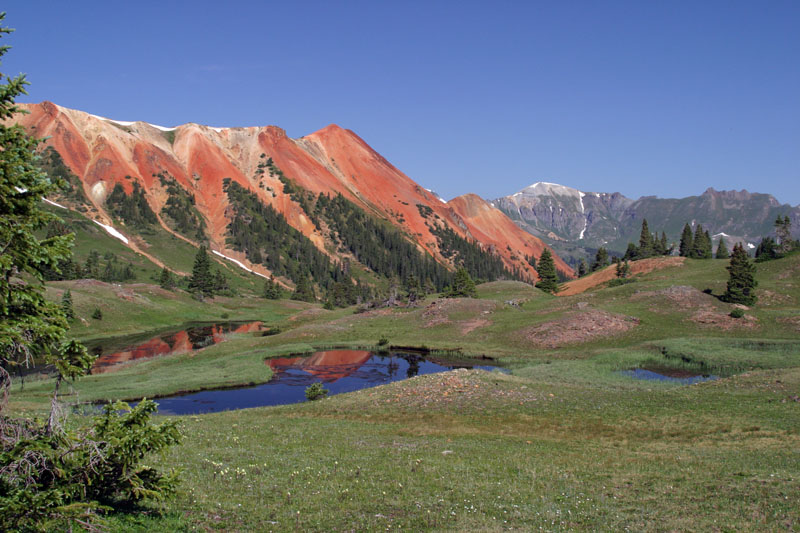
The Treatment...
Anyone who visited our home in the '50s or '60s (and possibly later) was potentially a target of The Treatment. Generally speaking (though there were some exceptions), any given individual would have The Treatment administered once, and then they were exempt from further administrations – and could even participate in administering The Treatment to someone else.
What was The Treatment? There was no precise definition, but generally speaking it included (a) ice cubes down the pant legs while being held upside down, and (b) unconstrained tickling while being held to the floor by a horde of torturers. My dad was the boss of The Treatment administration.
I never fully understood the rules that determined exactly who would be subjected to The Treatment, but it certainly included any of my friends that I might invite over for a visit, so kids were definitely eligible. Some adults were also eligible.
One of my high school friends, Nom Loy, was given The Treatment on his second visit to our home. More than 20 years later, he talked with me of his disbelief and shock when my whole family worked together to capture him, restrain him, throw him on the floor, pick him up by the legs, and then pour a bowl full of ice cubes down his pants legs. This was so far outside his experience of family behavior that he simply couldn't process it. He could tell by our laughter that we weren't actually threatening him, yet our behavior suggested an attack. My mom pouring the ice cubes down his pants legs was the ultimate shock for him, the utter and absolute loss of all dignity – past, present, and future. All those years later, Nom still remembered his experience with The Treatment as traumatic – but he also recognized that afterward he was much more comfortable around us, much less careful and reserved.
While I was growing up, I never thought of our tradition of The Treatment as particularly unusual. The first time I can remember recognizing it as unusual family behavior was in Navy boot camp, in Orlando, Florida. A few of my fellow recruits were horsing around, and had wrestled their target to the floor. I suggested ice cubes down the pants legs to them, and that started a long discussion wherein I described The Treatment and they marveled that my family wasn't locked up in the loony bin. But they did get the ice cubes :)
I still have never met another person whose family had some tradition resembling The Treatment...
Project Echo...
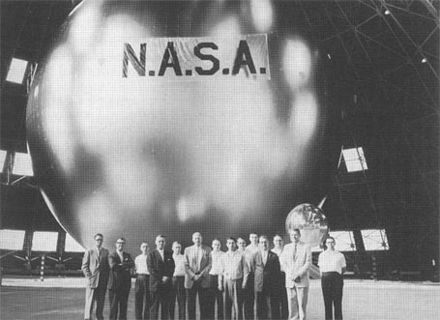
These satellites were enormous by today's standards: Echo 1 was 100 feet in diameter, and Echo 2 was 135 feet in diameter. Both were metalized Mylar balloons, and both were intended to be used as passive communications satellites – simple reflectors in space. Today's communications satellites are all either simple repeaters (devices with a radio receiver tied directly to a radio transmitter that simply retransmits an amplified version of whatever it “hears”) or more sophisticated routers (all-digital repeaters that not only amplify a signal, but can also send it through a particular antenna to the right part of the Earth's surface).
I have two memories of the Echo project. The first one was from shortly after Echo 1's launch in 1960, when I was just 8 years old. Because Echo 1 was so large, and had a mirror finish (reflective in visible light, not just radio frequencies), it was extremely bright for a satellite. That made it very easy to spot with the naked eye, and I remember standing outside at dusk with my Uncle Donald, in a soy bean field near his apple orchard, watching it transition overhead from horizon to horizon. It's funny how these old memories work – I remember it being my uncle that I was with, but I have no idea why. My Uncle Donald was not generally interested in space; he was into archaeology, fungi, and history...

This antenna was just 30 miles or so from the farm I grew up on (see map at left), and I drove up there one day to see if I could get a peek at it. At the time it was still privately owned by Bell Labs, and there was a fence keeping the public away – but one of the employees there saw me gawking through the fence and offered up a tour. For me the exciting part was in the little hut that you can see to the left of the antenna in the photo, with one window in it. The microwave receiver electronics were located in that shack, all custom-built stuff using the absolute latest and greatest. That employee turned out to be a technician who kept the gear tuned up (the microwave equipment of the day needed nearly constant attention to stay in tune), and very knowledgeable about the equipment. The main takeaway for me was a keenly whetted interest in bleeding-edge radio technology. When I enlisted in the U.S. Navy not long afterwards, that sort of technology is what I desperately wanted to learn about. Instead, they sent me off to learn about those boring old computers :)
Double transportation cipher solved?
Double transportation cipher solved? That's the claim of this newspaper article, though no details are supplied...
Here we go!
Here we go! The start of every new year means new taxes, but 2014 has a bumper crop of them. One that's going to affect a lot of people: a new tax on healthcare policies (some cost reduction from ObamaCare, eh?) that will mainly affect small businesses, the self-employed, and retirees not on Medicare. Hey – that's me! Dang it!!
What the hell is happening to my country?

Sunday, December 29, 2013
Punishment...
Punishment... I have been undecided about whether to inflict these upon my readers, as my mother inflicted them on me. I'm mad at the world today, though, so I'm turning them loose. Warning: once read, these cannot be unpunned...
I tried to catch some fog. I mist.My dad loved awful puns. He'd have been smiling for hours after reading these...
When chemists die, they barium.
Jokes about German sausage are the wurst.
A soldier who survived mustard gas and pepper spray isnow a seasoned veteran.
I know a guy who's addicted to brake fluid. He says he can stop any time.
How does Moses make his tea? Hebrews it.
I stayed up all night to see where the sun went. Then it dawned on me.
This girl said she recognized me from the vegetarian club, but I'd never met herbivore.
I'm reading a book about anti-gravity. I can't put it down.
I did a theatrical performance about puns. It was a play on words .
They told me I had type A blood, but it was a type-O.
This dyslexic man walks into a bra .
PMS jokes aren't funny, period.
I didn't like my beard at first. Then it grew on me.
A cross-eyed teacher lost her job because she couldn't control her pupils?
When you get a bladder infection, urine trouble.
What does a clock do when it's hungry? It goes back four seconds..
I wondered why the baseball was getting bigger. Then it hit me!
Broken pencils are pointless.
What do you call a dinosaur with an extensive vocabulary? A thesaurus.
England has no kidney bank, but it does have a Liverpool .
I used to be a banker, but then I lost interest.
I dropped out of communism class because of lousy Marx.
All the toilets in London police stations have been stolen. Police say they have nothing to go on.
I took the job at a bakery because I kneaded dough.
Velcro - what a rip off!
Cartoonist found dead in home. Details are sketchy.
Crowdsourcing the end of free speech...
Crowdsourcing the end of free speech... An excellent post, chock full of ponder-worthy ideas, by Daniel Greenfield at Sultan Knish...
The old cowboy gets a shave...
The old cowboy gets a shave... Via my mom:
An old cowboy walks into a barbershop in Dime Box for a shave and a haircut. He tells the barber he can't get all his whiskers off because his cheeks are wrinkled from age.
The barber gets a little wooden ball from a cup on the shelf and tells the old cowboy to put it inside his cheek to spread out the skin. When he's finished, the old cowboy tells the barber that was the cleanest shave he'd had in years, but he wanted to know what would have happened if he had accidentally swallowed that little ball.
The barber replied, just bring it back in a couple of days like everyone else does...

Saturday, December 28, 2013

Geek: the CDC 6600 architecture, documented...
Geek: the CDC 6600 architecture, documented... This is a supercomputer from the late '60s, considerably more modern than the first computers I worked on (Univac 1206s), which were designed in the late '50s and early '60s. It's interesting for a computer hardware buff to see the evolution of these machines over the 8 to 10 years between them. The Univac 1206s had 100 kHz clock speeds and zero CPU concurrency, and the CDC 6600 had 10 times faster clocks, up to 10 concurrent CPU operations, and a tiny (27 word!) semi-conductor instruction cache – all of which combined to boost the power of the CDC 6600 to over 100 times that of the Univac 1206...
A feminist defense of masculine virtues...
A feminist defense of masculine virtues... Camille Paglia, in The Wall Street Journal. The more I read from her, the more I like her. In this piece, she had me from the first line:
What you're seeing is how a civilization commits suicide.
Living the California nanny-state life...
Living the California nanny-state life... Andy Kessler, writing in The Wall Street Journal, vividly outlines some of the many reasons why Debbie and I are escaping from California...
Shipwrecked on an island inhabited by Stone Age people...

With a bit of searching on Google Maps, I was able to find the wreck of the Primrose, just off the northwestern-most prominence on the island. Expand the map at left and zoom out to see exactly where it is..
Best and worst quotes of 2013...
Best and worst quotes of 2013... An excellent pair of lists, with many of my personal favorites on both lists...
Subscribe to:
Posts (Atom)