Ed (a blonde man) finally decides to take a vacation. He books himself on a Caribbean cruise, and proceeds to have the time of his life -- until the boat sank. He found himself swept up on the shore of an island with no other people, no supplies... nothing... only bananas and coconuts. After about four months, he is lying on the beach one day when the most gorgeous woman he has ever seen rows up to him.
In disbelief, he asks her, "Where did you come from? How did you get here?"
"I rowed from the other side of the island," she says. "I landed here when my cruise ship sank five months ago.""Amazing," he says. "You were really lucky to have a rowboat wash up with you."
"Oh, this?" replies the woman. "I made the rowboat out of raw material I found on the island. The oars were whittled from gum tree branches. I wove the bottom from palm branches. And the sides and stern came from a Eucalyptus tree."
"But, but,... that's impossible," stutters Ed. "You had no tools or hardware. How did you manage it?"
"Oh, that was no problem," replies the woman. "On the south side of the island, there is a very unusual strata of alluvial rock exposed. I found if I mined it and fired it to a certain temperature in my kiln, it melted into forgeable ductile iron. I used that for tools and used the tools to make the hardware."
Ed is stunned.
"Let's row over to my place," she says.
After a few minutes of rowing, she docks the boat at a small wharf. As Ed looks onto shore, he nearly falls out of the boat. Before him is a stone walk leading to an exquisite bungalow painted in blue and white.
While the woman ties up the rowboat with an expertly woven hemp rope, he could only stare ahead, dumbstruck. As they walk into the house, she says casually, "It's not much, but I call it home. Sit down please. Would you like to have a drink?"
"No, no, thank you," he says, still dazed. "I can't take any more coconut juice."
"It's not coconut juice," the woman replies. "How about a Pina Colada?"
Trying to hide his continued amazement, he accepts, and they sit down on her couch to talk. After they have exchanged their stories, the woman announces, "I'm going to slip into something more comfortable. Would you like to take a shower and shave? There's a razor upstairs in the cabinet in the bathroom."
No longer questioning anything, Ed goes into the bathroom. There, in the cabinet, is a razor made from a bone handle. Two shells honed to a hollow ground edge are fastened on to its end inside of a swivel mechanism.
"Wow! This woman is amazing!" he muses, "What next?" He looks in the shower stall and sees a nozzle with hand drilled holes fed from an overhead cistern of sun-warmed rain water. So he showers, using her hand made soap.When he returns to the living area, she greets him wearing nothing but flowered vines --strategically positioned-- and smelling faintly of gardenias.
She beckons for him to sit down next to her.
"Tell me," she begins suggestively, slithering closer to him, "We've been out here for a really long time." She pauses, then continues. "You've been lonely. There's something I'm sure you really feel like doing right now, something you've been longing for all these months. You know..."
She stares demurely into his eyes.
He can't believe what he's hearing:
"You mean...", he swallows excitedly, "I can check my email?!"

Wednesday, March 23, 2005
Blonde

Planetary luminance

All previous evidence for the existence of planets around other stars has been indirect. Generally this evidence has been either detecting fluctuations in the star's luminance (because the planet partially occults the star during part of its orbit) or by detecting the "wobble" in the star (via atomic line frequency shifing) caused by the orbiting planet.
But now Spitzer has directly detected the light reflected from an orbiting planet. This is a technical tour de force which also happens to be a first.
I quote the NASA press release in its entirety:
NASA's Spitzer Space Telescope has for the first time captured the light from two known planets orbiting stars other than our Sun. The findings mark the beginning of a new age of planetary science, in which "extrasolar" planets can be directly measured and compared.
"Spitzer has provided us with a powerful new tool for learning about the temperatures, atmospheres and orbits of planets hundreds of light-years from Earth," said Dr. Drake Deming of NASA's Goddard Space Flight Center, Greenbelt, Md., lead author of a new study on one of the planets.
"It's fantastic," said Dr. David Charbonneau of the Harvard-Smithsonian Center for Astrophysics, Cambridge, Mass., lead author of a separate study on a different planet. "We've been hunting for this light for almost 10 years, ever since extrasolar planets were first discovered." The Deming paper appears today in Nature's online publication; the Charbonneau paper will be published in an upcoming issue of the Astrophysical Journal.
So far, all confirmed extrasolar planets, including the two recently observed by Spitzer, have been discovered indirectly, mainly by the "wobble" technique and more recently, the "transit" technique. In the first method, a planet is detected by the gravitational tug it exerts on its parent star, which makes the star wobble. In the second, a planet's presence is inferred when it passes in front of its star, causing the star to dim, or blink. Both strategies use visible-light telescopes and indirectly reveal the mass and size of planets, respectively.
In the new studies, Spitzer has directly observed the warm infrared glows of two previously detected "hot Jupiter" planets, designated HD 209458b and TrES-1. Hot Jupiters are extrasolar gas giants that zip closely around their parent stars. From their toasty orbits, they soak up ample starlight and shine brightly in infrared wavelengths.
To distinguish this planet glow from that of the fiery hot stars, the astronomers used a simple trick. First, they used Spitzer to collect the total infrared light from both the stars and planets. Then, when the planets dipped behind the stars as part of their regular orbit, the astronomers measured the infrared light coming from just the stars. This pinpointed exactly how much infrared light belonged to the planets. "In visible light, the glare of the star completely overwhelms the glimmer of light reflected by the planet," said Charbonneau. "In infrared, the star-planet contrast is more favorable because the planet emits its own light."
The Spitzer data told the astronomers that both planets are at least a steaming 1,000 Kelvin (727 degrees Celsius, 1340 Fahrenheit). These measurements confirm that hot Jupiters are indeed hot. Upcoming Spitzer observations using a range of infrared wavelengths are expected to provide more information about the planets' winds and atmospheric compositions.
The findings also reawaken a mystery that some astronomers had laid to rest. Planet HD 209458b is unusually puffy, or large for its mass, which some scientists thought was the result of an unseen planet's gravitational pull. If this theory had been correct, HD 209458b would have a non-circular orbit. Spitzer discovered that the planet does in fact follow a circular path. "We're back to square one," said Dr. Sara Seager, Carnegie Institution of Washington, Washington, co-author of the Deming paper. "For us theorists, that's fun."
Spitzer is ideally suited for studying extrasolar planets known to transit, or cross, stars the size of our Sun out to distances of 500 light-years. Of the seven known transiting planets, only the two mentioned here meet those criteria. As more are discovered, Spitzer will be able to collect their light -- a bonus for the observatory, considering it was not originally designed to see extrasolar planets. NASA's future Terrestrial Planet Finder coronagraph, set to launch in 2016, will be able to directly image extrasolar planets as small as Earth.
Shortly after its discovery in 1999, HD 209458b became the first planet detected via the transit method. That result came from two teams, one led by Charbonneau. TrES-1 was found via the transit method in 2004 as part of the NASA-funded Trans-Atlantic Exoplanet Survey, a ground-based telescope program established in part by Charbonneau.
Artist's concepts and additional information about the Spitzer Space Telescope are available at http://www.spitzer.caltech.edu/Media.
NASA's Jet Propulsion Laboratory, Pasadena, Calif., manages the Spitzer Space Telescope mission for NASA's Science Mission Directorate, Washington. Science operations are conducted at the Spitzer Science Center, at the California Institute of Technology in Pasadena. Caltech manages JPL for NASA. For more information contact Nancy Neal Jones, Goddard Space Flight Center, 301/286-0039; or David Aguilar, Harvard-Smithsonian Center for Astrophysics, 617/495-7462.
The good guys win one
Hat tip to Michelle Malkin for the pointer to a blog I'd never seen before (the Ace of Spades), with this excellent news.
As several observers have noted (including Ms. Malkin), this is one more piece of evidence that the tipping point in Iraq has been reached...
Memogate?
What? Again?!?
When I first heard about this memo, I just assumed (silly me) that there was at least some truth to it, and dismissed it (cynical me) as another piece of evidence for rampant moral corruption in politics. But many bloggers, arguably more cynical than I, immediately saw the potential for this memo being yet another dirty trick, or at the very least another twisted bit of reporting. Powerline, as usual, is prominent amongst this group. Fishkite has an excellent timeline, with pointers to other information.
And I'm left again to wonder whether there's any utterance of the MSM that I can trust...
Kyrgyzstan

Kyrgyzstan has been an area of increasing unrest since a hotly disputed election was held recently. It's not something that's widely reported, and I've had trouble finding credible sources. Here's a good one though: a great roundup from Registan.net.
Don't miss the pictures on page two of the roundup!
14.45 and counting
We're up to 14.45 inches for the calendar year. Best of all, nearly all of this rain came in the form of slow, steady drizzle or light rain — so damaging runoff was minimal, despite the high total rainfall accumulation. Our spring is in full flush; we're surrounded by greenery. The shortfall this year (from a plant's perspective) isn't the usual shortfall of water — it's sunshine!
Quote for the day
Come with rain, O loud Southwester!
Bring the singer, bring the nester;
Give the buried flower a dream;
Make the settled snowbank steam.
Robert Frost
Tuesday, March 22, 2005
The new Shakers?
Mark Steyn has a piece this morning on the fact and consequences of Europe's rapidly declining birthrate. As usual it is hilarious — and it makes some very good points. An excerpt:
Shortly after 9/11, I wrote in these pages about one of the most curious aspects of the new war - the assurance given to Islamist "martyrs" that 72 virgins were standing by to pleasure them for eternity. The notion that the after-life is a well-appointed brothel is a perplexing one to the Judaeo-Christian world, and I suggested that Americans would be sceptical if heaven were framed purely in terms of boundless earthly pleasures.
But, on reflection, if the Islamists are banal in portraying the next world purely in terms of sensual self-gratification, we're just as reductive in measuring this one the same way. America this Holy Week is following the frenzied efforts to halt the court-enforced starvation of a brain-damaged woman for no reason other than that her continued existence is an inconvenience to her husband. In Britain, two doctors escape prosecution for aborting an otherwise healthy baby with a treatable cleft palate because the authorities are satisfied they acted "in good faith". You can read similar stories in almost any corner of the developed world, except perhaps the Netherlands, where discretionary euthanasia is so advanced it's news if the kid makes it out of the maternity ward. As the New York Times reported the other day: "Babies born into what is certain to be a brief life of grievous suffering should have their lives ended by physicians under strict guidelines, according to two doctors in the Netherlands.
Cruelty
Michelle Malkin has her usual swift roundup.
This is such a sad affair, on so many levels. Much of the focus recently, and very naturally, has been on the immediate issue of whether Terri should be kept alive or should be "allowed" to starve and dehydrate until she dies. There are legitimate issues and questions on both sides, and emotions are running very high amongst people who are thinking about Terri's situation. I am myself amongst those who believe there are enough questions about the circumstances surrounding the decision to remove her feeding tube to justify reinserting it while those issues are examined. As President Bush so eloquently put it: in a situation as grey and blurry as this one, there should be a presumption of life. Terri should be kept alive while we figure this out.
But there's another issue at play in Terri's case that I haven't seen much discussed, and I think it deserves to be. To wit: if, as a society, we decide that there are circumstances in which people like Terri should be "allowed to die," why would we do so in such a cruel manner?
Can you imagine the howls (from every political direction) if we condemned a murderer to die by withholding food and water? Certainly such a sentence would never stand in the United States. Why, then, would we even consider doing such a thing to an innocent? I cannot fathom the logic here at all. To me, the solution seems incredibly simple: in such a circumstance, the patient should be killed (euthanized, if you prefer the antiseptic term) in a manner that is truly as painless as possible, with an absolute minimum of suffering. Such a death is easily within our means...we have the technology to do so.
Certainly I would hope that if I ever found myself in a situation where my fellow citizens said that I must die, that is the kind of death I would want — whether the reason for that decision was my crime or my health.
Shake 'em up
Fred Barnes is always an intersting commentator, whether on TV or in his writing. Today he has a short column in the Wall Street Journal (paid subscription) talking about President Bush's recent spate of controversial appointments. Mr. Barnes believes that anyone who is surprised by these appointments simply has a basic lack of comprehension of what President Bush is all about — he sees these appointments as totally in characters...and as predictable. Some of his key points:
Anyone shocked by the nominations of Messrs. Wolfowitz and Bolton doesn't understand the president's approach to multilateral organizations. The conventional idea is that these organizations are wonderful, though perhaps flawed and infused with too much anti-American sentiment. And the chief task of U.S. representatives is to get along amicably, not buck the system and cause problems. This idea is popular in the press, the State Department bureaucracy and diplomatic circles, and with foreign-policy "experts." But not with Mr. Bush.
The president's idea is simple: No more Mr. Nice Guy. He believes international organizations have failed largely and must be challenged and reformed. He was miffed when outgoing U.N. Ambassador John Danforth rushed to the defense of Kofi Annan in the midst of the Oil for Food scandal. Mr. Annan opposed the war in Iraq and even declared it illegal. More important, he's viewed by Mr. Bush as part of the problem at the U.N.
...
The nominations of Messrs. Bolton and Wolfowitz produced shock and awe around the world. Ms. Hughes's didn't. But what's significant is that all three have agendas that reflect the president's own world view. Or, put more precisely, their agendas stem from Mr. Bush's shake-up-the-world view.
Quote for the day
The grand aim of all science is to cover the greatest number of empirical facts by logical deduction from the smallest number of hypotheses or axioms.
Albert Einstein
Monday, March 21, 2005
Quote for the day
Democracy is the recurrent suspicion that more than half of the people are right more than half of the time.
E. B. White
Sunday, March 20, 2005
Outrageous Chavez
I put "president" in scare quotes because Chavez was not elected in a free and fair election, Jimmy Carter's opinion on the matter notwithstanding. The London Times online has a lengthy article about Chavez's preparation for a confrontation with the U.S. — a confrontation that Chavez has been loudly accusing the U.S. of provoking. Shades of North Korea.
Anyway, in that article are these stunners allegedly uttered by Chavez. The context is not clear from the article, but a close read suggests they were copied from state TV broadcasts:
Assassination: “If they kill me, there will be a really guilty party on this planet whose name is the President of the United States, George Bush”
Bush’s Administration: “It is a mafia, a true mafia of murderers”
Cuba: “I am the second Fidel Castro of Latin America”
Capitalism: “The Devil’s economic model . . . The capitalist exploitation model has destroyed oceans, entire oceans”
Saddam Hussein: “A brother”
Condoleezza Rice: “I cannot marry Condolencia (condolence), because I am much too busy. I have heard she dreams about me”
Two years
Husayn Uthman is a young Iraqi man who keeps an interesting blog called Democracy in Iraq. Yesterday he posted his thoughts about the second anniversary of the war, and in particular about whether it was worth it. Read the whole thing, but here is his conclusion:
Our cities are smoking, our graveyards full, and terrorists in our midst. But we are not defeated. We are not down, we are not regretful. We are not going to surrender. For all that the two years have brought, the greatest thign they have given us is a future, and a view of the finish line.
Iraqis see the finish line, the finish line of freedom and democracy and a functioning nation. We can smell it, taste it, and like a sprinter, one who has broken his legs, but who has a heart full of passion, we will crawl there no matter what the cost. No matter what we must endure, we have realized what we can become, and that is the biggest result of the last two years.
Noone can take that from us. Not the terrorists, not those who want to question the good of the removal of Saddam, not those who want to reduce our glory for politics, none.
We have been brought from darkness to light. And not only has the future been made better for Iraq, but the martyrs of our nation, their blood is watering the roots of democracy across the world. We are watching our neighbors come closer to the light, and this only pushes us more, and makes us stronger in our burning desire to reach the finish line, to realize the dream that our people have had for so long.
No, we will not give up, and we will not say that the last two years were a waste. They for all their trouble have been momentus. They for us, have been a turning point in history. Whether or not you agree, this is how it looks from Iraq.
Those liberal voices who so piously intoned that the Arabs weren't ready for democracy; that they craved dictators rather than elections — I wonder how they would respond to this?
Quote for the day
I think we have more machinery of government than is necessary, too many parasites living on the labour of the industrious.
Thomas Jefferson
Saturday, March 19, 2005
A revolutionary change
Herbert E. Meyer served during the Reagan Administration as Special Assistant to the Director of Central Intelligence and Vice Chairman of the CIA’s National Intelligence Council. In this excellent article he makes the case for why revolutions in all the remaining dictatorships are inevitable. Information technology is the revolutionary enabler, he argues. Read the whole thing; it's a very interesting piece. Here's his conclusion (the emphasis is his):
Now think about the generals in today’s remaining dictatorships. They cannot be having much fun, or feeling very confident about the future. George W. Bush is secure in his second term, and he’s made freedom around the world his personal mission. Georgia and Ukraine have had their revolutions, and Afghanistan and Iraq are moving steadily toward democracy. Crowds are surging in Lebanon, Syria looks to be in Washington’s cross-hairs, and demonstrations have been taking place every day, for months, in Iran. Even little Kyrgyzstan is starting to come apart, and over in The Hague a score of Serbian generals are on trial for their lives. Throughout the world, the very idea of revolution is in the air. This is the 21st century, and ordinary people everywhere understand that the combination of democracy and free enterprise is the only thing that works. They see it, and they want it.
It would be foolish to suggest that everything has changed, and that the generals and the demonstrators will all be sitting in a circle, holding hands and singing It’s a Small, Small World. There is still the very real possibility of horrific violence in Lebanon, Iran, or in any of the countries where trouble is brewing. But it would be even more foolish to believe that nothing has changed, and that the dictatorships that were built in the 20th century will survive for long in the 21st.
It is late at night in Damascus, or Teheran, or Cairo, or maybe even Moscow, and the general is sitting in his easy chair with his tie loosened, his shoes off and perhaps with a drink in his hand. He is exhausted, but he cannot sleep. All day he has been reading reports of growing unrest, of strikes, of demonstrations against the regime he is sworn to defend. It is getting out of hand, and sooner rather than later he will be given the order to shoot. Scenes of the resulting carnage will be played and re-played on televisions around the world – including the one in his wife’s bedroom. And even if the revolution is stopped, surely it will start again before long and even more blood will flow through the streets. The general finishes his drink, turns out the lamp beside his chair, walks slowly toward his bedroom – and realizes that his two teen-agers aren’t home…
Friday, March 18, 2005
Iran's cruise missiles

Oh, great. Like we needed this, on top of Iran's well-understood nuclear ambitions. You just gotta wonder what these people were thinking when they made this deal!
On the bright side, without the revolution in the Ukraine, I seriously doubt we'd have gotten this admission (though one could hope our intelligence services would have ferreted it out).
The AFP's complete story:
LONDON (AFP) - Ukraine admitted that it had exported nuclear-capable cruise missiles to Iran (news - web sites) and China, amid tense diplomatic debate over Tehran's alleged quest for nuclear weaponry.
Eighteen Soviet-era X-55 cruise missiles were exported in 2001 -- 12 to Iran and six to China -- Svyatoslav Piskun, Ukraine's prosecutor general, told the respected London-based Financial Times daily.
Piskun said the missiles were not exported with the nuclear warheads that they were designed to carry.
Nonetheless, both Japan and the United States were worried about what appeared to be a significant leak of military technology, the newspaper reported.
The X-55, an air-launched missile also known as the Kh-55 and AS-15 and first introduced in 1976, has a range of 3,500 kilometers (2,175 miles), which would give China -- or North Korea (news - web sites), if it obtained the missile -- easy access to Japan, while Iran could hit its main regional foe, Israel.
Last month the Ukrainian government opened a criminal inquiry, at the request of Japan, into the illegal sale of 18 missiles by the Ukrspetsexport arms group to unspecified states via Russia.
Reports about the missile sales going to Iran emerged earlier this month.
But Piskun's statement was the first acknowledgment from the Kiev government, and is likely to heighten suspicions about Tehran's nuclear program.
The Islamic republic insists its program is aimed at peaceful civilian use but Washington claims it is designed to produce nuclear arms.
Although the X-55 is designed to carry a nuclear warhead, it can also be loaded with conventional weaponry and would not be Iran's ideal nuclear missile, Doug Richardson, editor of Jane's Missiles and Rockets Magazine, said.
Richardson told AFP the Tehran regime's own Shahab ballistic missile was better suited since it was faster than a cruise missile.
"If they're going to nuclearize a weapon, they're much more likely to do so with one of their ballistic missiles. A ballistic missile, simply because of its sheer speed, is more difficult to defend against than a cruise missile," he said, calling the Shahab "almost unstoppable".
A cruise missile, on the other hand, travels at subsonic speed comparable to that of an airplane, he added.
However, John Eldridge, editor of Jane's Nuclear, Biological and Chemical Defence, told AFP the report was a fresh sign that Iran was seeking "to beef up its offensive capability in the region".
"It's not a piece of news that hints of great stability in the region," he said.
If Iran is seeking to create an offensive nuclear capability, it could either buy complete "off-the-shelf" solutions or acquire both materials such as the X-55 and expertise to create it themselves, Eldridge said.
Currently, "both options appear to be being pursued by the Tehran government", he added.
Ukraine had a massive weapons arsenal after the fall of the Soviet Union, but it returned its nuclear warheads to Russia or destroyed them under a US-funded disarmament program.
Its remaining weaponry remains, however, a source of major concern in the West, fueled by several high-profile cases of arms trafficking including radar technology to Saddam Hussein (news - web sites)'s regime in Iraq (news - web sites).
two anti-aircraft missiles and a launch system were reported stolen last month from a Ukrainian naval base in the Crimean peninsula, while Turkey reported seizing a Ukrainian radio-controlled missile and missile heads en route to Egypt last June.

Wolfowitz derangement syndrome
Bush's recent appointment of Paul Wolfowitz to head the World Bank has much of Europe in a tizzy. From what I've read, much of the tizzy stems from Bush's failure to "consult with" (translate: buckle under to) the European shareholders of the bank. Those shareholders are very much in the minority, by the way...not that that matters to the liberal Europhiles over here who are having a sympathy tizzy with the Europeans. Roger Simon nicely tears holes in the tizzy's foundations, and raises some questions of his own. An excerpt:
You would think a Jewish and an Arab intellectual (both quite adult) being romantically involved would be applauded by "progressive" Europe, but I guess not. So what is the reason for their WDS -- Wolfowitz Derangement Syndrome -- other than the usual envy expressed by the ever-bilious British pol Clare Short who is quoted in the same article as saying on their TV: "America is going to do what it likes or hard cheese."
Another article in the Financial Times reports that some Europeans and "development economists" were concerned that Wolfowitz was "ill-suited" for the post, apparently because he wasn't properly educated in their specialty, as if development economics were particle physics or open-heart surgery. It's hard to take that seriously, considering the deputy defense secretary is easily one of the brainiest government officials on either side of the pond.
Ann's rebuttal
Brian Nicols wrestled a gun away from his guard last week and went on a murderous rampage, murdering a judge and three other people. The guard who lost her gun happened to be a 5 foot tall grandmother. Do you think that might have had something to do with Nicols' success? Ann thinks so. Here's an excerpt from her wonderful column, which you really should go read:
How many people have to die before the country stops humoring feminists? Last week, a defendant in a rape case, Brian Nichols, wrested a gun from a female deputy in an Atlanta courthouse and went on a murderous rampage. Liberals have proffered every possible explanation for this breakdown in security except the giant elephant in the room – who undoubtedly has an eating disorder and would appreciate a little support vis-à-vis her negative body image.
The New York Times said the problem was not enough government spending on courthouse security ("Budgets Can Affect Safety Inside Many Courthouses"). Yes, it was tax-cuts-for-the-rich that somehow enabled a 200-pound former linebacker to take a gun from a 5-foot-tall grandmother.
Atlanta court officials dispensed with any spending issues the next time Nichols entered the courtroom when he was escorted by 17 guards and two police helicopters. He looked like P. Diddy showing up for a casual dinner party.
I think I have an idea that would save money and lives: Have large men escort violent criminals. Admittedly, this approach would risk another wave of nausea and vomiting by female professors at Harvard. But there are also advantages to not pretending women are as strong as men, such as fewer dead people. Even a female math professor at Harvard should be able to run the numbers on this one.
Don't miss the rest...
al-Arifi nabbed
Abdullah Nassar al-Arifi has been on the FBI's most-wanted list since 9/11, according to Fox, though I couldn't find him when I went to the FBI's site.
Another one bites the dust!
Quote for the day
Democracy is the art and science of running the circus from the monkey cage.
H. L. Mencken
Thursday, March 17, 2005
Quote for the day
Too bad that all the people who know how to run the country are busy driving taxicabs and cutting hair.
George Burns
Scalia's speech
Supreme Court Justice Anton Scalia delivered a speech at the Woodrow Wilson International Center for Scholars on March 14, 2005. A blog named ThreeBadFingers has transcribed the whole thing by hand. Please if you read just one thing today, make it this one. A teaser:
The very next case we announced is a case called BMW verses Bush. Not the Bush you think; this is another Bush. Mr. Bush had bought a BMW, which is a car supposedly, advertised at least as having a superb finish, baked seven times in ovens deep in the Alps, by dwarfs. And his BMW apparently had gotten scratched on the way over. They did not send it back to the Alps, they took a can of spray-paint and fixed it. And he found out about this and was furious, and he brought a lawsuit. He got his compensatory damages, a couple of hundred dollars, the difference between a car with a better paint job and a worse paint job. Plus, two million dollars against BMW for punitive damages for being a bad actor, which is absurd of course, so it must be unconstitutional. BMW appealed to my court, and my court said, “Yes, it’s unconstitutional.” In violation of, I assume, the Excessive Damages Clause of the Bill of Rights. And if excessive punitive damages are unconstitutional, why aren’t excessive compensatory damages unconstitutional? So you have a federal question when ever you get a judgment in a civil case. Well, that one the conservatives liked, because conservatives don’t like punitive damages, and the liberals gnashed their teeth.
I'm fully in favor of liberals gnashing teeth!
The NYT says there was WMD?!?
Ever since the war in Iraq began, the New York Times has been insisting there was not, and never had been, any WMD to find in Iraq. According to them, the whole WMD story was a big lie calculated to deceive Americans into supporting the effort to topple Hussein. But recently they published an article detailing the looting of a WMD site just after war started. Is this a position change?
In Slate, Christopher Hitchens does a wonderful job of tearing the grey lady a new one. Read the whole thing! Here's a sample:
My first question is this: How can it be that, on every page of every other edition for months now, the New York Times has been stating categorically that Iraq harbored no weapons of mass destruction? And there can hardly be a comedy-club third-rater or MoveOn.org activist in the entire country who hasn't stated with sarcastic certainty that the whole WMD fuss was a way of lying the American people into war. So now what? Maybe we should have taken Saddam's propaganda seriously, when his newspaper proudly described Iraq's physicists as "our nuclear mujahideen."
Coup in Syria?
Some comments on Little Green Footballs indicate that this short article is nonsense. Delicious nonsense, though...
Terri Schiavo
This article is well worth reading in its entirety. It makes a compelling case for intervention by some higher authority than Judge Greer (the sitting judge in the Terri Schiavo actions).
So how can Judge Greer ignore the opinions of so many qualified neurologists, some of whom are leaders in the field? The answer is that Michael Schiavo, his attorney George Felos, and Judge Greer already have the diagnosis they want.
Terri’s diagnosis was arrived at without the benefit of testing that most neurologists would consider standard for diagnosing PVS. One such test is MRI (Magnetic Resonance Imaging). MRI is widely used today, even for ailments as simple as knee injuries — but Terri has never had one. Michael has repeatedly refused to consent to one. The neurologists I have spoken to have reacted with shock upon learning this fact. One such neurologist is Dr. Peter Morin. He is a researcher specializing in degenerative brain diseases, and has both an M.D. and a Ph.D. in biochemistry from Boston University.
In the course of my conversation with Dr. Morin, he made reference to the standard use of MRI and PET (Positron Emission Tomography) scans to diagnose the extent of brain injuries. He seemed to assume that these had been done for Terri. I stopped him and told him that these tests have never been done for her; that Michael had refused them.
There was a moment of dead silence.
“That’s criminal,” he said, and then asked, in a tone of utter incredulity: “How can he continue as guardian? People are deliberating over this woman’s life and death and there’s been no MRI or PET?” He drew a reasonable conclusion: “These people [Michael Schiavo, George Felos, and Judge Greer] don’t want the information.”
Am-Bushed
Hat tip: Powerline.
Q Mr. President, you say you're making progress in the Social Security debate. Yet private accounts, as the centerpiece of that plan, something you first campaigned on five years ago and laid before the American people, remains, according to every measure we have, poll after poll, unpopular with a majority of Americans. So the question is, do you feel that this is a point in the debate where it's incumbent upon you, and nobody else, to lay out a plan to the American people for how you actually keep Social Security solvent for the long-term?
----
Q Paul Wolfowitz, who was the -- a chief architect of one of the most unpopular wars in our history --
THE PRESIDENT: (Laughter.) That's an interesting start. (Laughter.)
----
Q -- is your choice to be the President of the World Bank. What kind of signal does that send to the rest of the world?
Q Mr. President, your judicial nominees continue to run into problems on Capitol Hill. Republicans are discussing the possibility of ending the current Democratic filibuster practice against it. And Democrats yesterday, led by Minority Leader Harry Reid, went to the steps of the Capitol to say that if that goes forward, they will halt your agenda straight out. What does that say about your judicial nominees, the tone on Capitol Hill? And which is more important, judges or your agenda?
----
Q Mr. President, back to Social Security, if I may. You said right at the top today that you urged members of Congress to go out and talk about the problem with their constituents.
THE PRESIDENT: About solutions to the problem.
Q But also to talk about solutions. It's that part of it I want to ask about. Aren't you asking them to do something that you really haven't been willing to do yet?
And our mainstream media wants us to believe they're neutral? Sheesh!
Wednesday, March 16, 2005
Regulating blogs?
Brad Smith, one of the Federal Elections Commission's (FEC) commissioners, recently made some comments that have been widely interpreted as a thinly vieled threat to the politically active blogosphere. A close reading of his comments does indeed suggest to this reviewer that Mr. Smith actually had the intent to threaten. Scott Thomas, the chairman of the FEC commissioners, has ever since been trying to calm the storm of protest resulting from Mr. Smith's remarks. Mr. Thomas is basically trying to say that the FEC would resort to regulating the blogosphere only under extreme circumstances that (one presumes) he believes everyone would find to be in reasonable need of regulation.
This is a topic on which reasonable men can disagree. My own position is that any regulation whatsoever is unconstitutional on the face of it, and that includes all the free speech suppression provisions of McCain-Feingold.
Bob Bauer (a campaign finance expert for the Democratic Party) recently published a learned analysis of the Brad Smith kerfuffle, ending with these remarks:
But who is creeping through which door? The questions Thomas would have the agency answer—what is news? What is a "legitimate" press function?—are those, in fact, that the proponents of an unshackled Internet would not entrust to the deliberation of the government. Once the FEC has determined that these questions are rightly asked, and that it is poised to competently answer them, it has already seized control of the territory. Those permitted to pass through do so, as stated here previously, as an act of administrative grace which, granted once, may be withdrawn later. It is a matter of four votes.
This is the vast difference between a wholesale exemption for Internet communications, justified by its unique characteristics and a desire to provide for its continued, unimpeded development, and the very different decision to treat those communications much like any other, subject to regulatory whim.
Indeed.
Quote for the day
I would remind you that extremism in the defence of liberty is no vice. And let me remind you also that moderation in the pursuit of justice is no virtue!
Barry Goldwater
Tuesday, March 15, 2005
A lost day in court
A LOST DAY IN COURT
A lady about 8 months pregnant got on a bus. Shenoticed the man opposite her was smiling at her. Sheimmediately moved to another seat. This time the smileturned into a grin, so she moved again. The man seemedmore amused. When on the fourth move, she had the manarrested.
The case came up in court. The judge asked the man(about 20 years old) what he had to say for himself.The man replied, "Well your Honor, it was like this:When the lady got on the bus, I couldn't help butnotice her condition. She sat under a sweets sign thatsaid, "The Double Mint Twins are Coming" and Igrinned. Then she moved and sat under a sign thatsaid, "Logan's Liniment will reduce the swelling, andI had to smile. Then she placed herself under adeodorant sign that said, "William's Big Stick Did theTrick," and I could hardly contain myself. BUT, yourHonor, when she moved the fourth time and sat under asign that said,............... "Goodyear Rubber couldhave prevented this accident"... I just lost it."
Monday, March 14, 2005
Lebanon -- wow!

Depending on who you want to believe, somewhere between 800,000 and 1,300,000 people descended on Beirut today in the largest protest in the history of Lebanon. This anti-Syrian show of force was a direct counterpoint to the orchestrated pro-Syrian demonstrations late last week. The news (excellent round-up in near real-time at Publius Pundit) continues to pour in, and it's nearly all good. Lebanon looks to be going the route of the Ukraine — it's starting to look very likely that the forces of good will triumph, and in short order.
Who would ever have imagined this, even just a couple of months ago? Feels a bit like those giddy days 15 years ago when the Soviet Union was crumbling...
From Naharnet (Lebanese news):
Lebanon's opposition staged the biggest show of force in the nation's modern history from slain ex-Premier Rafik Hariri's graveside Monday, taking a thunderous oath to break Syria's ruthless stranglehold and tear apart President Lahoud's police state of "secret service phantoms."Between 1.5 and 2 million opposition activists converged on Beirut's downtown Martyrs Square and surrounding neighborhoods to mark the lapse of one month on Hariri's assassination. They shouted slogans demanding the resignation of all security commanders in Lebanon because of dereliction of duty in stopping the assassination.
The demonstration was so huge that Syria's loyalists led bySayyed Hassan Nasrallah's Hizbullah and Parliament Speaker Nabih Berri's Amal movement, who pose as standard-bearers of the Shiite community were dwarfed into an overwhelmed minority.
What made the trick was the massive turnout of the Sunni sect onto the streets of the capital to defy Syria's tutelage. Crowds from densely-populated Sunni neighborhoods stood shoulder-to-shoulder with opposition activists from various Christian communities and Walid Jumblat's Druze sect, chanting "we want the truth, we want sovereignty, we want Syria out." The Sunnis make up the biggest bloc among Lebanon's eligible voters.
One poster brandished among an ocean of Lebanese flags read "long live Syria inside Syria." Another poster read "President Lahoud, rest assured your turn is coming," a reference that he might be overthrown over Hariri's assassination.
Legislator Marwan Hamadeh, who survived an assassination attempt in October, formally opened the sit-in protest by declaring that the massive opposition was "writing the end of President Lahoud's police state and its Syrian backers." He drew thunderous cheers when he announced "this is the end to the one whose regime has been extended and to those who extended his regime." Hamadeh, a former minister under Hariri's premiership, said "the days of the secret service, the days of the ghosts are numbered."
Bahia Hariri, the ex-Premier's sister who is a member of parliament, stole the hearts of the Lebanese when she took the makeshift podium to address her slain brother at his nearby grave in the courtyard of Al-Amin's mosque.
"You have accomplished Lebanon's long-elusive miracle, the miracle of national unity, the miracle of Christian-Muslim unity that has been baptized by your blood," Bahia Hariri said.
She then raised her right arm and urged the crowds to do the same, vowing "we pledge to be loyal to Lebanon, your Lebanon which you rebuild from the rubble of civil warfare. We pledge to you that Lebanon would never be torn by civil warfare again under any circumstance," she said.
Another touching expression of post-Hariri's national unity came in an address to the crowds by Joe Sarkis, the representative of Samir Geagea's Lebanese Forces.
"I want to convey to you Geagea's tribute from eleven years behind prison bars to the national unity welded together by the last tragic thirty days of Rafik Hariri's assassination," Sarkis said.
Another moving address was delivered to the crowds by An Nahar's General Manager Gebran Tueni who declared "you are the biggest party in Lebanon. You are the party of Lebanon." He left the impression that the opposition Party of Lebanon was bigger than the Party of God.
Hundreds of thousands trekked overland and by sea in bus and motorboat convoys to fill the sprawling Martyrs Square and the nearby Riad Solh Square to the brim. Thousands upon thousands assembled at rooftops and nearby highway passes in what old-timers said was the biggest demonstration since Lebanon's 1943 independence.
There were outspoken charges before the demonstration leveled by opposition leaders, accusing the Lahoud regime of standing behind the assassination.
"The secret services have become a death machine, a death mill toiling without letup," had said Hariri's parliament bloc member Walid Ido.
Ido spoke on Hariri's Future-TV network screen a few hours after ex-Defense Minister Mohsen Dalloul directly accused the Lahoud regime of involvement in Hariri's assassination, revealing that a police unit assigned to protect the ex-premier was withdrawn a few days before the crime.
"Hariri had worked out an agreement with President Lahoud to have the police unit assigned to protect and escort him as a former prime minister. The force was actually put on the job and it functioned from Hariri's Koreitem mansion," Dalloul said in an interview aired by the F-TV Sunday night.
"When Hariri's aides managed to reach the official responsible for the protection unit, he said Hariri has plenty of money and he can hire his own security apparatus," said Dalloul, a parliament member who served as defense minister in one of Hariri's governments.
"The crime took place a few days later and now officials are boasting that 'the crime is behind us,' which means they have committed the crime," Dalloul added.
P.S. The girl at right really is a Lebanese demonstrator from today's demonstration. She and many other Lebanese beauties have been prominently featured in many of the photographs accompanying the news stories of events today. I predict tourism to Lebanon is about to pick up sharply, dominated by twenty-something men. And just in case you don't know: that red, white, and green pattern so attractively displayed upon that young woman's person is the flag of Lebanon.
More from Iraq

From his blog masthead: Lance Frizzell is a Medical Platoon Leader in the National Guard, and in civilian live he's the Press Secretary for House Republicans in the Tennessee General Assembly. Now he's posting from Iraq, including photos. What got me to his site was a link to this post about reasons for the UN staying out of Iraq — with a bunch of snapshots of cute Iraqi kids.
Get it? UN rapists, stay out of Iraq.
Dave's not here
This blog is full of interesting photos (of things you don't generally see on the news!), and a running commentary of just what it's like to be in Iraq.
How to spot a dictatorship
Courtesy of the Coyote Blog:
1. Michael Moore portrays the country as a kite-flying paradise
2. Jimmy Carter sanctioned their last election
3. The UN certifies that there is no genocide
4. They sign friendship pacts with other dictatorships (also here and here and here too)
5. They are a member of the UN Human Rights commission (not 100% foolproof but getting closer every year)
6. They were once a French colony, and/or France is opposing sanctions against it (also here too)
7. Their people are impoverished and they lag the world in economic growth
Quote for the day
Leadership is a potent combination of strategy and character. But if you must be without one, be without the strategy.
General H. Norman Schwarzkopf
Sunday, March 13, 2005
The new barber
A popular Des Moines barber shop had a new robotic barber installed. A fellow came in for a haircut. As the robot began to cut his hair it asked him, "What's your IQ?"
The man replied, "130."
So the robot proceeded to make conversation about physics, astronomy, investments, insurance, and so on. The man listened intently and thought, "This is really cool."
Later, another gent came in for a haircut and the robot asked him as it began the haircut, "What's your IQ?"
The man responded, "100."
So the robot started talking about football, baseball, and so on. The man thought to himself, "Wow, this is really cool."
Later on, a third guy came in to the barber shop. As with the others, the robot barber asked him, "What's your IQ?"
The man replied, "70."
The robot then said, "So, I understand you Democrats are really excited about John Kerry!"
Aurora magnificus

This is an oldie-but-goodie — a picture of the spectacular aurora resulting from an X14-class solar flare on April 15, 2001. Click on the picture for a larger version.
This photo comes from the excellent site Astronomy Picture of the Day, which should be on your bookmarks or favorites if it isn't already...
Quote for the day
A ship is always referred to as 'she' because it costs so much to keep one in paint and powder.
Admiral Chester Nimitz
Saturday, March 12, 2005
The Giuliana Sgrena affair
Unless you've been on vacation to a distant galaxy, you know by now that:
- Giuliana Sgrena is an Italian journalist
- She was kidnapped by terrorists in Iraq
- She was 'rescued' by an Italian intelligence agent
- The agent was shot and killed by US forces outside the Baghdad airport
- Giuliana told a dramatic story of the attack, including 'handfuls of bullets,' armored vehicles, and tanks
- Giuliana has loudly accused the US of 'targeting' her
If you're a little more informed than the average joe, you may also know:
- The Italian government paid a large ransom for her release
- The coalition forces were not informed about the attempt to rescue her
- Her car has just two bullet-holes visible in photos of it
- The windows on her car are still intact
Enough review. Here's what really bothers me about this affair: why did so many people find her story credible?
My initial reaction, even before finding out that the car was relatively undamaged, was that her story just didn't add up. If she'd really been attacked with the force she claimed, she wouldn't have been in one piece, much less survived it. It's implausible on its face that American soldiers would deliberately target a journalist being rescued. My initial take, before any of the evidence started coming in, was that most likely it was a tragic accident, a friendly-fire incident. And that Giuliana was crazy.
Reading the MSM and talking with folks during the week, it quickly became clear that my reaction was not the majority reaction. The MSM was full of comments ranging from completely creduluous reporting of her story as if it were corroborated fact to outrageous commentary implying that this incident "proves" that Eason Jordan was right all along — the U.S. military is targeting journalists.
Now that Giuliana's story is unraveling, even the MSM is reporting on a little more level-headed basis. A little. But what's up with that initial reaction? Why do so many jump on such a hateful, suspicious story and embrace it as if it were a long-lost friend?
I've pondered long and hard on this one, and the only thing I can come up with isn't particularly profound...just human nature at work. I think the most likely explanation is that this story, if you're a member ofthe Bush-bashing angry left and you're willing to suspend disbelief, reinforces your own preconceived notions. In other words, this story is completely consistent with their belief about Bush, so therefore to them it seems likely to be true. It doesn't matter that the details are fishy, or that you'd have to assume evil intent by a randomly selected group of soldiers, or even that visible evidence is contradictory. The story has the "Bush team" exhibiting all the horrible evil things you believe of it, so by gosh it must be true.
I'll instantly forgive the Italians and their press for being suspicious and credulous of Giuliana's story; after all, she's one of them (Italian, I mean). The rest of the world's press, however, was similarly credulous and even more full of vitriol than the self-hating American MSM. But these are the same outlets that are non-stop Bush-bashers, so my theory is not contradicted. It's worth noting that the Italian government and most of the Italian press are amongst the first to regain sobriety. The government, through several officials, has publicly chided Giuliana for "reckless accusations" and "careless talk." Basically they've asked her to shut up. And several Italian newspapers are actively reporting on all the gaping holes in Giuliana's story. And Giuliana changes her story frequently, and it seems the changes are always in the direction of something that sounds more plausible to me.
Giuliana, please shut up. Now.
Does anyone have a better idea about why the majority's initial reaction to this story was to believe it? I'd really like to understand this, as I suspect that buried in here somewhere is an important insight into the liberal mindset...
Quote for the day
There is nothing so useless as doing efficiently that which should not be done at all.
Peter Drucker
Friday, March 11, 2005
Dog humor
The Doggy Dictionary
LEASH: A strap which attaches to your collar, enabling you to lead your person where you want him/her to go.
DOG BED: Any soft, clean surface, such as the white bedspread in the guest room or the newly upholstered couch in the living room.
DROOL: Is what you do when your persons have food and you don't. To do this properly you must sit as close as you can and look sad and let the drool fall to the floor, or better yet, on their laps.
SNIFF: A social custom to use when you greet other dogs. Place your nose as close as you can to the other dog's rear end and inhale deeply, repeat several times, or until your person makes you stop.
GARBAGE CAN: A container which your neighbors put out once a week to test your ingenuity. You must stand on your hind legs and try to push the lid off with your nose. If you do it right you are rewarded with margarine wrappers to shred, beef bones to consume and moldy crusts of bread.
BICYCLES: Two-wheeled exercise machines, invented for dogs to control body fat. To get maximum aerobic benefit, you must hide behind a bush and dash out, bark loudly and run alongside for a few yards; the person then swerves and falls into the bushes, and you prance away.
DEAFNESS: This is a malady which affects dogs when their person want them in and they want to stay out. Symptoms include staring blankly at the person, then running in the opposite direction, or lying down.
THUNDER: This is a signal that the world is coming to an end. Humans remain amazingly calm during thunderstorms, so it is necessary to warn them of the danger by trembling uncontrollably, panting, rolling your eyes wildly, and following at their heels.
WASTEBASKET: This is a dog toy filled with paper, envelopes, and old candy wrapper. When you get bored, turn over the basket and strew the papers all over the house until your owner comes home.
SOFAS: Are to dogs like napkins are to people. After eating it is polite to run up and down the front of the sofa and wipe your whiskers clean.
BATH: This is a process by which the humans drench the floor, walls and themselves. You can help by shaking vigorously and frequently.
LEAN: Every good dog’s response to the command "sit!", especially if your person is dressed for an evening out. Incredibly effective before black-tie events.
BUMP: The best way to get your human's attention when they are drinking a fresh cup of coffee or tea.
GOOSE BUMP: A maneuver to use as a last resort when the Regular Bump doesn't get the attention you require... especially effective when combined with The Sniff. See above.
LOVE: Is a feeling of intense affection, given freely and without restriction. The best way you can show your love is to wag your tail. If you're lucky, a human will love you in return.
Dog show humor
EVERYTHING YOU WANTED TO KNOW ABOUT DOG SHOWS
ANGULATION-Degree to which dog handlers will bend over backwards to impress the judges.
BALANCE-How to arrange the checkbook so your spouse won't know how much money you spent on dog shows last month. Usually done in the bathroom with the door locked.
BITCH-(A)Name for a lady dog. (B)Name often overheard at dog shows, not always to describe a lady dog.
COAT-The hairy covering of a dog that usually falls out about one week before the Specialty show.
DAM-(A)A lady dog with children. (B)Expression frequently overheard at dog shows as losers leave the ring.
ELBOW-Method of getting to ringside when late.
EXPRESSION-"Sweet" look adopted by dogs while staring ravenously at chunks of liver.
FANCIER-Degree to which some gentlemen handlers dress more than others.
FEATHERING-What winners are accused of doing to judges' nests.
FRONT-Part of the dog often stacked toward the outside of the ring.
HEEL-(A)What you feel like when your dog beats the one you had just sold to an eager novice. (B)Expression often screamed to attract the attention of deaf dogs.
HEIGHT-As in "Maximum Allowed," a measurement which all champions fall under by AT LEAST 1/8 inch.
HOCK-A way of financing your dog shows by the use of jewelry such as wedding rings.
KENNEL-Where you go when the kids fight and your spouse yells at you.
LITTER-Trash left all over the building and parking lot after a dog show.
MASK-What to wear when you have to show the pet you sold six months ago.
MUZZLE-What to put on your kids at a dog show to prevent them from calling your competition what they overheard you call him last night.
NOSEPRINTS-Cute marks left all over your French doors.
OUTCROSSING-What your spouse tells the minister that you are doing out in the kennel with the dog and the bitch.
POINTS-Minute, invisible awards for winning which you cannot convince your spouse are more important than cash prizes.
PUPPIES-Small, dog like food-processing machines with the ability to stink up an entire house and collectively deafen a band of magpies (These creatures have not yet been perfected, as they come with a leaky system, and can also be dangerous to weak hearts and bank accounts.)
Religious truths
Muslims do not recognize Judaism as a religion.
Jews do not recognize Jesus as the Messiah.
Protestants do not recognize the Pope as the leader of the Christian Faith.
Mormons do not recognize each other in the Liquor store.
Catholic humor
Catholic Dog
Muldoon lived alone in the Irish countryside with only a pet dog for company. One day the dog died, and Muldoon went to the parish priest and asked, Father, me dog is dead. Could ya' be saying' a mass for the poor creature?" Father Patrick replied, "I'm afraid not; we cannot have services for an animal in the church. But there are some Baptists down the lane, and there's no tellin' what they believe. Maybe they'll do something for the creature." Muldoon said, "I'll go right away Father. Do ya' think $5,000 is enough todonate to them for the service?" Father Patrick exclaimed, "Sweet Mary, Mother of Jesus! Why didn`t ya tell me the dog was Catholic?
Donation
Father O'Malley answers the phone, and the caller says "Hello, is this Father O'Malley?"
"It is"
"This is the IRS. Can you help us?"
"I can"
"Do you know a Ted Houlihan?"
"I do"
"Is he a member of your congregation?"
"He is"
"Did he donate $10,000 to the church?"
"He will".
Confession
An elderly man walks into a confessional. The following conversation ensues:
"I am 92 years old, have a wonderful wife of 70 years, many children, grandchildren, and great grandchildren. Yesterday, I picked up two college girls, hitchhiking. We went to a motel, where I had sex with each of them three times."
Priest: "Are you sorry for your sins?"
Man: "What sins?"
Priest: "What kind of a Catholic are you?"
Man: "I'm Jewish."
Priest: "Why are you telling me all this?"
Man: "I'm telling everybody."
Brothel Trip
An elderly man goes into a brothel and tells the madam he would like a young girl for the night. Surprised, she looks at the ancient man and asks how old he is. "I'm 90 years old," he says. "90!" replies the woman. "Don't you realize you've had it?" "Oh, sorry," says the old man. "How much do I owe you?"
Pest Control
A woman was having a passionate affair with an inspector from a pest-control company. One afternoon they were carrying on in the bedroom together when her husband arrived home unexpectedly. "Quick," said the woman to her lover," into the closet!" and she pushed him in the closet, stark naked. The husband, however, became suspicious and after a search of the bedroom discovered the man in the closet. "Who are you?" he asked him. "I'm an inspector from Bugs-B-Gone," said the exterminator. "What are you doing in there?" the husband asked. "I'm investigating a complaint about an infestation of moths," the man replied. And where are your clothes?" asked the husband. The man looked down at himself and said,... "Those little bastards."
Estonia in Iraq
As many of you know, I have a lot of friends in Estonia, made through my 10+ years of working with software development teams there. Several of these friends are interested in world politics, and I have a spotty correspondence with them on such topics. Iraq has been one of the key topics, and by-and-large my Estonian friends' attitude resembles that of our angry left — they're convinced we went into Iraq to get the oil, Bush is stupid, and so on. The familiar rant.
So I've been halfway expecting that they're representative of their country, and that as a result Estonia would withdraw their contingent of soldiers from Iraq. Ah, perhaps you didn't know there were Estonians in Iraq? Been listening to too much TV, or reading the New York Times? The Estonians have been at our side since the invasion. Their numbers are small in absolute terms, to be sure (55 soldiers, currently) — but in relative terms, that's actually a fairly large contingent. In terms of relative populations, that's equivalent to over 1,000 American soldiers — but relative to the sizes of our military forces, the Estonians are actually fielding a higher percentage, as their military forces are quite modest in size, as is befitting the small size of their country.
But as you can see in the news story I've posted in its entirety below, the Estonians are not withdrawing. They've just "re-upped" for another year. Hooray for them! It's possible that my "sample" of friends is not representitive (most of them happen to be ethnic Russians, and they are a minority in Estonia), or it could be that the politicians are simply doing the right thing. Whatever the reason, I applaud the Estonian government for standing tall at our side in Iraq.
TALLINN, March 10 (Itar-Tass) -- The Estonian government has decided to extend for another year the stay of its military contingent in Iraq. This decision has been made in response to the request of the head of the Iraqi interim government and is prompted by the need to continue the process of stabilization and construction of a democratic state in Iraq.
Some 55 Estonian servicemen now stay in the Persian Gulf area. Their stay expires on June 20, 2005. Under the government’s decision there will be 15 men less in the new shift. This reduction in the numerical strength is due to the fact that the Estonian military will no longer handle the cargoes for Iraq arriving at the airfields in Kuwait, Qatar and Bahrain.
The government’s decision needs parliament’s endorsement. The decision will most probably be supported by the majority coalition, which holds 58 sets in parliament out of the 101. A considerable part of the opposition has earlier supported the majority on this matter but the number of those opposed to Estonian presence in Iraq has been on the rise of late since two Estonian soldiers were killed in Iraq last year.
Those of you who were conscious before the fall of the Soviet Union might be a little amused by the "TASS" in the dateline. My, how our world has changed!
Lend-Lease
I've always been struck by the political aspects of the Lend-Lease program. Essentially it was a way to put a palatable (politically) face on the need for the U.S. to support Britain and its allies in what we know today as World War II. At the time, the President (Franklin Roosevelt) and a sufficient number of senators and congressmen understood the need well enough to get Lend-Lease passed — but the majority of Americans were dead-set against taking a position in the "European war". In fact there was considerable support for the Germans and Italians, including (sound familiar?) by a panoply of celebrities — "Lucky" Lindbergh and not a few Hollywood stars amongst them.
Until Pearl Harbor, President Roosevelt took a lot of heat for having instigated and signed Lend-Lease. On that December 7, however — just like a certain Septemeber 11 sixty years later — public opinion swiveled about and all the public clamor faded away.
It's worth a good ponder about the behavior of societies. Consider that with hindsight Lend-Lease was, quite literally, a life-saver for the Allies of World War II (and that would include the U.S.). Further consider that if it wasn't for the courage and (dare we say it?) arrogance of a single individual — I mean President Roosevelt — it would never have happened. Think about the consequences if it had not happened...many historians believe the outcome of the war might well have been different. We might be living under the swastika-and-stripes, with a rising sun on the side...
Wikipedia has a good introduction to Lend-Lease, for those of you who are not familiar with it.
Quote for the day
Ninety-eight percent of the adults in this country are decent, hard-working, honest Americans. It's the other lousy two percent that get all the publicity. But then - we elected them.
Lily Tomlin
Thursday, March 10, 2005
Smart cat
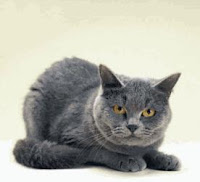
A man absolutely hated his wife's cat and decided to get rid of him one day by driving him 20 blocks from his home and leaving him at the park. As he was getting home, the cat was walking up the driveway. The next day he decided to drive the cat 40 blocks away. He put the beast out and headed home. Driving back up his driveway, there was the cat! He kept taking the cat further and further and the cat would always beat him home. At last he decided to drive a few miles away, turn right, then left, past the bridge, then right again and another right until he reached what he thought was a safe distance from his home and left the cat there. Hours later the man calls home to his wife: "Jen, is the cat there?" "Yes", the wife answers, "why do you ask?" Frustrated, the man answered, "Put that son of a bitch on the phone, I'm lost and need directions!"
Bush bandwagon
Just knowing there's another Mark Steyn column for me to read is enough to put a smile on my face. Here's how he starts a column that notes the rising chorus of (gasp!) liberals saying "Maybe Bush was right after all...":
Come on, lads. You don’t want to be the last to leap aboard the bandwagon. The New York Times are running front page stories with headlines like “Unexpected Whiff Of Freedom Proves Bracing For The Middle East”. Daniel Schorr, the dean of conventional wisdom at National Public Radio, was for once almost ahead of the game, concluding his most recent editorial with a strange combination of words that had never before passed his lips in that particular order: “Bush may have had it right.”
Did he simply muff the reading? Did he mean to say: “Bush may have had it - right?” But apparently not. Ever since, the same form of words has mysteriously flowered from Toronto to London to Sydney. It’s the catchphrase du jour - like “Show me the money” or “You are the weakest link. Goodbye.” Now it’s “Could Bush be right?” Even America’s media naysayers have suddenly noticed that they can hardly hear their own generic boilerplate about what a Vietnam quagmire the new Iraq is over the sound of raven-tressed Beirut hotties noisily demanding Lebanon’s freedom in the streets of Beirut.
Over at Britain’s Guardian, meanwhile, the poor chaps are desperately trying to give credit to anyone but the reviled Bushitler. Here’s how Timothy Garton Ash opened his disquisition: “Has Osama bin Laden started a revolution in the Middle East?” Well, that’s one way to look at it. Maybe he could share the Nobel Peace Prize with Michael Moore and MoveOn.org.
Wednesday, March 9, 2005
Extraordinary rendition
David Ignatius, writing in the Washington Post, makes some very good points on this topic. The whole column is well worth reading. Here's the way he starts:
Torture is immoral and illegal, and the refusal to allow it is one measure of a civilized society. But this ironclad moral argument doesn't necessarily apply to the practice known as "extraordinary rendition."
Rendition is the CIA's antiseptic term for its practice of sending captured terrorist suspects to other countries for interrogation. Because some of those countries torture prisoners — and because some of the suspected terrorists "rendered" by the CIA say they were, in fact, tortured — the debate has tended to lump rendition and torture together. The implication is that the CIA is sending people to Egypt, Jordan or other Middle Eastern countries because they can be tortured there and coerced into providing information they wouldn't give up otherwise.
The problem with this argument is that it assumes the CIA believes that torture works. But in 30 years of writing about intelligence, I've never encountered a spook who didn't realize that torture is usually counterproductive. Professional intelligence officers know that prisoners will confess to anything under intense pain. Information obtained through torture thus tends to be unreliable, in addition to being immoral.
But in conversations over the past several years with senior CIA officials and the heads of several Arab intelligence services, I've heard explanations for why the practice is used. These arguments for rendition at least ought to be understood, as Congress and the public struggle with the moral issues involved.
What's gained by transferring a prisoner to his home country for interrogation is emotional leverage, according to Arab and American intelligence chiefs. A hardened al Qaeda member often can't be coerced physically into giving up information, no matter how nasty the interrogator. But he may do so if confronted by, say, his mother, father, brother or sister.
In other words, torture doesn't work, the CIA knows it, but they also know that just placing the suspect in his home country can be an effective interrogation tool. That's completely plausible to me. I have no doubt that I'd be much more likely to spill the beans if I were in a prison here, with my wife begging me to talk, than I would if I was in (say) a North Korean prison. Mr. Ignatius concludes with this point:
Before you make an easy judgment about rendition, you have to answer the disturbing question put to me by a former CIA official: Suppose the FBI had captured Mohamed Atta before Sept. 11, 2001. Under U.S. legal rules at the time, the man who plotted the airplane suicide attacks probably could not have been held or interrogated in the United States. Would it have made sense to "render" Atta to a place where he could have been interrogated in a way that might have prevented Sept. 11? That's not a simple question for me to answer, even as I share the conviction that torture is always and everywhere wrong.
An excellent point, Mr. Ignatius.
Mr. Bush's speech
President Bush gave a speech yesterday at the National Defense university. You can (and should!) read it in full. It was a wide-ranging speech, but here are a few points I thought were particularly well made. First, on Lebanon:
And any who doubt the appeal of freedom in the Middle East can look to Lebanon, where the Lebanese people are demanding a free and independent nation. In the words of one Lebanese observer, "Democracy is knocking at the door of this country and, if it's successful in Lebanon, it is going to ring the doors of every Arab regime."
Across the Middle East, a critical mass of events is taking that region in a hopeful new direction. Historic changes have many causes, yet these changes have one factor in common. A businessman in Beirut recently said, "We have removed the mask of fear. We're not afraid anymore." Pervasive fear is the foundation of every dictatorial regime — the prop that holds up all power not based on consent. And when the regime of fear is broken, and the people find their courage and find their voice, democracy is their goal, and tyrants, themselves, have reason to fear.
History is moving quickly, and leaders in the Middle East have important choices to make. The world community, including Russia and Germany and France and Saudi Arabia and the United States has presented the Syrian government with one of those choices — to end its nearly 30-year occupation of Lebanon, or become even more isolated from the world. The Lebanese people have heard the speech by the Syrian president. They've seen these delaying tactics and half-measures before. The time has come for Syria to fully implement Security Council Resolution 1559. All Syrian military forces and intelligence personnel must withdraw before the Lebanese elections, for those elections to be free and fair.
The elections in Lebanon must be fully and carefully monitored by international observers. The Lebanese people have the right to determine their future, free from domination by a foreign power. The Lebanese people have the right to choose their own parliament this spring, free of intimidation. And that new government will have the help of the international community in building sound political, economic, and military institutions, so the great nation of Lebanon can move forward in security and freedom.
Today I have a message for the people of Lebanon: All the world is witnessing your great movement of conscience. Lebanon's future belongs in your hands, and by your courage, Lebanon's future will be in your hands. The American people are on your side. Millions across the earth are on your side. The momentum of freedom is on your side, and freedom will prevail in Lebanon.
On the prospects for a real peace between Israel and the Palestinians:
The bombing in Tel Aviv is a reminder that the fight against terrorists is critical to the search for peace and for Palestinian statehood. In an interview last week, Palestinian President Abbas strongly condemned the terrorist attack in Tel Aviv, declaring, "Ending violence and security chaos is first and foremost a Palestinian interest." He went on to say, "We cannot build the foundations of a state without the rule of law and public order."
President Abbas is correct. And so the United States will help the Palestinian Authority build the security services that current peace and future statehood require: security forces which are effective, responsive to civilian control, and dedicated to fighting terror and upholding the rule of law. We will coordinate with the government of Israel, with neighbors such as Egypt and Jordan, and with other donors to ensure that Palestinians get the training and equipment they need. The United States is determined to help the parties remove obstacles to progress and move forward in practical ways, so we can seize this moment for peace in the Holy Land.
On Iraq's future:
Iraq's democracy, in the long run, must also be defended by Iraqis, themselves. Our goal is to help Iraqi security forces move toward self-reliance, and they are making daily progress. Iraqi forces were the main providers of security at about 5,000 polling places in the January elections. Our coalition is providing equipment and training to the new Iraqi military, yet they bring a spirit all of their own.
Last month, when soldiers of the U.S. 7th Cavalry Regiment were on combat patrol north of Baghdad, one of their Humvees fell into a canal, and Iraqi troops came to their rescue — plunging into the water again and again, until the last American was recovered. The Army colonel in charge of the unit said, "When I saw those Iraqis in the water, fighting to save their American brothers, I saw a glimpse of the future of this country." One of the Iraqi soldiers commented, "These people have come a hundred — 10,000 miles to help my country. They've left their families and their children. If we can give them something back, just a little, we can show our thanks." America is proud to defend freedom in Iraq, and proud to stand with the brave Iraqis as they defend their own freedom.
I watched a video of the speech; not only was it well-written, it was delivered with great skill. I think Mr. Bush's communications skills have been misunderestimated...
Quote for the day
The best computer is a man, and it's the only one that can be mass-produced by unskilled labor.
Dr. Werner von Braun, upon being asked if computers would replace men in spaceflight
Tuesday, March 8, 2005
KetchupWoman returns

Just when you thought the world was safe from KetchupWoman, she rises up out of the pickle barrel and utters some more nonsense. Now she's accusing the Republicans of having rigged the 2004 election by hacking the voting machines:
Heinz Kerry is openly skeptical about results from November's election, particularly in sections of the country where optical scanners were used to record votes.
"Two brothers own 80 percent of the machines used in the United States," Heinz Kerry said. She identified both as "hard-right" Republicans. She argued that it is "very easy to hack into the mother machines."
"We in the United States are not a banana republic," added Heinz Kerry. She argued that Democrats should insist on "accountability and transparency" in how votes are tabulated.
"I fear for '06," she said. "I don't trust it the way it is right now."
Please, KetchupWoman — stop the madness! You can find the full article here.
The Old Poodle
A wealthy old lady decides to go on a photo safari in Africa, taking her faithful aged pet poodle along for company. One day the poodle starts chasing butterflies and before long he discovers that he is lost. Wandering about, he notices a leopard heading rapidly in his direction with the obvious intention of having lunch.
The old poodle thinks, "Oh-oh, I'm in deep doo-doo now!" Noticing some bones on the ground close by, he immediately settles down to chew on the bones with his back to the approaching cat. Just as the leopard is about to leap, the old poodle exclaims loudly, "Boy, that was one delicious leopard. I wonder if there are any more around here." Hearing this, the young leopard halts his attack in mid-stride, a look of terror comes over him, and he slinks away into the trees. "Whew", says the leopard, "That was close. That old poodle nearly had me."
Meanwhile, a monkey who had been watching the whole scene from a nearby tree, figures he can put this knowledge to good use and trade it for protection from the leopard. So, off he goes but the old poodle sees him heading after the leopard with great speed, and figures that something must be up. The monkey soon catches up with the leopard, spills the beans and strikes a deal for himself with the leopard. The young leopard is furious at being made a fool of and says, "Here monkey, hop on my back and see what's going to happen to that old conniving canine." Now the old poodle sees the leopard coming with the monkey on his back and thinks, "What am I going to do now?" But, instead of running, the dog sits down with his back to his attackers, pretends he hasn't seen them yet and, just when they get close enough to hear, the old poodle says, "Where's that damn monkey? I sent him off half an hour ago to bring me another leopard!"
Eesti feline

I recently reconnected with Anton (whom I worked with at Previo/Stac), and somehow in the course of our email conversation cats came up. Imagine that!
Anton lives in Tallinn, Estonia.
Click on the picture for a larger version...
The old mule
The old farmer's mule had finally died of old age just before spring planting, so the farmer made a trip to town to buy another mule. His $125 didn't buy much, but he was satisfied with his purchase and he made arrangements to return the next day with a horse trailer to pick up the mule and the dealer agreed to keep it overnight for him.
Early the next day, the old man returned. "Jim," said the mule dealer, "that old mule died last night. I'm real sorry to have to tell you this. I know you were counting on it for your spring garden." The dealer offered Jim his money back, but Jim said a bargain was a bargain, loaded the mule on his truck and left.
A couple of months later the mule dealer happened to drive by Jim's place and was astonished to see Jim working his garden on a *NEW* $4,000 garden tractor. Honking his horn, he called Jim over and asked him how in the world he had managed to buy a tractor when not to long ago all he had was the $125 that he'd spent on the mule that died.
"Well", Jim explains, "After leaving with the mule, I had this idea. So I stopped off at the local print shop and had 2,000 $2 raffle tickets printed up. Grand prize: Gardening Equipment. I sold all the raffle tickets to people around town."
"Yeah, but where did you get the gardening equipment?"
"From you."
"No, I mean the equipment you had as the raffle prize."
"I got it from you."
"Jim, all you got from me was a dead mule."
"I know, that's what I raffled off."
"My Goodness, Jim! You raffled off a dead mule?! I'll bet that really made a lot of people mad when they found out about it."
"Naw, not really, the only one really ticked off was the winner, and I gave him his money back."
He never saw it coming
Mark Steyn's latest column is an even-better-than-usual (and that's a high bar in his case) example of his trademark combination of wit and commentary. Here's my favorite bit, talking about Bashar Assad's current situation (if you didn't already know it, Assad happens to be an ophthalmologist):
<The ophthalmologist never saw it coming. Assad's plan for a phased partial withdrawal over several months would have been hailed as a breakthrough a couple of years back. Now Bush swats it aside as too little, too late. In a poignant conclusion to his interview with Time last week, the neophyte dictator said: "Please send this message: I am not Saddam Hussein. I want to co-operate." You don't have to be an eye doctor to read the writing on the wall.
OK, that's enough ophthamology. The headline on Newsweek's cover, alongside the aforementioned Lebanese totty, was "People Power" - a novel concept in the Middle East, but very real. But just as worrying for Assad is a much older tendency in regional politics - the inclination to side with the winners. Right now, for Bush and the Iraqi people and the Lebanese people and Chirac and Blair and the House of Saud and pretty much everyone except the Canadian prime minister, the winning side looks like whichever side Bashar Assad isn't on.
That's a tough spiral to climb out of. Two years ago, Colin Powell took Jordan's King Abdullah to one side and told him, modifying a Rumsfeldian paradigm, that America saw him as part of "the new Middle East". The Sauds, Mubarak and Gaddafi are not entirely on board with this "new Middle East" thing, but since January 30 they've been doing their best to pretend they are - and the easiest way to do that is to stick some loser with the label of "old Middle East". Syria's prestige, such as it is, rests on its subordination of Lebanon. Abandoning that on a time frame demanded by Bush and the Beirut babes doesn't exactly communicate strength. The Iranians are still officially Assad's pals, but the word is that even they wouldn't be averse to a palace coup.
China builds wall around Taiwan
Scott hardly ever fails to make me laugh out loud with his ScrappleFace columns, but this latest one resonated with my funnybone...
Monday, March 7, 2005
From a French supporter
I have taken the liberty of reproducing this letter in its entirety.
Dear President Bush,
I count among the very few intellectuals in Paris who from the start publicly supported an armed intervention against Saddam Hussein. My sole and simple reason for this position was the inhumanity of his dictatorship; my only regret was that it hadn't been toppled in 1991. I was thus exerting my citizen's right to voice public disagreement with my government's policy; and my philosophical right to contradict a quasi-unanimous French opinion that, from the far right to the far left, majority and opposition alike, from the grass-roots activist to the president of the Republic, stigmatized your initiative.
I therefore appreciate as a connoisseur the evolution of public feeling in France and Europe, highlighted by your recent visit to the Continent. You will have noticed how anti-American protests along the stops on your trip were few and far between. Nothing like those, massive and uncompromising, that were sparked here by the arrival of Nixon and Reagan. Likewise, when Condoleezza Rice gave her speech in the heart of the Paris Latin Quarter last month, no hostile group tried to spoil the party, even though the students of Paris are as prone to protest as those of Berkeley.
Do not think the conversation is over. It has only just begun. At the next setback for the warriors of freedom, as soon as a monstrous terrorist strike grieves the good people once more, the stupid litany will again catch its breath: Peace at any price, peace before all, peace even out of the graveyards!
Our former minister for foreign affairs, Dominique de Villepin, currently a rising figure in the French government, proclaimed urbi et orbi the radical antagonism between "two conceptions of the world." His own, that of Paris, stipulates the absolute precedence of peace, with freedom following some day or another. The opposite one gives precedence to freedom, the only foundation for a solid and lasting peace.
This second principle guided the first European democracies and great thinkers such as Kant. It inspired the best aspects of the American and French Revolutions. It commanded their Declaration of Human Rights. It is still inscribed today on public buildings of the French Republic, even though no one here in Paris knows how to read them in the right order anymore: "Liberté, Egalité, Fraternité." Freedom is the No. 1 requirement, and it's the choice you made. Thank you, and well done.
The decent greeting given to you on the ancient Continent is not due, you will have easily noticed, to an abrupt conversion of the elites in France, Germany, Spain or Belgium who brashly speak for the whole of Europe. World news embarrasses their preconceptions. People confront terror and choose the ballot box at the peril of their lives; that was the reality both in Afghanistan and Iraq. They defend free elections against the mafias and those nostalgic for the Soviet order: this is Ukraine and Georgia. The street and the "pacifist" circles of Western Europe have thus been forced to bow down temporarily before this evidence of unexpected courage.
During your journey, you reiterated your enthusiastic support for the soft revolutions that struggle for freedom on the boulevards of Beirut and achieved it on Kiev's Independence Square.
You didn't hesitate either to criticize, in measured terms but in a loud and clear voice, the autocratic straying of Vladimir Putin. Again, well done! And in doing this you astounded the capitals of Western Europe who fight to win the favors of the master of the Kremlin and do not dare proffer the slightest criticism against him, a reflection of how much they underestimate the strength and truth of this aspiration for democracy sweeping through the former Soviet empire as well as through the "Arab world."
From Budapest in 1956 to Kiev in 2005, the movement of emancipation that changed the face of Europe over the past 50 years is now tackling despots all around the planet. It puts the will to live free at the very beginning of the beginning. It is instituting the principle of civilized life for the 21st century.
The success of your most recent journey proves that European opinion, under the pressure of sheer facts, is capable of putting asleep its anti-American prejudice. Please dare, Mr. President, to not give up on the necessary common support for the battles for freedom. Do not give up your obligation to prevent rogue states from selling any kind of weapon indiscriminately, helping nuclear proliferation and effectively or morally supporting the battalions of hatred that crisscross the planet with three professions of faith in their pocket: hatred of America, hatred of the Jew, hatred of women.
I could not conclude this letter of congratulations without mentioning my reservations and a burning regret that you did not have a word for the tragedy that has obsessed me, haunted and pursued me for the past 11 years and I fear will continue to till my grave. You did not let the word Chechnya be heard. Remember Grozny, Mr. President, once a city of 400,000, the first capital to be razed by a European army since Hitler punished Warsaw in 1944. Think of this small people, less than a million inhabitants, which has lost between a fifth and a quarter of its population over the last decade. In proportion, imagine France being bled of 13 million people, America of 60 million.
Please conceive that over the last three centuries, a colonial war has thrice led this indomitable community to the brink of disappearing. First under the weight of the czar's merciless armies. Then when in three days Stalin and Beria threw the entire population in the Gulag. And the third time today, when civilians are being indiscriminately hit in the name of Mr. Putin's conception of "anti-terrorist operations." The free press around the globe bears witness to the unthinkable actions of the Russian army. I confirm their bleak portrayals, having illicitly gone to see them for myself on the ground.
Why such stubbornness? Why so little compassion? Moscow's obstinacy isn't based on strategic reasoning or interests in fuel. This tiny territory is a threat to no one, all the more so since the pro-independence combatants have pledged to honor demilitarization under international control. The main reason for Russian cruelty in the Caucasus, Tolstoy had already spotted it, is pedagogic. What matters is to make an example, and to teach to Russians themselves what it costs not to follow ukases. In 1818 general Ermolov gave Czar Nicholas I the key to this endless combat: "This Chechen people inspires by its example a rebellious spirit and a love for freedom even in your Majesty's most devoted subjects." "Respect of minorities," you said. "Freedom," you insisted. Will you allow, Mr. President, a people that greets the foreigner with these words — "freedom comes in with you!" — to be exterminated?
To demand that President Putin set himself free from this ominous tradition is to help him get out of an autocratic whirl into which he is sinking. To do so is to defend an oppressed minority and support Russian democracy. I pray you to remind Mr. Putin publicly that in these times in which, against all odds, information does come through, a people that annihilates one another cannot be free itself. Our common civilization is going straight to suicide by close-mouthed toleration of the war crimes and insults against humanity.
Respectfully yours, A. Glucksmann.
Italian secrets

Whatever you think of Giuliana Sgrena (the rabidly communist, anti-war reporter for the Italian Communist journal Il Manifesto), the fact that American forces fired on the car carrying her to freedom is a tragedy. But why would it happen? Surely Sgrena isn't accurate when she claims that American troops "targeted" her (gee, thanks, Eason Jordan, for putting that thought into her head)?
Personally, I don't believe she was targeted at all. The story coming from the American side — that her car was fired on simply because it didn't stop at a checkpoint, despite warnings — is much more plausible than her story. But here is some additional information that might further explain how this could have happened:
Italian agents likely withheld information from U.S. counterparts about a cash-for-freedom deal with gunmen holding an Italian hostage for fear that Americans might block the trade, Italian news reports said yesterday.
The decision by operatives of Italy's SISMI military intelligence service to keep the CIA in the dark about the deal for the release of reporter Giuliana Sgrena, might have "short-circuited" communications with U.S. forces controlling the road from Baghdad to the city's airport, the newspaper La Stampa said.
This is from an excelent article in the Washington Post, with other interesting details.