
Showing posts with label Electronics. Show all posts
Showing posts with label Electronics. Show all posts
Wednesday, March 20, 2013
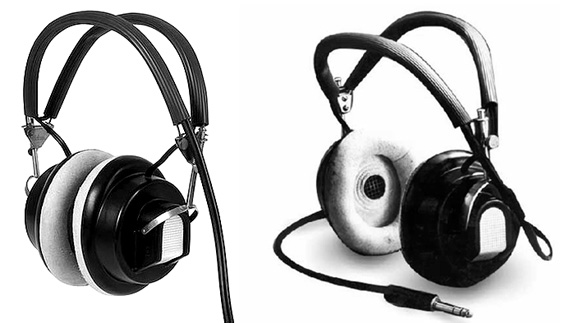
Headphone History...

Tuesday, March 19, 2013
Electronic Simulation...
...right in your browser. CircuitLab does schematic capture, AC and DC simulation, and schematic sharing. Currently it is free, though the site gives notice that they may charge for “premium services” down the road. A news story recently cited them as having 70,000 active accounts, with a simulation running on average every six seconds. That's a lot of electronics!
Thursday, January 24, 2013
CircuitHub...
CircuitHub is a startup providing a parts library (datasheets, specs, etc.), free. It's essentially crowd-sourcing for electronic component data...
Saturday, January 19, 2013
Oh, My Sides Hurt!
Even if you're not into electronics this is funny. If you are into electronics, it's hysterical!
I can't decide whether the guy is making a joke, or this is his schtick to make his point, or if he's just really that dumb. Doesn't matter. It's funny!
I can't decide whether the guy is making a joke, or this is his schtick to make his point, or if he's just really that dumb. Doesn't matter. It's funny!
Thursday, October 4, 2012
WTF? How Could This Be?
Someone observed a strange phenomenon and wanted an answer:
Naturally, our geeky questioner went to the best crowd-sourcing site around for answering questions on electronics: Electronics StackExchange. And they got an answer – a sensible, plausible, clever, and unexpected answer. Go there and read the first answer on this post – it's a classic...
Every once in a while, my eighth-inch audio jack will slip loose and I'll seemingly lose only the voice part of a track -- leaving somewhat of a "karaoke" version. What I would guess about how audio plugs work suggests that I'd be making this up; however, I've asked and others tell me they've experienced this as well.The author of this question couldn't believe this was happening himself. But I can easily imagine observing this myself, and becoming obsessed with getting an answer to this unexplainable, but repeatable, observation. It's a bit like walking outside and seeing your car floating three feet in the air – but only when you've accidentally left your front door ajar on your way out.
What causes this stripped vocals from audio when a 1/8' audio jack is partially unplugged?
Naturally, our geeky questioner went to the best crowd-sourcing site around for answering questions on electronics: Electronics StackExchange. And they got an answer – a sensible, plausible, clever, and unexpected answer. Go there and read the first answer on this post – it's a classic...
Saturday, June 23, 2012
Read-Only Memory...
This post at NYC Resistor, about EPROMs, set me off on a little trip down memory lane this morning...
“EPROM” stands for Eraseable, Programmable Read-Only Memory. The “ROM” part just means some memory (a place to store information) that can be read, but not written (modified, erased, etc.). However, they can be programmed one time. You could think of them as being analagous to a printed book – you can read the information in the book, but you can't actually change what's been printed on the page, once it's been printed.
 This sort of memory is essential in virtually every electronics design that includes a computer, and in many other areas as well. I designed a lot of electronic gadgets that included a finite state machine, and these often included a ROM as well. EPROMs, like the 1702A (at right) and it's many descendants, were an enormous improvement over the previous forms of ROMs – you could erase and reprogram them (like being able to magically erase a printed book and replace the text with text of your choice). If you're an engineer developing a design of some sort, you might go through many cycles of design/build/test during the course of finishing a product, and the EPROM made it easy to do that.
The 1702A EPROM was the first of these I'd ever run into. I first started using it in the mid-'70s, and it was a huge improvement over previous ROM technology. The way you erased one of these EPROMs is to shine a very bright, short-wave ultraviolet light through the clear window for an hour or so. We bought specially little light-tight boxes to do this in, as the short-wave ultraviolet light is dangerous for people. When I first heard about these things, I thought the idea very odd – no other electronic device I'd ever heard of worked with UV light. But the convenience was undeniable.
Today the idea of a UV-erasable EPROM seems quite quaint. EEPROMs (Electrically-Eraseable Read-Only Memory) have completely taken over. These ROMs require That's what's in your USB memory stick, or your Solid-State Disk. The laptop I'm writing this on has a 512GB SSD – that's an EEPROM with 4,398,046,511,104 bits of information in it. The 1702A held 2,048 bits, roughly 2 billionths as much information as my laptop's SSD. But what came before EPROMs?
The first kind of ROM that I ever ran into personally was built from a matrix of capacitors made from a double-sided printed circuit board. Once side of the board had a series of parallel lines etched in one direction, while the other side had orthoganal parallel lines (at 90° direction). Each intersection of lines from the two sides represented one bit of information. To make a “1”, there was a small, square pad of copper on both sides of that intersection. These pads formed a tiny capacitor, and appropriate electronics could detect these. That first ROM I saw had 16 lines on each side of the circuit board, making 256 intersections – so it was a 256 bit (or 32 byte) ROM. It was most definitely not eraseable – nor was it programmable. The only way you could change the value of this ROM was to manufacture a new one from scratch! The electronics that “read” that ROM was roughly the size of a shoebox, and quite unreliable – I spent many hours “tuning” those darned things back in the early '70s, on U.S. Navy cryptographic equipment.
The next kind of ROM I saw was used as the “bootstrap” (a small, simple program that loaded a bigger, more complex program) for the 642-A and 642-B computers I worked on, again in the U.S. Navy in the early '70s. This ROM was made with a “plug-board” – essentially a big connector with some of the pins wired together. Each pair of pins wired together was a single “1” bit, and each pair of pins not wired together was a “0” bit. This particular ROM had 32 words of information, with each word being 30 bits long – so 960 bits all together. This was implemented with four connectors, each having 480 pins (that's a big connector!). This ROM was programmable – with a really skinny pair of pliers and a magnifying glass, you could plug or unplug wires to change bits from “1” to “0” and vice versa. Just once I had to do this, when a field modification came out. I remember that it took me several days of quite painstaking work to change the bootstrap programs for all four of the affected computers on my ship.
When I first started doing digital design work in the mid '70s, there was a kind of PROM (programmable, but not eraseable) available at fairly low cost. These were little integrated circuits (chips, or ICs) that you could program by blowing microscopic little fuses that were actually constructed of silicon on the chip. One did this with a PROM “programmer” – a little electronic gadget that you “talked” to through a serial port. These parts were readily available with up to a few thousand bits, and in the smaller sizes were fairly economical. Still, in each design/build/test cycle you'd have to throw the old one away and “burn” a new one – a process that was not only potentially expensive, but was annoyingly slow. The 1702A EPROM was an enormous improvement over that, and really quite revolutionized the way that I did my design work, as I no longer had to worry much about either the cost or the time of the ROM in a design/build/test cycle...
“EPROM” stands for Eraseable, Programmable Read-Only Memory. The “ROM” part just means some memory (a place to store information) that can be read, but not written (modified, erased, etc.). However, they can be programmed one time. You could think of them as being analagous to a printed book – you can read the information in the book, but you can't actually change what's been printed on the page, once it's been printed.
 This sort of memory is essential in virtually every electronics design that includes a computer, and in many other areas as well. I designed a lot of electronic gadgets that included a finite state machine, and these often included a ROM as well. EPROMs, like the 1702A (at right) and it's many descendants, were an enormous improvement over the previous forms of ROMs – you could erase and reprogram them (like being able to magically erase a printed book and replace the text with text of your choice). If you're an engineer developing a design of some sort, you might go through many cycles of design/build/test during the course of finishing a product, and the EPROM made it easy to do that.
The 1702A EPROM was the first of these I'd ever run into. I first started using it in the mid-'70s, and it was a huge improvement over previous ROM technology. The way you erased one of these EPROMs is to shine a very bright, short-wave ultraviolet light through the clear window for an hour or so. We bought specially little light-tight boxes to do this in, as the short-wave ultraviolet light is dangerous for people. When I first heard about these things, I thought the idea very odd – no other electronic device I'd ever heard of worked with UV light. But the convenience was undeniable.
Today the idea of a UV-erasable EPROM seems quite quaint. EEPROMs (Electrically-Eraseable Read-Only Memory) have completely taken over. These ROMs require That's what's in your USB memory stick, or your Solid-State Disk. The laptop I'm writing this on has a 512GB SSD – that's an EEPROM with 4,398,046,511,104 bits of information in it. The 1702A held 2,048 bits, roughly 2 billionths as much information as my laptop's SSD. But what came before EPROMs?
The first kind of ROM that I ever ran into personally was built from a matrix of capacitors made from a double-sided printed circuit board. Once side of the board had a series of parallel lines etched in one direction, while the other side had orthoganal parallel lines (at 90° direction). Each intersection of lines from the two sides represented one bit of information. To make a “1”, there was a small, square pad of copper on both sides of that intersection. These pads formed a tiny capacitor, and appropriate electronics could detect these. That first ROM I saw had 16 lines on each side of the circuit board, making 256 intersections – so it was a 256 bit (or 32 byte) ROM. It was most definitely not eraseable – nor was it programmable. The only way you could change the value of this ROM was to manufacture a new one from scratch! The electronics that “read” that ROM was roughly the size of a shoebox, and quite unreliable – I spent many hours “tuning” those darned things back in the early '70s, on U.S. Navy cryptographic equipment.
The next kind of ROM I saw was used as the “bootstrap” (a small, simple program that loaded a bigger, more complex program) for the 642-A and 642-B computers I worked on, again in the U.S. Navy in the early '70s. This ROM was made with a “plug-board” – essentially a big connector with some of the pins wired together. Each pair of pins wired together was a single “1” bit, and each pair of pins not wired together was a “0” bit. This particular ROM had 32 words of information, with each word being 30 bits long – so 960 bits all together. This was implemented with four connectors, each having 480 pins (that's a big connector!). This ROM was programmable – with a really skinny pair of pliers and a magnifying glass, you could plug or unplug wires to change bits from “1” to “0” and vice versa. Just once I had to do this, when a field modification came out. I remember that it took me several days of quite painstaking work to change the bootstrap programs for all four of the affected computers on my ship.
When I first started doing digital design work in the mid '70s, there was a kind of PROM (programmable, but not eraseable) available at fairly low cost. These were little integrated circuits (chips, or ICs) that you could program by blowing microscopic little fuses that were actually constructed of silicon on the chip. One did this with a PROM “programmer” – a little electronic gadget that you “talked” to through a serial port. These parts were readily available with up to a few thousand bits, and in the smaller sizes were fairly economical. Still, in each design/build/test cycle you'd have to throw the old one away and “burn” a new one – a process that was not only potentially expensive, but was annoyingly slow. The 1702A EPROM was an enormous improvement over that, and really quite revolutionized the way that I did my design work, as I no longer had to worry much about either the cost or the time of the ROM in a design/build/test cycle...
Friday, February 17, 2012
Wednesday, November 2, 2011
Still Working After 40 Years...

Nice, Jerry...

Monday, October 31, 2011

Thursday, September 29, 2011
Better Definition of an Ampere...
A breakthrough involving graphene may lead us (finally!) to a definition of the ampere directly derived from the electron charge...
Sunday, January 23, 2011
New Memory Technology...
This sounds very promising: a new semiconductor technology for non-volatile memory with the speed of volatile RAM. Unlike some other, more exotic methods proposed over the years, this one doesn't require any advances in fabrication technology...
Friday, January 7, 2011
Sunday, May 9, 2010
Tiny Single-Board Linux Computer for $89...
This brings all sorts of fun little projects to mind. The board is less than 4 inches square, consumes less than a half watt of power, and has all the basic things you'd expect (Ethernet, video, sound, serial, USB, SATA, and expansion capability). It's called the Hawkboard, and it's the best thing I've seen yet for hobby projects that need (or would benefit from) a “real” computer in the middle...
Saturday, August 22, 2009
A Small Victory...
 Seven or eight years ago, we bought a large-screen HDTV. After doing quite a bit of research on the various technologies and models, we eventually settled on a rear-projection triple-CRT model: the Pioneer Elite Pro-620HD.
It's a monster of a TV. If the inside of the cabinet were hollow, you could use it as a residence for 3 or 4 families in some parts of the world.
We've really enjoyed this television. The picture is superb, and the user-tweakable digital color convergence has allowed us to keep it that way for all these years (I adjust it every 18 months or so).
But a couple of days ago it just quit working. The symptoms were not at all encouraging: when you tried to turn it on, the green power light would come on for a fraction of a second, you could hear some relays clicking, and then it just shut down again.
A few minutes on the web and I learned several depressing things: (1) Pioneer no longer supported this prehistoric model in any shape, way, or form (including at their authorized service centers); (2) nobody has any spare parts for it; and (3) there apparently is no longer any such thing as a television repair shop.
I was on my own.
A few more minutes of searching for our TV's symptoms led me to several articles and forum posts. There I learned that this model had a history of exactly this failure – and that at least for one person, re-soldering some “cold” solder joints on the low-voltage power supply circuit board fixed the problem. I also knew from long past experience as an electronics tech that cleaning dirt (especially away from high-voltage components) and cleaning/reseating connectors could often cure a problem.
So I decided to take the back off the beast and see what I could do. The thing was quite expensive, and I didn't want to just throw it away without even trying.
First came the easy part: cleaning off the accumulated dust of years, and reseating the connections. As I was doing this, I could observe (for the first time, actually) all the electronics in this TV. A couple of impressions: it was very nicely made (trust me, not all electronic equipment is!), and there was an awful lot of electronics. I counted 9 circuit boards in the area I could see, and I don't doubt there were more tucked away in parts of the cabinet I couldn't see.
After the cleaning/reseating, we tested. No joy. The symptoms were identical. So I decided to go for the more difficult task of removing, cleaning, examining, resoldering, and replacing the power supply board.
There are actually two power supply boards in this TV: a low-voltage and a high-voltage board. The low-voltage board was the culprit in the article I'd read online, and fortunately it was the easier of the two to get out. The board is mounted vertically at the extreme right side of the cabinet, as you're looking in from the back. There were 17 screws and 11 connectors to remove, and then out it popped. Took only a few minutes to get it out.
Then I took it to our kitchen table, and carefully examined it in the bright sunlight. It was a largish (about 12 x 18 inches) single-sided circuit board with dozens of large, high-power components on it (all of this is typical for a power supply). Right away it was obvious that someone had worked on this board since it was manufactured. The giveaway was that 30 or so solder joints had brown rosin residue remaining – something you don't see on boards that were soldered by machine (the rosin all gets cleaned off with solvents). A little more examination and I saw a pattern: the resoldered joints were larger than the majority of the joints. That led to a theory on my part: that Pioneer had a manufacturing problem that caused cold solder joints on the larger joints on the board (and being a power supply board, it had quite a few of these). Larger solder joints do require more heat, and they are tricky to get right in an automated soldering machine, so this was at least plausible.
So I resoldered every one of the large solder joints on the board – something like 175 of them. The hardest part of this chore was spotting them – my eyes don't seem to work quite as well as they used to. I've done a lot of soldering in my day, and apparently I didn't forget how (it's like riding a bicycle, you know). In the course of carefully looking for each of those large joints, I spotted 3 that looked like they might be cold solder joints, and one definite bad joint, complete with cracks.
When I finished all the soldering, we put everything back together and tried it out. Much celebrating ensued – the danged thing worked, and it has kept on working. Debbie (the primary consumer of TV around here) was very happy to have her TV back, and we were both very happy that we didn't need to go out and buy another TV.
A small victory, to be sure...but it really does feel very good to have had it!
Subscribe to:
Posts (Atom)