Thursday, May 5, 2005

Mars Polar Lander found?

The folks at Malin Systems (a San Diego company that does imaging work for NASA and JPL) believe they may have found the lost Mars Polar Lander that disappeared in December 1999. In their own words:

The loss of Mars Polar Lander in December 1999 was a traumatic experience not only for those of us intimately involved in the mission, but also for the U. S. Mars Exploration Program. Following the failure, exhaustive reviews of what happened and why led to major shifts in the way planetary exploration was implemented. Without telemetry, the cause of the failure could only be surmised. It would be extremely important if, through some observation, it were possible to confirm the failure mode.

Shortly after the loss of Mars Polar Lander (MPL), the Mars Global Surveyor MOC was employed to acquire dozens of 1.5 m/pixel images of the landing uncertainty ellipses, looking for any evidence of the lander and its fate. The criteria we used in searching for MPL required a bright feature of irregular or elongated shape (the parachute) within about 1 kilometer (0.62 miles) of a location that included a dark area (rocket-disturbed martian dirt) and a small, bright spot near its center (the lander). In 2000, we found one example (see figure) that met these criteria, but in the absence of any substantive, corroborating evidence, the interpretation that this was MPL and its parachute were considered to be extremely speculative.

Observations by MGS MOC in 2004 of the Mars Exploration Rover (MER) landing sites provided guidance for a re-examination of the previously identified MPL candidate. For example, the material from which the MPL and MER parachutes are made is similar, and its brightness in MOC images can be calculated, at least in a relative sense, as a function of sun angle. The brightness of the candidate "parachute" in the MPL candidate location image turns out to be consistent with it being the same material. The brightness difference of the ground disturbed by rocket blast at the MER sites is similar to the brightness difference seen in the MPL candidate image, again adjusted for the difference in illumination and viewing angles. These consistencies lend credibility to this tentative identification.

If these features really are related to the MPL landing, what can we surmise about that landing from the image? First, we can tell that MPL's descent proceeded more-or-less successfully through parachute jettison and terminal rocket firing. The relative location of the candidate parachute and lander is consistent with the slight west-to-east wind seen in dust cloud motion in the area around the date of landing. The blast-disturbed area is consistent with the engines continuing to fire until the vehicle was close to the ground. How close is not known. The larger MER retrorockets fired at about 100 m altitude and continued firing until the engines were about 20-25 m above the surface; the candidate MPL disturbance is roughly the same size, but whether this means the engines were firing as close to the ground as the MER rockets cannot be determined. These interpretations are consistent with the proposed MPL mode of failure: the engines fired at the correct time and altitude and continued firing until the flight software checked to see if an electronic message indicated that the landing leg contact switch had been set. Since the initial leg deployment several kilometers above the surface apparently induced sufficient motion to trigger this message, the software stopped the engines as soon as the check was made, about 28-30 seconds into the 36-40 second burn. MPL was probably at an altitude of about 40 m, from which it freely fell. This is equivalent to a fall on Earth from a height of about 40 feet. The observation of a single, small "dot" at the center of the disturbed location would indicate that the vehicle remained more-or-less intact after its fall.

What is important about having a candidate for the Mars Polar Lander site? It gives the MOC team a place to target for a closer look, using the compensated pitch and roll technique known as "cPROTO." Examples of cPROTO images and a description of this capability, developed by the MGS team in 2003 and 2004, were discussed in a MOC release on 27 September 2004. Without a candidate for targeting a cPROTO image, it would take more than 60 Earth years to cover the entire Mars Polar Lander landing ellipse with cPROTO images, because the region spends the better part of each Mars year covered with carbon dioxide frost, part of each winter is spent in darkness, and, because of several uncertainties involved with the technique, it often takes two, three, or more tries before a cPROTO image hits a specific target. Now that a candidate site for Mars Polar Lander has been identified, we have a cPROTO target, which may permit us to obtain an image of about 0.5 meters per pixel (allowing objects approximately 1.5-2.5 meters in size to be resolved) during southern summer this year. At the present time (May 2005), the landing site is just beginning to lose its cover of seasonal carbon dioxide frost.

Click on the photo at right for a stupendously huge, high-resolution version (it will download quickly from Malin's site, not slowly like it would from mine).

A Marine acts quickly

A fast-thinking Marine takes quick and decisive action upon seeing another McDonald's customer in danger. The short story from 7/39 News:

Staff Sgt. Jamie Nicholson is being hailed a hero for what he did at the McDonald's in Clairemont at Balboa and Genesee avenues. Nicholson was in the drive-thru line placing his order over the McDonald's intercom when Sabio Barretto, 24, who was being waited on at the drive-thru window, dropped some change out his window. Barretto leaned out his window to retrieve the money and either stepped on the gas pedal or the idling vehicle pulled forward, trapping his head between the car and the exterior wall of the restaurant.

Nicholson told police what happened as he pulled into the drive thru.

"I was placing my order over the intercom, and then I heard the lady inside say, 'Oh, my God,' and kind of scream," said Nicholson.

It appeared that Barretto was in serious danger, said Nicholson.

"The door was hitting the building, so he was pinned between the door and the car, and it looked like it cut off his oxygen," said San Diego police officer Tim Peterson.

Nicholson acted quickly to save Barretto.

"I jumped out," said Nicholson. "He was turning blue, [so I] smashed the back window in, reached from the back seat, put the car in reverse car, backed up, just reassured him, told him everything would be all right, help was on the way."

Nicholson, who is a drill instructor at the Marine Corps Recruit Depot, said that unlike when he served four months in Iraq, he didn’t expect any trouble at the McDonald's Wednesday morning.

"Life-threatening situation at a McDonald's drive through is not something you'd expect everyday, that's for sure," said Nicholson.

San Diego Sgt. Andra Brown said Nicholson did everything right.

"He definitely is a hero," said Brown. "He took immediate action. He did not hesitate to get involved, saw that somebody's life was at risk, and it's not what you'd expect to find at McDonald's drive-thru, but he's a hero, he saved a guy's life today."

Barretto was taken to Sharp Memorial Hospital, where he was treated for minor injuries.

Desmond T. Doss

Desmond Doss was a very unusual sort of military hero. He refused to kill enemy soldiers, because of his religious beliefs. But he still wanted to serve his country, and serve it he did...with great distinction. Chaotic Synaptic Activity (is that a great name or what?) has a wonderful post describing Doss' heroism. Here's a small taste:

The monument was then, the day of the picture of my sisters and I, located near a sugar cane field on the island of Okinawa. It was there my father told us a story of an Army Medic by the name of Corporal Desmond T. Doss, who distinguished himself (that day) by climbing an escarpment, repeatedly, venturing out onto a machine gun fire swept battle field of open, relatively flat ground, to recover his fellow soldiers, and lower them down the escarpment to safety. A brave man indeed, but he was braver still, in the context of then, and even today than those key points describe.

Desmond T. Doss is (he is still living) a 7th Day Adventist. This Christian denomination does not believe in the taking of life. Desmond Doss could have easily avoided service in WWII. Because of his upbrining and personal faithfulness, a request for CO status would have, most likely, been granted without question. Yet, Desmond T. Doss joined the Army, not to kill, but to save lives.

You'll be really sorry if you don't read the whole post. Plus all your hair will fall out, and a camel with leprosy will move into your car's back seat. Worse things, perhaps, as well. Read it!

Here's the citation from Doss' Medal of Honor:

The President of the United States in the name of The Congress takes pleasure in presenting the Medal of Honor to

DOSS, DESMOND T.

Rank and organization: Private First Class, U.S. Army, Medical Detachment, 307th Infantry, 77th Infantry Division.
Place and date: Near Urasoe Mura, Okinawa, Ryukyu Islands, 29 April-21 May 1945.
Entered service at: Lynchburg, Va.
Birth: Lynchburg, Va. G.O.
No.: 97, 1 November 1945.

Citation: He was a company aid man when the 1st Battalion assaulted a jagged escarpment 400 feet high As our troops gained the summit, a heavy concentration of artillery, mortar and machinegun fire crashed into them, inflicting approximately 75 casualties and driving the others back. Pfc. Doss refused to seek cover and remained in the fire-swept area with the many stricken, carrying them 1 by 1 to the edge of the escarpment and there lowering them on a rope-supported litter down the face of a cliff to friendly hands. On 2 May, he exposed himself to heavy rifle and mortar fire in rescuing a wounded man 200 yards forward of the lines on the same escarpment; and 2 days later he treated 4 men who had been cut down while assaulting a strongly defended cave, advancing through a shower of grenades to within 8 yards of enemy forces in a cave's mouth, where he dressed his comrades' wounds before making 4 separate trips under fire to evacuate them to safety. On 5 May, he unhesitatingly braved enemy shelling and small arms fire to assist an artillery officer. He applied bandages, moved his patient to a spot that offered protection from small arms fire and, while artillery and mortar shells fell close by, painstakingly administered plasma. Later that day, when an American was severely wounded by fire from a cave, Pfc. Doss crawled to him where he had fallen 25 feet from the enemy position, rendered aid, and carried him 100 yards to safety while continually exposed to enemy fire. On 21 May, in a night attack on high ground near Shuri, he remained in exposed territory while the rest of his company took cover, fearlessly risking the chance that he would be mistaken for an infiltrating Japanese and giving aid to the injured until he was himself seriously wounded in the legs by the explosion of a grenade. Rather than call another aid man from cover, he cared for his own injuries and waited 5 hours before litter bearers reached him and started carrying him to cover. The trio was caught in an enemy tank attack and Pfc. Doss, seeing a more critically wounded man nearby, crawled off the litter; and directed the bearers to give their first attention to the other man. Awaiting the litter bearers' return, he was again struck, this time suffering a compound fracture of 1 arm. With magnificent fortitude he bound a rifle stock to his shattered arm as a splint and then crawled 300 yards over rough terrain to the aid station. Through his outstanding bravery and unflinching determination in the face of desperately dangerous conditions Pfc. Doss saved the lives of many soldiers. His name became a symbol throughout the 77th Infantry Division for outstanding gallantry far above and beyond the call of duty.

If you'd like to read more about this hero who was nearly thrown out of the service, look here and here.

Donald Herbert

J. James Estrada at American Thinker posted this interesting piece earlier today; it starts:

1,037 words. That was the length of the May 3rd New York Times story that ran with the headline, “Buffalo Fireman Regains Long-Lost Memories.” The two words that a learned reader would expect to appear in the article, but did not? Terri Schaivo. Talk about “long-lost memories.”

Donald Herbert, the firefighter who spent the last ten years in a state reminiscent of Schaivo, all of a sudden began asking for his wife and family. The Times story quotes a nursing home worker as saying the miracle occurred “out of the blue.” (By the way, they didn’t call it a miracle, I did).

Oh, my, this really gets the ponder going...

A little further reading here and here has me thinking that Mr. Estrada has a valid point, though he's stretching the facts a tad (or to be more charitable, at the time he posted there may not have been as many facts available). It appears that Mr. Herbert's condition was highly variable, and at times there was observable brain activity, which was very different than with Terry Schiavo's situation.

Still, it gives one pause when you think about ever deciding when to give up hope. Here's a fellow who was "drooling in a wheelchair" for almost ten years, and then a doc comes along with a new idea for treatment (a drug "cocktail") and next thing you know he's talking and wondering what happened to ten years of his life.

I hope some of those who were so eager to pull the plug on Terry will reflect on the miraculous recovery of Mr. Herbert...

Asparagus pee

I searched the web and found this article on the subject:

Why Asparagus Pee Smells Funny...

by Hannah Holmes

"This is of no practical importance," the urologist tells me. "It wasn't part of my training. It's something we contemplated over pizza and beer." When I admit that I have actually timed the arrival of the distinctive odor in my pee after eating asparagus (about 15 minutes), the good doctor suggests, facetiously, that my groundbreaking research might lead to a tenure-track position at a fine university.

It is a sadly neglected field. But I'm not the first to ask.

In 1891 a scientist named "Nencki" had so very little to do that he convinced four guys to eat seven kilograms of asparagus (that's about three and a half pounds each). He collected the pertinent pee, worked some medieval magic on it, and concluded that the smell was due to a metabolite called methanethiol.

So there you go. Nencki claimed that as your body metabolizes asparagus, it produces this smelly chemical, which your discriminating kidneys see fit to dump into the bladder.

This probably doesn't qualify as red-hot science, but it's warm enough to spark differing opinions.

In 1975 a chemist from California claimed in Science that gas chromatography had fingered a different culprit: S-Methyl Thioesters, to be precise. No methanethiol.

Then there's the 1980 reference in the British Medical Journal that simply refers to "metabolites." Another asparagus scholar favors "six sulfur-containing compounds."

I'm voting for methanethiol, partly because the guy who did the gas chromatography left no forwarding address, and partly because the methanethiol entry in my aging Merck Index of chemicals is so interesting.

Methanethiol is composed mostly of sulfur with a splash of hydrogen, plus some carbon, a brew famous for its effect in rotten eggs, cabbages and paper mills. Convincing, no? Merck also notes the asparagus connection and, most intriguing, warns that methanethiol may be a narcotic in high concentrations.

Now if you're scowling at your screen and muttering, "My pee doesn't smell like asparagus," first ask yourself if you eat asparagus.

Even if you do but lack the smell, you're still OK. In fact the fabulously funny book, The ReSearch Guide to Body Fluids (by Paul Spinrad, Juno Books, N.Y., 1994), says just 22 percent of survey respondents experience asparagus pee.

Early investigators thought genetics had divided the world into stinkers and nonstinkers. That was until 1980, when three researchers had the presence of mind to wave pee from the nonstinkers under the noses of the stinkers.

Lo and behold, the problem proved to be one not of producing the stinky pee but of being able to sniff it out.

If you've been deprived of this gift, don't give up hope. To increase the concentration of methanethiol molecules available to your snoot, you could either intentionally dehydrate yourself before you dine (this is unhealthful); or pee into a cup and sniff that. Or eat three and a half pounds of asparagus for lunch.

And if you experience a narcotic effect, you could be looking at a tenure-track position at a fine university.

Vocabulary: Asparagus fleet, n. Roman emperors were so fond of asparagus, which probably originated near the Mediterranean, that they kept special boats for the purpose of fetching it.

Grabbing the chainsaw

To understand this story, you need one little piece of background... We recently adopted a little kitten, from a batch of feral kittens that Debi raised a few weeks ago. She is part of a cat rescue organization that (among other things) takes the kittens of feral mom-cats and acclimates them to human contact, thus making them very adoptable. One of these kittens both of us fell in love with -- a little guy who looks a lot like a miniature "Maine coon" cat, with beautiful gray and brown tabby markings, a pronounced bobcat-like face, and great big paws. Right now he's about 10 weeks old, weighs a couple of pounds, and is playful and active just like any other kitten. We've named this guy Halala Pala (at right; click for a larger view)...

Debi and I were sleeping a little later than usual this morning. I was the first one up, at 4 am, peering out the window to see if the anticipated storm had started dumping some rain on us (it hadn't). Since I was up anyway, I walked, half asleep, into the bathroom to donate the previous evening's iced tea to our septic tank. I did this in the usual fashion, standing in front of the toilet. All was well with the world, or so I thought...when out of the corner of my eye, I spotted Halala, in full scamper, headed straight for the toilet.

You see, we have one of those shaggy covers for our toilet lid, and the cats all love to perch on those lids. Halala had discovered the delights of the shaggy toilet lid some time ago, but apparently he had not yet discovered that the shaggy cover wasn't always there.

Even in my half-asleep state, it was clear to me that Halala headed for the toilet was possible trouble. I didn't realize quite how much trouble, though...

There's something else you need to understand. If you're female, you may not realize that a man "in full stream", as it were, cannot just immediately turn off the spigot. It takes a few seconds to shut down the system. And a little kitten in full scamper can go a long way in a few seconds. And I was half asleep...

So Halala did just what you've guessed by now. I can play it over in my mind's eye: a little kitten, launching himself, with claws extended on all four paws, toward his intended shaggy perch so he could say hello to his human in the morning. A little kitten, simultaneously noting the absence of his shaggy footing, and a stream of vile liquid hitting him in the head. A little kitten, twisting his head to look up at his human with a look of absolute astonishment on his face. A little kitten, falling into an evil trap, full of foul-smelling water. A little kitten, spitting, hissing, scrabbling on the smooth sides of the toilet, trying to get a grip so he could get out -- and failing.

A few seconds later, the spigot finally off, I faced something not particularly pleasant (especially considering it was 4 am). I had to reach down and grab my poor little Halala, to rescue him. This was like grabbing for a running chainsaw blade in a bucket of urine. What fun!

I finally got poor little Halala out of the toilet. He was one pissed-off (and pissed on) kitten! Next up was a bath, which of course cheered him up even more. It took a while before he would condescend to be near us again...

Alligator shoes

A young blonde was on vacation and driving through the Everglades. She wanted to take home a pair of genuine alligator shoes in the worst way, but was very reluctant to pay the high prices the local vendors were asking. After becoming very frustrated with the "no haggle on prices" attitude of one of the shopkeepers, the blonde shouted, "Well then, maybe I'll just go out and catch my own alligator, so I can get a pair of shoes for free!" The shopkeeper said with a sly, knowing smile, "Littlelady, just go and give it a try!"

The blonde headed out toward the swamps, determined to catch an alligator.

Later in the day, as the shopkeeper is driving home, he pulls over to the side of the levee where he spots that same young woman standing waist deep in the murky bayou water, shotgun in hand. Just then, he spots a huge 9-foot gator swimming rapidly toward her. With lightning speed, she takes aim, kills the creature hauls it onto the slimy bank of the swamp. Lying nearby were 7 more of the dead creatures, all lying on their backs. The shopkeeper stood on the bank, watching in silent amazement. The blonde struggled and flipped the gator onto its back. Rolling her eyes heaven-ward and screaming in great frustration, she shouts out, "DANG! THIS ONE'S BAREFOOT TOO!"

Space sombrero

In NASA's words (click for a larger view):

NASA's Spitzer and Hubble Space Telescopes joined forces to create this striking composite image of one of the most popular sights in the universe. Messier 104 is commonly known as the Sombrero galaxy because in visible light, it resembles the broad-brimmed Mexican hat. However, in Spitzer's striking infrared view, the galaxy looks more like a "bull's eye."

In Hubble's visible light image (lower left panel), only the near rim of dust can be clearly seen in silhouette. Recent observations using Spitzer's infrared array camera (lower right panel) uncovered the bright, smooth ring of dust circling the galaxy, seen in red. Spitzer's infrared view of the starlight, piercing through the obscuring dust, is easily seen, along with the bulge of stars and an otherwise hidden disk of stars within the dust ring.

Spitzer's full view shows the disk is warped, which is often the result of a gravitational encounter with another galaxy, and clumpy areas spotted in the far edges of the ring indicate young star-forming regions.

The Sombrero galaxy is located some 28 million light-years away. Viewed from Earth, it is just six degrees south of its equatorial plane. Spitzer detected infrared emission not only from the ring, but from the center of the galaxy too, where there is a huge black hole, believed to be a billion times more massive than our Sun.

The Spitzer picture is composed of four images taken at 3.6 (blue), 4.5 (green), 5.8 (orange), and 8.0 (red) microns. The contribution from starlight (measured at 3.6 microns) has been subtracted from the 5.8 and 8-micron images to enhance the visibility of the dust features.

The Hubble Heritage Team took these observations in May-June 2003 with the space telescope's Advanced Camera for Surveys. Images were taken in three filters (red, green, and blue) to yield a natural-color image. The team took six pictures of the galaxy and then stitched them together to create the final composite image. This magnificent galaxy has a diameter that is nearly one-fifth the diameter of the full Moon.

Quote for the day

I'm not smart, but I like to observe. Millions saw the apple fall, but Newton was the one who asked why.

   Bernard Mannes Baruch

Wednesday, May 4, 2005

A little girl lost

The picture at right has been all over the news and the blogs today, but I haven't seen the whole story anywhere on the MSM. Click on the picture for a larger view.

The story is very sad, as told by Michael Yon reporting from on the ground in Mosul (I've copied his entire short post; I trust he won't mind):

Major Mark Bieger found this little girl after the car bomb that attacked our guys while kids were crowding around. The soldiers here have been angry and sad for two days. They are angry because the terrorists could just as easily have waited a block or two and attacked the patrol away from the kids. Instead, the suicide bomber drove his car and hit the Stryker when about twenty children were jumping up and down and waving at the soldiers. Major Bieger, I had seen him help rescue some of our guys a week earlier during another big attack, took some of our soldiers and rushed this little girl to our hospital. He wanted her to have American surgeons and not to go to the Iraqi hospital. She didn't make it. I snapped this picture when Major Bieger ran to take her away. He kept stopping to talk with her and hug her.

The soldiers went back to that neighborhood the next day to ask what they could do. The people were very warming and welcomed us into their homes, and many kids were actually running up to say hello and ask soldiers to shake hands.

Eventually, some insurgents most have realized we were back and started shooting at us. The American soldiers and Iraqi police started engaging the enemy and there was a running gun battle. I saw at least one IP who was shot, but he looked okay and actually smiled at me despite the big bullet hole in his leg. I smiled back.

One thing seems certain; the people in that neighborhood share our feelings about the terrorists. We are going to go back there, and if any terrorists come out, the soldiers hope to find them. Everybody is still very angry that the insurgents attacked us when the kids were around. Their day will come.

Isn't it telling that the Iraqi citizens welcomed our soldiers back, even after some of their children were injured and killed? Clearly they don't see the American soldiers as the bad guys. I sure wish more of that reality was portrayed in the MSM...

William at Pardon My English has a moving tribute to our soldiers posted, using the event captured in this photo as an example, with liberal reference to some of MacArthur's finest words. An excerpt:

The American soldier does indeed, drink deep from the chalice of courage.

The terrorist, on the other hand, drinks deep from the tin cup of cowardice. His very existence a scurrilous blight on humankind. A pox to be eradicated.

The American soldier, as manifestly evidenced by the above, does America proud. We as a grateful nation are not only proud of our military prowess in achieving swift and certain victory on distant battlefields but also notably in how often our brave soldiers have placed themselves in harm's way in the service and defense of the oppressed.In fact the motto of the United States Special Forces is; 'De oppresso libere' - 'To liberate the oppressed.'

DO take the time to read the whole thing...

A tip o' the hat to Michelle Malkin for getting me started reading about this incident.

What a blog!

Tip o' the hat to the Mudville Gazette -- thanks so much for pointing this wonderful blog out.

Just when you think that our schools are completely hopeless, churning out brainwashed liberal zombies, along comes something wonderful like this. Mind you, this didn't come from an ordinary public school -- this came from KDES, a primary school associated with the famous Gallaudet University for the deaf. Nonetheless, it raises ones hopes...some students are being directly (and gently) exposed to the real world, very directly, by making very creative use of blogs and email. A wonderful thing. And I'll bet it was a wonderful thing from the perspective of this Marine and his family, as well...

Here's the blurb on the blog's home page:

The war in Iraq can seem like a world away unless you know someone there. For the deaf and hard of hearing students at Kendall Demonstration Elementary School (KDES) in Washington, D.C., the war is made more immediate through their on-line dialogue with U.S. Marine Sgt. Earl (Jay) Beatty. Through a new kind of correspondence commonly known as a blog, the students, as part of a Visual Literacy project, exchange letters and photographs, and share their extraordinary drawings of the war as they see it with Beatty in Iraq, and with his wife, Donna, in the U.S.

How did all of this happen? Beatty, a Maryland state trooper and Marine, was deployed to the Iraqi town of Fallujah in late August. Prior to leaving for his new post, he was asked if he would be willing to communicate with KDES students while stationed in Iraq as part of a visual literacy project. He eagerly accepted the offer. He and his wife have corresponded with the students ever since.

The students set up their message center in the TecEds lab where staff members help them to send and receive e-mail from Beatty. The spontaneity of the Internet and the flexibility of digital pictures have enabled the students to have a front-line experience of the war through the eyes of a soldier serving his country.Please...go read this wonderful blog, and see the photos and paintings from the students. But grab a box of Kleenex before you start reading...

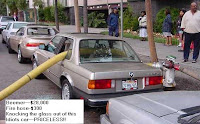
Fireman's revenge


Betting pool

The Strategy Page is full of good stuff every day, including a daily news report on the war in Iraq. I've excerpted today's report below. I was especially interested to read the end of the report:

May 4, 2005; The capture of al Qaeda leader Abu Musab Zarqawi’s laptop computer last month has led to a series of additional raids, which resulted in many al Qaeda members killed or captured, and the seizure of still more documents. Among those documents was a letter from one of Zarqawi’s subordinates to his boss. There are complaints of poor leadership and lack of direction. The letter writer says that all Zarqawi calls for are more and more suicide bomb attacks, without any apparent strategy. The subordinate complains that he does not even see Zarqawi anymore. This is understandable, because the growing number of Sunni Arabs disenchanted with terrorism, have been giving more and better tips to the Iraqi police. This has led to more raids that are getting closer to nailing Zarqawi himself, who is spending most of his time evading capture. Tellingly, some American intelligence officers in Iraq have set up a betting pool on when Zarqawi will be caught.

I wonder what date has the lowest return? I hope it's something like tomorrow or the day after!

Junk science

I've long been unhappy with the way science and technology (amongst other things) are taught in our primary and secondary schools. It's been very visible to me because I've worked closely with two groups of engineers: American teams (mostly based in Southern California and Florida), and Eastern European teams (based in Tallinn, Estonia and St. Petersburg, Russia). These folks were educated under very different systems, and the quality of the results is distinctly different. And America is on the losing side of that particular comparison.

Pamela Winnick has a column in the Weekly Standard that touches on this, paying particular attention to the way "political correctness" has affected our science texts. I'd like to see more reporting on this in the MSM...but even more, I'd like to see a lot of Americans angry about it. So far the only public anger I've seen that was focused on these issues came from captains of industry, and for some silly reason their anger doesn't seem to resonate. It should.

Ms. Winnick's column starts:

SEVERAL CENTURIES AGO, some "very light-skinned" people were shipwrecked on a tropical island. After "many years under the tropical sun," this light-skinned population became "dark-skinned," says Biology: The Study of Life, a high-school textbook published in 1998 by Prentice Hall, an imprint of Pearson Education.

"Downright bizarre," says Nina Jablonski, who holds the Irvine chair of anthropology at the California Academy of Sciences. Jablonski, an expert in the evolution of skin color, says it takes at least 15,000 years for skin color to evolve from black to white or vice versa. That sure is "many years." The suggestion that skin color can change in a few generations has no basis in science.

Pearson Education spokesperson Wendy Spiegel admits the error in describing the evolution of skin color, but says the teacher's manual explains the phenomenon correctly. Just why teachers are given accurate information while students are misled remains unclear.

Read the whole thing!

Lady Grunts

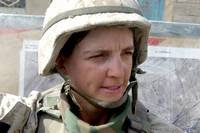
Stars and Strips has an interesting article about female Marines in a combat unit. An excerpt:

“This is history. This is huge for us,” St. John said. “I’ve been in the Marine Corps for 18 years, and this is my first opportunity to be out with an infantry company. Even five years ago, the Marine Corps wouldn’t be doing this. This is a major change in how we think women can be used in the military.”

On the ground

Michael Yon has a terrific post from the field, complete with pictures. The excerpt below is just a short taste of this post, which has a lot more great on-the-scene reporting. You don't want to miss this one!

LTC Kurilla ran to the burning Stryker, threw off his protective gear and helmet, leading a swarm of soldiers atop and over the burning hulk, in a determined push to get their buddies out. Kurilla dropped himself down a top hatch, to get into the burning Stryker, while men passed up fire extinguishers and even bottles of water. Major Mark Bieger and others were also atop the vehicle, alongside one gutsy Private First Class that everyone calls "Q."

The taste of toxic smoke combined with heat of the fires were overwhelming sensations. Rescuers and the men trapped inside were choking to death on that smoke. Attention was split between the urgent rescue at hand and the threat of follow-on attacks. Within minutes of our arrival, the men had wrestled out their severely injured friends and were climbing off the burning Stryker, separating into teams that shored up defensive positions while others scoured the area searching for other IEDs.

Iraqi perspective

A couple of weeks ago, I posted some Iraqi perspective that included an open letter from President Talabani to Tony Blair. Today, Ali of Free Iraqi posted his reaction to President Talabani's letter: Thank you, Mr. President, for speaking on my behalf. Read the whole thing, especially Ali's description of pre-war impressions of Tony Blair. Here's how it begins:

Thank you, Mr. President for speaking on my behalf.

A friend of mine, Dr. Jawad Hashim e-mailed me the full script of president Talibani's letter to PM Tony Blair. And although it was published on many sites and newspapers about a week ago, I'd like to post it here on my blog in full so that more people would have the chance to read it. I'm no fan of politicians in general but the truth is that I admire MR. Blair a lot and I also feel honored that Mr. Talibani is my president. I think it's something that honors all Iraqis, Arabs even more than Kurds that Iraq has finally started to cross the line of fanaticism to see each others as brothers and sisters and that soon we will join the whole human family although it's been a tough road and it's going to be so for a long time.

I chose to post Mr. Talibani's letter because I don't see it as a political letter and I don't think that he had to write it, but more it's a letter from an Iraqi who was oppressed and treated like a second degree citizen (in a country where 1st degree citizens were killed tortured and raped on a regular base!) and who now, thanks to the sacrifices of the coalition and to the bravery and determination of men like Mr. Blair has finally found his much deserved position in his country. I feel that Mr. Talibani did not really have to write this letter but instead he wanted to and I feel the same way and have always hoped of doing something like that. In fact I've written a "thank you" letter to Mr. Blair on the Internet but I don't think it reached him.

I like Mr. Talibani's letter more because it speaks exactly the way I feel and the way I wanted to write such a letter. For the first time an Iraqi president says and thinks the way I do! I must say I'm not the only one who feels this way and that so many Iraqis feel the same (even anti-American ones who I found that they still like two coalition leaders; Blair and Colin Powel).

Happy days are here again

Claudia Rosett is one of our favorite columnists. Usually she's to be found reporting on the progress of liberty, such as the recent events in Lebanon. Today she weighs in with a cheerful column reflecting on how far we've come in the past few years. The beginning is excerpted below; you can (and should!) read the whole thing here.

It's always risky to celebrate security and good times, especially in an age when there is no way to rule out that along with the usual perils of life, we will suffer another terrorist attack. But this spring, more than 3 1/2 years after Sept. 11, it does seem that since that day America has weathered a rough passage awfully well. That, and with the cherry trees just done blooming in Washington and New York's Central Park full of flowers (and, in the grand old tradition, amateur baseball teams), it feels worth a moment to stand back and observe that for all the usual ructions of politics and the more prominent idiocies of such institutions as Hollywood, academia and the imploding United Nations in our midst, rarely in recent decades has there been more sanity and self-respect abroad in this land.

That is clear not only in such minor but telling details as the humor with which Laura Bush, onstage at a press dinner in Washington this weekend, poked affectionate fun at the president's early bedtime habits--and was received with clamorous applause by an audience not overly loving of George W. Bush. It is also clear in such major matters as the resolve of most Americans, despite the loud groans of our most precious elite, to stay united behind the president in the need to win both the wars and the peace, in Afghanistan, Iraq and by extension a world in which we spend less effort appeasing our enemies and do more to address real threats. Better times can be seen in an economic recovery that has left room for the country to debate such matters as the fixing of the decrepit and wasteful Social Security system. And broadly better days are manifest in the general grace with which Americans in recent times have put up with high gas prices, disastrous weather, the threat of more terrorist attacks and the costs of trying to prevent them.

Quote for the day

The difference between a moral man and a man of honour is that the latter regrets a discreditable act, even when it has worked and he has not been caught.

   H. L. Mencken

Monday, May 2, 2005

Blackmail bombing

I shudder in horror every time I read one of these stories, and it's way too often. It's nearly beyond my capacity to imagine what it must be like to be in this poor man's situation. I've excerpted the complete article from DefenseLink:

Soldiers Rescue Man Blackmailed into Suicide-Bombing Mission
American Forces Press Service

WASHINGTON, May 1, 2005 – Task Force Baghdad soldiers this morning rescued a man apparently blackmailed into a suicide-bombing mission by terrorist master Abu Musab al-Zarqawi.

The man exploded his red Kia sedan roughly 15 feet from a barrier to a coalition base in east Baghdad, Iraq. The car bomb failed to detonate properly and the vehicle caught on fire. Soldiers manning the gate reacted quickly and saved the driver, coalition officials said in a release.

An initial investigation revealed that terrorists had kidnapped the driver's family and that he was forced to carry out this suicide-bombing mission to protect his wife and children, coalition officials said.

No soldiers were injured in the attack. The driver is being treated at a military hospital and is cooperating with authorities.

"This is another case where Abu Musab al-Zarqawi has to extort men to carry out his indiscriminate slaughtering," said Army Col. Joe DiSalvo, commander of 2nd Brigade Combat Team, 3rd Infantry Division. "He can't recruit volunteers. (So) he is resorting to forcing Iraqi civilians to carry out these mission by threatening harm to kidnapped family members."

Officials released no more information on the fate of the man's family.