Monday, February 1, 2016

An amazing visualization tool...

An amazing visualization tool...  Free, on the web, and it works in your favorite web browser.  It's called “earth”, and it lets you look at winds, temperature, humidity, pollutants, ocean waves, and more – and you can see them anywhere in the world.  It's all driven by satellite data, and much of the data is updated in near realtime (within a few hours).  The least fresh data I could find was at most five days old.  You can even look at the data with a variety of map projections.  Amazing to have this at your fingertips!

I took the screenshot at right this morning, showing the winds over the U.S. At first I thought that winds were all it could show, but then I clicked on the “earth” menu at the lower left corner, and a whole 'nother world opened up.  Take a gander!

The math was settled...

The math was settled...  There is no such thing as an irrational number (that is, a number that cannot be exactly defined as the ratio of two numbers). No opposition was allowed; in fact, irrational number deniers are rumored to have been executed.

It's all very reminiscent of global warming and its skeptics...

I tried...

I tried ... to get interested in tonight's caucuses (caucusi? see note below.) in Iowa.  I tried to even care.  But I failed.  Tonight's events are doubly irrelevant for me.  First of all, there isn't a single candidate running that I'm sure I'd like to elect as President.  Worse, there's not even anyone who stands out as someone I don't want – so there's not even anyone in particular to vote against.  Hell, I'm not even very curious about who wins this thing, in either party – they're all schmucks!  Then secondly there's the very limited meaning and impact of the Iowa caucuses, and it seems to be getting even less relevant with each passing election.

So I'm paying no attention at all.

Note: on a much more important matter, I looked up “caucus” in the OED to see what the usual form of the plural is.  I assumed, from the form of the word, that it was derived from Latin.  I got a surprise:
caucus
[Arose in New England: origin obscure.
   Alleged to have been used in Boston U.S. before 1724; quotations go back to 1763. Already in 1774 Gordon (Hist. Amer. Rev.) could obtain no ‘satisfactory account of the origin of the name’. Mr. Pickering, in 1816, as a mere guess, thought it ‘not improbable that caucus might be a corruption of caulkers', the word “meetings” being understood’. For this, and the more detailed statement quoted in Webster, there is absolutely no evidence beyond the similarity of sound; and the word was actually in use before the date (1770) of the event mentioned in Webster. Dr. J. H. Trumbull (Proc. Amer. Philol. Assoc. 1872) has suggested possible derivation from an Algonkin word cau′-cau-as′u, which occurs in Capt. Smith's Virginia 23, as Caw-cawaassough ‘one who advises, urges, encourages’, from a vb. meaning primarily ‘to talk to’, hence ‘to give counsel, advise, encourage’, and ‘to urge, promote, incite to action’. For such a derivation there is claimed the general suitability of the form and sense, and it is stated that Indian names were commonly taken by clubs and secret associations in New England; but there appears to be no direct evidence.] 
Such outright uncertainty is fairly rare in the OED, but this sort of discussion is one of the big reasons why I love that tool.  Way more than I love the Iowa primary process, whatever one calls it...

Sunday, January 31, 2016

Paradise ponders...

Paradise ponders...  Well, the snow finally stopped sometime last night.  This morning, after the sun came up and was shining nicely, I went out to plow the driveway again.  I quickly ran into a problem, though – in my hurry to get into the (nice, warm) house last night, I forgot to turn off the hazard lights on my tractor.  I don't normally use those lights, but last night when I drove down the highway I had them on.  They were still flashing this morning, but the bulbs just barely lit up.  The tractor engine wouldn't turn over.

So ... I had to go fish the jumper cables out of the garage, run Debbie's truck over to the barn (over the unplowed inch to two inches of fresh snow), and park it nose-to-nose with the tractor.  Then I had to figure out how to open the tractor's “hood” so I could get to the battery.  Luckily that turned out to be easy.  I hooked up the cables and started up the tractor, then put the truck back, the cables away, and finally I could go plow.

I got surprised right away by a layer of ice that developed somehow, right against the pavement.  In a couple of places it was almost an inch thick, but most places it was only about a quarter of that.  I plowed the entire driveway but still couldn't actually see the pavement!  Fortunately the sunshine took care of that problem in just a few hours.

Then I shoveled off the walkway again, and salted it to get rid of the ice (it was there, too; not just on the pavement).  I've got four foot high piles of snow now on both sides of that walkway...

Uh oh...

Uh oh...  Curiosity may have a problem...

I've never been able to fathom...

I've never been able to fathom ... why so many people are attracted to socialism.  The inevitable outcome isn't exactly attractive...

Collision imminent!

Collision imminent!  A giant cloud of gas (weighing more than a million suns) is headed for the Milky Way galaxy at 700,000 MPH.  It will hit a different arm of the galaxy than the Earth is in, about 30 million years from now.  That's imminent in the grand scheme of things, though it may not seem so to you :)

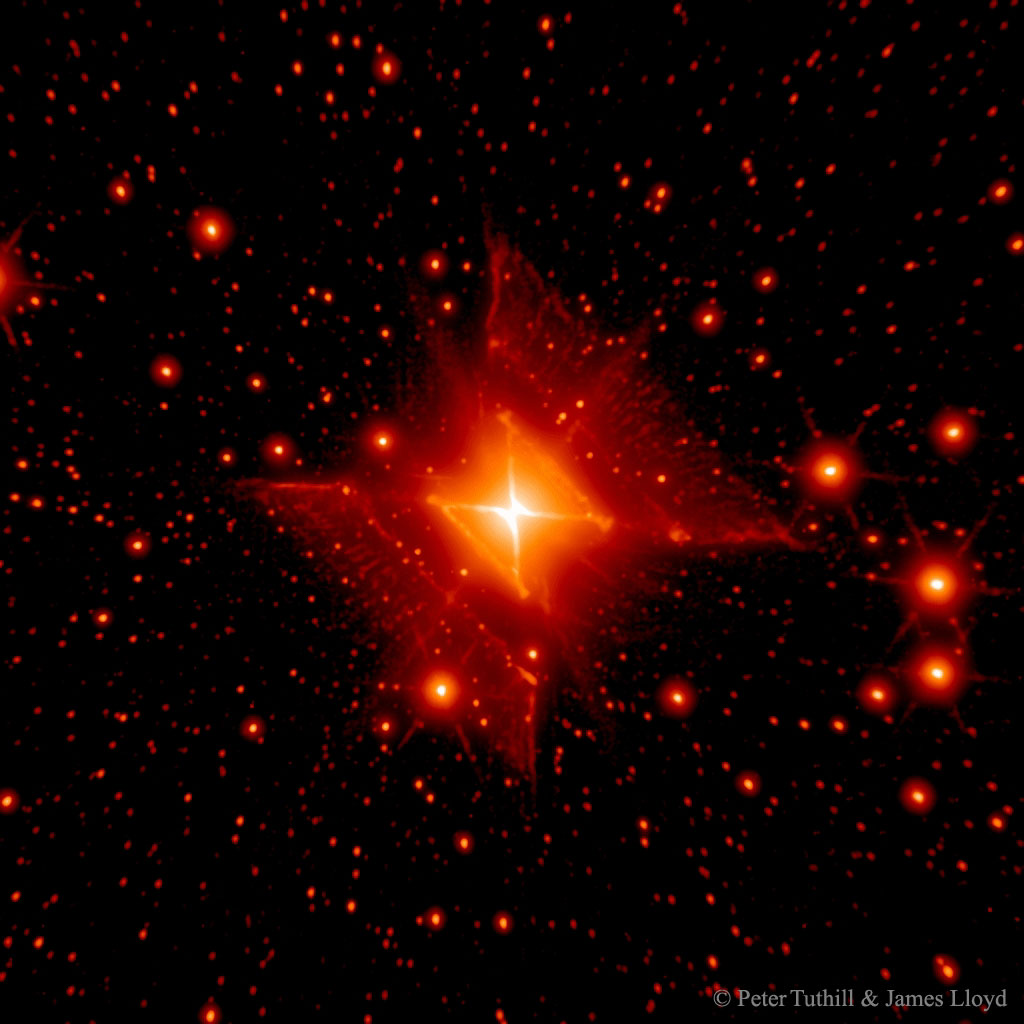
The Square Red Nebula...

The Square Red Nebula...  Via APOD, of course.  What a bizarre celestial object!  Click to embiggen...

Things I did not know, part 54,903,112...

Things I did not know, part 54,903,112...  StrategyPage's article on suicide bombings includes this paragraph (emphasis mine):
In both Lebanon and to a lesser extent in Sri Lanka, the terrorist organizations took advantage of religious beliefs that honored extreme sacrifice. Added to this was exploitation of economic and political grievances, thus making the suicide attackers into heroic characters. In addition, families of the suicide volunteers received generous (by local standards) economic rewards. Until in 2003 families of Palestinian suicide bombers receive up to $33,000 (from various sources, mainly Iraq and Saudi Arabia). Financial incentives like this have become common and the Palestinian government now pays them out of foreign aid cash
Assuming that's true (and I've found StrategyPage to be a reliable source), this is simply appalling.  The vast majority of foreign aid that Palestine receives comes from the U.S., either directly or indirectly through the U.N. and other aid organizations.  So ... U.S. tax dollars are paying rewards to the families of suicide bombers.

You'd think I'd be cynical enough to be unsurprised by this, but I guess I need to work on my cynicism some more because this did surprise me.  As I sat here and festered, I started thinking about all the things our government does that anger me, and ... I understood a little better what a powerful current Trump is tying into.  I don't like the idea of Trump-as-President, but I absolutely love the idea of tipping over the apple-cart on the current people running the government...

I've neglected to mention...

I've neglected to mention ... a piece of clothing I recently bought, that's making me even more comfortable outside in cold weather: fleece-lined jeans from Carhartt.  They are the bomb!
 Despite having (a relatively mild case of) Raynaud's disease, with the right apparel I'm not having much trouble.  The one exception: my hands.  I still don't have a great solution for keeping my hands comfortable while still allowing me to work with some semblance of dexterity.  My best answers today are (a) a pair of electrically heated gloves (designed for motorcyclists), and (b) a pair of well-insulated mittens combined with chemical heaters.  My fingers still get painful in the gloves if it's cold enough, and of course in the mittens my dexterity is quite impaired.  Still searching for a good answer for that!

The insulated boots I got earlier this year have proven to be a great answer for my cold feet.   Yesterday afternoon I was outside for about four hours, including an hour in a near-blizzard condition, and my feet (and legs) were comfortable the whole time...

Saturday, January 30, 2016

Dang it!

Dang it!  The storm stopped around 1:30 pm, and the forecast said little chance of more, and the weather radar showed nothing on the way – so I shoveled our porch and walkway (about 18" of snow), and plowed our driveway. 

Then I headed over (on the tractor) to our neighbor, Nick and Maria S.  They have a long driveway and told me they had nobody arranged to plow them out, so I volunteered.  On the drive over (about 2 miles on a 15 MPH tractor), it started to snow.  By the time I got to their house, it was a full-on blizzard, with visibility down to 100' or so.  I plowed them out as best I could see, and headed home. 

I was frozen and soaked by the time I got back in the house, so I jumped right into a nice, hot shower.  Fifteen minutes later, there was an inch of fresh snow on the ground – and it's still coming down hard. 

Dang it!

Plowing the driveway this time was a much different experience than usual.  Normally the only challenge is to scrape every square inch while marshaling all the snow off to the side.  It's sort of a management problem: not taking too big a bite, having the blade angled right, etc.  This time there was a completely different challenge: how to get the vast quantity of snow herded off to some place available to put it.  There was a lot of snow to put somewhere!  Next time we have a deep snowfall, I'm going to try starting out with the loader bucket, and use that to move the bulk of the snow off to some good place for a pile.  Then I'll use the blade to finish it off nicely...

Newton...

Newton ... or Haukea (white snow in Hawai'ian), or Haunani (beautiful snow) ... all these names are under consideration.  He's one cute little kitten.  So far as we can tell, he's in good health.  He's got a vet appointment on Wednesday to be sure.

Then there's our dogs, in the snow.  They'd really rather be inside :)


Snowy consequences...

Snowy consequences...  The temperature is hovering right around freezing, which means the (totally unpredicted) volumes of snow that we're getting are heavy, gloppy, and wet.  For some reason one particular basement casement window is having lots and lots of snow pile into it – to the point where I started to get worried about its physical integrity.  The weight of that snow looked like it just might break the window panes!

So I ran out to my shop, found a piece of scrap OSB (chip board), and sawed it up into two 5' x 20" pieces.  Then I shoveled all the snow out from around the casement (this is while the roof was dumping more on me!), shoveled out most of the snow inside the casement, and covered it with those two pieces of OSB.  It looks like it will hold, and it definitely removed the immediate threat.  We're keeping an eye on the other casements, too, but so far none of them are getting large amounts of snow in them.  I know not why.

Meanwhile, some photos from around the place to entertain you.  If I didn't keep thinking about the work it's going to take to dig us out, I'd be entranced by the beauty of it.  The first photo shows our sidewalk after I shoveled off the first 8" or so.  In the fifth photo you can see the juncos that just don't care that I'm standing right next to them – they want that food!  The last is the same balcony shot I took just a few hours ago – look at all this white stuff!


Our balcony...

Our balcony ... at 7am.  And it's supposed to snow all day long.  Yikes!

The forecast says 3 to 5 inches today, but we've already gotten more than that.  Can you spell buried?

Mystery of the cattery pond...

Mystery of the cattery pond...  When Debbie went down to our basement cattery this morning, she discovered a small pond in the northeast corner of the room.  This was very reminiscent of the indoor ocean we had last summer during a rainstorm, but on that memorable occasion it was quite obvious where the water came from: the casement window had about 8 inches of water in it, and water was streaming through the window frame into the basement.

This time the source wasn't nearly so obvious.  We cleaned up the water with mops; the total was about two quarts.  That's far too much for a cat to be the source under even the wildest set of assumptions.  It's even too much for a water bowl to have been the source.  The kitties were puzzled as well; it was not the water feature of their dreams.  So we were mystified as we cleaned up, until Debbie spotted some water on a casement window sill.  Ah, ha!  That had to be the source.  But how?  The bottom of the casement well had no water.  Where did the water come from?  How did it get through the window?

Some inspection and thought unveiled the answer.  If water came through the casement opening at an angle (as it would if the wind was blowing from the east), then the rain would strike the casement window pane.  Then it would run down and into the sill that the window slides in.  That sill has a drain to the outside, but it's a small hole – heavy rain could easily overwhelm it.  In that case, water would overflow and some of it would run down the inside of the sill, into the cattery.  That must have been what happened.  It was rainy and windy last night.

I'm going to call that a mystery solved.  We've been in the house nearly two years now, and this is the first time anything like that happened.  Let's hope it remains a rare occurrence!

You have to pick cherries...

You have to pick cherries ... if you want to make cherry pie.  That's from this new post by Steve McIntyre, continuing his tireless work trying to find some bit of reality in the warmist's research papers.  Short version: he hasn't found any yet.  From his conclusion:
Unfortunately, Briffa and associates have never set out ex ante criteria for site inclusion/exclusion, resulting in Briffa regional reconstructions seeming more like Calvinball than science, as discussed in many CA posts.   However, remarkably, D’Arrigo et al 2009 (though not noticed at the time) had admitted earlier that year to doing exactly what Briffa had denied: the ex post selection of sites in order to obtain a preconceived result (a reconstruction that went up in the 20th century).
Do read the whole thing.  It's wonderful and satisfying to see a competent observer applying actual science techniques and skepticism.  Plus, a Calvin and Hobbes reference!
Paradise ponders...

Paradise ponders...  We had an unplanned adventure yesterday.  My brother Scott had a new feline at his house – a male kitten, barely old enough to be outside by himself.  The kitten (which he named “Furball”) was obviously not feral – he was very familiar with people and wanted into the house.  Scott isn't interested in having a kitten as a pet, and we didn't want to see the poor thing tossed back out into the snowstorm, so Debbie and I drove up and picked him up.  Furball (tentatively renamed “Newton”) is now ensconced in our basement bathroom, isolated from our cattery kitties.  We have an appointment for him with the vet next Wednesday, and Debbie has contacted Four Paws (a rescue volunteer group) to see about finding him a permanent home.

Meanwhile, Debbie has a kitten.  If you know her, you can probably imagine just how heartbroken she is about this :)  Photos will be forthcoming...

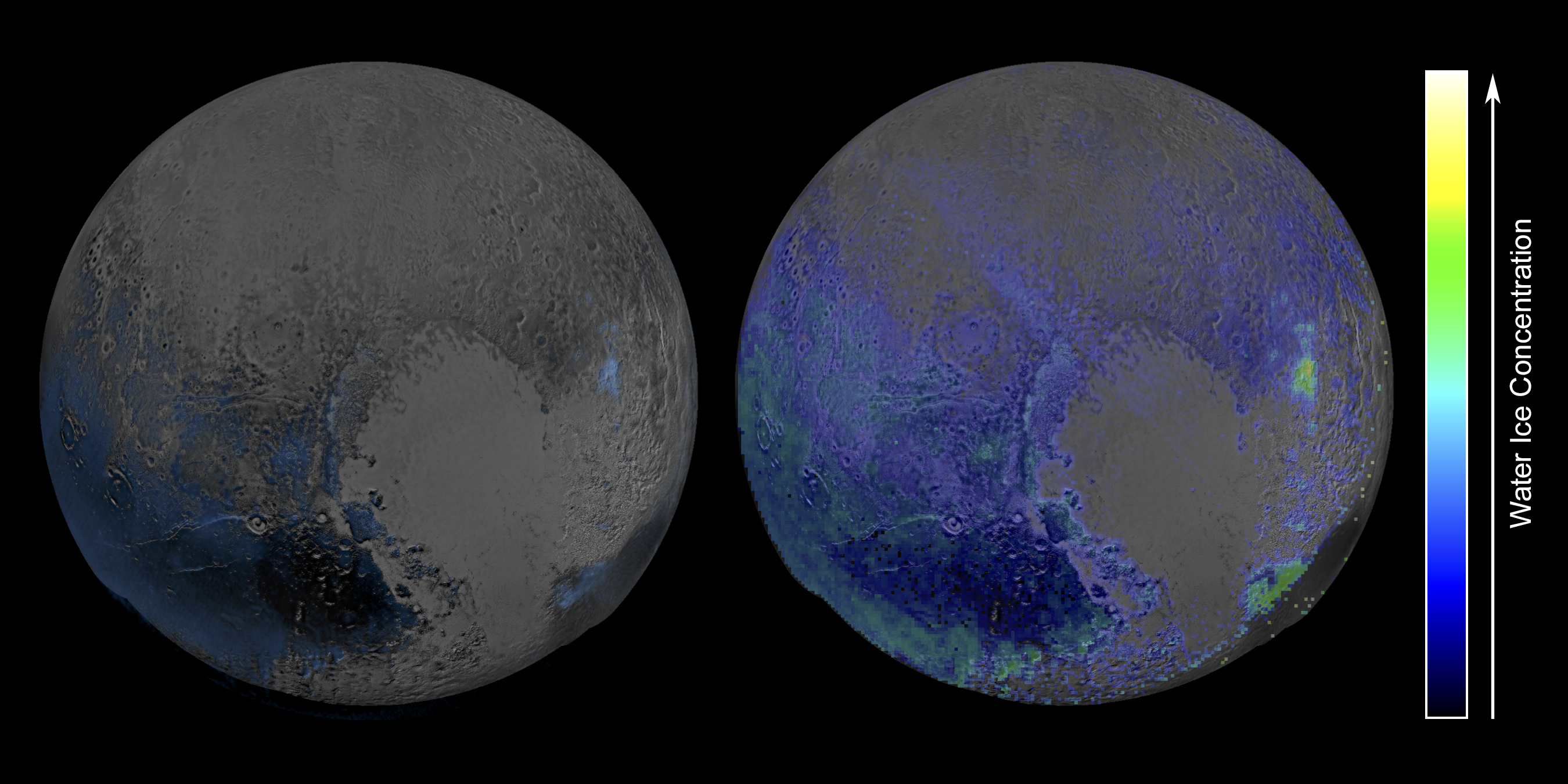
Water is all over Pluto...

Water is all over Pluto...  It was a surprise to find any water ice on Pluto.  With more analysis of the New Horizons data, researchers are discovering that there's lots of water on Pluto, and very widely distributed.  More here...

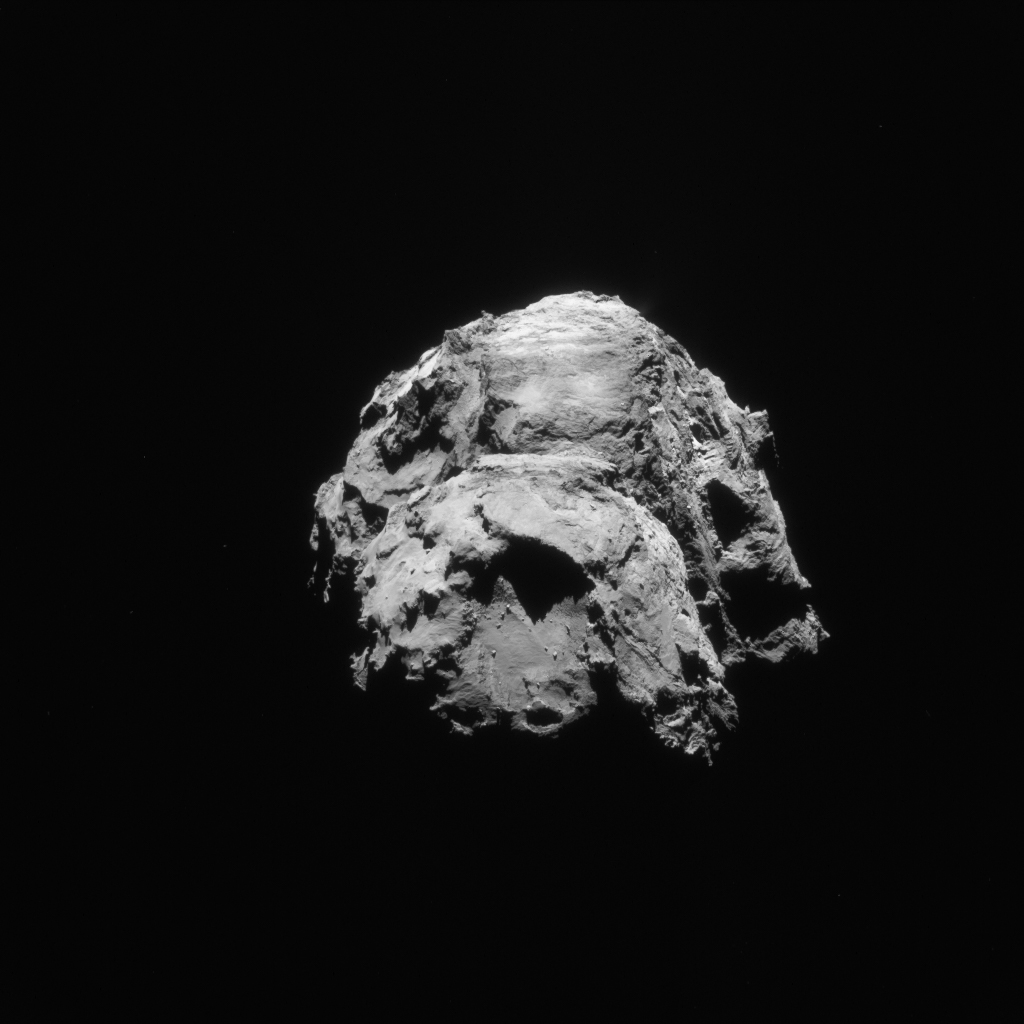
Comet 67P...

Comet 67P...  Handsome fellow, isn't he?

Of dates and computers...

Of dates and computers...  I stumbled into this article in my reading this morning.  It's a good, non-technical explanation of why we have leap years (this year is a leap year, by the way).  This is familiar territory for me, as I've written quite a bit of code that deals with these issues.  That got me to pondering just how much time I've spent over the years doing this.  It's kind of crazy, really, just how hard it is!

The most recent descent into date madness that I took was about 12 years ago, when I was working for a company doing electronic stock and option trading.  They had customers located all over the world, in a total of 28 different time zones.  The development team was getting all twisted up in the problem of converting dates and times from one time zone to another.  Our programming environment (Java) had a standard way of doing this (a “library”), but it always seemed to be missing a few of the time zones we needed.  The problem was that time zones changed frequently.  Mistakes in the time zone conversions could be very expensive for us, so it was worth considerable effort to get right.  I ended up writing a replacement for the standard Java library that we could keep up to date ourselves.  I was amazed how complex this seemingly simple problem was, especially when it dawned on me that I had to track not only the current time zones (that was bad enough!) but also the entire history of time zones.  Sheesh!

Way back in the '80s I had a consulting job that involved writing code for a different kind of date and time conversion.  This time it was a university who needed a way to figure out the relative timing of events in the past, back to around 500 BC.  The challenge was that people in different places used to keep entirely different calendars, and these calendars independently changed over time.  When someone in Italy wrote a date of (say) February 12, 1204, that wouldn't necessarily have been the same date in (say) Denmark; there it might be December 29, 1203.  One of the big challenges to understanding those differences was that the whole concept of a country was quite fluid back then :)  Even worse, in some places the researchers cared about, the calendars they used were completely different – not the Julian calendars invented by the Romans, but totally different calendars generally controlled in quite an arbitrary and capricious manner by religious authorities.

That was a really challenging programming problem.  Coming up with a model that could handle all these things wasn't too hard, but gathering the information required to fully implement that model was.  I ended up getting a grad student assigned to me as my helper, and her only job was to go get answers for me.  I'd ask her a question like “When did Amsterdam switch over to the Gregorian calendar?”, and she'd go off to get the answer.  In the end, the solution was more a database and less a bunch of code. 

I remember one problem the researchers were wrestling with that they never did come up with a satisfactory answer for.  The problem arose when interpreting the writings of someone in the past who was writing about events in an area not local to them.  For example, an Englishman might write about the purchase of a ship from Amsterdam, saying something like “I bought this ship for 4,000 guineas, and it was delivered on March 17, 1366.”  The problem is which March 17, 1366 was he talking about: London's or Amsterdam's?  Because they weren't the same.  Most likely they'll never figure that one out :)

Anyway, I've spent a lot more programming time dealing with issues like this than I ever thought I would.  The problem of dates and times keeps recurring, and I'm not sure that will ever end.  For instance, there's a debate currently underway about leap-seconds, and whatever the answer turns out to be, software will have to be written to deal with it...