Republican 2016 presidential primary... The current data (derived from Betfair wagering). While the U.S. polls show Trump and Carson at the top, by far ... the people putting their money down on the race are favoring Rubio by a wide margin. What do they (think they) know that the pollsters aren't picking up?
If you're not familiar with using betting data in a situation like this, here's the one thing that's important to know: since about the mid-'90s, the betting data has been far more reliable in predicting the outcome of elections than polls have been – and that difference is increasing over time. Either bettors are getting better information, pollsters are getting worse (or are more overtly biased), or both. I'm guessing both...
Saturday, October 24, 2015
Online encyclopedia of integer sequences...
Online encyclopedia of integer sequences... I've posted about this fascinating resource before, but today I ran across a nice story about Neil Sloane, the mathematician who created it...
I don't get too excited...
I don't get too excited ... when I read about foreign countries spying on us. One reason why: we do it too. Another reason: we do almost nothing to stop it. If we don't like the spying, then instead of being all offended and self-righteous when friend or foe spies on us, we should instead concentrate on defending ourselves. The current plague of Chinese industrial spying, for example, should be seen as a failure of our defenses against spying (in effect, inviting the spies!) – not as some nefarious Chinese plot.
The current situation is as if we tore the front door off our house, put giant billboards advertising that fact on the freeway, then act surprised and hurt when thieves rush in to steal all our stuff. I know from personal experience at the last several software companies I worked for that stealing all their source code would only have been moderately difficult for a complete outsider with no internal connections – and completely trivial for anyone with any insider assistance at all. Anyone with even the slightest interest in the technology I worked on could have had it all (and quite possibly did!) very easily...
Pluto is weird!
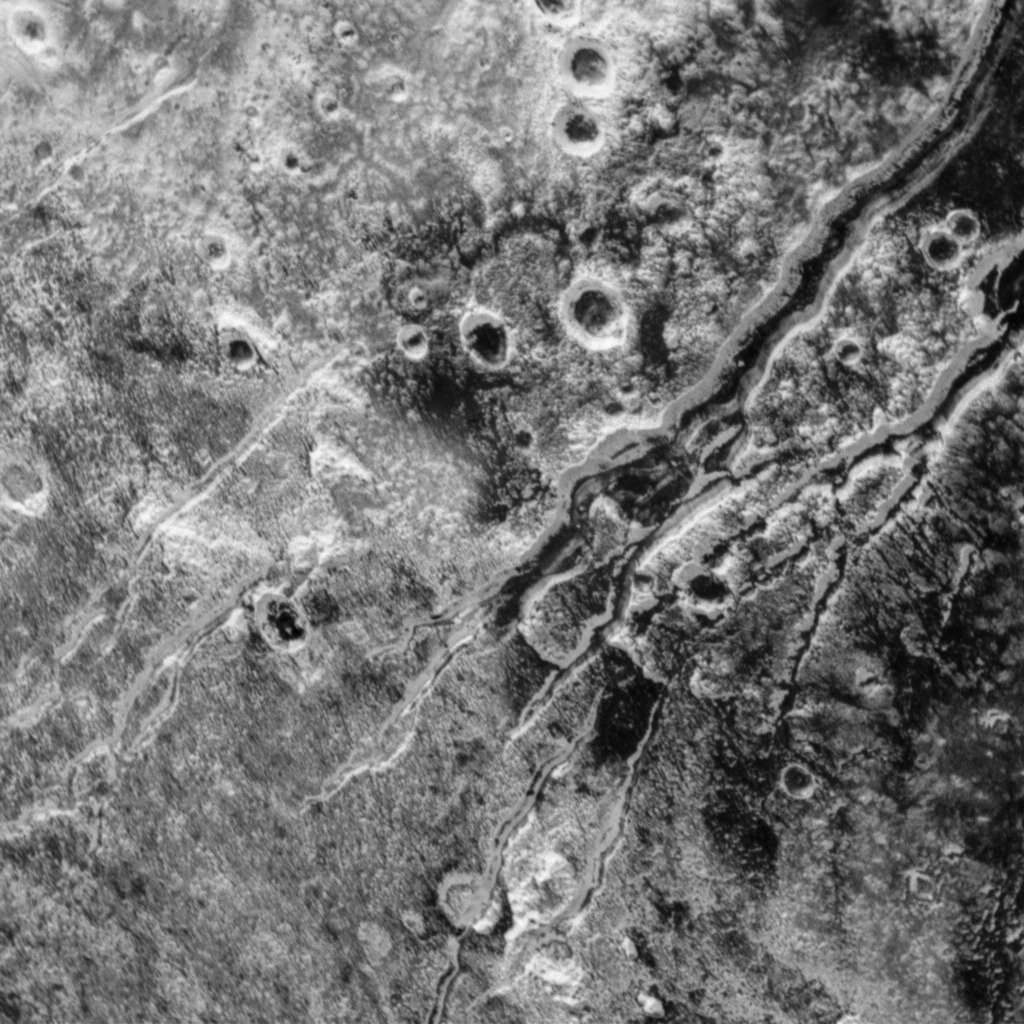
Pluto is weird! The photo at right is one of the latest downlinked from New Horizons from its Pluto encounter earlier this year. Those sure look like “canyons” formed by some kind of flowing liquid! Pluto is just chock full of surprises, making the scientists on the project very happy.
Also in today's Pluto-related news: a first photo (at left) of Kerberos (one of its moons), which isn't anything at all like what astronomers expected.
Researchers really hit the jackpot with the New Horizons probe...
Also in today's Pluto-related news: a first photo (at left) of Kerberos (one of its moons), which isn't anything at all like what astronomers expected.
Researchers really hit the jackpot with the New Horizons probe...
Friday, October 23, 2015
Paradise ponders...
Paradise ponders... Earlier this week, Michelle H. (the wonderful woman who cleans our house for us, but who is fast becoming a good friend) invited Debbie to a “salsa social” put on by Paradise Ward 2's Relief Society. Paradise Ward 2 is the area (including our home) of one congregation of the Paradise LDS (Mormon) church. This particular Relief Society is the same group of women who insisted on feeding us earlier this year, shortly after Debbie was injured.
Last night was the evening of the salsa social, and Michelle picked Debbie up at 6:30 and took her there and back. It was held at the home of Pam and Paul N.; Paul was the preceding bishop of the ward, just after Tim D. (our neighbor to the north), less than a mile from our house. Debbie came back all smiley and happy – she had a wonderful time meeting a bunch (20 or 25) of the local women. She reports that they were all very friendly, eager to get to know her (it's not every day there's a new face in town!). As she told them, it was really nice for her to hear women's conversation, instead of just that with the slug she married :)
We love living here!
I went out this morning to check in with Elray (the well driller) to see what his progress is. He's got the hole bored down to 90', has 45' of 10" casing down (this will later form the basis for the 40' of "seal" required around every new well), and about to start putting the first 90' of casing down the hole. In the first two photos below, you can see the "sticks" he's just finished pulling out of the hole. The 10" diameter drill bit (the working end of which is in the last photo) is still in the hole at that point, but held up at the very top. You can also see the "mud" (hydrated clay) that has been drilled, puddled in the foreground. There's quite a pile of mud there, and when I commented on that Elray told me that when the mud is loosened and hydrated, it expands – sometimes considerably, by a factor of several times the volume. Who knew that dirt swelled up? The third photo shows the end of a pile of seven 20' lengths of 6" diameter casing. Elray will be welding these into a single pipe as he inserts the casing down the hole. It's fascinating to watch him work on this, especially when he has to move heavy things around – that rig and his skill makes it look really easy. I watched him extract the 10" drill bit this morning. It's a piece of steel about 7' long overall, weighing well over 200 lbs. Elray lifted it out with a hoist, then swung it around like a giant pendulum until the working end was swinging over the spot where he wanted to lay it on the ground, then at precisely the right moment he dropped the lift down and placed it within inches of where he told me he would. He never had to work hard for that whole job...
Last night was the evening of the salsa social, and Michelle picked Debbie up at 6:30 and took her there and back. It was held at the home of Pam and Paul N.; Paul was the preceding bishop of the ward, just after Tim D. (our neighbor to the north), less than a mile from our house. Debbie came back all smiley and happy – she had a wonderful time meeting a bunch (20 or 25) of the local women. She reports that they were all very friendly, eager to get to know her (it's not every day there's a new face in town!). As she told them, it was really nice for her to hear women's conversation, instead of just that with the slug she married :)
We love living here!
I went out this morning to check in with Elray (the well driller) to see what his progress is. He's got the hole bored down to 90', has 45' of 10" casing down (this will later form the basis for the 40' of "seal" required around every new well), and about to start putting the first 90' of casing down the hole. In the first two photos below, you can see the "sticks" he's just finished pulling out of the hole. The 10" diameter drill bit (the working end of which is in the last photo) is still in the hole at that point, but held up at the very top. You can also see the "mud" (hydrated clay) that has been drilled, puddled in the foreground. There's quite a pile of mud there, and when I commented on that Elray told me that when the mud is loosened and hydrated, it expands – sometimes considerably, by a factor of several times the volume. Who knew that dirt swelled up? The third photo shows the end of a pile of seven 20' lengths of 6" diameter casing. Elray will be welding these into a single pipe as he inserts the casing down the hole. It's fascinating to watch him work on this, especially when he has to move heavy things around – that rig and his skill makes it look really easy. I watched him extract the 10" drill bit this morning. It's a piece of steel about 7' long overall, weighing well over 200 lbs. Elray lifted it out with a hoist, then swung it around like a giant pendulum until the working end was swinging over the spot where he wanted to lay it on the ground, then at precisely the right moment he dropped the lift down and placed it within inches of where he told me he would. He never had to work hard for that whole job...
Thursday, October 22, 2015
More photos downlinked from New Horizons...
More photos downlinked from New Horizons... The one at right is of Charon. I'm still boggled that we're seeing these sorts of images...
Wednesday, October 21, 2015
This is pretty funny...
Cyr wheel...
Pretty spectacular! Note in particular how he never runs over his fingers.
Japanese maple...
Japanese maple ... at the Portland (Oregon) Japanese Garden. I've visited that garden and the very famous tree, though not (unfortunately!) while it was in fall color. It truly is a gorgeous specimen...
That's one very impressive machine!
“The fundamental producer of income inequality is freedom.”
“The fundamental producer of income inequality is freedom.” Now there's a ponder-worthy quote, and it's my quote of the day. The writer was George Will, in a shouldn't-be-missed column at NRO. In the occasional conversation I've had with friends about income inequality, I've always defended it as a good thing, and a reflection of capitalism at work – but Mr. Will has reduced that idea to its most pithy, powerful form in that one short sentence...
Paradise ponders...
Paradise ponders... We took our walk yesterday at noon, under a partly cloudy sky. The ground was still damp and slightly muddy from the rains, so we kept to the roads and avoided tromping over the sodden fields. The dogs were disappointed by this, as that meant less voles to sniff out. Still, the high humidity brought exciting aromas to their noses, and both of them were noses down the whole time we were walking. We saw a few hawks circling high, but none perched around the fields. They must have reduced the vole population to the point where they have to work harder to find one. It was only 50°F during our walk; light jacket weather even though we were working hard. Some photos:
Debbie had physical therapy in the morning, and I worked indoors where I could stay warm. Elray had to stay home in the morning to wait for two truckloads of casing pipe to arrive (some of which is for us!); he didn't get here until too late in the afternoon to start drilling. The next step for him is to expand the hole he's got now from 6" to 10" in diameter. That's so he can put a temporary 10" casing down the first 40' or so of the well. That will provide enough room for him to put the water connection in, 6' or so underground (to prevent it from freezing). When he's all done with the well, he'll pull that 10" casing out. A reader wrote yesterday to ask what the drill bit actually looks like. That's what the photo at right is: the 6" rotary drill that he used to drill the hole we've got so far. Those knobby “cones” rotate against the bottom as the drill shaft is turned. Because the shaft itself is heavy, plus there's a big weight on top of it (several tons), those pointy knobs are grinding into the bottom of the well, breaking loose bits of soil and rock as they go. Between the top two cones you can see a small hole; that's one of three air ports that blast out a huge amount of compressed air to blow the debris back up the hole. There's also a bit of water injected in there, about 500 gallons per day, mainly to keep it from creating too much dust. The water also acts as a lubricant, but that doesn't matter too much unless you're drilling through rock. Elray tells me that those rotary drills were invented by Howard Hughes – not that Howard Hughes, but his father. That's how he made his original fortune.
Debbie and I had lunch at Elements, a restaurant on the southern end of Logan that gets high rankings in the snooty restaurant magazines and web sites. We'd only been to it once before; we liked it but were not all that impressed by it. Yesterday we decided to give it another try, and we're very glad we did – both of us had really nice meals. Debbie had an outstanding spinach salad and a barbecue chicken pizza (she's a big fan of these; me, not so much) that she pronounced wonderful. I had a tomato bisque (good, not great; a little sweet for my taste), and a very different sort of fish and chips. That's what they called it on the menu, but it really was Alaskan cod cooked tempura-style, and mashed sweet potato baked with a cinnamony, slightly sweet crust on top. The cod was melt-in-your-mouth good, better than any I've had in many years. The tempura was perfectly done; a very light coating of batter and very little oil. And the sweet potato just might have been the best sweet potato dish I've ever had. Debbie, somehow, had enough room for dessert: key lime pie. I didn't even taste it, but she reports it was mouth-puckeringly tart, just the way she likes it, and reeking of lime. I almost left out the part of the meal that surprised us the most: flavored lemonades. When you order one, you get one free refill. We both started with raspberry, and at the first sip our brains just about fell out on the table. Wonderful stuff! Tart as hell with the lemon, but with a lot of raspberry puree swizzled in. Naturally we both took our refills. Debbie tried the strawberry, and was equally delighted with it. I tried the mango, and it was just as wonderful as the raspberry. We'll be going back there...
The photo above has nothing to do with the restaurant :) It's the view to the southwest of our driveway entrance, as the sun was about to disappear behind the Wellsville Mountains...
Debbie had physical therapy in the morning, and I worked indoors where I could stay warm. Elray had to stay home in the morning to wait for two truckloads of casing pipe to arrive (some of which is for us!); he didn't get here until too late in the afternoon to start drilling. The next step for him is to expand the hole he's got now from 6" to 10" in diameter. That's so he can put a temporary 10" casing down the first 40' or so of the well. That will provide enough room for him to put the water connection in, 6' or so underground (to prevent it from freezing). When he's all done with the well, he'll pull that 10" casing out. A reader wrote yesterday to ask what the drill bit actually looks like. That's what the photo at right is: the 6" rotary drill that he used to drill the hole we've got so far. Those knobby “cones” rotate against the bottom as the drill shaft is turned. Because the shaft itself is heavy, plus there's a big weight on top of it (several tons), those pointy knobs are grinding into the bottom of the well, breaking loose bits of soil and rock as they go. Between the top two cones you can see a small hole; that's one of three air ports that blast out a huge amount of compressed air to blow the debris back up the hole. There's also a bit of water injected in there, about 500 gallons per day, mainly to keep it from creating too much dust. The water also acts as a lubricant, but that doesn't matter too much unless you're drilling through rock. Elray tells me that those rotary drills were invented by Howard Hughes – not that Howard Hughes, but his father. That's how he made his original fortune.
Debbie and I had lunch at Elements, a restaurant on the southern end of Logan that gets high rankings in the snooty restaurant magazines and web sites. We'd only been to it once before; we liked it but were not all that impressed by it. Yesterday we decided to give it another try, and we're very glad we did – both of us had really nice meals. Debbie had an outstanding spinach salad and a barbecue chicken pizza (she's a big fan of these; me, not so much) that she pronounced wonderful. I had a tomato bisque (good, not great; a little sweet for my taste), and a very different sort of fish and chips. That's what they called it on the menu, but it really was Alaskan cod cooked tempura-style, and mashed sweet potato baked with a cinnamony, slightly sweet crust on top. The cod was melt-in-your-mouth good, better than any I've had in many years. The tempura was perfectly done; a very light coating of batter and very little oil. And the sweet potato just might have been the best sweet potato dish I've ever had. Debbie, somehow, had enough room for dessert: key lime pie. I didn't even taste it, but she reports it was mouth-puckeringly tart, just the way she likes it, and reeking of lime. I almost left out the part of the meal that surprised us the most: flavored lemonades. When you order one, you get one free refill. We both started with raspberry, and at the first sip our brains just about fell out on the table. Wonderful stuff! Tart as hell with the lemon, but with a lot of raspberry puree swizzled in. Naturally we both took our refills. Debbie tried the strawberry, and was equally delighted with it. I tried the mango, and it was just as wonderful as the raspberry. We'll be going back there...
The photo above has nothing to do with the restaurant :) It's the view to the southwest of our driveway entrance, as the sun was about to disappear behind the Wellsville Mountains...
Tuesday, October 20, 2015
Paradise ponders...
Paradise ponders... It rained intermittently yesterday, so the boys (Miki and Race) and I missed our walk. This morning it's a little nasty out (humid and cold), so we're going to wait until later this morning, or maybe even early this afternoon.
Debbie and I took a ride in the Hardware Ranch area late yesterday afternoon. We had some great viewing of several kingfishers under the shadow-less light of a cloudy day. It's interesting what the lighting does to your view. Through the binoculars the colors were dull and flat by comparison to bright sunlight, but we could see the details of the birds much better in the lower contrast. We also caught a fleeting glimpse of a dipper, and Debbie spotted just one deer as it hightailed it over a hill. Hunting season is open, and the deer are smart enough to stay out of sight when the hills are swarming with orange-jacketed hunters.
Elray (the well driller) showed up in the afternoon to start our well, and I went out to observe and chat a bit. Elray is quite a character – a lifetime resident of the general area, as were his parents. His dad was also a well driller. Elray told me about a fun project he's got going – to restore his dad's first well drilling rig to working condition. It's made mostly of wood, which has deteriorated over the years, so he's got a bunch wood working to do. That's all new to him, as everything he does involves steel. That old rig also works completely differently than today's rigs. It didn't use a rotary drill bit; instead, it used a round “bit” that got pounded into the ground with a heavy weight that was repeatedly dropped on the top of the pipe. This is essentially the same idea as a modern pile driver, but with the weight lifted via a cable instead of a diesel piston.
The first photo below shows the rig while drilling. Note the American flag flying at the top. What you're seeing there is the drill shaft turning (which turns the bit far underground against the hole's bottom), and compressed air (at up to 900 cfm!) blowing the debris right up the hole and out of the top, in the form of gray mud mixed with gravel that you can see at the bottom of the rig. The mud is gray because he's drilling through a layer of clay that underlies the entire valley. The second photo is the same, except with a closer view of the operator's panel and the top of the hole. The third photo shows Elray using the hoist mechanism to add another 40' length of drill shaft. He's doing this because the first 40' piece is now almost entirely underground, so he has to add another segment to go deeper. The last photo shows a later stage of that same operation.
I was fascinated by Elray and his rig. Watching him work through an entire cycle of drilling and adding a “stick” to the drill shaft, I could see just how cleverly this entire system worked together with a skilled operator. The end result is that a single man, nearly 70 years old, can drill a well up to 1,200' feet deep. The rig is full of things that surely were developed after years of in-the-field experience and innovation. To pick on just one example: the system that allows “sticks” to be screwed and unscrewed from one another without requiring the precise alignment of (say) pipe threads. That system is simple, relying mainly on tapered threads (sort of like an “easy-out”, if you're familiar with them), but incredibly robust and easy for the field workers to use. Another: the center-of-gravity hoist mechanism (which you can see in the last two photos) makes it easy to maneuver the 400 lb. “stick” into the proper position. There are probably two or three hundred such bits of cleverness in this rig's design.
When I mentioned to Elray how impressed I was with the rig's engineering, he launched into an apologia of sorts. I had to stop him to ask why he was doing this – and it emerged that the rig I was so impressed with is, by today's standards, obsolete. It's as if someone started praising the cleverness of vacuum tubes to someone like me. The modern rigs, Elray tells me, make this one look sort of silly. They're full of computers that monitor the entire operation and automate much of it. But those modern rigs are extremely expensive (as in well over a million dollars), and with his small business he can't justify that sort of expense unless he raised his fees beyond what the local market would bear. He actually had a relatively sophisticated analysis of the business case, though expressed in the language of a country boy. So he's making do with his two old, obsolete rigs. The cost of maintaining them in working order is a small fraction of the cost of a modern rig's financing, and that allows him to keep his fees low. About the only regret he seems to have is missing the increased safety of the modern rigs.
Debbie and I took a ride in the Hardware Ranch area late yesterday afternoon. We had some great viewing of several kingfishers under the shadow-less light of a cloudy day. It's interesting what the lighting does to your view. Through the binoculars the colors were dull and flat by comparison to bright sunlight, but we could see the details of the birds much better in the lower contrast. We also caught a fleeting glimpse of a dipper, and Debbie spotted just one deer as it hightailed it over a hill. Hunting season is open, and the deer are smart enough to stay out of sight when the hills are swarming with orange-jacketed hunters.
Elray (the well driller) showed up in the afternoon to start our well, and I went out to observe and chat a bit. Elray is quite a character – a lifetime resident of the general area, as were his parents. His dad was also a well driller. Elray told me about a fun project he's got going – to restore his dad's first well drilling rig to working condition. It's made mostly of wood, which has deteriorated over the years, so he's got a bunch wood working to do. That's all new to him, as everything he does involves steel. That old rig also works completely differently than today's rigs. It didn't use a rotary drill bit; instead, it used a round “bit” that got pounded into the ground with a heavy weight that was repeatedly dropped on the top of the pipe. This is essentially the same idea as a modern pile driver, but with the weight lifted via a cable instead of a diesel piston.
The first photo below shows the rig while drilling. Note the American flag flying at the top. What you're seeing there is the drill shaft turning (which turns the bit far underground against the hole's bottom), and compressed air (at up to 900 cfm!) blowing the debris right up the hole and out of the top, in the form of gray mud mixed with gravel that you can see at the bottom of the rig. The mud is gray because he's drilling through a layer of clay that underlies the entire valley. The second photo is the same, except with a closer view of the operator's panel and the top of the hole. The third photo shows Elray using the hoist mechanism to add another 40' length of drill shaft. He's doing this because the first 40' piece is now almost entirely underground, so he has to add another segment to go deeper. The last photo shows a later stage of that same operation.
I was fascinated by Elray and his rig. Watching him work through an entire cycle of drilling and adding a “stick” to the drill shaft, I could see just how cleverly this entire system worked together with a skilled operator. The end result is that a single man, nearly 70 years old, can drill a well up to 1,200' feet deep. The rig is full of things that surely were developed after years of in-the-field experience and innovation. To pick on just one example: the system that allows “sticks” to be screwed and unscrewed from one another without requiring the precise alignment of (say) pipe threads. That system is simple, relying mainly on tapered threads (sort of like an “easy-out”, if you're familiar with them), but incredibly robust and easy for the field workers to use. Another: the center-of-gravity hoist mechanism (which you can see in the last two photos) makes it easy to maneuver the 400 lb. “stick” into the proper position. There are probably two or three hundred such bits of cleverness in this rig's design.
When I mentioned to Elray how impressed I was with the rig's engineering, he launched into an apologia of sorts. I had to stop him to ask why he was doing this – and it emerged that the rig I was so impressed with is, by today's standards, obsolete. It's as if someone started praising the cleverness of vacuum tubes to someone like me. The modern rigs, Elray tells me, make this one look sort of silly. They're full of computers that monitor the entire operation and automate much of it. But those modern rigs are extremely expensive (as in well over a million dollars), and with his small business he can't justify that sort of expense unless he raised his fees beyond what the local market would bear. He actually had a relatively sophisticated analysis of the business case, though expressed in the language of a country boy. So he's making do with his two old, obsolete rigs. The cost of maintaining them in working order is a small fraction of the cost of a modern rig's financing, and that allows him to keep his fees low. About the only regret he seems to have is missing the increased safety of the modern rigs.
Monday, October 19, 2015
Free topo maps...
Free topo maps ... of just about anywhere in the U.S. This is another example of how modern technology has completely upended the old way of doing things. When I was a kid, if you wanted a topo map you either visited a musty old map store and hoped they had the one you wanted (out of the many thousands that were available), or you wrote away to a mail order firm and waited weeks or even months for your map to arrive. They weren't cheap, either. When you finally got your mitts on that map, it was a large piece of quality paper that had to be folded or rolled for transport. They were particularly awkward if you were hiking, and highly vulnerable to spoiling by getting wet or dirty. Usually we put them in a watertight plastic bag with the map folded so we could see the area around us without removing the map.
Fast forward to today. I haven't used a paper topo map for quite a few years now. My device of choice for map work is my iPad, but my iPhone works quite well, too. When I'm home I use my computer with its magnificent 27" screen. I can pan and zoom with the flick of a finger. And the maps got cheaper and cheaper, then free on certain web sites, and now – free to everyone through the USGS Store where you can download a PDF of any topo map for free.
It's an amazing world we live in...
Fast forward to today. I haven't used a paper topo map for quite a few years now. My device of choice for map work is my iPad, but my iPhone works quite well, too. When I'm home I use my computer with its magnificent 27" screen. I can pan and zoom with the flick of a finger. And the maps got cheaper and cheaper, then free on certain web sites, and now – free to everyone through the USGS Store where you can download a PDF of any topo map for free.
It's an amazing world we live in...
Powerful testimony...
Like her, I am ashamed that my country condones and encourages the killing of babies...
Reason interviews Scott Adams...
Sunday, October 18, 2015
The cranky old lady...
The cranky old lady... Via my pistol-packing, Macified mom:
A very cranky old woman was arrested for shoplifting at a grocery store. She gave everyone a hard time, from the store manager to the security guard to the arresting officer who took her away. She complained and criticized everything and everyone throughout the process.Ha!
When she appeared before the judge, the judge asked her what she had stolen from the store. The lady defiantly replied, "Just a stupid can of peaches."The judge then asked why she had done it.
She replied, "I was hungry and forgot to bring any cash to the store.” The judge asked how many peaches were in the can.
She replied in a nasty tone, "Nine! But why do you care about that?”
The judge answered patiently, "Well, ma'am, because I'm going to give you nine days in jail -- one day for each peach.”
As the judge was about to drop his gavel, the lady's long-suffering husband raised his hand slowly and asked if he might speak. The judge said, "Yes sir, what do you have to add?”
The husband said meekly, "Your Honor, she also stole a can of peas.
Twelve foot tall Cosmos!
Twelve foot tall Cosmos! My mom sends this photo, saying:
Special soil prepared by Scott, grown in 12 inch pot on my deck this summer...is 12 + high and just started to bloom. That is some nutritious soil! Warren is 6 feet tall.Scott is my brother, soon to be moving out here to Utah – and hopefully, to be providing said super-soil to us! Warren is my brother-in-law, who (when he's not gaping at giant Cosmos) is a great help to my mom by taking care of a zillion little (and some not so little) maintenance issues at her house.
Newspaper headlines...
Newspaper headlines... Reader Simi L. sent along a great collection of classic newspaper headlines. Many of them I'd seen before, but not these:
First findings released by New Horizons team...
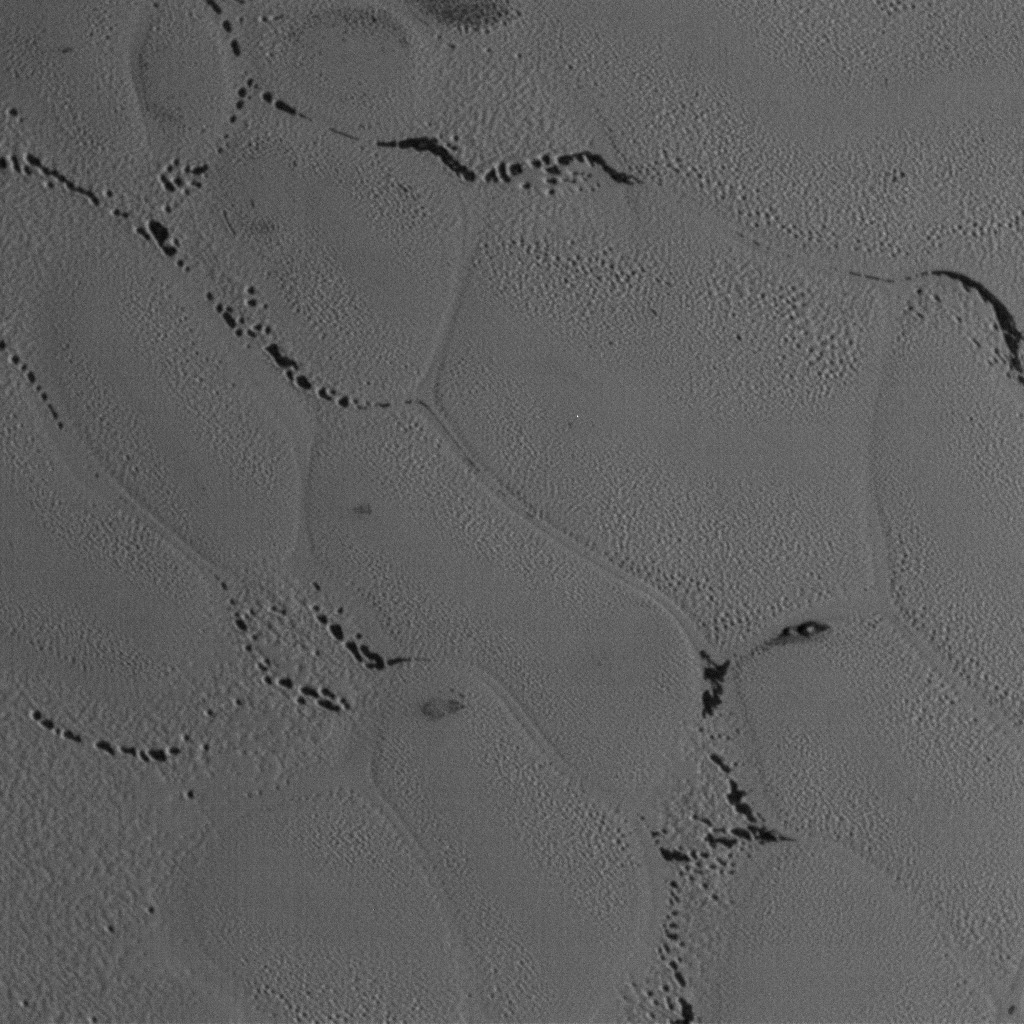
First findings released by New Horizons team... Good article here. Lots of new raw photos, too, like the one of somewhere on Pluto at right. Pluto's surface is weird!
Subscribe to:
Posts (Atom)