
Saturday, February 1, 2014
Pervasive corruption...
Pervasive corruption... This article about the effects of pervasive corruption in Afghanistan is an eye-opener. Most Americans have no experience at all with corruption this profound, and that makes it very hard to really grasp what it does. I have some experience, from New Jersey in my childhood, to southeast Asia in the '70s, to Russia in the '90s and '00s. Russia was particularly bad (and I understand it's considerably worse now, and organized), but it was never as bad as the Afghanistan this article describes...

POV video of Felix Baumgartner's jump...
Useful tools for dealing with progressives...
Useful tools for dealing with progressives... Logical fallacies, listed and explained. I used this to understand something James Taranto wrote :)
One very lucky skydiver...
Friday, January 31, 2014
We're up in Utah...

Yesterday's drive should have taken us about 12 hours, but it ended up being closer to 15 hours. First, we got caught behind a pileup on the I-215, and blew about an hour and a half scooting around that. Then when we got all the way up to Nephi, Utah, we ran into a stretch of I-15 that was completely closed – and that involved a 30 mile detour on country roads in a snowstorm while temperatures hovered at the freezing mark. What fun! The snowy landscapes were fun for us to see, though...
On the way through St. George, UT, we decided to stop for some ice cream. Purely by accident, we stumbled onto Freddy's Frozen Custard & Steakburgers, where we both had a chocolate malt. Yum!
Today we're going to relax and rest a bit, get a feel for what winter up here is really like, and start our explorations...
Wednesday, January 29, 2014
Lea...
Lea... We're at the veterinary hospital with her right now, waiting until her first treatment is finished and we can take her home.
First, some good news: the two most likely places for canine melanoma (the kind of cancer she has) to metastasize outside the mouth are the lymph nodes and the lungs. The first order of business here today was some more sophisticated diagnostics to assess that, and ... she's clear on both fronts. No sign of any movement of the cancer outside her mouth.
After consulting with the oncologist here, we decided to opt for radiation treatment to the areas of her head where there are likely some cancerous cells remaining after the surgery. The side effects of such localized radiation treatments are minimal, and we don't think they're likely to impact Lea's quality of life in any significant way. The most likely outcome of this treatment is that we'll have three to six months more with Lea in good shape ... which is probably not much different than we'd have had even if she was disease-free, given her age.
The oncologist (Dr. Burke) was great at giving us straight answers to our questions, and at providing advice and recommendations. We never felt any pressure to take any particular route, but we felt well-informed to make a good decision.
Debbie had a great idea for this visit: she brought Lea's favorite blanket, the one she spends most nights lying on. Lea is normally very nervous at the vet, trembling in fear – but not today. She even fell asleep a few times while we were waiting...
For now, we just wait for her to come out of that first treatment...
First, some good news: the two most likely places for canine melanoma (the kind of cancer she has) to metastasize outside the mouth are the lymph nodes and the lungs. The first order of business here today was some more sophisticated diagnostics to assess that, and ... she's clear on both fronts. No sign of any movement of the cancer outside her mouth.
After consulting with the oncologist here, we decided to opt for radiation treatment to the areas of her head where there are likely some cancerous cells remaining after the surgery. The side effects of such localized radiation treatments are minimal, and we don't think they're likely to impact Lea's quality of life in any significant way. The most likely outcome of this treatment is that we'll have three to six months more with Lea in good shape ... which is probably not much different than we'd have had even if she was disease-free, given her age.
The oncologist (Dr. Burke) was great at giving us straight answers to our questions, and at providing advice and recommendations. We never felt any pressure to take any particular route, but we felt well-informed to make a good decision.
Debbie had a great idea for this visit: she brought Lea's favorite blanket, the one she spends most nights lying on. Lea is normally very nervous at the vet, trembling in fear – but not today. She even fell asleep a few times while we were waiting...
For now, we just wait for her to come out of that first treatment...
Our economic future...
Our economic future... There's a big debate amongst economists these days about the long term effects of technology – especially automation – on the economy. This topic arises often in discussions of income inequality and high unemployment (especially with respect to low employment ratios). The debate boils down to this: when automation replaces human workers, what happens to those workers?
Many former formerly manual jobs have already been subsumed by automation. Many, many industrial robots are at work in factories all over the world, though they are mostly invisible to people. I've been surprised how many people have no idea these robots exist. But lesser examples abound. If you'd like to see an example, take a close look inside your local McDonald's restaurant someday. Those coffee cups are filled automatically, including sugar and cream. The fries are lifted out of the deep fat automatically, just at the perfect time. In fact, a typical McDonald's has several dozen automated production machines – all replacing a formerly human job.
What has economists debating this now is that we're on the cusp of a lot more such automation, and it's going to start getting a lot more visible to people. Jobs that people tend to think of as not possible to automate are, in fact, going to be automated. Here's one example. Some others that seem likely: truck drivers, mail delivery, and farming – all of which have simply enormous economic efficiencies to be gained, and all of which are in the development pipeline. Not research pipeline, mind you – engineers are working on these products right now, to be delivered within a year or two. Some of them, especially in farming, are actually being delivered right now – there's a good chance that the last apple you ate was picked by machine, for instance.
So what do the apple-pickers do after a machine takes over their job? One camp argues that they will all be able to find jobs such as maintaining or building the robots, after sufficient training. Another camp basically says they're screwed; once automation takes all the jobs that don't require creativity, there will be nothing left for them to do – and there either won't be enough creative jobs, or they won't be capable of doing them.
The first position sounds unreasonably optimistic to me. If 100,000 postal workers are displaced by Googlebots, are they all going to find work oiling and polishing their robot overlords? The economics of that wouldn't work at all, and experience with modern technology would lead one to conclude that the reliability will more resemble that of a 2014 Toyota than a 1935 Ford. And would those postal workers get retrained to work in a creative field? I don't know what your experience with postal workers has been, but on average the ones I've met would have a hard time creating a ham sandwich. I can't see them building the next great iPhone app.
So I'm a bit pessimistic about this, in the sense that I don't see all these people finding satisfying, productive employment. And that sounds like a big problem to me – because what's the alternative? A huge welfare state supported by a creative minority and a robot majority? That would be a very different kind of society than the one I grew up in. How could all those people find fulfillment and happiness? I associate those things with useful work, but clearly not everybody does. Are we going to build a brave new world where the majority of people are content and happy to be living off the productive work of a creative majority? How would such a society work? And in particular, how would a representative democracy work, when the majority are the takers?
I don't have any real answers to these questions. They're just topics for me to worry about. Anybody have any good answers?
Many former formerly manual jobs have already been subsumed by automation. Many, many industrial robots are at work in factories all over the world, though they are mostly invisible to people. I've been surprised how many people have no idea these robots exist. But lesser examples abound. If you'd like to see an example, take a close look inside your local McDonald's restaurant someday. Those coffee cups are filled automatically, including sugar and cream. The fries are lifted out of the deep fat automatically, just at the perfect time. In fact, a typical McDonald's has several dozen automated production machines – all replacing a formerly human job.
What has economists debating this now is that we're on the cusp of a lot more such automation, and it's going to start getting a lot more visible to people. Jobs that people tend to think of as not possible to automate are, in fact, going to be automated. Here's one example. Some others that seem likely: truck drivers, mail delivery, and farming – all of which have simply enormous economic efficiencies to be gained, and all of which are in the development pipeline. Not research pipeline, mind you – engineers are working on these products right now, to be delivered within a year or two. Some of them, especially in farming, are actually being delivered right now – there's a good chance that the last apple you ate was picked by machine, for instance.
So what do the apple-pickers do after a machine takes over their job? One camp argues that they will all be able to find jobs such as maintaining or building the robots, after sufficient training. Another camp basically says they're screwed; once automation takes all the jobs that don't require creativity, there will be nothing left for them to do – and there either won't be enough creative jobs, or they won't be capable of doing them.
The first position sounds unreasonably optimistic to me. If 100,000 postal workers are displaced by Googlebots, are they all going to find work oiling and polishing their robot overlords? The economics of that wouldn't work at all, and experience with modern technology would lead one to conclude that the reliability will more resemble that of a 2014 Toyota than a 1935 Ford. And would those postal workers get retrained to work in a creative field? I don't know what your experience with postal workers has been, but on average the ones I've met would have a hard time creating a ham sandwich. I can't see them building the next great iPhone app.
So I'm a bit pessimistic about this, in the sense that I don't see all these people finding satisfying, productive employment. And that sounds like a big problem to me – because what's the alternative? A huge welfare state supported by a creative minority and a robot majority? That would be a very different kind of society than the one I grew up in. How could all those people find fulfillment and happiness? I associate those things with useful work, but clearly not everybody does. Are we going to build a brave new world where the majority of people are content and happy to be living off the productive work of a creative majority? How would such a society work? And in particular, how would a representative democracy work, when the majority are the takers?
I don't have any real answers to these questions. They're just topics for me to worry about. Anybody have any good answers?
Light blogging alert...
Light blogging alert... I expect to be on the road for the next two weeks, with uncertain Internet access. Tweets will be easier than blog posts, so you may see more activity from me there than on the blog...
Tuesday, January 28, 2014
Photo of the day...

What a government shutdown should look like...
What a government shutdown should look like... Via my lovely bride:

Arizona cowboy whisperer...
Arizona cowboy whisperer... Via reader Simi L., who says “This is one of my three all-time favorite jokes!!”...
Cowboy: 'That your dog?'Indian: 'Yep.'
Cowboy: 'Mind if I speak to him?'
Indian: 'Dog no talk.'
Cowboy: 'Hey dog, how's it going?'
Dog: 'Doin' all right.'
Indian: (Look of shock!)
Cowboy: 'Is this Indian your owner?' (pointing at the Indian...)
Dog: 'Yep.'
Cowboy: 'How's he treating you?'
Dog: 'Real good. He walks me twice a day, feeds me great food and takes me to the lake once a week to play.'
Indian: (Look of total disbelief)
Cowboy: 'Mind if I talk to your horse?'
Indian: 'Horse no talk.'
Cowboy: 'Hey horse, how's it going?'
Horse: 'Cool.'
Indian: (Extreme look of shock!)
Cowboy: 'Is this your owner?' (Pointing to the Indian...)
Horse: 'Yep.'
Cowboy: 'How's he treating you?'
Horse: 'Pretty good, thanks for asking, he rides me, brushes me down often and keeps me in a lean-to to protect me from the weather.'
Indian: (Look of total amazement)
Cowboy: 'Mind if I talk to your sheep?'
Indian: 'Sheep lie.'

Monday, January 27, 2014
Lea...
Lea... Just got back from another vet visit, and this time all the results are hopeful sounding. X-rays of her lungs show no visible tumors. Dr. C. did a fine needle aspiration of one of her lymph nodes, and there's not visible sign of malignancy there (though the slides are now out for cytology). Next step: appointment with an oncologist on Wednesday morning.
Lea continues to look and behave like a completely well, but slightly ancient dog. We took off her “cone of shame” this morning, and she's very happy about that...
Lea continues to look and behave like a completely well, but slightly ancient dog. We took off her “cone of shame” this morning, and she's very happy about that...
Earthquakes: not just a California thing...

I knew about the New Madrid (Missouri) area being a risk, and also the Yellowstone hot spot – but South Carolina? That was a complete surprise to me...
Cats: 1 Toilet Paper: 0...
Schumer: use the IRS to stomp on the Tea Party...
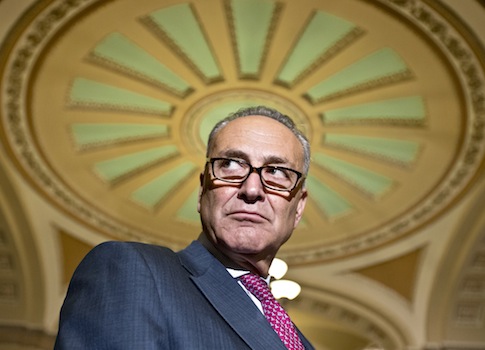
What a knucklehead!
Sunday, January 26, 2014
Cartography has advanced a bit...

Martian dirt...

The image is a “focus merge” product, using several images merged to create a greater depth of field than is possible by purely optical means...
Subscribe to:
Posts (Atom)