Sunday, December 1, 2013

Colion Noir is not happy...

Colion Noir is not happy ...  about the NFL banning a SuperBowl ad promoting self-defense.  He smells hypocrisy.

I watched this just after reading an article about how our combat commanders in Afghanistan now routinely consult with lawyers before sending troops on a mission to kill terrorists.  The progressives would love nothing better than to turn us all into self-loathing milquetoasts begging to be victimized.

But why?

Great moments in government...

Great moments in government...  You'll laugh!  You'll cry!  You'll run to the gun shop for more ammo, and to Home Depot for a good supply of rope...

Another hot-spot to worry about...


Another hot-spot to worry about...  Arthur Herman, writing at Ricochet, has the best summary I've seen about recent events near the Senkaku Islands.  As he says, this is how wars get started in Asia.  More on the Senkakus, map at right...

India's Mars Orbiter is on the way...

India's Mars Orbiter is on the way...  It successfully made it's trans-Mars injection burn, and is now on its way to join the other robotic explorers on and around the red planet...

Google Sky...

Google Sky...  Reader and friend Simon M. pointed me to Google Sky, in case I hadn't seen it – and I had not!  It's like Google Maps, except for the sky instead of the ground.  No directions, though :)  I especially liked the overlays (microwave, infrared, and “historical”).  The historical overlay is a beautiful old drawing of the constellations – and a good way to find them!  Certain particularly interesting parts of the sky (and certain objects as well) can be drilled down into much further than most of the sky.  Check out the Orion constellation for some examples...

ObamaCare debacle update...

ObamaCare debacle update...  Because.  Just because...

Key Metric For Obamacare Site: Democrats’ Blood Pressure. Yup, that's exactly right.  What politician actually cares if the damned thing really works? All that matters is whether the plebes stop whining...

No reasonable expectation of privacy?  I linked to an article about this a few weeks ago; here's the actual testimony.  The testimony mentions HIPAA; there's information about that at the link.  If enough Americans actually read or listened to the testimony in these hearings, we'd be seeing active discussions of impeachment.  Via my mom...

Hard sell – going door-to-door with ObamaCare “cheerleaders.”

On “improvements” being rolled out today – the best summary I've seen.

ObamaCare's plans are worse.  That's not exactly news at this point, but this Wall Street Journal is brimming with good details...

In the trenches with the ObamaCare army.  More good background.

Poor wittle NPR reporter is frustrated by White House opacity.  Wait – did I say NPR?

Woman tries to do what That One asked us to do: talk about ObamaCare at our Thanksgiving dinner.  Hilarity ensues.

Pater: The big trip “out west.”

Pater: The big trip “out west.”   The photo at right is from another trip out west: July 12, 2005, when my dad was with Debbie and I at the top of Corkscrew Gulch, with Red Mountain behind him, in the San Juan Mountains of Colorado.
The big trip “out west.”

I mentioned one incident on this trip in an earlier post; now I'd like to share a few other memories I have of that trip.   Sadly, my memories of that adventure are disjoint and faded – my only excuse is that these events occurred over 50 years ago and time has torn up and scratched over the pages of my memory.  In addition, my family (all of us!) made later trips, and it's possible I've confused some of the memories.  But for what it's worth, here's what I remember...

My father, my brother Scott, and I piled into my dad's old black 1948 Dodge and headed for an epic adventure “out west”.  Scott and I were far too young to have any sense at all of the geography of our travels; we just knew that we would be gone for several weeks, going a long, long way, and seeing places we'd never before seen.  What more could a little kid want?

We took an old Army surplus tent, sleeping bags, some blankets, a few pots and pans, an ancient two-burner Coleman “white gas” stove,  a few changes of clothes, and not much else.  I was too young to know anything about money, but for some reason it's stuck in my head that my dad carried very little cash with him – not because he planned to pay with credit cards (we didn't have any of those), but because he simply didn't have much money.  One thing I do remember that supports that idea: we traveled extremely frugally.  I recall my dad being very conscious of his fuel use (even though gasoline was under 20 cents a gallon), and I remember that when shopping in grocery stores for our food my dad was always looking for the most “bang for the buck.”  Beans figured prominently in our diet.  We camped almost every night, and mostly in undeveloped (free) National Forest campgrounds or just out in the woods somewhere with no facilities at all.  The only exceptions were a couple of nights when we stayed at the home of someone he knew.

The rest of my memories are all centered around particular places or events.  I do not recall at all the route we took on our trip.  My younger readers will have trouble imagining this, but back in those days there were no Interstate highways, and there were lots of unpaved roads.  Some of those unpaved roads were oiled dirt, something you rarely see these days because of environmental concerns, but back then they were common.  Most of the unpaved roads, though, were plain old dusty dirt roads.  In certain parts of the country, if it rained often, they might be complete with deep ruts.  I remember many hours on roads that varied from nicely paved U.S. highways to rutted, dusty dirt roads.  Those roads, for a cross-country trip, were a very different experience than the Interstate highways – of course they were much slower, but that's not what I mean.  Traveling on those roads, you actually felt like you were part of the countryside or town you were traveling through.  You could stop and get out to take a look at something anytime you wanted to (and we did that often!).  Taking an Interstate is more like being at 35,000 feet in an airliner: you're observing from a distance, not so much traveling through.  Debbie and I to this day travel as much as we can on such roads, for exactly the those reasons.

One of the places we traveled to on that trip was to a nursery in eastern Missouri, near the town of Festus.  My dad had corresponded with the nurseryman, and had arranged to meet him and see his stock.  I remember my dad collecting some cuttings, but not much else about the nursery visit.  The nurseryman's wife made us a fine meal, an early dinner, which we greatly appreciated, as at that point we'd been on the road for several days of very frugal eating.  Also, I should note that while my dad had some truly admirable abilities, his cooking was not amongst them.  We attacked that meal with great gusto, to the delight of that nurseryman's wife.  She gave us a big pile of leftovers to take with us, too.  The nurseryman told my dad about some high bluffs, just south of town, that we could camp on.  There were no facilities there, but he said we could easily find a place to pitch our tent with a fine view over the Mississippi River, whose western banks lapped up against the bottoms of the bluffs.  We did exactly that, far from any highway noise (though I do recall quite a bit of mosquito noise – those little buggers were feasting on us).  We watched the running lights of barges and tugs going by below us; we heard the sailors hollering at each other (with my dad wincing at some of their language).

Many, many years later – around 2007 – I made another personal connection with the town of Festus – one of those bizarre coincidences that life is full of.  I had started collecting slide rules, and focused on a brand called “Acu-Rule” that I liked for its uniquely American characteristics.  As I researched the brand, I discovered that the original company making them was called “Festus” – and that the factory for them was at one time the largest business in town.  I later made contact with an elderly gentlemen there named George Keane who was sort of an unofficial historian for the company.  He connected me with some people who actually worked in the factory before it went out of business, and through that connection I acquired a fine collection of brand-new Acu-Rule models from a former worker's private stash...

In the morning, we ate all those leftovers and headed for our next destination: the Ozark Mountains in southwestern Missouri.  I was fascinated by the countryside we were traveling through – so much water, and beautiful, exotic-looking forests.  Scott and I were eagerly anticipating an adventure that lay ahead of us, thanks to my dad's nurseryman friend.  When he'd heard we were going to the Ozarks, he told my dad that we just had to take a “jon boat” down the river, and he had a friend there who could help.  The nurseryman made a phone call to his friend and the unexpected adventure was arranged.  These days, I read that such float trips are a large, organized business.  Back then it was just locals finding a way to make a little money with their boats and pickups.  They would pile their jon boat in the back of their pickup with whatever gear you had, then stuff you all in the front seat of their pickup and give you a ride to somewhere a few miles upstream along one of the many rivers there.  You'd all pile out of the truck, slip the boat into the river, and float slowly downstream with the current until you got back to where you'd started.

That's exactly what we did.  We met the friendly fellow the nurseryman had called on our behalf in front of his slightly decrepit-looking cottage on the banks of a river (I'm not certain which river this was).  He looked like one of the corn-pone characters from Li'l Abner, and had a thick accent.  We loved him at first sight.  He had an old, beat-up wooden jon boat and an even more beat-up, rusty pickup.  He and my dad loaded the jon boat up, we threw a rucksack with food in the back, and Scott and I both got on my dad's lap in the passenger side of the pickup.  We drove for quite a while – perhaps an hour – mostly over narrow, rough dirt roads through the woods on one side of the river.  Finally we arrived at a place where the road went over a concrete ford that crossed the river, and we unloaded the jon boat and took off.

Within just a few minutes, we were alone on a magical river.  I remember the quiet – the only sounds were insects, birds, and the occasional light breeze stirring the tree leaves.  The river varied in width, but probably averaged 25 or 30 feet wide, quite small.  The current flowed slowly, at the pace of someone walking slowly, perhaps one mile an hour.  In many places, trees grew completely over the river and we were floating through a green tunnel, brightly lit from above but full of diffuse greenish light below.  An occasional sunbeam found a hole in the canopy, making a beam like a flashlight, full of motes and bugs.  Once in a while a fish would surface to catch a bug.  We used the paddles just to keep the boat away from the shoreline (mostly tree roots) and to aim it – the current did all the real work.  Occasionally we'd pass a ramshackle cabin, and wave at the people we saw.  They always waved back, with a friendly smile or shout out.  My dad was entranced – this was exactly the kind of natural beauty that he most enjoyed, and he was drinking it all in.  We spent most of the day on the river, yet when the Li'l Abner character's cabin came back into sight (along with our car!), we were all a little sad.

That's a day I'd love to relive.

Later on that trip, we ended up in Big Bend National Park, in southwestern Texas.  Two memories from that visit stand out.  The first one was during the day, at the peak of the afternoon heat.  We were walking around a fossil bed.  I don't actually remember the fossils at all, but I do remember my dad thinking it was amazing.  What I remember is my dad saying that “it was hot enough to fry an egg on the fender” – and Scott and I wanted him to do it.  So he did!  He washed off a piece of the fender that was level, put butter on it, and fried an egg.  That was one ugly fried egg – more scrambled – but it did get fried, much to our delight as we ate it.  The other memory is from a morning, camped on a steep hill overlooking the Rio Bravo.  We got up before sunrise, and my dad made us breakfast as dawn broke.  Before we ate, he wanted us to wash our hands – and that posed a challenge.  We were just camped in the meadow, not in a campground, and there were no facilities there, not even water.  We didn't have much water in containers.  So my dad told us to wash our hands “like the Indians did.”  According to him, that meant finding some clean sand, scrubbing our hands with it, then “rinsing” them off with the dew collected on the tall grass all around us.  For some reason this really tickled my little kid self's fancy, and I did it several times, just for fun.  Now I have a memory of myself, standing on a knoll above our little campsite, nose full of the intense scents of the desert, looking down at my dad working on the stove and behind him the broad expanse of rolling hills, desert, and Rio Bravo below, with the sun rising off to my left.  A wonderful memory scene...

I only have a few other memories of that trip.  One is of driving through miles and miles of southern yellow pine forest, with Spanish moss hanging down, in high humidity.  That was most likely northern Mississippi or Alabama, judging from more recent experiences, though I'm not sure.  When I asked my dad about it, many years later, he didn't remember being in the Deep South, so I'm not really sure where we were.  Another memory is of an oilfield in Texas, with swinging-arm pumps operating all around us.  We walked through the field, fascinated by the mechanical connections (through steel cables) that operated several pumps from a single central pump that had a motor.  I also remember a nursery in Illinois that had quite a bit of American holly growing in sandy soil, which my dad was quite surprised about – I don't think he believed there was any nursery that had as many holly plants as his, but this one was clearly much larger.  The proprietor was a businessman, not a plant lover, and my dad was full of scorn for him after we left.  I remember the scorn more than the nursery :)

There's also one meal that has somehow gotten stuck in my memory.  I've no idea where we where (though Oklahoma comes vaguely to mind), but we had just visited a store that had some bargain food that my dad was quite excited about.  We had scored several large tins of sardines in mustard sauce, a gallon of “real” apple juice, a loaf of fresh-baked bread (still warm), a nice chunk of strong-smelling cheese, and some beautiful ground chuck that had been ground right in front of us.  My dad couldn't wait to do our usual thing of finding a pretty outdoors place to eat, as he wanted to get to that bread quickly.  So we stopped at the sort of place that normally we'd avoid: the town park.  This was quite a small town, and they had a correspondingly small and simple town park: a few trees, some grass, and a couple picnic tables.  We took over one of those tables and proceeded to have a feast that most people would likely consider odd, though we didn't.  We ate the hamburger raw, with just a little salt on it, with chunks of bread as accompaniment.  The apple juice was our tipple, and the cheese and sardines our desert.  A few passers-by gave us some odd looks, but we didn't care – we were too busy stuffing our faces with this delicious food.  It was far better fare than our usual meal on that trip.  Knowing my dad, I'm sure that was far from the oddest meal on our trip, but for some reason (perhaps the setting in the town park) it stuck in my memory.

Looking back on that trip, I'm in awe of my dad's courage (or insanity!) in just taking off on such a trip with two small boys, hardly any money, a car that could break down at any moment, and absolutely no idea where we would spend our nights.  He loved to travel, so the trip was guaranteed to be rewarding for him – but he chose to share it with us, and he used the experience to try to instill in us a love of the outdoors, of nature in general, of plants in particular, and most especially an appreciation for natural beauty.  I'm certain those were actually things he intended, and in those he succeeded.  But he also taught some other lessons with that trip, lessons that I've carried with my all my life, that I don't think he actually intended.  Probably the one most important to my own life was this: that there are profound pleasures that life makes available to anyone, no matter how rich or poor, educated or ignorant.  Anyone can be awed by a sunset, or float down a river, lay on your back in the grass under an apple tree in bloom, listen to the crickets on a summer night, slurp ice cold water from a spring, wash your hands in dew-soaked grass, marvel at the Milky Way on a night in the desert, or breathe deeply the aroma of lupine blooming on a Texas roadside.  It's all there for anyone at all to enjoy, if you'll just take the time to do so...

Saturday, November 30, 2013

Even in California...

Even in California ... it's possible for a liberal to get mugged by reality.  Just ask the Mayor of San Jose – though I should note that the political betting is that he's going to lose his fight, and the unions will win.  That would guarantee the end of San Jose as a fiscally viable city, and hasten it along the path to bankruptcy.  But since when did any pesky reality like that ever divert a greedy, tax-swilling union from running headlong at an epic fail?

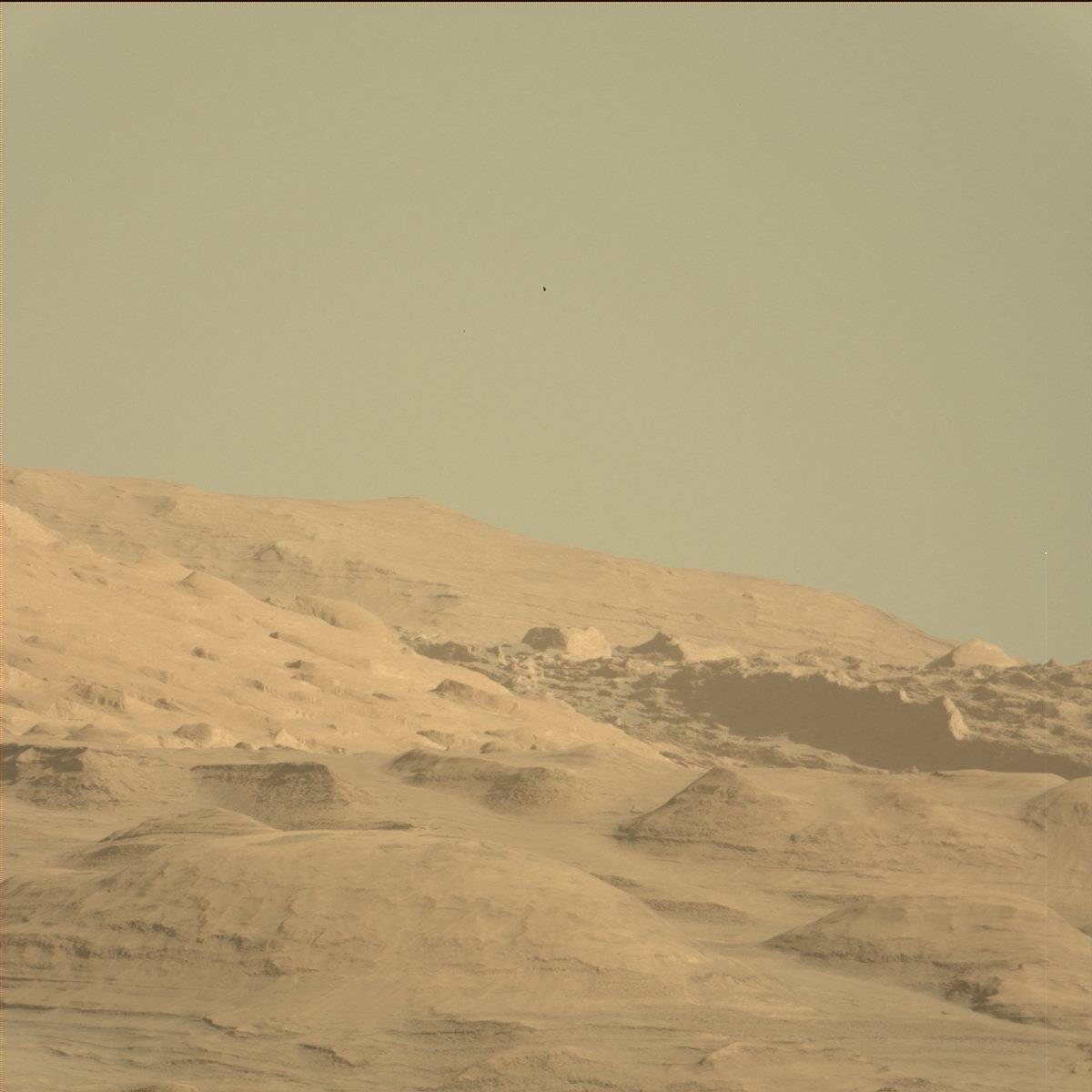
Some interesting Martian terrain...

Some interesting Martian terrain...  Curiosity is getting into more rugged terrain as it climbs the flanks of Mount Sharp...

Iran deal update...

Iran deal update...   I'm not entirely sure it's another debacle, so for now I'll keep calling it a “deal” – which, come to think of it, it is.  But for whom?  That's the interesting question...

Surrender in Geneva.  The inimitable Mark Steyn:
In Geneva, the participants came to the talks with different goals: The Americans and Europeans wanted an agreement; the Iranians wanted nukes. Each party got what it came for.
Comparisons with Munich are rampant.  I saw the photoshop at right and was just stunned – somehow the photo is much more powerful than all the words about the Iran deal I've read.

I'm afraid, though, that this photo won't mean much to all too many Americans, as they don't know enough history to recognize this as a photoshop of the famous photo of Neville Chamberlain (original at left) giving his infamous “Peace for our time” speech after making a disastrous deal with Hitler.  Shortly afterwards, World War II erupted, and the deal was recognized as being the enabling moment that allowed Hitler's evil to roll over Europe.

Is That One's deal with Iran the equivalent?  Certainly not the direct equivalent; there are too many relevant and significant differences between Hitler and his Germany, and the mad mullahs and their Iran.  But there are enough similarities to be concerning.  The very idea of the mad mullahs having a collection of nuclear weapons at their disposal is one that I find frightening – and I live half a world away.  Just imagine how the countries in their neighborhood feel about that!

Some cartoons from the week:


ObamaCare debacle update...

ObamaCare debacle update...  Yes, even on the weekends...

Breaking up with healthcare.gov is hard to do.  It's like Hotel California – you can check in, but you can't check out!

Welcome to the klugeocracy.  Michael Barone says That One “lacks that knack” ... surely the understatement of the year!

Believing his own bullshit.  Neo-Neocon does some armchair analysis...

Some good cartoons from the week:
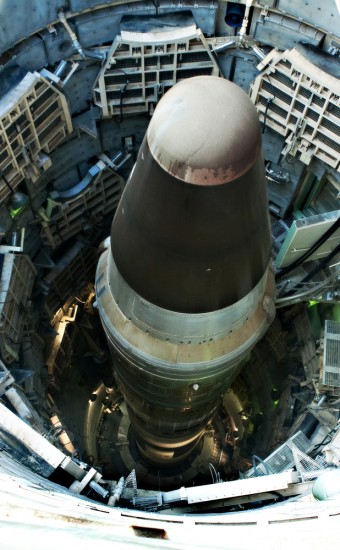

Unfortunately, this is all too believable...

Unfortunately, this is all too believable...  For almost 20 years, the “code” needed to launch our nation's nuclear-tipped ICBM arsenal was: 00000000.  Seriously.

I think anyone who, like me, was in the military and had any exposure to nuclear weapons prior to the great nuke lockdown of 1977 would be completely unsurprised by this.  The ship I served on carried nuclear weapons, and though there was no reason for me to ever get near one, I was able to do so on several occasions.  In my case, it was just simple curiosity – I wanted to know what they looked like (not very impressive, actually). 

Security in general was ludicrously lax on the ship.  Anyone at all could enter the radio room, which routinely carried “Top Secret” traffic – I went in there many times to repair equipment without having the appropriate security clearance, and nobody ever questioned my presence.  Similarly, the sonar room, electronic warfare area, and the SWC (Ship's Weapons Controller) station in CIC had classified material – some of it quite sensitive – lying about, and again I was frequently in those areas unsupervised and without appropriate clearance.  I even spent an interesting afternoon with one of the sonarmen going through the acoustic signature analyzer and data!

Pater: A little imagination and play...

Pater: A little imagination and play...  At right, my dad on my last visit with him: August 25, 2013.  He's tucking into a plate of scrapple (a favorite breakfast for both he and I).  He hated cornmeal mush – a staple in his family during the depression – but somehow he never caught onto the fact that scrapple is basically slightly dolled-up cornmeal mush :)  Also in front of him: a slice of my mom's world-class homemade apple pie and a bag of “Liz’s cookies” (recipe originally from Mrs. Philbrook on Matinicus Island).  My mom is clutching his hand...
A little imagination and play...

This morning as I walked our dogs in the pre-dawn dark, I was treated to a beautiful crescent moon.  The dark part was brightly lit with earthshine, a phenomenon I always enjoyed seeing.  These days there are many things that remind me of my dad, and this was yet another – he's the first person who ever explained why the dark part of the moon was sometimes lit up.  But he didn't explain it the way Wikipedia does...

To make sense of this, you'll need a little context.  My family, of course, knows all this very well – but if you never had the opportunity to meet my dad, you might be a bit surprised by it...

My dad would frequently say that he was “still a kid”, and in some important ways he was right.  He never really completely grew up.  In particular, he had a child's sense of imagination – most especially, a child's willingness to suspend disbelief and reality.  His imagination manifested in many ways, but the one I remember most vividly was his story-telling.  When we kids were young, he delighted in spinning the most amazing extemporaneous yarns that could keep us enthralled for hours.  Sometimes these stories began and ended on one evening's tale; sometimes they were “serialized” and went on for weeks.  The characters in the stories could be people, talking frogs, trees that could walk around (Ents!), anything at all.  The stories always had a coherent (though often meandering) plot, and occasionally had a lesson or two, but mostly they were purely for fun.  He loved to delight us with a plot twist (“the momma frog hopped into her pond, and accidentally stepped on a snapping turtle!”).  I loved those stories...

So how does earthshine on the moon come into it?  Well, when I was perhaps 5 or 6, long before I understood what the moon actually was, my dad, my brother Scott, and I were camping in the hills of West Virginia.  It was a fine, clear night, so we just threw our sleeping bags on a tarp and sacked out under the moon and stars.  On that night, there was a crescent moon, and there was bright earthshine.  I asked my dad about it, and he unhesitatingly spun a story that went like this:

“It's the light bulbs.  You probably think that light bulbs are made in a factory, but actually they are grown on farms, on the moon.  What you see now is most of the moon covered with baby light bulbs that can only glow dimly.  When they grow up, they get really bright - and that’s the bright part of the moon.  When the crop is ready for harvest, the whole moon will be bright!”

Now, looking back, I have no idea if my dad actually knew what earthshine was, so I don't know if he could have given me the correct explanation.  But he did give me an explanation I could understand – and believe! –  and I did believe it, for several years.

That explanatory story was nothing unusual – my dad was full of them, and many have become family legends.  He was clearly having fun with them, always pushing the envelope of what our kid selves would believe.  He had an iron-clad rule that we could invoke anytime we wanted to: if we asked him “Is that true?”, he would answer honestly.  But very often it never occurred to us to ask...

One such explanatory story that has become family legend has to do with cows.  The story started out as an explanation for where chocolate milk came from (brown cows, of course!).  Then the story grew to include an explanation for buttermilk (cows that hopped instead of walking!), and milkshakes (cows that ran in tight circles around the tops of frozen Swiss mountains!).  Somewhere along the line, we learned about the special Swiss cows that were bred to have shorter legs on one side, so they could stand straight up on the steep alpine meadows (these came in left-handed and right-handed varieties).  The entire edifice of cow explanations came tumbling down when he tried the milkshake explanation on us – one of the kids asked “Is that true?” and he admitted that it was not.  That led us to question some things we had previously been convinced were true, like chocolate milk coming from brown cows :)

This sort of story-telling was absolutely routine with my dad.  He always did it extemporaneously, seamlessly, and so full of detail that we found it utterly plausible.  It was surprisingly rare for us to catch him at first; generally we only tumbled to his story when he tried to push it too far...

His verbal imagination extended to word play, too.  He was notorious for his awful puns, which he could carry on with ad nauseum.  When he got together with a friend who similarly enjoyed horrible puns, it could be unbearable for us to be around them :)  But it wasn't just puns, thankfully.  He came up with some very creative spoonerisms that are now baked into the family's vocabulary: “mocalate chilk”, “chirds burping”, and “flutterby” are some favorites.  He invented whimsical terms, some of which I still use today: “cackleberries” (for eggs), “moo juice” (for milk), and “sparrow grass” (for asparagus).

It wasn't just word play that my dad enjoyed, either.  He liked to play in many ways.  We played lots of games as a kid.  He taught me how to play chess at quite a young age, and was always a ruthless competitor – there was no mollycoddling from him!  My whole family played lots of card games and board games: Monopoly, Scrabble, Boggle, and Krypto were all favorites.  Many of these, though not all, had an educational component to them – I don't know whether that was a deliberate strategy to interest us in learning, or if my parents just thought those games were fun.  Both are equally plausible.

And my dad liked physical play with little kids, too – which delighted us, as he was the only adult we knew who did so.  He loved to engage in rough-and-tumble play, down on the ground at our level.  He'd let us climb all over him, ride him like a pony, wrestle with him, and so on.  He'd tickle us (he loved to see us laugh), and tease us.  Often in the middle of that play, he'd give us a big hug and hold us tight for a moment.

Many years afterward, when I was on a long, long cruise on a Navy ship, I had a conversation about fathers with three of my crewmates.  We were all playing a game of spades, trying to make the boring hours at sea at least a little more engaging.  Somehow we got into a conversation about our fathers.  This sort of conversation didn't happen often amongst groups of sailors, as the general habit there was to make ruthless use of every nugget of discovered fact to mercilessly tease and ridicule someone.  This tended to inhibit personal revelations :)  But on that day, with those four people, something made them open up a bit; a sort of mutual trust, I think.  The first guy to talk about his father described an alcoholic dad who routinely beat up his wife and smacked the kids around.  His mom ran away, taking the kids with her to live with her mother – whose husband had also been a drunk.  The second guy to talk described his dad in wistful tones, as someone he really didn't know.  His dad was always working or out with his friends, and he'd never really spent much time with him.  The third guy, who came from the projects in Chicago, had no idea who his father was – and his mother didn't, either.  Then it was my turn.  I talked about the traveling, camping, and hiking we kids did with my mom and dad.  The others wanted to hear more.  There was a sort of hungry look on their faces that I'll never forget.  Our card game was forgotten.  I ended up talking about my parents and childhood for hours that day, something I had never done before (though I have many times since then!).  But here's the point of this whole paragraph: the thing those guys wanted to hear about the most was my dad's stories and the way he played with us.  They leaned over our little card table, completely focused on what they were hearing, smiling at the very idea of a dad like mine...

Friday, November 29, 2013

Pater: food is important...

Pater: food is important...  My dad is at center in the photo, at my family's Thanksgiving dinner in 2012.  My sister Holly is at left, my brother Scott at right.  My dad's focus on the food was totally normal for him...
Food is important...

It's the family joke, my dad's obsession with food.  There were many manifestations of it, but probably the one that gave all of us the most amusement was this one: when we left to go on any trip longer than about an hour, you could be certain that within a few minutes of leaving, my dad would be wondering out loud where and when we were going to eat.  On this score he was utterly reliable.  Nobody in my family would ever take a bet on him forgetting.

On one of the trips I took with my dad in the '90s, we left our home in Chula Vista early in the morning.  Debbie (my wife) and I had a private bet going on this food planning habit of his – not on whether he'd ask about when we're eating, but rather how long it would take him to do so.  I bet that he'd ask before we got to the freeway, some 8 blocks from our home.  Debbie thought he wouldn't ask until we were zooming northward on I-805.  I won – he asked just one block from our house :)  That wasn't really fair of me, though, as I knew that was a sucker bet.

But my dad's food obsession went much deeper than that...

My dad had traveled to nearly every corner of the U.S., and much of Canada as well.  Some parts he visited regularly.  In all of those places, he had uncovered good places to buy unusual kinds of (good!) food, or good little eateries of one kind or another.  Even when I was quite young and we didn't have much money for such extravagances, he still knew places to go.  I think that his mental map of anyplace was marked not with borders, towns, and roads, but rather with places to get food.

One example from my youth that pops right to mind: the part of Pennsylvania between Lancaster and Trenton.  We made the trek to Lancaster regularly in the early '60s, because my dad had discovered that he could by tobacco stems very cheaply at the cigarette factory there, and they made good mulch.  We'd go out there with our truck and they'd pile the stems on as high as they could.  Back then, those tobacco stems were waste material so far as the tobacco companies were concerned.  Later, they started grinding up the stems to use in the cigarettes, so that source went away.

Lancaster, Pennsylvania is the heart of “Pennsylvania Dutch” country, where the Amish and Mennonite farmers have some of the most productive farms in the world – along with some of the best cooks.  We visited the Lancaster Farmer's Market – then genuinely a farmer's market – and bought ourselves several kinds of delicacies.  I particularly remember cup cheese on fresh-baked bread, sausages and other meats, and apple pies.  In those days you could buy a gut-busting lunch there for very little money – perfect for us.  Not far from Lancaster, along the road home, some Amish women had a smorgasbord restaurant where they made (amongst other delicacies) the best turkey corn soup I've ever had.  They just loved my dad, I think because of his deep and completely transparent appreciation of their fine food.  We stopped there for a big jar of that turkey corn soup just about every trip out that way – and those fine ladies would slip little treats of one kind or another to any of us kids who happened to be along.

My dad was legendary for the sheer quantity of food he could eat.  My mom attributed it, jokingly, to his “hollow leg”.  While that certainly wasn't the actual physical source of his capacity, it was a decently accurate estimation of it.  If, dear reader, you never met my dad, then you should know that he wasn't a big man.  Far from it, in fact.  For most of his life, his weight hovered near 130 pounds.  He was 5'8" or 5'9" tall – not exactly short, but certainly not tall.  He was intensely physical, with a wiry physique that was stronger than his appearance would suggest, and he had the endurance of a marathon runner.  He routinely did hard physical work all day long for weeks on end.  And oh, my, could the man eat!  When people first saw him eat a meal, it was absolutely routine for their eyes to get big and round, their jaws to hang slackly, and for them to exclaim “Tom, where are you putting that?!?”  His alimentary canal capacity really was remarkable.

On our trip together to Lassen National Park, in 2007, we looked for a nice little restaurant to have a few good meals in (mostly we ate food I cooked in our cabin).  There were many kinds of restaurants that my dad would declare he didn't like, such as Italian or Chinese restaurants.  My family had learned to ignore these proclamations, as we had a long list of counter-examples.  In that spirit, I picked a Chinese restaurant one evening: Happy Garden in Chester, California (and I see it's still there!).  On the way in, my dad was wondering out loud if he'd survive the experience, and made a point of looking for hearses in the parking lot.  On the way out, he asked when we could come back.  What made the difference?  The soup he'd had there: a delightful, vegetable-stuffed version of wor wonton mein that was served in an enormous ceramic bowl intended for a family to share.  We ate the entire bowl (about 3/4 to my dad, 1/4 to me), and my dad asked the waiter if we could get some more.  That brought the cook out, after the waiter relayed the incredible story of the man who ate a family-sized bowl of soup and then wanted more.  The cook and waiter were amazed – a common reaction to first sighting of my dad's eating – but that sort of thing was a routine experience for anyone who traveled with him.  We went back there several times on that trip, especially when my dad's first question each morning was “Are we driving through Chester today?”

If I had to guess what kind of food my dad enjoyed the most, I'd have to say it would have been seafood.  Good, plentiful, plainly cooked seafood.  There was a place in southern New Jersey that made a very simple oyster stew that he'd happily drive a couple of hours to enjoy.  Another place on the Maine coast where he loved the crab, clams, and lobster.  On his visits with us in San Diego, if we planned to go out to eat, seafood restaurants would be at the top of his list.  On a couple of his visits, when I could afford to do so, we took him (and once, my mom, too!) to Anthony's old “Star of the Sea” restaurant.  Those meals he remembered often.

As for the source of his food obsession, I'm not sure.  Some have hypothesized his Depression-era childhood, which included some pretty awful stretches of food.  But I think not, as his brothers lived through that as well, and they didn't share his food obsession.  I suspect several things contributed, possibly including the bad Depression-era food.  One was simply his physicality – it would have taken a lot of fuel to keep up that level of exercise, day in and day out.  Another contributing factor might be his culinary experiences in Italy, during the war – especially with seafood.  Another might be that he married a most excellent cook: my family, though we didn't have much money, ate meals that were routinely excellent, and on special days, spectacular.  And I think there might be yet another contributor: my dad had a fine sense and appreciation of natural beauty.  That was very evident in the joy he got from flowers, beautiful plants, and scenic vistas.  I think perhaps he thought of good food as another kind of natural beauty.  His preferences were definitely for simple, wholesome foods with a beautiful flavor.

I'll close this post with one last memory of my dad and food.  This memory was from our trip to the Big Sur in 2005.  We were close to Monterey, justly famous for its seafood restaurants, and we went there one night to have ourselves a good meal as a special treat on the night before we left to come back home.  I've forgotten the name of the restaurant, but it was along a pier downtown, and was Italian.  We went in, were seated, and started examining the menu (an activity that was itself a source of joy for my dad :).  They had cioppino, a seafood stew that my dad really liked, but only if it was made “right”.  He started asking our waitress some specific questions about what was in their cioppino and how it was cooked, but she didn't know the answers, so she called out the chef. 

The chef was a short, stout Portuguese fellow with a thick accent, and at first he looked a little annoyed that someone might doubt his food.  But somewhere during that conversation, the two of them started to really enjoy it.  I think the chef sensed a kindred spirit, and they had quite a long talk about the misery of overdone clams, the sadness of tough squid, and the criminality of a cioppino made with insufficient shellfish.  That chef promised my dad the best cioppino he'd ever had – and he delivered.  The joy and anticipation on my dad's face when that enormous bowl of cioppino was placed on our table was truly something to behold; the memory still instantly brings a smile to me.  I'd give anything to have a photo of that moment.  Of course he ate the entire thing; at that point he would have hurt himself to make sure there wasn't a single scrap left.  After I'd paid the check and we were getting ready to leave, the chef came out with a huge leftover box filled with more cioppino – he apologized (with a huge grin) for not having a big enough bowl for my dad, and handed the leftover box to him with a flourish.  My dad ate the leftover cioppino for breakfast the next morning, before we left for the long drive home, and swore that it was the best breakfast he'd ever had...

“Some sphincter in a suit.”

“Some sphincter in a suit.”  How software companies die, a brilliant piece from 1995 by that I've never seen before.  It's by, of all people, science fiction author Orson Scott Card.  It's absolutely spot on.  His conclusion:
The shock is greater for the coder, though. He suddenly finds that alien creatures control his life. Meetings, Schedules, Reports. And now someone demands that he PLAN all his programming and then stick to the plan, never improving, never tweaking, and never, never touching some other team's code. The lousy young programmer who once worshiped him is now his tyrannical boss, a position he got because he played golf with some sphincter in a suit. The hive has been ruined. The best coders leave. And the marketers, comfortable now because they're surrounded by power neckties and they have things under control, are baffled that each new iteration of their software loses market share as the code bloats and the bugs proliferate.

Got to get some better packaging. Yeah, that's it.
Awesome.

The FTC goes after piano teachers...

The FTC goes after piano teachers...   Kimberley Strassel details this outrage, which, sadly, is just one of many such outrages.

Our Founding Fathers were so right to fear the emergence of federal bureaucracies...

Which do you think is more persuasive?

Which do you think is more persuasive?  How do you convince an abusive parent to stay hands off the kids?

One choice would be to assign a union worker with the physical presence of a baby bunny to the case, then give them a high caseload and enormous amounts of paperwork so that they might schedule a visit to the child's home every couple of months.

Another choice would be to assign a couple of tough bikers who get right in the abuser's face and promise to cut off his balls, then use him for a kitty toy in the tiger enclosure at the Wild Animal Park – and then show up twice a week to make sure things are ok.

I know where I'd place my bet...

Government – is there anything it can do well?

Issa's IRS investigation continues...

Issa's IRS investigation continues...  The latest to testify is the IRS' Chief Counsel, who conveniently can't seem to remember anything of relevance.  That One has stuffed his administration with ruthless, shameless, and downright un-American Alinskyite progressives – rather frightening to this citizen...

Should I laugh or cry?

Should I laugh or cry?  It's hard to do both at the same time.  George Will has a Thanksgiving roundup of “turkeys” from 2013.  His lede:
We are tomorrow’s past, so this Thanksgiving give thanks for 2013, a year the future might study more for amusement than for edification.
It's a good read, but will leave you with decidedly mixed emotions...

Coincidence?

Coincidence?  Or jackboot grinding a citizen's face into the dirt?  With That One's administration, unfortunately, one must be suspicious...