It's undeniably spring in Paradise ... and a much earlier spring than even last year. As I write this, our willow's leaves are out, about 3/4" long. The roses along the canal just started popping leaves from their buds today. Several other trees in our yard look like they're ready to pop into leaf as well. Looking back on my blog posts from last year, that's just about the same state we were in on April 12. That means we're almost a month earlier this year, which validates all the locals' astonishment at our mild winter and early spring. Temperatures today were in the high 60s; it was just lovely outside.
I took possession of this house last April 3rd, just under a year ago. Though sometimes it seems like we're making slow progress, when I think back to what this house was like when I moved in and started “camping”, it's obvious we've actually accomplished quite a bit this past year...

Tuesday, March 17, 2015


By popular demand...
By popular demand... Well, ok, one reader asked – but that's a significant percentage of my readers! Here's a photo of the hardware card I wrote about yesterday, and also a photo of the table saw in its partly-assembled current state...


Monday, March 16, 2015
“Almost immediately, it became clear that we were all going to hate each other.”
“Almost immediately, it became clear that we were all going to hate each other.” The subject is “mom dates”.
Geek: unexpectedly difficult...
Geek: unexpectedly difficult... Every once in a while I've come across a problem that turns out to be far more difficult than it first appears. Most recently this happened to me with the need to produce GUIDs. I accidentally observed a GUID collision (that is, identical GUIDs being generated multiple times) in the system I was working on (which shall remain unnamed). That's the sort of thing that just isn't supposed to happen, so it got my attention. I tracked down the source of the collision by examining the algorithm used. It turns out that collisions were happening when multiple processes with identical GUID generators were being run on the same server – as we were doing in our datacenter, with some servers having over a hundred such processes. Under those conditions, collisions were likely to happen several times a day – very bad indeed. Fixing that was challenging, especially fixing it in a performant way.
This morning I stumbled across a discussion about another such problem: uniformly distributing random floats in [0,1] given a source of random bits. I knew, vaguely, that it wasn't exactly trivial – but it's definitely more challenging than I'd have guessed!
This morning I stumbled across a discussion about another such problem: uniformly distributing random floats in [0,1] given a source of random bits. I knew, vaguely, that it wasn't exactly trivial – but it's definitely more challenging than I'd have guessed!
Geek: fast, easy jump consistent hash...
Geek: fast, easy jump consistent hash... Next time I have a sharding problem, I'd like to try this. But now that I've retired, why on earth would sharding ever raise its head again?
Memory lane, geek edition...
Memory lane, geek edition... I stumbled across this 1999 paper on data structures for representing text sequences in editors. I love the idea of using a simulator to rank the data structure approaches!
All of the data structures it discusses are far older than that paper, and I've implemented many of them. In the late '70s I wrote a Basic interpreter that used a buffer for each line of the program. In the early '80s I wrote a text editor (in Pascal!) that used what the paper's author calls a “piece table” data structure that included a snapshot feature (not discussed in the paper, but an obvious enhancement).
I got the idea for that last by reverse-engineering a '70s program by MicroPro called WordMaster (manual) – a general purpose WYSIWYG text editor I used for programming. I was amazed by its ability to handle large text files, and I wanted to know how it worked. I reverse engineered enough of it to understand that it kept something like a piece table data structure, and that gave me the ideas I needed to write my own with the snapshot capability. The “gap” approach discussed in the paper is new to me, and I'm surprised its performance was as good as it was...
Quote of the day...
Quote of the day... An employee of WBTV (Charlotte, North Carolina) said:
I feel the doom crushing down on my shoulders...
“This is a learning lesson for all and we hope this will never occur again.”She's talking about another employee who was caught whistling Dixie. Literally.
I feel the doom crushing down on my shoulders...
The table saw is out of the box...
The table saw is out of the box ... but its assembly is far from finished. The main box weighed about 250 pounds, a bit more than I could muscle around by myself. The box was on a pallet, and I'd plopped it down in the garage section of the barn after unloading it from the delivery truck. However, we conveniently built the door from the garage section to the woodshop section just barely large enough to drive my tractor into the woodshop. So I loaded the box back onto the tractor's fork lift yesterday, and carefully drove it right to it's designated location in the woodshop. It took about 50 “K” turns to get it in the right place, and about 50 more to get the tractor back out of the woodshop – but I did it, and without bashing down any walls or posts in the process :)
Unboxing the table saw was a much more interesting process than I expected. The overall experience reminded me a bit of unboxing an Apple product – one pleasant surprise after another. First I cut the straps and pulled off the lid, revealing a piece of molded foam about 30" x 50" in size. I pulled off the foam, and discovered its bottom side was elaborately molded with bosses (for strength) and cavities to fit various things packed underneath it. The main part of the saw was packed on its side, with its cast iron top swaddled in heavy wax paper to cover the protective grease underneath it, and the entire saw covered in shrink wrap. Other components were boxed or wrapped in bubble wrap, with everything very carefully separated by some kind of shock absorbing material (several kinds were employed).
On the very top, prominently showing, was a single sheet of paper with detailed diagrams and explanation showing exactly how to remove the saw without damaging it. This was particularly nicely done. The first step was to remove the remaining box and other components. One of the things I pulled out was a large, colorfully printed piece of stiff cardboard, covered with plastic that had bubbles in it to hold various bits of hardware needed to put the saw together, along with some special tools (like metric Allen keys). This piece of cardboard was a delight to examine – someone went to a great deal of trouble to make my life easier! The colors are a form of coding to help identify each piece of hardware. Text in each colored section explained what the hardware was. Behind each bubble the cardboard was scored to make it easy to remove the hardware. I've assembled lots of kits like this one, but never one in which the hardware was so easy to locate and identify. Very nice job, SawStop. Very nice indeed.
After I removed everything except the base saw, I had about 150 pounds to muscle around – not so bad, especially since all I had to do was roll it and tilt it up. I followed the (excellent) directions, and in very short order I had stood up the table saw in its new home. It was getting toward the end of my day, so I didn't do much more work on it – just cleaned the grease off the cast iron tabletop, installed the two hand wheels (also cast iron, and beautifully made) and the motor cover. Today I'll tackle the rest of it...
Sunday, March 15, 2015
State of the dust collector...
State of the dust collector... The left photo below shows the partly assembled dust collector, lying on its side like a crippled minnow. The large cylinder in the left foreground is the HEPA filter for the beast, and the smaller cylinder in the background is the sawdust/chip collector. Both of these will be attached once the beast is raised upright. The right photo shows the variety of small parts that remain to be attached...


Spent the morning picking old caulking...
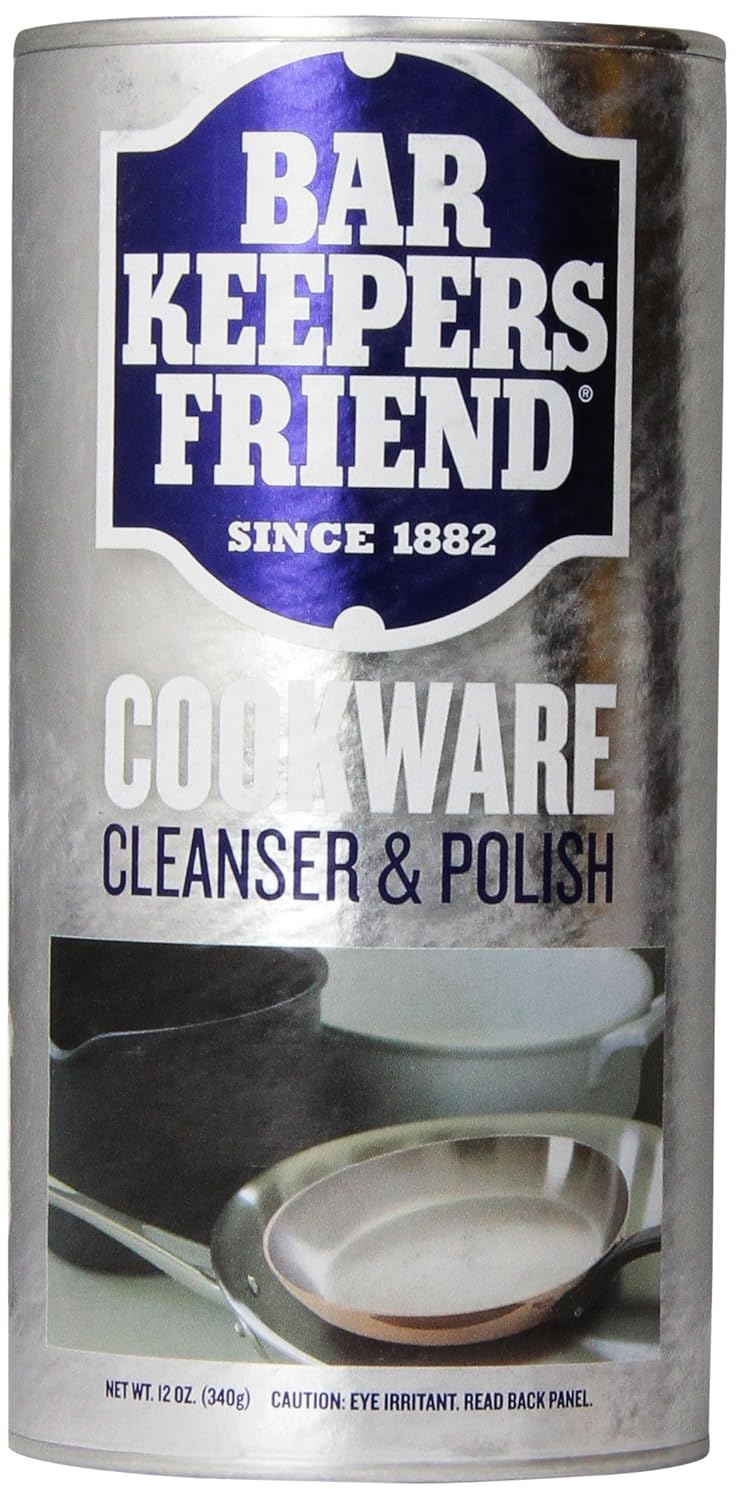
I picked all that out with a dental pick, then used steel wool and a lot of elbow grease to get the film of translucent silicone off. That was surprisingly difficult! I also used steel wool on the sink itself, followed by a course of Barkeeper's Friend (the best stuff I've ever used for cleaning metal); this cleaned and shined up the sink nicely.
Then I re-caulked with modern, water-clear silicone – and kept the bead completely under the granite. I finished it using a trick I learned from the guys who installed our bathroom granite: I spritzed the bead with half water/half isopropyl alcohol, then just ran my finger down the bead. Perfect finish! The face of the caulk bead is basically vertical. When it's cured (tomorrow), I'll get rid of any films of silicone remaining on the stainless steel – and then the kitchen sink will be completely finished!
Well, it took all day...
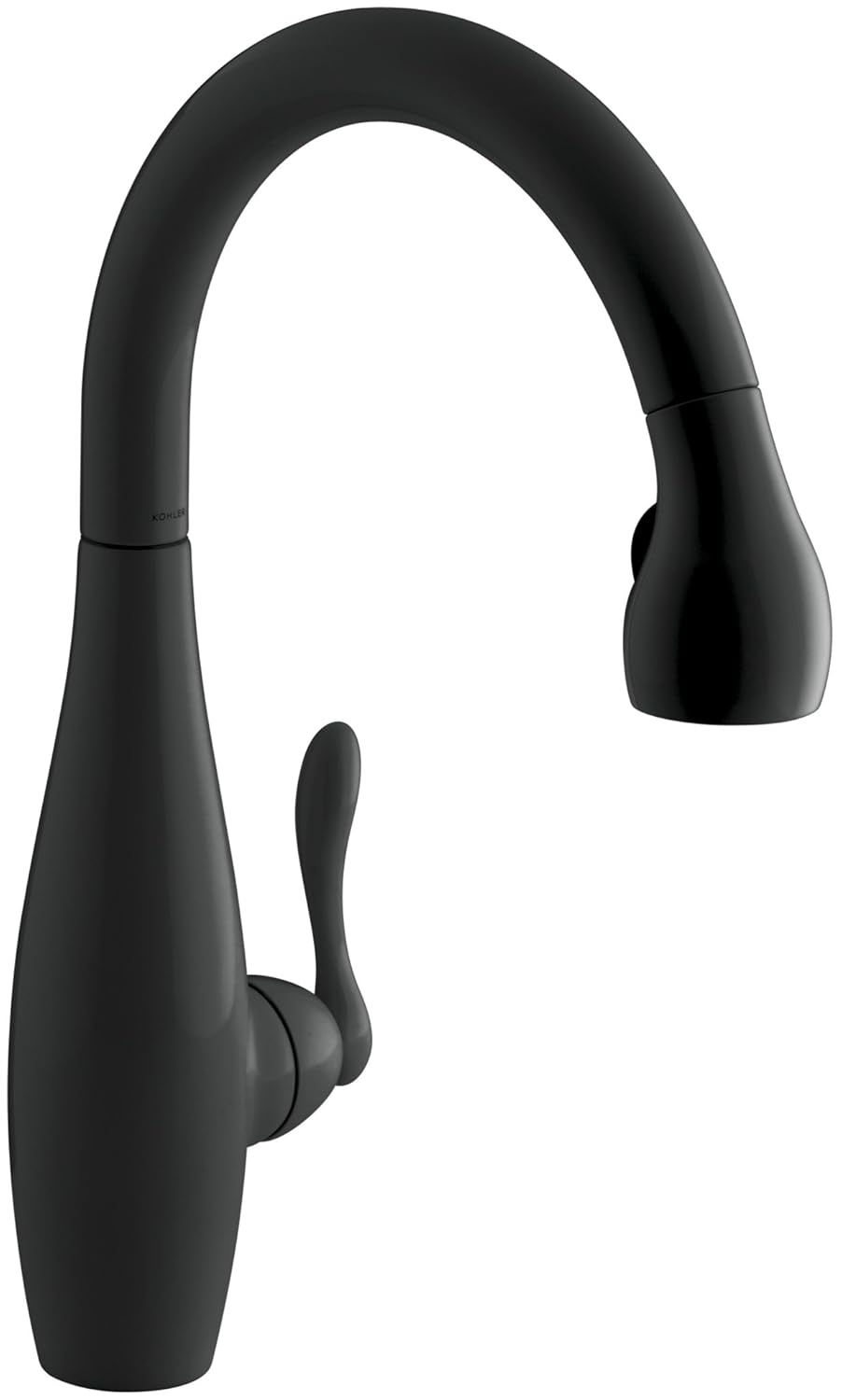

One sink-related task remains for today: I'm going to strip out all the old caulking (it's an under-counter sink, caulked to the bottom of the surrounding granite) and put new in. That means a fifth trip, this time to Home Depot to get some decent grout, hopefully in a color that will blend nicely. I'm also going to use steel wool to thoroughly clean the sink itself, as now it's old grungy appearance contrasts badly with the nice new faucet :)
Saturday, March 14, 2015
Hillary's email...
Hillary's email... The latest revelation is that the State Department didn't actually archive the emails that Hillary sent to other State Department employees. Nor did they archive anybody else's.
Everyone I know with any sort of IT background shares my reaction to the news reporting on this issue: it's all complete nonsense, credulously reporting the State Department's assertions that this is a difficult problem only recently addressed. That's the sheerest poppycock and twaddle. Specialized email backup programs have been readily available commercially, and routinely used by private organizations, since at least the late 1980s – almost thirty years ago. I personally selected and acquired such a system for my then-employer in the mid-1990s. These backup systems save every email (no selection is required) and then provide tools for recovery of particular (or all) emails.
For the State Department (or any branch of government) to assert that this is difficult, time-consuming, or expensive is one of two things: an outright lie, or a confirmation of an almost unimaginable level of incompetence.
Occam's Razor says: it's a lie.
But why would the State Department lie about this, making themselves look stupid and ignorant? The most likely reason I can imagine is that if they actually produced copies of their internal emails, it would expose them as the utterly incompetent fools and nefarious knaves the electorate suspects they are...
Dinner out...

The drive home in the late evening light was especially pretty. The mountains around the valley were glowing in the reddish light of near-sunset, while the valley was mainly in shadow. There were quite a few dramatically-lit scenes along the way. Just south of Hyrum, on the east side of Highway 165, there's a small farm that's recently acquired a bunch of baby goats. They were out playing “king of the hill” on a pile of giant wooden telephone wire spools. I could watch baby goats for hours. It's too bad they're only babies for about ten minutes – and then grow up to be extremely uncute goats...
Barn progress...
The two shipments due to arrive yesterday did arrive. We now have two pallets full of foam flooring for Debbie's agility court. My SawStop table saw also arrived, in a collection of sturdy boxes strapped to another pallet. The garage area of our barn is starting to look like a warehouse!
Today is “sink day” – I'm replacing the faucet, garbage disposal, drains, strainer, and under-sink plumbing on our kitchen sink. The immediate provocation was an annoying, persistent, and unrepairable leak in the existing faucet. The secondary provocation was a desire to get a more powerful garbage disposal (1 HP model replacing an aging 1/2 HP model) and to remove an “instant on” hot water heater that we never use. I bought all the parts I thought I needed earlier this week, but as I start the actual work I fully expect to discover 12 more things I need, necessitating at least 8 more trips to Home Depot and/or Lowe's...
Original Moog schematics online...

Friday, March 13, 2015
The hazards of open source programming, part 692...

Barn progress...
Barn progress... So I did finish wiring all the lights in the garage section of the barn yesterday ... and boy howdy is it nice and bright in there now when I flip the switch on! There are 12 “100 watt” LED bulbs in there. The LED bulb manufacturers have taken to specifying the light output of their devices in terms of incandescent bulb equivalents. I guess the American public just isn't sufficiently acquainted with actual units of light brightness (usually lumens). The specified power consumption of these LED bulbs is 17.5 watts each, or 210 watts total. I measured it at 196 watts, or just under one sixth of the power it would have taken to achieve the same brightness with old fashioned incandescent bulbs. Actually, if I couldn't have obtained LED bulbs, I would have used halogen bulbs, and they'd have used about 1,000 watts to get the same brightness. I detest the CFL bulbs and would never have considered using them.
Next up on the wiring front: 30 more LED lamp fixtures for the two other “rooms” on the first floor of the barn. Parts are on order for them.
 I had a few hours left yesterday after finishing the wiring, so I started assembling my new Grizzly dust collection system. First step was to unpack the entire unit and inventory the (hundreds of) parts, and that took me nearly an hour. The packaging of all these odd shaped parts was done in a very clever manner to reduce the total volume. Some of the tricks took me a while to reverse-engineer so I could figure out how to get the parts separated. My hat is off to the ingenious packaging engineer who came up with the dozen or so key elements of the packaging. Not only did it reduce the volume tremendously, it also securely protected anything that was even slightly vulnerable. The pallet weighed 494 pounds, and there isn't a ding, scratch, or even a little mark anywhere on anything. Very impressive!
I haven't got very far on the assembly yet, but what I've done so far shows this thing to be a real beast. I'm putting the stand together, and it's made out of very heavy gauge steel, beautifully powder coated. It looks like something you'd see in an industrial setting. Once I get this monster assembled and wired up, then I have to install 8 inch diameter ducting to the major pieces of equipment (most especially the table saw). For smaller tools I can run 6 inch or even 4 inch ducting. It will be interesting to see how all this works out!
Next up on the wiring front: 30 more LED lamp fixtures for the two other “rooms” on the first floor of the barn. Parts are on order for them.
I haven't got very far on the assembly yet, but what I've done so far shows this thing to be a real beast. I'm putting the stand together, and it's made out of very heavy gauge steel, beautifully powder coated. It looks like something you'd see in an industrial setting. Once I get this monster assembled and wired up, then I have to install 8 inch diameter ducting to the major pieces of equipment (most especially the table saw). For smaller tools I can run 6 inch or even 4 inch ducting. It will be interesting to see how all this works out!
Subscribe to:
Posts (Atom)