Near-zero blogging alert... Things in Silverton, Colorado have changed – we basically have no Internet connection at all. At the moment we're sitting in a restaurant in Lake City which just happens to have free WiFi, so I can post this. I don't know when (or even if) we'll have a connection again while we're on vacation.
Speaking of which, it's been grand so far! Lots of flowers, beautiful weather, happy dogs, and a gorgeous cabin to stay in. More when we can...

Thursday, July 3, 2014

Stony Pass to Lake City, Cinnamon Pass to Silverton...
Stony Pass to Lake City, Cinnamon Pass to Silverton... Today's trip was a reprise of our favorite trip of last year – up and over Stony Pass, and thence to Lake City. There are two ways back to Silverton from Lake City (one via Cinnamon Pass, the other via Engineer Pass), and today we chose Cinnamon Pass. We chose to take this trip today partly because we hoped to avoid the heavy holiday trail traffic, and for the Stony Pass segment of the trip that worked very well – we only met a few people until we got to the Rio Grande Reservoir around noon. The segment from Lake City over Cinnamon Pass and back to Silverton was another story altogether – all sorts of people and vehicles there! We left at the crack of dawn and returned just before dark – a long day, but awfully nice.
The flower situation was … glorious. We're definitely a little earlier in the flower season, by a week or two, compared with last year. One of my goals was to see the irises on the south side of Stony Pass, and we did – but a week earlier yet would have been even better. We saw orange columbine in the forests just north of the Rio Grande reservoir, which we'd never seen there before. On the trip up and over Cinnamon Pass, we saw more Parry's Primrose than we'd ever seen before – basically every wet place over 10,500' was chock full of it. We apparently hit the season for them absolutely perfectly. We were too early to see sheep and shepherds, though – we're hoping we'll see them toward the end of our visit here.
A few miles south of the Stony Pass summit, the trail crosses Pole Creek on a ford across some gravel. We've made this traverse quite a few times before, and once (several visits back) we were turned around here by high water – something we were afraid might happen today, as the streams are running high compared with most of our experience. The creek was indeed running high, about 18” or 20” deep in the fast center channel – but the FJ took it just fine, with no water leaking inside the cab and the engine never sputtering at all. We haven't modified our FJ to handle deep water, but the manual says anything up to about 40” should be fine – so long as you don't mind water flowing in the cab :) We didn't come anywhere near that depth, and had no problem at all.
The dogs had a wonderful time playing in the snow near Stony Pass. We took several minutes of video with the two of them madly chasing a ball across the snow fields. By the time we put them back in the truck, we had two very tired puppies :)
After we crossed Pole Creek, we headed through the beautiful scenery of the Rio Grande valley, past the Rio Grande Reservoir (and several others), through some fire-damaged areas (from last year's fires that we saw the immediate aftermath of), and thence up through Slugmullion Pass (on paved roads) up to Lake City. There's a favorite destination of ours there: the Sportsman's Club. We like the people there (the owner's are Texans who come up to run the place in season), and most of all we like the food – most especially the pull-pork sandwiches. If your memory is particularly good, you may remember the tragedy of last year, wherein we ordered pulled-pork sandwiches and they only had enough meat for one (I took it). The same damned thing happened again this year – but this time, Debbie got the pulled-pork sandwich, and I opted for a sliced brisket sandwich – also delicious. The owner/cook came out to apologize for both the horrible pulled-pork shortage and the long delay (the place was very busy) – and insisted on giving us the sliced brisket sandwich for free. We actually hadn't minded the delay at all, because there was free WiFi there, and we had the first real connectivity of our trip. We both spent some time catching up on email and what was happening in the world. Afterwards we stopped by at Debbie's favorite Lake City coffee joint (she has one in every city, trust me): Jean's Beans. We both had some coffee, to perk ourselves up for the trip up and over Cinnamon Pass to get back to our cabin in Silverton.
There was very little snow, even at altitudes over 12,000' – the least snow we've ever seen up here at this time of year. This jibes with our host's assertions of very light snowfall this past winter. That's bad for everything and everybody depending on the water from the snow melt making it into the streams...
The wildlife wasn't as abundant in the morning as in our past experiences here. Possibly we're too early in the season. We saw a dozen or so deer, but no fawns. Lots of pikas and (especially) marmots, along with innumerable chipmunks and squirrels. We saw quite a few flickers (especially north of the Rio Grande Reservoir), as well as a few woodpeckers.
We had a bit of rain, just enough to wet down the dust, as we passed the Rio Grande Reservoir. There was no sign of any rain around our cabin when we got home, dang it.
At the top of Cinnamon Pass, we met a couple in a Jeep with their dog. They said they'd seen us earlier in the day, going the opposite way from us at Stony Pass. They recognized the orange FJ with the “Slightly Loony” sign on the front. Turns out they were camping at the Rio Grande Reservoir, and were making the exact same trip we were, but in the opposite direction. By a strange coincidence, the two times we passed them were at the tops of the two passes on the trip. Weird!
Just below Cinnamon Pass, on the Silverton side, we stopped near a stream and marsh that was chock-a-block full of allysium and Parry's Primrose. We let the dogs out to play and chase the ball there, and they had a great time as usual – and I got some nice video of them. Race had a great time biting at the fast-flowing stream. We don't know why he does this, but he seems to think it's great fun. At one point Debbie threw the ball over the stream to the opposite bank, and that made for some unexpected fun. First Race (easily) traversed the stream and went looking for the ball – but failed. Then Miki (less easily) waded across the stream and went looking – and succeeded, after following Debbie's verbal command to turn right. Then Miki wanted to come back to our side of the stream, but for some reason he didn't want to wade over this time. Instead, he wiggled around on the other side and then suddenly made a heroic leap – which didn't quite make it to the other side. He made an awful-looking full-belly-flop landing, half in the water and half out. We were afraid that he'd hurt himself, but nope, he was just fine.
After coming down off Cinnamon Pass, we just headed for home, our little cabin on Blair Mountain. It was very attractive after such a long day :)
 |
| Tundra Hymenoxys |
 |
| Rosy and sulfur paintbrushes |
 |
| Parry's Primrose |
 |
| Alpine Avens |
 |
| Unidentified, uncommon |
 |
| Parry's Primrose |
 |
| Unidentified, common early season |
 |
| Colorado Columbine (bud) |
 |
| Parry's Primrose |
 |
| Big patch of Parry's Primrose |
 |
| Purple Fringe |
 |
| Western Iris |
 |
| Unknown flower bud |
 |
| Seep Monkeyflower |
 |
| Spearleaf stonecrop |
 |
| Some sort of beardtongue? |
Wednesday, July 2, 2014
Shakedown Drive – Corkscrew Gulch, Copper Gulch, Cement Creek...
Shakedown Drive – Corkscrew Gulch, Copper Gulch, Cement Creek... We got up at daybreak this morning, and I spent the first part of the day rigging the FJ for off-roading. This mainly consisted of loading all the tools, winch accessories, rope, etc. into the storage boxes under the dog platform, and mounting the hi-lift jack, spare gas cans, Pull Pal, and shovel up on the roof rack. There were a few other details, too (like dismounting the trailer hitch), but those were very little work in total. It took me a couple hours to do all this, partly because I was so full of Debbie's wonderful bacon and eggs breakfast that I could hardly move!
On the way down from our cabin, we spotted some orange columbine (a favorite of mine). This was good news for me, as it proved that we had succeeded in arriving here earlier in the flower season than we did last year. As we discovered later in the day, the next time we make this trip we're going to want to be even earlier, by another week or so, as many flowers are now past prime – or even in seed – below about 9,000 feet. This varies a bit by exposure, water, etc., so we can still find many of our favorites in bloom – but a little earlier would be mo' bettah.
The first thing we noticed when we got out on the trail up Corkscrew Gulch, is that everything looks dry and dusty compared with our experiences in past years. Our host at the cabin tells us that the “monsoons” haven't arrived yet this year, and they're overdue. On the other hand, we immediately noticed that the rate of flow in most streams is considerably more than what we saw last year. I suspect this has more to do with snow melt than anything else, and it's very obvious that the snow levels at altitude are lower than they were last year (when we arrived a week later in the season).
Because we got a late start, the trail was full of jeeps, ATVs, motorcycles, and tour trucks – just the sort of thing we try very hard to avoid. We also didn't see much in the way of wildlife, for the same reason. The traffic problem is likely exacerbated by this being a holiday weekend, and there are people here on vacation as well. On the 7th, after the July 4th holiday is over, we expect trail traffic levels to go way down. We'll also start doing our usual early morning starts, and that means we'll rarely seen anyone on the trail, and we will see wildlife.
One of the tasks for me on today's trip was to re-learn how to use my camera (a FujiFilm X100). I haven't used it at all in the past year, mainly because the camera on my iPhone isn't bad at all – and is always at hand. The X100 is remarkably easy to use, given its SLR-like capabilities – but there's still enough complexity to it that I needed to work up a little familiarity.
When we got to the top of Corkscrew Gulch, the two ponds at the pass were nice and full of water – so we launched the dogs into them for some fun. They immediately got into the spirit of things, madly chasing the ball on land and at sea. Race, as usual, played so hard that he bloodied his paws on the rocks. It will take some time for him to build up his paw-calluses.
After collecting some rocks for Gracie (our Paradise neighbor's daughter who loves rocks), we headed down off the pass and back up into Copper Gulch. This is an area we know well from past years. Even though it's a dead-end road, it passes through such beautiful scenery that we can never pass it up. This year we were a bit early for flowers (it's nearly 12,000 feet high), but the snow was mostly melted, and the ponds were full and the streams flowing. In a set of terraced ponds set in some lush meadows, we let the dogs run and play and swim. A grand time was had by all, in a setting that is heart-stoppingly beautiful.
Despite being early in the flower season at high altitude, we still saw plenty of flowers. One we noted especially: Parry's Primrose, in more abundance than we've seen before. We're not sure if it was our earlier arrival that accounted for this, or perhaps it's because there's more water in this area (update: experience on later days makes us think it's the timing, not the water).
After we finished playing around with the dogs, we headed further down Copper Gulch – but not very far, as we went down a steep slope and slid for 20 feet or so, right down a mud-covered embankment. At that point, worried about whether we could get out again, I turned the FJ (which we've nicknamed “Fajita”) around and headed back up. I needn't have worried. The “A-Track” feature took the muddy slope with no work on my part – whenever a wheel started slipping, the “A-Track” system instantly applied the brakes to that wheel so that the other, non-slipping wheels still got power. We went straight up that slippery slope and back onto the dry road. Whew!
After that, we headed down Cement Creek (the high-speed route back to Silverton) and then back to the cabin. The shake-down was a success – no rattles, no gear falling off, nothing malfunctioning. We are ready for some serious off-roading!
 |
| An orange columbine blossom |
 |
| Pond in Copper Gulch |
 |
| Rosy paintbrush |
 |
| Red Mountain #2 from the top of Copper Gulch |
 |
| Closer to Red Mountain #2 |
 |
| Happy dogs playing around the ponds |
 |
| Debbie and Fajita |
Tuesday, July 1, 2014
Paradise, Utah to Blair Cabin in Silverton, Colorado...
Paradise, Utah to Blair Cabin in Silverton, Colorado... We left at about 4:30 am, hoping to make it to Blair Cabin before dark – even after grocery shopping in Montrose at our favorite area grocery store (City Market). This worked, as we made it into the cabin at around 6 pm, with plenty of light left.
The route we took was a brand-new one to us, at least partly because we left from Paradise, Utah instead of southern California. But we also deliberately selected a route that avoided Interstate highways as much as we could. Our route took us to Ogden via I-15, then east on I-84/I-80 until we reached US 40. After that, we took US 40 east through the Ute mountains until just over the Colorado border, then south on Colorado 139 to I-70, briefly on I-70 to US 50, then south on US 50/US 550 to Silverton. Overall, this route was vastly more interesting and less ugly than the desert crossing further south on I-70. Google Maps claims that the southerly route is only about an hour faster; that's an hour we'd gladly invest to avoid that long, long desert passage.
Along the way we saw lots and lots of ranches and horses; the entire length of the trip was through “cowboy country”. Often these ranches were quite beautiful, with broad green pastures in various stages of mowing, baling, and growing. Several times we saw postcard scenes of horses in green pastures with tall grass, alongside brooks and ponds. Of course there were also lots and lots of cows, too, but they're just not as much fun to look at.
We also saw a lot of deer, but unfortunately most of the deer we saw were dead – victims of collisions with cars. We didn't count, but I suspect we saw at least two dozen of their broken bodies along the road. There were also, for some reason, a lot of dead racoons, especially on the western segment of the trip.
 |
| What we looked like on the way from Jamul to Paradise |
Before buying the trailer, I was a bit worried about towing it behind our FJ – the FJ is a relatively small vehicle, and the trailer is 8' long, 5' wide, and 6' high (it's a Wells Cargo Road Force trailer). I needn't have worried, as the trailer was barely noticeable when driving. Even on rough paved roads it handled flawlessly, and in particular it never bounced around like so many trailers I've been behind. The real test, though, was the final 2 mile drive up a very rugged 4WD road to the cabin we rented. The road is steep, filled with large rocks and deep holes, and parts are made of loose rock. I drove up that road very slowly, and for the most part we never even knew the trailer was behind us. There were a couple of steep spots with loose rock where the FJ lost traction on one or two wheels, but the “A-Track” automatic traction system took care of that with zero effort on my part. In the end we pulled the trailer down the steep driveway to the cabin and parked it without incident. When I opened up the trailer to unload the groceries we'd purchased on the way through Montrose, I discovered that none of them had even jostled out of the position I'd loaded them with. With that discovery, I declared the great trailer experiment a resounding success – with it we can carry far more in the way of supplies and creature comforts than we can with the overhead rack, and with far less effort. If it can handle the road to this cabin, it can handle anything we're ever likely to throw at it...
Saturday, June 28, 2014
It's o'dark thirty on Saturday morning...
It's o'dark thirty on Saturday morning... Our FJ Cruiser is loaded and ready, as is the trailer attached to its rear. We're off for Utah today!
Thursday, June 26, 2014
Be careful around nurses...
Be careful around nurses... Via my CCPOAA mom:
A policeman was rushed to the hospital with an inflamed appendix. After his operation the doctors advised him that all was well. However, the patrolman kept feeling something pulling at the hairs in his crotch.Ouch!
Worried that it might be another surgery needed that the doctors hadn't told him about yet, he finally got enough energy to pull his hospital gown up sufficiently, that he could look at what was making him so uncomfortable. Taped firmly across his pubic hair and private parts were three wide strips of adhesive tape, the kind that doesn't come off easily – if at all!
Written on the tape in large black letters was the sentence, "Get well soon, from the nurse in the Ford Explorer you pulled over last week and gave a ticket to!"
Congress to sue Obama for executive branch overreach?
Congress to sue Obama for executive branch overreach? Boehner announced his intent to pursue this yesterday. I have some insta-reactions:
- Well, it's about frickin' time! What the heck took you so long, beltway-breath?
- Boehner did this? There must be some reason, other than the obvious...
- Jonathan Turley thinks the suit may prevail, causing progressive heads to explode. More popcorn, please!
- Why didn't Pelosi do this with George W. Bush, who was nearly as bad as Obama in this regard?
- The safe bet would be that this is pure political posturing, and Boehner has no intent to see the lawsuit actually make it through the courts until a judgment is reached. I feel so (justifiably) cynical saying this, but I will be completely unsurprised when some reason to drop the suit magically arises...
Wednesday, June 25, 2014
Adjusted temperature data...
Adjusted temperature data... Warren Meyer (aka “Coyote”) has a balanced recap of the adjusted temperature data used by the NOAA that forms the basis of many “hockey stick” like graphs.
Learning about this adjusted data was the first thing I ran into, five years ago or so, that set off all my bullshit detectors regarding anthropogenic global warming (AGW). Specifically, it was the combination of the fact that the reported global warming was nearly identical to the adjustments made in the temperature data, and that the adjustments were never explained, justified, or even revealed. That was just way too convenient for the AGW proponents – much like the oh-so-convenient “hard drive failures” that wiped out the emails of seven IRS employees. Just those seven – and just for the time period the investigators need the emails. Yeah, right. I felt (and still feel) the same way about those opaque temperature adjustments.
The second thing that I ran into – which amplified my already turned up bullshit detectors – was my discovery that every single model used by both the NOAA and the IPCC used positive feedback loop assumptions for carbon dioxide's effects on global warming. As Warren Myer has pointed out many times, positive feedback loops are exceedingly rare in natural systems – so much so that when someone claims to have discovered one, the universal assumption amongst scientists is that there's an error in the observations, and everybody piles on to figure out what it is. Nearly all feedback loops in nature are strongly negative. What does that mean? It means that as carbon dioxide levels go up, it is much more likely that its effect on global temperatures will decrease (that is, the CO2 sensitivity will decrease). The models all assume that CO2 sensitivity will increase as levels go up.
Mechanical energy storage...
Mechanical energy storage ... is getting a lot of attention right now. All of these are less efficient than electrochemical systems (aka “batteries”), but have other advantages (most especially, cost at scale) that outweigh the efficiency differences. I know of one other mechanical storage technique being actively pursued: inertial storage. In an inertial storage system, a large and heavy flywheel is spun up to store energy and down to recover it. To my knowledge, the largest inertial storage system is in Israel, where a small town uses one to store solar energy during the day and recover it at night...
Ten small cats...

Tuesday, June 24, 2014
Music video with optical illusions...
Kenzie's Dance...
Light blogging alert!
Light blogging alert! I've got a busy few days here... Today I'm mostly catching up with some of my San Diego-based friends (including a lunch at the Fish Market in Del Mar, where I know what I'm having - scallops!). Tomorrow I'm picking up our new trailer, and I'll start packing it for our Colorado trip. Thursday and Friday is for packing and catching up with a few more friends. And Saturday morning, at o'dark thirty, we're heading out!
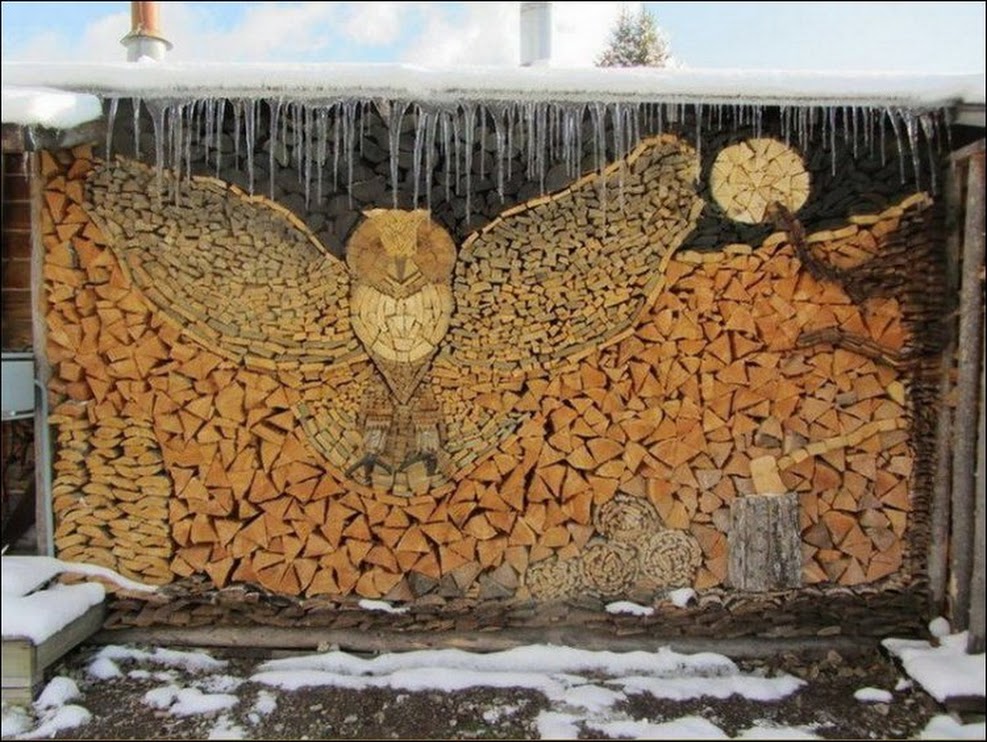
Woodpile art...
Sunday, June 22, 2014
Made it to Jamul...
Made it to Jamul... Got a hug and a kiss from my wife, and the dogs all remembered me :) The cats all acted like they'd rather I never come back again.
I'm stiff and tired after 14 and a half hours driving. I wonder why? :)
After spending three months up in the greenery of northern Utah, Jamul looks remarkably ... dead.
I'm stiff and tired after 14 and a half hours driving. I wonder why? :)
After spending three months up in the greenery of northern Utah, Jamul looks remarkably ... dead.
Representative Steve Stockman (R, Texas) submitted this bill...
Representative Steve Stockman (R, Texas) submitted this bill... And, HA!
Subscribe to:
Posts (Atom)