

Thursday, December 12, 2013

Amplituhedrons...
Amplituhedrons... Ok, most of this I don't understand. I'm going to do some reading up on some of the topics mentioned, to see if I can grok the whole thing. But the possibilities suggested in here are fascinating, and if proved correct would be a big change to quantum physics. One statement by a scientists caught my eye – he compared using Feynman diagrams (something I just barely understand) to taking a Ming vase and smashing it on the floor. That's a bit like saying that using a hammer is a really stupid way to pound a nail in, because there's a new way that's far better. If that happened, a whole bunch of carpenters (or physicists, in this case) will need to learn how to use those new tools...
More here, here, here, here, and the original paper.
More here, here, here, here, and the original paper.
Places I don't want to visit!
Places I don't want to visit! The ten worst weather places in the world...
Forgotten Soldiers...

It's easy to condemn the lobotomies with 20/20 hindsight and today's vastly superior knowledge and treatment options. In the context of the times in which they happened, though, the lobotomies were, the doctors agreed, the least bad alternative.
I have no idea how and why The Wall Street Journal came to support this reporting and writing, but I'm very glad they did. I'm used to seeing history works of this depth in book form, not serialized in a newspaper (or more correctly, in my case, on a web site). I hope we see more of this...
A Tale of Two ObamaCare Victims...
A Tale of Two ObamaCare Victims... One is a prominent conservative blogger, and the other the father of a critically ill son. Both stories are horrifying, and are the kind of thing that I'd bet most Americans are worrying about today, when they think about healthcare...
ObamaCare is a disaster...
ObamaCare is a disaster... So says presumptive 2016 presidential candidate Senator Ted Cruz in an op-ed piece at USA Today. In it he makes a point of attacking the fundamentals of ObamaCare, and not just the web site's failings. I suspect this will be a theme Republicans are going to hammer away at for the next two years...
ObamaCare enrollments...
ObamaCare enrollments... I've been trying to figure out, based on publicly released information, just how many people are actually succeeding in obtaining new healthcare insurance through the ObamaCare exchanges. In particular, I've been wondering whether the number of enrollees exceeds the number of cancellations – because the cancellation numbers are much better known, and they are continuing (through the end of this year for individuals, and through all of next year, for small businesses).
The estimates for total cancellations (assuming the ObamaCare law isn't repealed or changed significantly) varies, but seems to be within a range of 50 to 100 million policies. That's a lot of policies. By the end of this year, for individual policies, the number of cancellations seems to be in the range of 5 to 7 million – still a very large number.
So how many people are enrolling? Will that be a larger number than the number of cancellations? In other words, will ObamaCare result in a net gain of the number of people insured, or will it actually reduce the number of insured people? That's not a facetious question, because at the moment the bulk of the evidence is that at least through 2014, ObamaCare will take more people off the insured list than any other government action ever has.
As always, Megan McArdle has an interesting take on this. She wonders whether part of the problem is that we didn't actually have as many uninsured people as had previously been estimated. In other words, the problem isn't that uninsured people aren't signing up – it's that there aren't so many uninsured people!
Pro Publica looks at a different angle. They're worried that the few enrollment numbers we are getting are grossly overstated – because they don't include the most relevant data of all: how many people are actually paying for the insurance. That's what closes the deal, after all – but the ObamaCare exchanges aren't saying how many have paid. It's as if Jeff Bezos reported how many people had things in their shopping carts, instead of how many actually purchased something.
And this morning, The Wall Street Journal piled onto the last point with an editorial that includes this:
A charitable reading suggests that ObamaCare's net enrollment stands at about negative four million. That's the estimated four million to five and a half million people who had their individual health plans liquidated as ObamaCare-noncompliant—offset by the 364,682 who have signed up for a plan on a state or federal exchange and the 803,077 who have been found eligible to receive Medicaid.Ouch. Negative net enrollment, exactly what I've been wondering about. And that's with a “charitable” reading. Oh, my...
On that budget deal...
On that budget deal... Megan McArdle is a sober voice of reason, free of the partisan blinders that most commentators have on economic issues. She thinks the Republicans got the best of this deal, for some interesting and (at least to me) not too obvious reasons.
She may well be right, but to me the gamesmanship that seems to be 99% or more of the effort invested is more evidence of something fundamentally broken about our system of government. After almost 250 years of politicians building a body of knowledge about how to game the system, they've gamed it almost to death. I'm beginning to be convinced of something not a few historians have concluded: that no system of government (or at least, none yet invented) has the DNA to become permanent institutions. Furthermore, the easier it is for citizens of any political system to communicate and organize, the lower that system of government's lifetime is. American democracy has met the Internet, and I wonder if American democracy will last out even my own lifetime...
She may well be right, but to me the gamesmanship that seems to be 99% or more of the effort invested is more evidence of something fundamentally broken about our system of government. After almost 250 years of politicians building a body of knowledge about how to game the system, they've gamed it almost to death. I'm beginning to be convinced of something not a few historians have concluded: that no system of government (or at least, none yet invented) has the DNA to become permanent institutions. Furthermore, the easier it is for citizens of any political system to communicate and organize, the lower that system of government's lifetime is. American democracy has met the Internet, and I wonder if American democracy will last out even my own lifetime...
Pater: banana chips...

Banana chips...
When the three oldest kids (Scott, Holly, and I) were old enough to hike a few miles while carrying a pack, my dad started taking us on some multi-day backpacking trips. There was one in particular that I went on several times (the participants varied): a day hike up to the Chimney Pond campground in the main glacially-scooped basin of Mt. Katahdin. This gorgeous mountain is the northern-most terminus of the Appalachian Trail, towering over the mostly-flat surrounding land. It's in Baxter State Park, which has a fascinating history and is full of all sorts of interesting things – as if Mt. Katahdin weren't interesting enough all by itself. I love that place, and wish I could get back there more often – but it's about as far as you can get from San Diego and still be in the U.S.
On those backpacking trips to Chimney Pond (see map at right), my dad would rent one of the Adirondack lean-tos that the park makes available. That made our packs lighter, as we didn't have to bring up a tent and the associated stuff – just sleeping bags, cooking stuff, clothes, and some food. Once we got to Chimney Pond, we'd stay there for some number of days, making day trips on the trails that radiate out from Chimney Pond. Quite a few “loop” trips are possible, which we really liked. Then as an extra added bonus, the site of the Chimney Pond campground is spectacularly scenic – for 270° around you there are steep granite escarpments. Chimney Pond itself is in the trees, but timberline is only a few hundred feet in elevation above the campground, so the view around you is nearly all above it.
Especially on the earlier Chimney Pond trips, my dad had to find ways to do things on the cheap. We didn't have much money (not that we really noticed or cared about that when we were kids), so instead of the “normal” things one might do for such a trip we had to find other means. One example: we didn't have one of those nifty light-weight stoves designed for hiking. Instead, we had a one-burner Coleman naphtha stove that must have weighed 10 pounds. We carried a lot more weight up that mountain than most people did! One thing that was particularly irksome for my dad was the food. I've noted before that food was important to my dad. But carrying his normal diet up the mountain wasn't really practical. He'd have loved to have the high quality freeze-dried food that was just becoming available (and on later trips, he did), but at the time it was priced out of reach. So he struggled to find acceptable food.
One thing he did was to haunt the surplus stores, looking for bargains on military surplus food designed for troops on the move. He had some notable successes in that area. He once scored an entire case of pemmican at a bargain price, and we ate those little cans of concentrated energy on many a hike. Another time he got some of the high-temperature chocolate the Army handed out in WWII – tasted a bit like candle-wax, but still, it was vaguely chocolatey and had lots of sugar, which meant it was great trail food.
One other time, however, his surplus purchase didn't quite work out as we expected. He bought a case of canned freeze-dried banana slices, again military surplus. These were not at all like the “banana chips” you often find at places like Trader Joe's; these weren't fried. In fact, they weren't cooked at all – just dehydrated. I found these in an online store; they look like the same thing my dad bought. Those military surplus banana chips were in some kind of very lightweight can, and they had removable tops of some kind – no can opener required. I remember us marveling at those cans, the first we'd ever seen. They looked perfect for hiking – light-weight, no cooking required, not even a can opener needed.
It was on one of those Chimney Pond trips that we first took along some banana chips from that purchase my dad made. I can even remember which trail we were taking the first time we ate any: we were on the trail from Chimney Pond that leads north, to the “table lands” (a big, flat saddle to the east of Baxter Peak). On the way up, in the morning, we opened one of those cans and started eating.
Those chips weighed next-to-nothing, and each chip was quite small, roughly the size of a nickel. And they were tasty – a nice, intense banana flavor. The texture was a bit weird (I suspect this is why most of them are fried, to make the texture more palatable), but they really were great trail food. We ate the whole can in short order, and shortly we opened our second can and ate all of that. In my memory, at least, I ate more of those chips than anyone else, though I'm not sure that's a high-fidelity memory.
Very satisfied, we had a drink at a spring and kept hiking up. It wasn't long, though, before I started feeling a bit strange. Bloated, like. In fact, my belly was becoming distended, and I was starting to feel distinctly uncomfortable. At some point my dad figured out what was going on: those banana slices were re-hydrating inside our stomachs, and expanding. A lot. Fifteen minutes or so after I ate my last banana chip, the banana chips started coming back out of my mouth – they'd expanded so much that they quite literally forced their way back up. I wasn't vomiting in the usual sense, just ejecting the excess banana chips.
At some point a happy equilibrium was met, and the rest of the banana chips stayed down. I cannot remember today whether anyone else who had partaken was similarly afflicted, or if it was just me. Those banana chips are hands-down the most memorable trail food I've ever eaten, though. I'm not likely to forget that experience :)
My dad, I remember, was badly torn – between being concerned for my well-being, and rolling around in hysterical laughter over this boy who emitted banana chips. Even at the time I thought it was funny, and while it was uncomfortable, it wasn't nearly as uncomfortable as real vomiting is. It was such an odd feeling, to have your food expanding within you!
That night my dad did an experiment with one of those banana chips, putting it in warm water to see what would happen. That nickel-sized chip roughly doubled in diameter and tripled or quadrupled in thickness. It also recovered most of the texture of a overripe banana, too. We ate all those banana chips on future hikes, and we were sorry when they were all gone – they really did make good trail food. But you can bet that we ate them much more respectfully after that, and in significantly smaller quantities.
We did one other thing that night, too: we read the can. On there was a very clear warning, in big bold type, about eating too many of the chips. I remember my dad reading that part out loud, and there was a passage that went roughly like this: “If you are eating these banana slices directly from the can, do NOT eat more than one handful for a meal, and no more than two meals a day.” We all wondered how many soldiers had done the same thing we did. My dad didn't think anyone was likely to read a can – everybody was too familiar with cans. They'd just open them up and eat, like we did. We always read the packaging on trail food we bought after that, though :)
Wednesday, December 11, 2013
Are you proud of your president, America?

The three “leaders” (English, Danish, American, left-to-right) here provide a terrific example of the politician at his (or her) most detestable. Their self-absorption is so complete that they don't even realize their all-too-public behavior is disrespectful to the very man they are there to honor.
No, I'm not proud. I'm actually rather shamed and embarrassed...
Pater: puppies...

Puppies...
I spent a couple hours yesterday parked in a pleasant residential section of Hillcrest (a San Diego neighborhood), waiting for our two oldest dogs to finish at the groomers. While I was parked there, a little boy walked by with his mother and two black-and-white puppies ... and that triggered a very happy memory involving my dad.
This must have happened in '61 or '62, in one of the first years that my dad started taking me to customers' homes with him to “help” with his landscaping work. We had gone to New York state, to the home of a Mr. Goff, where my dad was doing extensive new landscaping work. Mr. Goff had a beautiful little brook on his place that tumbled down a steep hillside in a rocky bed. It was full of little pools and waterfalls, and there were frogs and turtles and birds, lots of things to engage a little boy. I was down next to that brook, having a great time, when I heard something rapidly approaching me – an animal of some kind.
Alarmed, I looked around – and there were two little black-and-white puppies, falling all over themselves to come greet me. The brook and my dad were forgotten; those two puppies and I had a wonderful time for the rest of the day as my dad worked away. He practically had to pry me away from them so we could go home.
Some day not too long after that, we were down by the Jersey shore, doing several smaller jobs at 3 or 4 different customers' homes. At one point during the day, my dad suddenly turned the truck around, pulled off on a side street, and parked. He told me to stay in the truck; he'd be back in a little while. Fifteen minutes or so later, he came back, with a big smile, and was very cheerful for the rest of that day's work. I had no idea what he had gone off to do, nor why he was suddenly all bright and cheerful.
We finished our day's work, and were (I thought) about to head for home, when my dad pulled our truck back into that same side street and parked again. This time, he had me come with him. We walked around the corner, and there was a facility of some kind that dealt with dogs (an SPCA or something like that). We walked in, and a couple of people at the front desk greeted my dad with big smiles of their own, and told him that everything was ready. I was a bit puzzled at this point – I'd never been in a place like this before, I had no idea how my dad knew these people, and I didn't have a clue what was about to happen. All I really knew was that there were a lot of dogs here, in pens built into the wall. All the dogs I could see were adults.
The smiling staffers led my dad and I down a little hallway, and then opened the door to a room and waved us in. My dad went in first, with me tagging along right behind him. The first thing I saw was puppies – lots and lots of puppies. I don't know how many, but there had to have been at least a dozen, and maybe even twenty of them. There were puppies of every size, shape, and color. I sat down on the floor and was absolutely covered with puppies for the next half hour or so. My dad, after a few minutes of just watching me, eventually got down on the floor with me – and we both overdosed on pudgy, squirming, squealing, excited, wet-nosed puppies.
It was wonderful.
My dad must have arranged this somehow when we parked the first time, earlier in the day. I didn't ask him about it at the time, or at least I don't remember doing so. We drove home in a puppy-stoked daze. Years later I did ask my dad about those puppies, and he just had the vaguest memory of playing with the puppies with me. He didn't remember setting it up himself, but he also couldn't remember how it was that we happened to be in a room full of puppies in a town a long way from home. Well, that's ok. I certainly remember it...
Tuesday, December 10, 2013
Merry Christmas to all, and to all a good flight!
MGM's newest movie: The Lyin' King...

First unmanned flight of an F-16...
Geek: Why do array indices start at 0, and not 1?
Geek: Why do array indices start at 0, and not 1? I thought I knew why (the pointer arithmetic), but I was wrong. Mike Hoye did the research, and the result is a fun (though geekly) read...
Mexico is what happens...
Mexico is what happens... when the public sector unions get too powerful...

And I thought Amazon's drones were cool!
Words fail me...


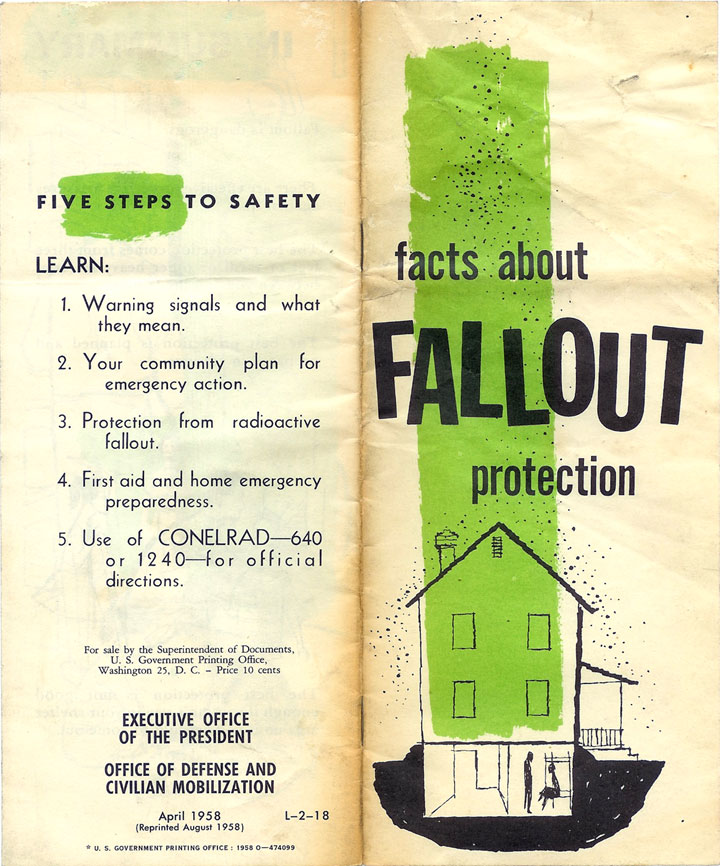
I remember this booklet!
Subscribe to:
Posts (Atom)